
France has backed away from their vow to intercept migrant boats, according to sources.
Callis’s officers were instructed to intervene more forcefully at sea to stop small boats from crossing the English Channel.
However, sources close to the operation claim that the French are not doing enough.
One figure closely linked to French maritime security described the efforts as a “political stunt”, adding: “It’s much blah-blah.”
Hundreds of small boat migrants continue to make the dangerous crossing, with Sir Keir Starmer’s “smash the gangs” policy failing to cut down numbers.
On Wednesday, the number of illegal arrivals on British shores overtook the total figure for 2024.
Two Border Force vessels arrived at Dover harbour, carrying 220 migrants, making the total so far this year 36,956.
The figure is 70 higher than the 36,816 migrants who crossed the Channel illegally the whole of last year.
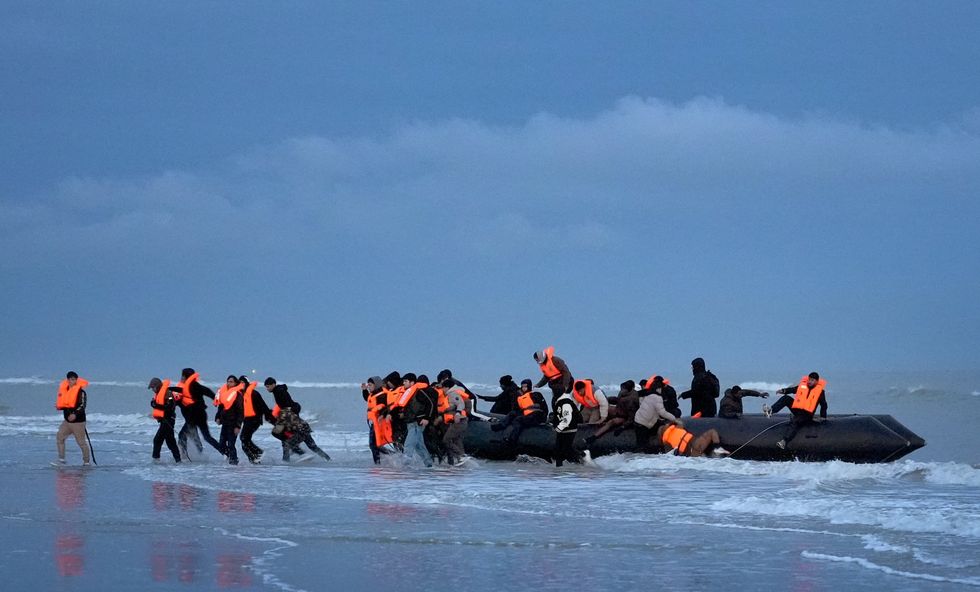
France has backed away from their vow to intercept migrant boats, according to sources
Martin Hewitt, who is in charge of border security in the UK, has previously expressed “frustration” at French delays.
President Emmanuel Macron and the Prime Minister met in July to discuss plans, including intercepting “taxi boats” now used by smugglers to cruise close to the coast and pick up passengers.
The police intervention is seen as a risk to both officers and civilians, leaving the taxis unchallenged.
Sir Keir has repeatedly claimed that his “one-in, one-out” deal would deter small boats, but so far, just 42 people have been sent back to France.
Hundreds of small boat migrants continue to make the dangerous crossing
Former Interior Minister Bruno Retailleau, credited with a more aggressive approach to the channel crossings, has lost his job as minister in the latest of several chaotic reshuffles, and the French Government remains scrambled.
Speaking on whether new measures promised by the French authorities will ever come into force, Peter Walsh, from Oxford’s Migration Observatory, said: “It’s possible that might never happen.”
A marine expert with close ties to the state told the BBC that the Canal de L’Aa was shallow enough for security forces to intervene without putting people’s lives at serious risk.
Another source told the broadcaster: “The French navy is against this. They realise this kind of mission is extremely dangerous and they risk being implicated and ending up in court. It’s going to be a disaster.”
Former Interior Minister Bruno Retailleau, credited with a more aggressive approach to the channel crossings, has lost his job as minister in the latest of several chaotic reshuffles
PA
The Home Office described France as a “critical partner in tackling illegal migration” despite the reports of backing away from commitments.
A spokesman said: “We will do whatever it takes to secure our borders and stop migrants entering the country on small boats.
“France is a critical partner in tackling illegal migration and we continue to work closely together as they review their Maritime Doctrine, which will allow officers to intervene in shallow waters. We want to see the earliest possible deployment of these new tactics.
“And thanks to our landmark deal with the French, people crossing in small boats can now be detained and removed.”
France Shies Away from Vow to Intercept Migrant Boats – ‘It’s Just a Stunt!’
The ongoing migrant crisis in the English Channel has sparked fresh controversy after France appeared to distance itself from commitments to intercept small boats travelling towards the United Kingdom. The development has raised serious questions about cooperation between London and Paris, with critics questioning whether the two governments share the same priorities when tackling irregular migration. Prime Minister Keir Starmer is facing renewed pressure to demonstrate that his immigration strategy can deliver practical results, while French authorities are being urged to clarify their responsibilities in preventing dangerous crossings.
First of all, small boat crossings have become one of the most controversial political issues in Britain. Thousands of migrants have attempted to cross the English Channel in overcrowded inflatable boats, often relying on criminal smuggling networks to organise their journeys. These crossings are extremely dangerous because of unpredictable weather, strong currents and heavy maritime traffic. Despite the risks, many people continue to attempt the journey in the hope of reaching British shores.
France plays an important role in this situation because many migrant boats depart from beaches and coastal areas in northern France. Locations around Calais and Dunkirk have become particularly significant in discussions about irregular migration. Consequently, British governments have repeatedly sought stronger cooperation with French authorities to prevent departures and disrupt the criminal organisations responsible for arranging crossings.
However, the latest controversy has raised doubts about how far France is prepared to go. Critics have questioned whether French authorities are willing or able to intercept boats once they have entered the water. The distinction between preventing boats from launching and stopping vessels already at sea is particularly important because maritime operations involve legal, operational and safety considerations.
The reported reluctance surrounding interception commitments has attracted criticism from those who believe that Britain cannot effectively control its borders without stronger cooperation from France. Some commentators have described the diplomatic announcements as a political stunt, arguing that agreements are meaningless unless they produce measurable improvements. They believe that the British public deserves clear evidence that cooperation between the two countries is reducing dangerous crossings.
Keir Starmer’s government has made immigration enforcement a major political priority. Since entering Downing Street in July 2024, the Prime Minister has promised to tackle people-smuggling networks and improve cooperation with European partners. Labour abandoned the previous Conservative government’s Rwanda deportation scheme and introduced a different strategy focused on intelligence sharing, international policing and stronger border enforcement.
One of the most important elements of this approach has been the agreement with France known as the ‘one in, one out’ arrangement. Introduced in 2025, the agreement allows certain migrants arriving irregularly in Britain to be returned to France, while an equivalent number of eligible individuals can enter Britain through an authorised legal route.
Supporters argue that the arrangement creates a more structured approach to migration management. However, critics question whether the number of returns is sufficient to discourage people from attempting dangerous Channel crossings. They also argue that the government needs to explain what happens when migrants are returned but subsequently attempt to enter Britain again.
The relationship between Britain and France is therefore essential to the wider immigration debate. Both countries have responsibilities and interests in managing migration across the Channel. Britain wants to reduce irregular arrivals, while France must manage migration pressures within its own territory and comply with its domestic and international legal obligations.
Another major concern is the financial impact of Britain’s asylum system. The government spends substantial public money on processing applications, providing temporary accommodation and managing immigration enforcement. The use of hotels for asylum seekers has attracted particular criticism because of the expense and concerns raised by some local communities.
Many taxpayers want reassurance that their money is being used effectively. At a time when households are facing high living costs, housing pressures and demands on public services, immigration expenditure has become an increasingly sensitive political issue. The government must therefore demonstrate that its policies are financially responsible and capable of producing practical results.
Nevertheless, the humanitarian consequences of Channel crossings should not be ignored. Migrants travelling in overcrowded vessels face serious dangers, and criminal smugglers frequently exploit their desperation. Preventing dangerous departures and disrupting smuggling networks should therefore be important priorities for both British and French authorities.
It is also essential to recognise that people arriving in Britain have different circumstances. Some are escaping conflict and persecution, while others are seeking economic opportunities. Every asylum application must be assessed individually, and individuals who qualify for international protection must receive the safeguards required by law. Those who have no legal right to remain should be subject to appropriate removal procedures.
There are several measures that could improve cooperation between Britain and France. Firstly, both governments should establish clearer operational arrangements for preventing dangerous crossings. Secondly, police and intelligence agencies should work together to investigate and prosecute smuggling networks. Thirdly, immigration authorities should improve the speed and transparency of asylum procedures. Finally, both countries should publish reliable information about interceptions, returns and enforcement results.
Public confidence will depend on whether political agreements produce measurable improvements. British taxpayers and local communities want to see effective border management rather than repeated announcements that fail to address their concerns. At the same time, cooperation must respect maritime safety and the legal responsibilities of both countries.
In conclusion, France’s apparent reluctance to commit to intercepting migrant boats has reignited debate about the effectiveness of Britain’s immigration strategy under Keir Starmer. The controversy demonstrates how difficult it can be to achieve meaningful cooperation between two governments facing different political and operational pressures. Although the relationship with France remains essential, Britain must ensure that its own immigration system is effective, transparent and properly managed. Ultimately, tackling irregular migration requires more than political promises. It demands consistent international cooperation, effective action against criminal smuggling organisations, fair asylum procedures and a clear commitment to protecting public safety.