
Sir Keir Starmer has been told to “get off his backside” in a furious tirade by a leading anti-abuse campaigner about the state of the grooming gangs inquiry.
Speaking to GB News, CEO of Freedom from Abuse Marilyn Hawes declared that survivors and campaigners have “had enough” of the way the Labour Government has handled the matter.
As calls mount for Safeguarding Minister Jess Phillips to resign, five grooming gang survivors have withdrawn from the inquiry.
One survivor told GB News that Mrs Phillips has behaved in a “disgusting and embarrassing way” towards both the inquiry and survivors during the process.
Marilyn Hawes has called on Keir Starmer to ‘get off his backside’ and ‘reality check’ the grooming gangs inquiry amid calls for Jess Phillips to resign
Weighing in on the Government’s handling of the inquiry, Ms Hawes told GB News: “Jess Phillips should resign, because if you go right back to the start of this, when it was a question of are we going to have it or aren’t we going to have it, nobody wanted to have this inquiry that was so desperate.
“It was clearly obvious across police and social workers and council mayors and goodness knows what else, had been an almighty cover up in the so-called protection of racial harmony.”
She added: “Meanwhile, these now adults but then children were turning up at police stations, bruised, bleeding, crying, being told that they were basically child prostitutes, they weren’t believed.
“So if you look in the mind and walk for five seconds in the shoes of a victim, why are they going to trust the Government, because it is the Government that covered it up.”
Criticising Sir Keir’s role in handling the inquiry, Ms Hawes fumed: “I think it’s a great shame that Jim Gamble stepped down, but he had the integrity and thought, ‘well, I only want to do it if I’ve got the joint feeling of the victims’.
“Has Starmer got off his backside and gone to ask them who would they choose or who would they like?” I’ll do it, if they don’t find anyone else I can do it.”
Calling on former Detective Constable with the Greater Manchester Police Maggie Oliver to head up the inquiry, she added: “I’d happily do it with Maggie Oliver. Why haven’t they chosen Maggie Oliver? She knows the truth, she will know what stones to turn over, what carpets to look under. Maggie Oliver, they would trust.”
Demanding that the Prime Minister has a “reality check” in regards to the inquiry, Ms Hawes raged: “This isn’t about Starmer, whether he thinks that Jess Phillips is okay, we’ve heard this before, haven’t we? We had so much hope and everything in Mandelson and look where that ended up.
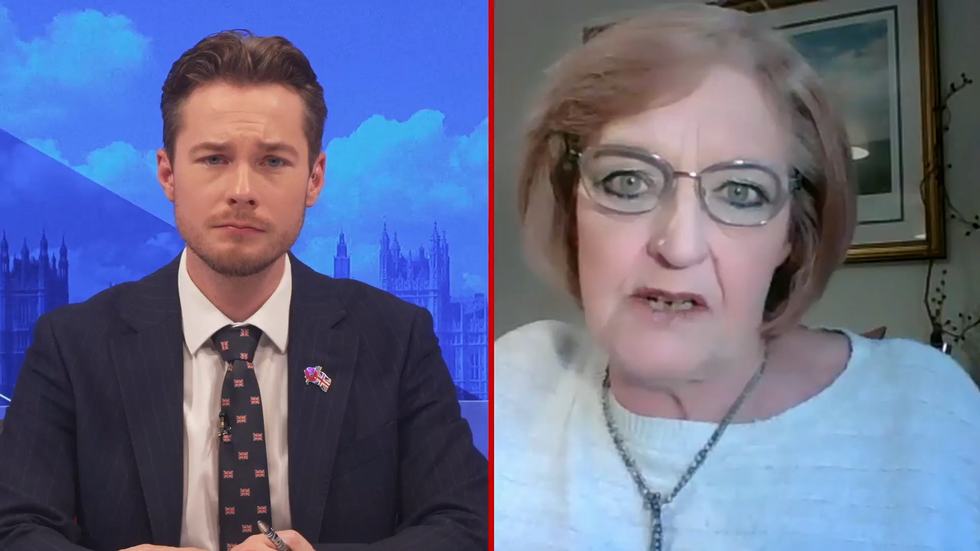
Ms Hawes told GB News that Maggie Oliver should head up the inquiry
GB NEWS
“It’s not about him, he hasn’t been raped as a little boy, has he? Stand in their shoes and have some empathy. I’m right on side with them because I deal with victims every day of my life, and people just disregard them. And if you want to have these people come out the other side, then everyone without fear or favour has to be named, shamed, put in a court and banged up, even if you had to build another prison.
“We’ve had enough of this and it’s it. Starmer needs to have a reality check on what comes out of his mouth, quite frankly.”
Concluding that Ms Phillips “has to go”, Ms Hawes stated: “You’ve got to eradicate it, you’ve got to deport people and you’ve got to get a spine. What has Jess Phillips achieved?
“Women are still getting raped all over the place, even more than ever. So what difference has she made? She has to go, she’s not effective.”\
‘We’ve Had Enough!’ Keir Starmer Told to ‘Get Off His Backside’ Over Grooming Gangs Inquiry in Fiery Tirade
Prime Minister Keir Starmer is facing renewed pressure over Britain’s grooming gangs scandal after furious criticism from campaigners and survivors demanding urgent action from the government. The heated intervention has reignited questions about delays to the national inquiry, the treatment of victims and the failure of public institutions to protect vulnerable children. With anger continuing to grow, campaigners are insisting that the Prime Minister must take personal responsibility and ensure that survivors finally receive the justice they have been waiting for.
The phrase ‘We’ve had enough!’ reflects the frustration felt by many people who believe that successive governments have failed to address the scandal adequately. For survivors, the issue is not simply another political disagreement. It concerns years of abuse, ignored warnings and institutional failures that have had devastating consequences for thousands of victims.
The anger surrounding the inquiry has been particularly strong because many survivors believe that their concerns have been ignored for years. Some victims have described how they approached police officers, social workers and other authorities but received little meaningful assistance. Others have spoken about being dismissed or blamed for the abuse they experienced. For these individuals, the promise of a national investigation represented an opportunity to expose the truth and finally hold those responsible accountable.
One of the main sources of disagreement has been the role of Jess Phillips, Labour’s safeguarding minister. Phillips has spent much of her political career campaigning against violence against women and girls. However, her involvement in the inquiry became controversial after several survivor representatives accused the government of failing to listen to their concerns about its direction.
In October 2025, four survivors resigned from the government’s victims and survivors liaison panel. They included Fiona Goddard and Ellie-Ann Reynolds, who described the environment surrounding the process as toxic and said they had lost confidence in the government’s approach. They demanded greater independence, meaningful consultation and assurances that the investigation would remain focused on grooming gangs. <Cite refs={[“turn793935search2″,”turn793935search4”]}/>
The disagreement also exposed divisions among survivors themselves. While four women called for Phillips to resign, five other survivors expressed support for the minister and argued that she had listened to their concerns. This demonstrated that victims have different experiences and expectations, making it essential for the inquiry to provide opportunities for every voice to be heard.
Keir Starmer subsequently defended Phillips, declaring that he had confidence in her work. He insisted that the investigation would not be watered down and promised that it would examine the ethnicity and religion of offenders wherever relevant. The Prime Minister also maintained that the inquiry must uncover the truth regardless of how uncomfortable its findings might be for public institutions or political figures. <Cite refs={[“turn793935search3″,”turn793935search6”]}/>
Another major concern involves the repeated failures of police forces and local authorities. Previous investigations uncovered situations in which victims were not properly protected despite clear warning signs. Poor communication, inadequate investigations and a lack of accountability allowed offenders to continue exploiting vulnerable children.
The government has therefore faced demands to investigate not only individual criminals but also the institutional decisions that allowed the abuse to continue. Survivors want answers about who knew what was happening, why complaints were ignored and whether senior officials deliberately avoided confronting the problem.
Importantly, the investigation must also examine the role of ethnicity, religion and culture where evidence indicates that these factors are relevant. Honest investigations should not avoid difficult subjects because of political sensitivities. Equally, individual offenders must not be used as justification for hostility towards entire communities. The priority must remain establishing the facts and ensuring that criminal responsibility is properly identified.
There have also been concerns about the appointment of an independent chair. Several potential candidates withdrew from consideration during the controversy in 2025, raising questions about whether the government could establish an investigation that commanded public confidence. Survivors argued that the person leading the inquiry must be genuinely independent and have the authority to examine institutional failures without political interference.
There has since been an important development. On 31 March 2026, the government published the formal terms of reference for the Independent Inquiry into Grooming Gangs. Baroness Anne Longfield was appointed chair, supported by panellists Zoë Billingham and Eleanor Kelly. The inquiry formally began its work on 13 April 2026. <Cite refs={[“turn793935search0″,”turn793935search1”]}/>
The inquiry covers England and Wales and is expected to examine failures between January 1996 and March 2029. Its responsibilities include investigating police forces, local authorities, social services and other public institutions. It will also examine the treatment of victims before, during and after their exploitation.
Furthermore, the government has committed to a budget of £65 million and a maximum operating period of three years. The final report is due by 31 March 2029. These arrangements are intended to ensure that the investigation proceeds within a defined timeframe while providing opportunities for survivors to contribute their experiences. <Cite refs={[“turn793935search0″,”turn793935search5”]}/>
Nevertheless, establishing an inquiry is only the beginning. Survivors will judge its success according to whether it delivers meaningful answers, exposes wrongdoing and leads to improvements in child protection. They do not simply want another official report containing recommendations that are eventually forgotten.
There are several important priorities for the government. Firstly, every survivor must have access to appropriate psychological, legal and practical support. Secondly, investigators must be able to examine the conduct of public officials without unnecessary interference. Thirdly, police forces should review historical cases where new evidence or investigative opportunities exist. Finally, the government must ensure that recommendations are implemented and that those responsible for misconduct face appropriate consequences.
In conclusion, the furious demands for Keir Starmer to take action over Britain’s grooming gangs scandal reflect years of frustration among survivors, families and campaigners. The controversy surrounding Jess Phillips and the resignations from the victims’ panel exposed serious disagreements about trust, accountability and the direction of the investigation. Although the statutory inquiry has now formally begun, the government still faces the difficult task of proving that its promises will translate into justice. Survivors deserve to be heard, institutions must answer for their failures and every child must be protected from exploitation. Ultimately, the measure of success will not be the number of political statements made in Westminster, but whether Britain finally delivers justice for victims and prevents such horrific crimes from happening again.