
More than 50 green sites across the Capital and its outskirts are at risk of development as a concrete jungle threatens to overrun the UK.
Despite sufficient space on brownfield sites to develop between 1.2 million and 1.5 million new homes across Britain, councils are still ploughing ahead with plans, causing fierce rows with locals.
A study from planning consultancy Lichfields said that “very significant areas” of the green belt are at risk of development, with LandTech, another leading firm, estimating up to 26,000 acres could be used.
The London Green Belt Council (LGBC) warned that “there are already planning permissions that have been granted for hundreds of thousands of homes (including on green belt land) that are not being built out”.
Secretary of the LGBC, Andy Smith, explained there is enough brownfield land for 37,000 new homes in just one borough of London and the Government does not need to push work on the green belt.
He told GB News: “The Government will never get the homes that the nation really needs unless and until it empowers and enables local councils and housing associations to build social housing in urban areas.”
Sir Sadiq Khan has pushed for green spaces within the Capital, recently boasting on social media that 44 new trees were growing at Grosvenor Square to bring “a green, healthier, more resilient London”.
However, the London Mayor has been handed new responsibilities to speed up developments, having “taken tough decisions to explore [the] release of green belt land for building” new properties, which GB News investigated.
Wimbledon Park
Under threat from the All England Lawn Tennis Club (AELTC) is Wimbledon Park, a heritage site which has been at the heart of a dispute between neighbours and officials.
The AELTC plans to develop a new 8,000 seater stadium, 38 open courts and a series of depots, player facilities and other structures.
This has been met with fierce backlash from locals, including the Save Wimbledon Park (SWP) organisation, whose member Simon Wright explained how the area simply couldn’t cope with the plans.
He told GB News: “We have seen no evidence that it is possible. We are very doubtful that the local area can cope with the anticipated extra traffic and extra volumes of people.
“They are talking about tripling the size of their footprint – we just think that’s completely unjustified.”
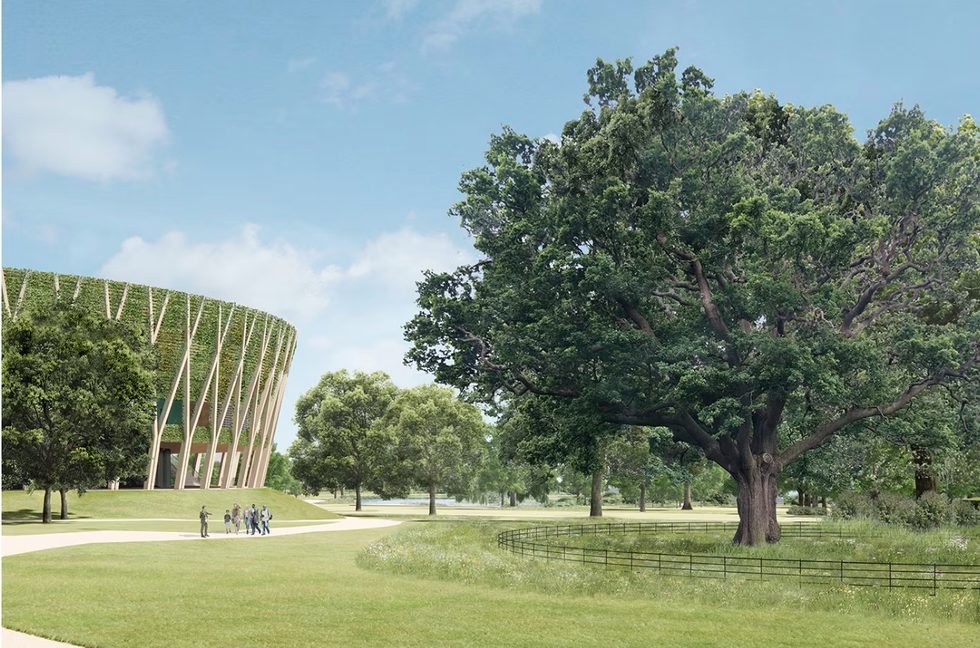
The plans include a new 8,000-seater stadium
Merton Council sold Wimbledon Park to the AELTC in 1993, which Mr Wright explained the AELTC said “it will never be built on”.
The AELTC broke its word by announcing it wanted to develop the land and proposing plans to Merton and Wandsworth Borough Councils.
Merton gave the go-ahead, but Wandsworth declined.
Subsequently, the decision was given to the Greater London Authority, which passed plans; however, SWP has taken this move to the Royal Courts.
Mr Wright said: “It’s not our job to tell the AELTC how they should develop outside, but we have done sufficient work ourselves to reassure them that a better scheme is possible.
“We would like the AELTC to come and talk to the local community, not just us.”
The AELTC’s plans have been met with severe backlash
Wimbledon
Paul Kohler, the Liberal Democrat MP for Wimbledon, said the AELTC’s plans are “overkill” and “too much”.
Speaking to The People’s Channel, Mr Kohler stated: “We need a compromise. I’m trying to compromise like I usually have between the AELTC, which has expanded on various occasions.
“They’ve compromised the local community before, and that’s what we need now. Everyone loves tennis, but it’s too much.”
Sir Sadiq initially supported the plans but has since kept quiet following the fierce drawback to the developments.
Addressing the London Mayor, Mr Kohler said: “I would like him to join me in calling for a sensible compromise. That’s what he should be doing.
“We don’t want the community and one of our great institutions that loggerheads with each other. He should join me in calling for a compromise.”
GB News has contacted the AELTC for comment.
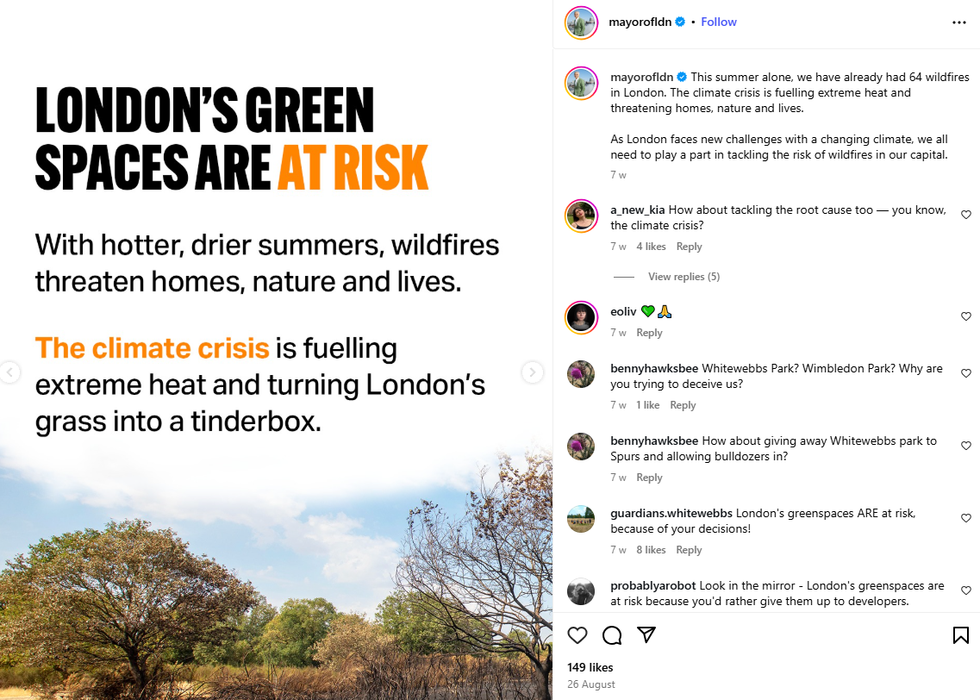
Sir Sadiq raised concerns about London’s green spaces at risk, with commenters responding about Whitewebbs and Wimbledon Park, which GB News investigated
Whitewebbs Park
Whitewebbs Park is up a similar road to that of Wimbledon, with proposed developments on the site for 11 football pitches and a new clubhouse for Tottenham Hotspur’s Women’s team.
According to campaigners from the Guardians of Whitewebbs, the plans will destroy 207 trees and take out 40 acres of grassland.
Alice Roberts, head of Campaigns with the Council for the Preservation of Rural England (CPRE), explained that councils are in “financial ruin” and will accept developments like the one proposed at Whitewebbs.
She told GB News: “Councils are in a financial crisis and are prepared to do pretty much anything it would seem.
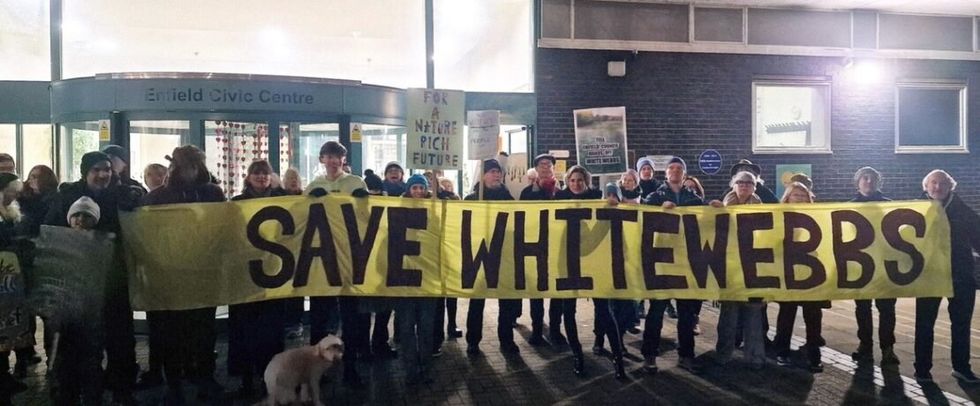
The Guardians of Whitewebbs voicing their concerns about the plans
CPRE
“So there’s the issue of massive plans in parks, which kind of turns into something that’s basically not a park, which is also controversial. It’s just really worrying.”
Miss Roberts explained that a series of brownfield sites are already available for development to “keep London going for 20 years”.
She said: “We should be building developments within the urban footprint already on the brownfield sites, if you want to call them that – previously developed land.
“Our view is you should absolutely not be building out into the greenbelt, which has so many devastating environmental impacts.”

Sir Sadiq boasted about a development receiving 44 extra trees despite Whitewebbs losing 207 with their proposals
PA
Other areas
The two parks are among more than four dozen examples of green spaces at risk in the Capital, with numerous reasons behind not building on brownfields.
In the west of the Green Belt, residents in Ascot fear losing their identity as neighbouring Bracknell encroaches outwards.
Winkfield Parish Council, geographically one of the largest civic parishes in the UK, sits in green belt land between Bracknell and Ascot, and recently held a public consultation to lay out plans for the future of the area.
A well-placed source on the Winkfield Development Plan, which aimed to determine planning applications in the area, explained that green spaces are “gradually eroding” away, and the “ridiculous rules for builders” are supporting this.
The source said: “A builder would rather have a pristine greenfield to build on, from scratch, than something that already had a building on it, or had concrete grounds to build on, because he has to demolish that, and that requires waste removal, which costs.
“The preference is to use brownfield sites because they otherwise go derelict, nobody’s using them, and it looks a mess.
“That land is available to build on, but it’s easier for the builder to take a pristine green field and build on that.
“So there’s not enough pressure to build on brownfields, or not enough support for the construction industry to remove waste removal costs from the equation.”
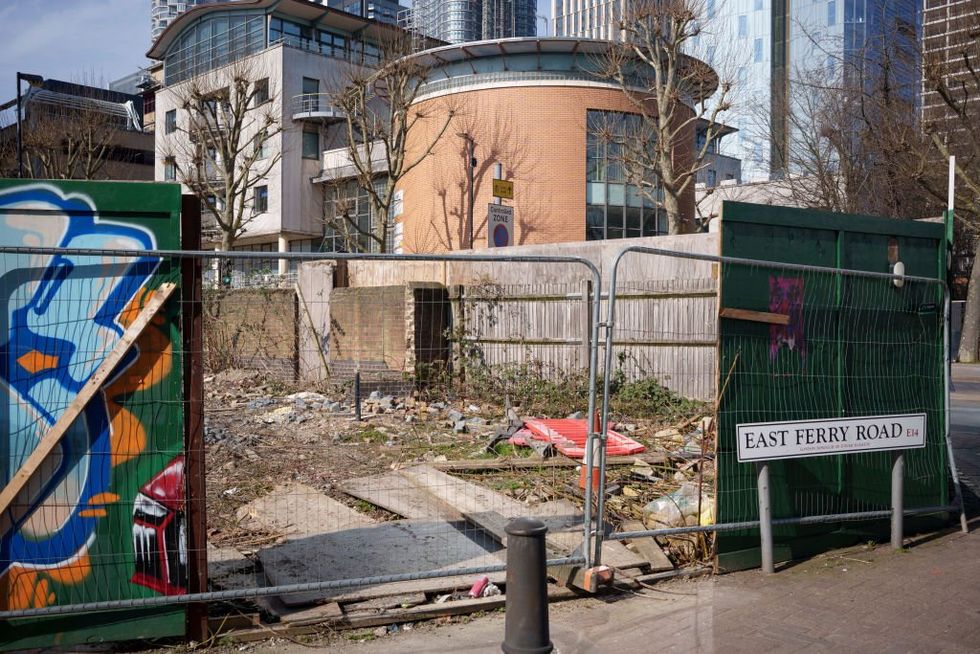
The source explained that builders would rather have a greenfield site rather than fork out the extra costs on removal from brownfield areas
GETTY
Multiple developments targeting greenfield sites will feature Very Special Circumstances (VSC), which prioritise builds over particular perspectives.
Within the planning documents of Whitewebbs Park, the term VSC is featured a staggering 32 times.
Chairman of the Sunninghill and Ascot Parish Council, Allison Sharpe, explained the influence of these, saying: “Generally speaking, there are very specific guidance notes on VSCs.
“For builds that are definitely and certainly medical provisions, it would be one of the VSC, as well as education.”
The Whitewebbs Park planning documentation cites the use for educational programmes, qualified under VSCs.
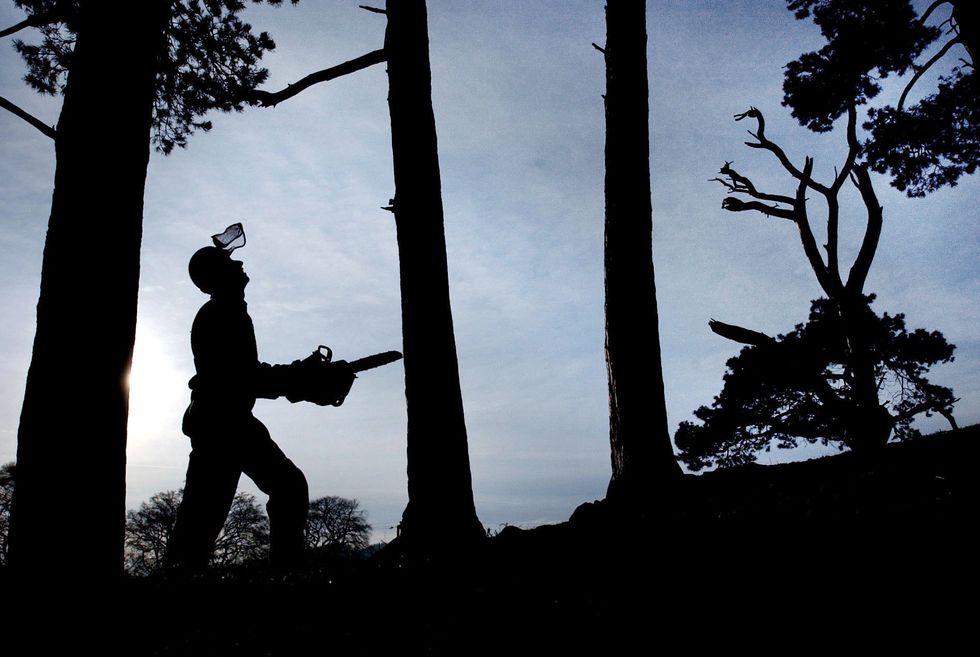
Hundreds of trees will be taken down as part of the development plans
GETTY
Despite Sir Sadiq pushing for a “greener, cleaner and healthier place for all Londoners to live,” new development plans continue to go forward on the Capital’s green belt sites.
The London Mayor has been handed new powers this week to “tackle the housing crisis in London” by building on green belt land, with “City Hall [becoming] the decision-maker regarding developments of 1,000sqm or more on green belt”.
Speaking about the new responsibility, Sir Sadiq said: “Affordable housing has always been a top priority for me as mayor… Urgent action is required, which is why I’ve been working with the Government on this package of bold measures.
“I will always do everything I can to accelerate the delivery of genuinely affordable homes as we continue to build a better, fairer London for everyone.”
The Mayor has promised to make London the first National Park City with more than 50 per cent green space by 2050.
Mr Smith is unconvinced and has pushed councils to “pursue brownfield regeneration opportunities to the full”.
In relation to the situation at Whitewebbs Park, he said: “In our view, the Whitewebbs Park saga goes to the heart of what sort of communities we want to have in London. Do we really want local councils selling off all our parks and open spaces, offering land to developers that should be for nature recovery and for people’s health and wellbeing, especially when there is more than enough previously-developed land that new houses could be built on?
“Or do we want to protect our countryside and green spaces, for the sake of future generations? To the London Green Belt Council, this battle over Whitewebbs Park is about protecting our quality of life”
Miss Roberts echoed the thoughts of Mr Smith and believes the priorities will always be “heavily in favour of developments”.
She said: “The reality is that the scales are very heavily in favour of development. It’s very much about money.”
Britain’s Green Belt Crisis Exposed as More Than 50 Sites Across the Capital Face Threat: ‘It’s Very Much About Money’
Britain’s green belt is facing renewed pressure as more than 50 sites across London and its surrounding areas are reportedly at risk of development, raising serious concerns among environmental campaigners, local residents and politicians. The growing controversy has reignited the national debate over housing shortages, urban expansion and the protection of Britain’s countryside. While the government continues to face demands to build more homes to address the housing crisis, opponents argue that valuable green spaces should not be sacrificed simply to create opportunities for developers and investors.
First of all, the green belt plays an important role in protecting the natural environment around Britain’s towns and cities. Originally introduced to prevent uncontrolled urban expansion, green belt land helps preserve open countryside, protect wildlife habitats and maintain clear boundaries between neighbouring settlements. For millions of people, these areas provide opportunities for walking, cycling and enjoying nature away from busy urban environments.
London is particularly dependent on its surrounding green spaces because of its large population and continued demand for housing. Parks, fields, woodlands and agricultural land provide environmental benefits while offering residents places to escape the pressures of city life. However, increasing demand for new homes has placed these areas under growing pressure.
According to a report highlighted by GB News on October 24, 2025, more than 50 green sites across London and its outskirts were facing potential development threats. The report also referred to research by planning consultancy Lichfields, which suggested that significant areas of green belt could be affected by development proposals.
The figures have raised questions about why countryside land is being considered for construction when alternative sites may already exist. Campaigners argue that previously developed brownfield land should receive greater attention before protected countryside is released for housing.
One particularly important argument concerns the availability of brownfield sites. These are areas that have previously been developed, such as former factories, warehouses, industrial buildings and disused commercial properties. Environmental campaigners argue that regenerating these locations could provide substantial opportunities for new housing without destroying valuable countryside.
Research cited in the debate suggested that brownfield sites across Britain could potentially accommodate between 1.2 million and 1.5 million homes. If properly developed, these locations could help address housing shortages while reducing pressure on green belt land.
However, developers frequently argue that brownfield projects can be expensive and complicated. Some sites require extensive environmental investigations, removal of contaminated materials, demolition work and improvements to existing infrastructure. These additional costs can make projects less attractive to private investors.
This is where the financial argument becomes particularly important. Critics believe that developers may prefer greenfield sites because they can offer greater commercial opportunities and potentially higher returns. The controversy has therefore raised concerns about whether financial interests are being prioritised over environmental protection.
The phrase ‘It’s very much about money’ reflects the frustration of campaigners who believe that countryside protection is increasingly being treated as an obstacle to commercial development. They argue that planning decisions should consider the long-term interests of local communities rather than focusing primarily on the financial benefits of construction projects.
Nevertheless, Britain’s housing crisis cannot be ignored. Millions of people face difficulties finding affordable accommodation, while younger generations increasingly struggle to purchase their first homes. High property prices, limited housing supply and population growth have created significant challenges for families across the country.
The government has therefore placed housebuilding at the centre of its economic and housing strategy. Labour has promised to increase construction and make it easier for developers to deliver new homes. However, achieving these targets without damaging important environmental areas remains a complicated challenge.
Supporters of carefully planned green belt development argue that not every protected site has equal environmental value. Some areas may be poorly maintained, isolated or located close to existing transport infrastructure. They believe that selected developments could provide much-needed housing while preserving the most environmentally important landscapes.
Opponents strongly disagree with an approach that could gradually weaken green belt protections. They warn that once countryside is replaced by housing estates, roads and commercial buildings, it is extremely difficult to restore its original character. They also argue that uncontrolled expansion could increase traffic congestion and place additional pressure on schools, hospitals and public transport.
Another important issue concerns the impact on wildlife. Green spaces provide habitats for birds, insects, mammals and numerous plant species. Construction can fragment these habitats, reduce biodiversity and affect the natural systems that help regulate local temperatures and manage rainfall.
Climate change makes these concerns even more significant. Trees, grasslands and natural landscapes can absorb carbon, reduce surface water runoff and help protect communities against extreme temperatures. Replacing large areas of vegetation with concrete and buildings may therefore create additional environmental challenges.
Local residents also have legitimate concerns about the future of their neighbourhoods. Many communities value nearby green spaces because they contribute to quality of life and provide opportunities for recreation. Residents may worry that large developments will increase pressure on roads, public transport and essential services.
However, housing campaigners argue that refusing development everywhere can also have serious social consequences. A shortage of affordable homes can force families to move further away from employment opportunities, increase rental costs and make it harder for young people to remain in the communities where they grew up.
The challenge for policymakers is therefore to balance competing priorities. Protecting every green belt site regardless of circumstances may limit housing opportunities, while allowing extensive development could permanently damage valuable countryside.
There are several possible solutions. Firstly, the government should prioritise suitable brownfield sites and provide financial support for their regeneration. Secondly, planning authorities should assess the environmental importance of individual green belt locations before considering any changes. Thirdly, new developments should include affordable housing, accessible public transport and sufficient infrastructure. Finally, local communities should be consulted before major planning decisions are made.
In conclusion, the threat facing more than 50 green sites across London has exposed the difficult choices confronting Britain’s housing and environmental policies. Although the country urgently needs more affordable homes, development should not automatically come at the expense of valuable countryside. The debate over brownfield regeneration, commercial investment and green belt protection demonstrates the importance of long-term planning. Ultimately, Britain must find a sustainable approach that provides homes for future generations while protecting wildlife, natural landscapes and the green spaces that make communities more attractive places to live.