
Lancashire Council to End Refugee-Resettlement Coordination Role, Opening a Wider Debate Over Funding, Responsibility and Local Control
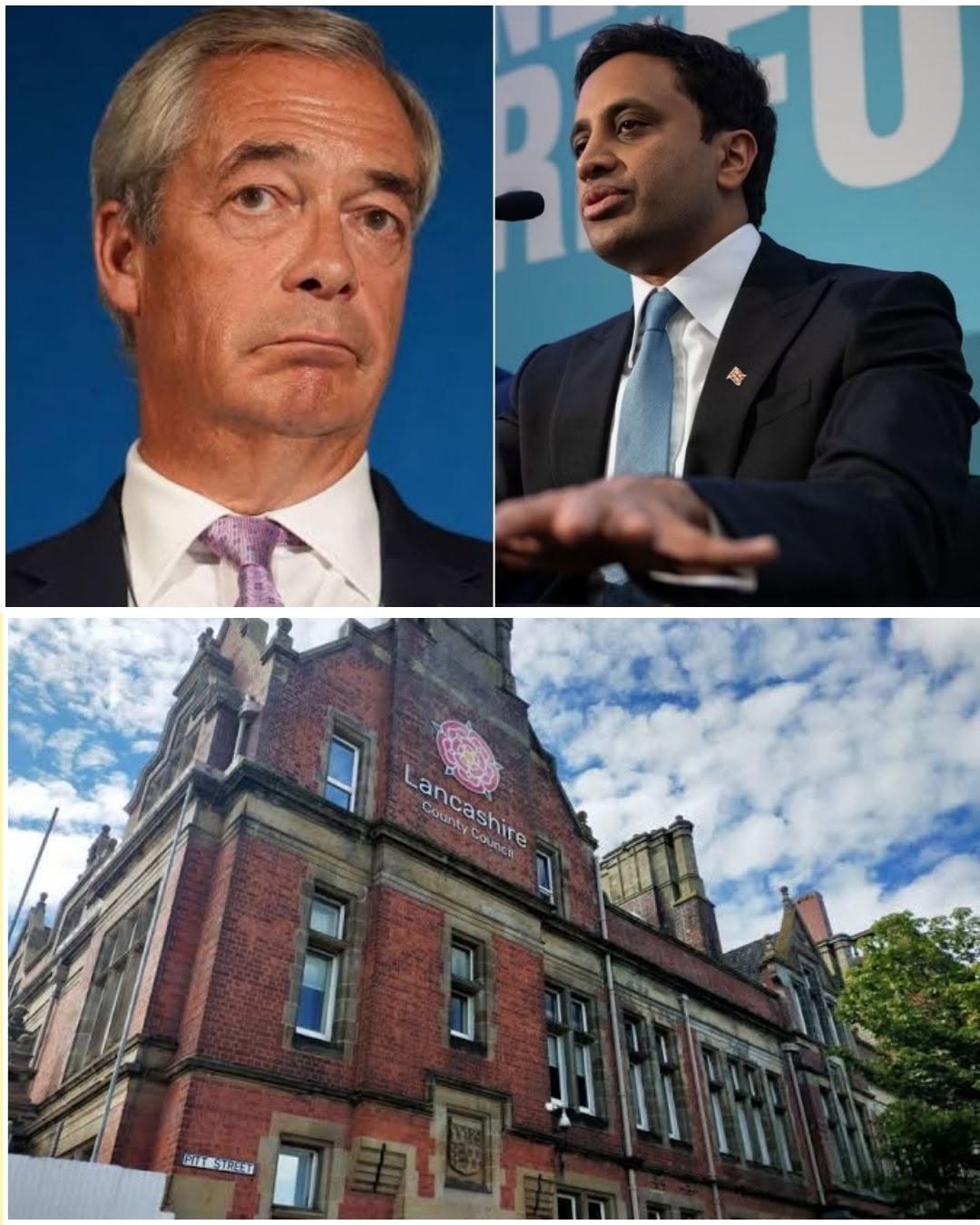
Lancashire County Council has formally decided to withdraw from its role coordinating several Home Office refugee-resettlement programmes across the county, but the decision is narrower than some descriptions of the move suggest. The council is not abolishing refugee support in Lancashire, nor does its decision by itself prevent refugees from being resettled there. Instead, administrative responsibility will have to move elsewhere through negotiations with the Home Office and other authorities. The distinction has become central to a politically charged argument about local government, public spending, housing pressures and Britain’s approach to legal humanitarian migration.
Lancashire County Council’s Cabinet approved the change on 3 September 2026 following a review of the authority’s involvement in administering refugee-resettlement schemes. According to the council’s official announcement, Lancashire will notify the Home Office that it intends to stop serving as the coordinating authority, after which responsibilities for existing and new cases are supposed to transfer through a managed process. The council says its administrative role will end no later than 31 March 2027. Lancashire County Council News
That confirmed decision is significant. But describing it as Lancashire completely “axing refugee support schemes” risks obscuring what has actually happened.
The council explicitly says the decision concerns administration and coordination, rather than terminating support available to refugees already living in Lancashire. It also says that withdrawing as coordinating authority does not terminate the national programmes themselves. Those programmes are ultimately established and funded by central government. Lancashire County Council News
The distinction matters because it changes both the practical consequences of the decision and the terms of the political debate surrounding it.
What Lancashire County Council Has Actually Decided
For years, Lancashire County Council has performed an umbrella role connecting the Home Office, district and unitary councils and other organisations involved in resettlement.
Its Lancashire Refugee Integration Team has worked with councils and partner organisations on integration and support. The council’s own published information describes the team as being funded by central-government grants and working across a range of humanitarian and resettlement routes. Lancashire County Council
The September Cabinet decision means the county council intends to relinquish that coordinating position.
County Councillor Joshua Roberts, the Cabinet Member for Rural Affairs, Environment and Communities, said after the decision that the Cabinet had considered the available options and concluded that Lancashire should step back as coordinating authority.
Crucially, Roberts also stressed that the change concerns administration rather than the availability of support to refugees already in Lancashire. The council has promised to work with the Home Office and partner organisations on a managed transition intended to protect people currently receiving assistance. Lancashire County Council News
The council’s review also found that Lancashire County Council is not legally required to perform this coordinating function. That gives the authority discretion to withdraw, although other statutory obligations applying to residents and particular services remain separate questions. Lancashire County Council News
The affected coordination arrangements have included schemes connected with Afghan resettlement and the wider UK Resettlement Scheme. Reporting on the Cabinet decision identifies the programmes considered as the Afghan Relocations and Assistance Policy, Afghan Citizens Resettlement Scheme, Afghanistan Resettlement Route, UK Resettlement Scheme and Afghan Resettlement Programme, with certain transitional accommodation excluded. Beyond Radio
Some of those programmes are themselves changing or winding down. That broader national transition was one of the circumstances cited by the council in explaining its decision. Lancashire County Council News
What the Decision Does Not Mean
Perhaps the most important point is what Lancashire’s decision does not automatically accomplish.
It does not give the county council authority to abolish Britain’s national refugee-resettlement system.
It does not automatically prohibit refugees from living in Lancashire.
It does not itself terminate every service used by refugees.
And it should not be confused with the separate asylum system or with the politically contentious issue of migrants crossing the English Channel in small boats.
The county council itself says the national programmes can continue after it relinquishes its administrative role. Lancashire County Council News
Indeed, the distinction has become even more important because national policy continues to evolve.
On 28 September 2026, weeks after Lancashire’s decision, the Home Office announced that the UK Resettlement Scheme would reopen for new referrals. The government said roughly a quarter of referrals were expected to involve Afghan women and girls and Palestinian refugees, with the first arrivals expected before the end of 2026. The government said referrals would operate with UNHCR and the International Refugee Assistance Project and would continue to involve cooperation with local authorities. GOV.UK
That development demonstrates why Lancashire’s administrative withdrawal should not be interpreted as the county having unilaterally ended national resettlement.
The central question is instead: who will perform the work Lancashire County Council no longer wishes to coordinate?
A System Built Around Several Layers of Government
British local government can make the issue appear more straightforward than it really is.
Lancashire County Council is not the only local authority operating within the geographical county. District councils and the unitary authorities have their own responsibilities, including functions related to housing.
Under the existing arrangements, Lancashire County Council has acted as a coordinating authority across the area, linking multiple organisations rather than functioning as the sole provider of every service involved in resettlement.
The county’s refugee infrastructure has historically involved councils, health services, government departments, police, voluntary organisations and other partners. Lancashire’s own description of its strategic partnership illustrates how extensive that network has been. Lancashire.gov.uk
Consequently, withdrawing the county council from the centre of that network does not necessarily make the network disappear.
Instead, the Home Office and local authorities must establish replacement arrangements.
This could involve another council assuming a larger coordinating role, different responsibilities being distributed among several authorities, or some alternative administrative structure being established.
Those details matter considerably.
The political symbolism of withdrawing may be immediate. The administrative consequences will emerge more gradually.
Why Supporters Back the Change
The decision comes under a Reform UK-led Lancashire County Council administration, and its supporters have presented the policy as part of a broader reassessment of what local government should be responsible for.
One argument is institutional.
Lancashire County Council is not primarily a housing authority, while district and unitary councils have important housing responsibilities. Supporters therefore question whether the county council should continue acting as the administrative centre of programmes in which housing is a major practical component.
During subsequent scrutiny of the decision, Roberts argued that the county council was not the most appropriate authority to administer these non-statutory schemes and maintained that the transition could occur without abandoning support for refugees already present. Mạng Lưới Chính Phủ Mở
A second argument concerns local priorities.
Reform politicians have previously said public authorities should place greater emphasis on services for existing residents, including vulnerable residents and veterans, and have connected refugee policy to wider arguments about pressure on housing and council resources.
Those are political arguments rather than neutral findings about the financial effect of this specific administrative withdrawal. Earlier reporting noted an important complication: the resettlement programmes are funded by central government, meaning that money associated with administering them cannot simply be treated as ordinary discretionary Lancashire council spending. The Guardian
That distinction is essential when assessing claims that withdrawing necessarily creates a large saving for local taxpayers.
The Funding Question Is More Complicated Than the Political Slogans
The financial debate may ultimately prove to be one of the most consequential aspects of the decision.
Refugee resettlement programmes involve central-government funding intended to cover designated costs. Lancashire’s own public information describes its Refugee Integration Team as fully funded through central-government grants. Lancashire County Council
Figures cited from the council’s published report by Reform UK’s Burnley branch said that, as of 31 March 2026, the relevant schemes were supporting 745 people, while about 1,250 people had been supported since 2016. It reported that the council had claimed approximately £18.013 million from the Home Office since 2020 and held about £6.53 million of unspent ring-fenced funding at the end of March. Those figures should be understood in the context of programme funding rather than as ordinary unrestricted council revenue. Reform UK Burnley
This creates two competing interpretations of the financial impact.
Supporters can argue that even externally funded programmes require management attention, institutional capacity and coordination, and that councils should be free to decide whether operating such programmes fits their priorities.
Critics respond that abandoning a centrally funded coordinating role could actually deprive Lancashire institutions of funding while leaving some underlying statutory demands intact.
That disagreement surfaced explicitly when the Cabinet decision was subjected to scrutiny.
The Decision Was Challenged — but Survived Scrutiny
After the Cabinet approved withdrawal, councillors challenged the decision through Lancashire’s scrutiny process.
A special meeting of the Community, Cultural and Corporate Services Scrutiny Committee considered a call-in on 11 September 2026.
Councillors Azhar Ali and Adrian Owens argued, among other things, that the financial consequences had not been adequately addressed. According to the meeting account, concerns included the possibility that withdrawing could require as much as £800,000 annually to replace funding connected with statutory services. Questions were also raised about value for money, equality considerations, confidential information and whether the decision had effectively been predetermined. Mạng Lưới Chính Phủ Mở
Roberts rejected those criticisms.
He maintained that relevant considerations had been examined, defended the proportionality of the decision and argued that the county council was not best placed to administer programmes closely connected with housing.
He also disputed the accusation of predetermination and said that an equality impact assessment had been considered. Mạng Lưới Chính Phủ Mở
The scrutiny committee ultimately did not refer the decision back to Cabinet for reconsideration, allowing the original decision to proceed. Mạng Lưới Chính Phủ Mở
That does not resolve the political disagreement over whether the policy is desirable. It does, however, mean that the formal council process has moved beyond the initial Cabinet vote and toward implementation.
Could Refugees Still Be Resettled in Lancashire?
Yes.
That possibility is one of the clearest points emerging from the available documentation.
Lancashire relinquishing coordination does not automatically prevent national government programmes from placing eligible refugees within the area under future arrangements.
Even a Reform UK account of the decision acknowledges that withdrawal does not itself stop refugees from coming to Lancashire and distinguishes refugee resettlement from asylum accommodation. Reform UK Burnley
That creates an unusual political situation.
A council administration can withdraw from coordinating a national programme as a statement about institutional responsibility and local priorities while having much less power over the underlying national immigration and humanitarian framework.
If another authority assumes responsibility, refugees may continue to arrive through legal routes while Lancashire County Council is simply no longer the organisation managing the regional system.
The eventual practical effect therefore depends heavily on negotiations with the Home Office.
Refugee Resettlement and Asylum Are Not the Same Thing
The debate also illustrates a recurring problem in British immigration discussions: several legally distinct categories are often combined under the word “migration.”
Refugees arriving through organised resettlement programmes are not necessarily in the same legal or administrative position as people who arrive spontaneously and claim asylum.
Nor are they equivalent to people entering Britain unlawfully.
The UK Resettlement Scheme, for example, exists specifically as an organised humanitarian route. The Home Office’s September announcement described its reopened programme as a safe and legal pathway, with referrals conducted in partnership with refugee organisations. GOV.UK
Lancashire’s earlier involvement in UKRS was substantial.
The council says Lancashire originally committed to resettling 240 people through UKRS, while an earlier Vulnerable Persons Resettlement Scheme commitment of 575 ultimately resulted in 654 people being resettled before that programme closed. Lancashire County Council
Afghan schemes emerged from different circumstances, including Britain’s commitments following the Taliban’s return to power and the evacuation from Afghanistan.
Ukraine programmes operate through still another legal structure.
Consequently, statements about “refugees,” “asylum seekers,” “illegal migration” and “small boats” cannot reliably be treated as interchangeable descriptions.
Housing Remains at the Centre of the Political Argument
Even with those distinctions, housing inevitably shapes the controversy.
Across Britain, councils face intense pressure over affordable housing, temporary accommodation and waiting lists.
Politicians who favour tighter immigration policies frequently argue that adding new residents to areas already experiencing housing shortages increases pressure on local systems.
Opponents of that argument point out that dedicated refugee programmes frequently come with central-government funding and involve relatively small populations compared with the broader forces affecting housing supply.
Both considerations can be relevant simultaneously.
An additional household requires somewhere to live.
But the scale and funding mechanism determine whether that translates into the kind of pressure suggested by broader political rhetoric.
The question for Lancashire is therefore not merely whether refugee households require housing—they obviously do—but how many households are involved, what accommodation arrangements are used, how much funding accompanies them and what effect those arrangements have on other residents.
Without those distinctions, discussions about housing can rapidly become misleading.
The Human Dimension
Behind administrative terms such as “coordination authority,” “funding instruction” and “transition timetable” are individuals whose circumstances differ considerably.
Some people supported through Lancashire’s refugee programmes fled Syria.
Others escaped Afghanistan following the Taliban takeover.
Some Afghans had connections to British institutions or British military operations.
Others entered through humanitarian pathways designed for particularly vulnerable people.
Lancashire’s Refugee Integration Team says its work has included language assistance, integration support, careers and employment assistance, health and wellbeing work and coordination with local organisations. Lancashire County Council
For those individuals, the key issue is less which authority’s logo appears on administrative documents than whether essential services continue without disruption.
That is why the transition process will matter.
If responsibilities transfer smoothly, refugees already receiving assistance may notice relatively little immediate change.
If administrative gaps emerge, the consequences could be more significant.
The county council has said explicitly that it intends to avoid the latter outcome. Lancashire County Council News
Local Government Reorganisation Adds Another Layer
Lancashire’s decision is also occurring while the county prepares for wider changes to local government.
The council itself has cited Local Government Reorganisation as part of the background to the decision. Lancashire County Council News
That matters because debates about which tier of government should administer refugee programmes overlap with a broader discussion about what Lancashire’s council structure will eventually look like.
If institutional responsibilities are going to change anyway, supporters of withdrawal can argue that maintaining the current coordination model may make little sense.
Critics can counter that institutional reform is precisely when continuity becomes most important, particularly for vulnerable populations dependent upon multiple public agencies.
Again, those are competing policy judgments rather than questions that can be settled by the existence of the Cabinet vote alone.
The National Government Is Moving in a Different Direction
Perhaps the most interesting development since Lancashire’s September decision is the Home Office’s reopening of UKRS referrals.
On 28 September, the government announced that new referrals would resume immediately, with initial arrivals anticipated before the end of 2026. GOV.UK
The government is also developing community, university and employment-based sponsorship routes, with some of those programmes expected to begin producing arrivals in 2027.
According to the Home Office, charities and nonprofit organisations will be able to apply to sponsor refugees through one route, universities through another, and companies through a later employment pathway. The government’s stated intention is that sponsors provide accommodation and integration support, thereby reducing pressure on local authorities. GOV.UK
That means Lancashire’s withdrawal is taking place not during the disappearance of Britain’s legal humanitarian migration system, but during its restructuring.
This potentially changes the practical importance of the county council’s decision.
The future model may distribute responsibilities differently among councils, central government, community organisations, universities and employers.
A Test of Local Versus Central Authority
At its broadest level, the Lancashire dispute raises a constitutional question that extends far beyond refugees.
How much responsibility should locally elected authorities have for implementing nationally determined policies?
Central government controls immigration law and Britain’s overall refugee framework.
Local government deals with many of the practical consequences: housing, schooling, social care, community services and integration.
That division inevitably produces tension.
A national government may determine that Britain should accept a certain number of refugees.
But those individuals must ultimately live somewhere.
Conversely, a county council can decide that it no longer wants to administer a particular programme, but it cannot independently rewrite national immigration law.
Lancashire’s decision therefore illustrates the limits of both levels of government.
Westminster cannot deliver successful local integration entirely without local institutions.
Local institutions cannot independently determine Britain’s borders.
Why the Political Language Matters
The original controversy has sometimes been framed as Lancashire “ending refugee schemes.”
The evidence supports a more precise description:
Lancashire County Council is ending its role as the coordinating authority for specified Home Office refugee-resettlement schemes.
That wording may sound less dramatic, but it better reflects the council’s own documentation.
Accuracy is particularly important because different descriptions imply very different outcomes.
“Ending refugee resettlement in Lancashire” suggests refugees will no longer be resettled there.
“Ending support for refugees” suggests existing residents will lose assistance.
“Withdrawing as coordinating authority” means the administrative structure is changing and another arrangement will be required.
Only the third formulation closely matches the council’s stated decision. Lancashire County Council News
What Happens Before March 2027?
The coming months will determine whether the policy represents primarily an administrative transfer or something with broader practical consequences.
Lancashire County Council must engage with the Home Office and partner organisations to establish a transition timetable.
Someone will have to assume responsibility for coordination if the relevant national programmes continue operating locally.
Existing cases must be transferred.
Funding arrangements must be reconciled.
Staffing questions will need resolution.
Participating councils will need clarity about whom they deal with after Lancashire County Council exits.
And refugees already receiving services will need continuity.
One possible direction is already emerging. Recent local reporting says Preston City Council has indicated willingness to take a role in future arrangements, although the eventual model remains dependent on negotiations and any outstanding legal or administrative issues. Lancashire Lead
That illustrates why March 2027, rather than September 2026, may ultimately be the more revealing moment.
The vote established the policy.
The transition will determine its consequences.
The Wider Political Significance
For Reform UK, the Lancashire decision provides a real-world example of what happens when a party whose national platform emphasises immigration control takes responsibility for local government.
But the episode also demonstrates the limits of using local government to pursue national immigration objectives.
Lancashire can withdraw from administration.
It cannot independently close national refugee routes.
It can argue that another institution should coordinate resettlement.
It cannot by that decision alone guarantee that no refugees will subsequently settle in Lancashire.
Those distinctions may become increasingly important as political parties use local authorities to demonstrate their approaches to national questions.
For Labour and other opponents of the decision, meanwhile, the challenge is to demonstrate not simply that they disagree politically but that alternative arrangements deliver measurable benefits to Lancashire residents and refugees alike.
That places evidence—particularly financial evidence—at the centre of the dispute.
The Questions That Remain Unanswered
Several important issues will become clearer only as implementation proceeds.
The first is who replaces Lancashire County Council.
The second is what happens to central-government funding previously administered through the county council.
The third is whether the transition changes the cost of statutory services elsewhere in the Lancashire system.
The fourth is what happens to staff working within the existing integration infrastructure.
The fifth is whether refugees currently receiving support experience any disruption.
And the sixth is how the reopening of the UK Resettlement Scheme affects future arrangements after Lancashire’s withdrawal. The national scheme’s reopening on 28 September makes this last question particularly relevant. GOV.UK
Until those matters are resolved, claims that the decision either produces major savings or creates major additional costs should be treated cautiously unless supported by detailed financial evidence.
A Historic Change — but Not the End of Refugee Resettlement
Lancashire County Council’s decision is unquestionably a significant political and administrative change.
After years of coordinating refugee resettlement across the county, it has decided that it no longer wishes to perform that role.
Its Reform UK-led administration sees withdrawal as part of reconsidering local responsibilities and priorities. Critics have questioned the financial rationale, potential disruption and consequences of abandoning an established coordinating structure.
Those disagreements are likely to continue.
But the verified position is more nuanced than the most dramatic interpretations circulating online.
Lancashire has not unilaterally abolished Britain’s refugee programmes. It has not automatically stopped refugees from being resettled in the county. And its Cabinet decision does not, by itself, terminate support for refugees already living there.
What Lancashire has done is withdraw from the coordination and administration of specified Home Office resettlement programmes, with that responsibility due to end no later than 31 March 2027 and alternative arrangements expected to be established during the transition. Lancashire County Council News
Meanwhile, the national picture is moving rather than standing still. On 28 September, the government reopened UKRS referrals and announced that new arrivals were expected before the end of the year. GOV.UK
The real test of Lancashire’s policy will therefore not be the rhetoric surrounding the September vote.
It will be what happens next: who takes responsibility, where the funding goes, whether services remain continuous, what measurable costs or savings emerge, and whether the new system functions better or worse than the one it replaces.
Those outcomes—not political slogans from either side—will provide the clearest evidence for judging the practical consequences of one of Lancashire’s most closely watched recent policy changes.