
Danny Tommo’s Legal Battle Becomes a New Flashpoint in Britain’s Immigration Debate
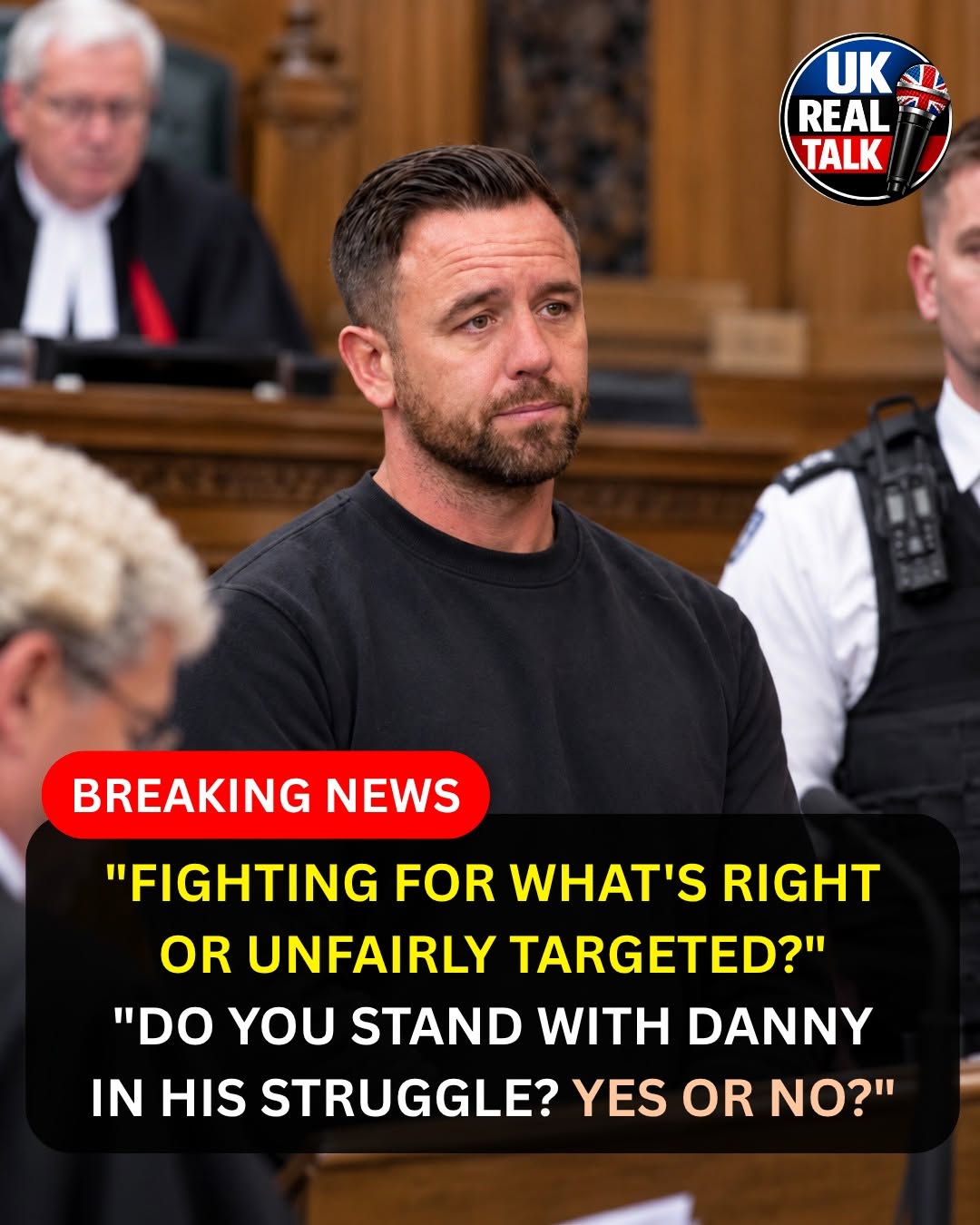
Daniel Thomas, better known to supporters as Danny Tommo, has become one of the most controversial figures in Britain’s increasingly heated argument over irregular migration. His supporters say his activism reflects public frustration over Channel crossings and government border policy. Critics argue that protest cannot place activists above the law. With Thomas now facing several legal proceedings, the dispute raises a broader question that reaches beyond one individual: where should Britain draw the line between political protest, civil disobedience and alleged criminal conduct?
The image circulating online presents a simple choice: is Danny Tommo “fighting for what’s right” or being “unfairly targeted”? In reality, the legal and political questions surrounding Daniel Thomas are considerably more complicated than that binary framing suggests.
Thomas, 37, has emerged as a prominent organiser of anti-migration demonstrations in southern England through the Patriot Platform. Recent protests connected to his movement have focused particularly on Dover, Portsmouth and government plans for asylum accommodation. Reporting by major British outlets describes him as an anti-migration activist who has increasingly used direct action, livestreaming and public demonstrations to challenge the government’s approach to irregular Channel crossings. Sky News
His activities have also brought him into repeated contact with the criminal justice system.
In September, Hampshire Police charged Thomas with criminal damage following an incident in the English Channel in which he was filmed appearing to damage an inflatable boat while an emergency responder was aboard. Police also charged him with failing to provide the PIN for his mobile phone. He was remanded in custody pending court proceedings. Thomas disputes the criminal-damage allegation. Sky News
Those facts matter because the debate surrounding his case is increasingly being conducted not only in court but across social media, where supporters and opponents frequently present very different interpretations of what has happened.
The incident that intensified the controversy
The most serious recent controversy concerns Thomas’s activities at sea.
According to Hampshire Police, the criminal-damage charge followed an allegation that a boat in the Channel was damaged while an emergency responder was on board. Video circulated online showing Thomas apparently approaching and interfering with the vessel during one of his efforts to monitor activity connected with migrant crossings. Sky News
Reports say Thomas was livestreaming during the episode.
It is important to distinguish between what video footage may appear to show and what a court ultimately establishes.
A criminal charge is an allegation, not a conviction. Thomas is entitled to challenge the prosecution’s evidence and present his defence. Unless and until a court finds otherwise, the presumption of innocence applies to contested charges.
That principle is fundamental regardless of an accused person’s political views.
At the same time, political motivation does not automatically provide immunity from ordinary criminal law. Whether a person believes an action serves a political or moral purpose is legally separate from whether that action breached legislation governing property, public safety or restricted areas.
That distinction lies at the centre of the current argument.
His lawyers say politics is part of the story
Thomas and those supporting him have repeatedly suggested that his activism explains the intensity of official scrutiny.
His legal representatives have reportedly argued that aspects of the prosecution are politically motivated. However, reporting on subsequent proceedings says a judge rejected the suggestion that political considerations had influenced a decision concerning his bail. The Sun
That difference of interpretation is important.
Supporters can reasonably ask whether authorities apply the law consistently to demonstrations representing different political causes. Scrutiny of policing is legitimate in a democratic society.
But proving political persecution requires more than showing that the accused is a political activist.
Evidence would be needed that investigators, prosecutors or courts treated him differently because of his beliefs rather than because of specific alleged conduct.
At present, the publicly reported proceedings concern defined allegations.
The question for the courts is therefore not whether Thomas’s political views are popular, unpopular or controversial. It is whether prosecutors can prove the offences charged to the required legal standard.
Dover has become central to his campaign
Thomas was already facing separate legal proceedings before the Channel episode.
In August, he appeared at Margate Magistrates’ Court over alleged incidents at the Port of Dover earlier in 2026.
According to reporting by The Independent, he pleaded guilty to entering a restricted harbour area without lawful authority or reasonable excuse on 31 March. He pleaded not guilty to five other charges, including allegations relating to trespassing and threatening, abusive or racially abusive words or behaviour. The Independent
Again, the distinction between admitted and contested allegations matters.
Thomas publicly portrayed his presence at Dover as investigative activism, saying he wanted to show the public what was happening on England’s south coast. The Independent
That argument has considerable resonance among sections of the public who believe mainstream institutions have failed to explain or control irregular migration.
But ports are also tightly regulated environments.
Restricted zones exist partly because they involve immigration facilities, maritime operations, heavy transport and security infrastructure. Journalists, campaigners and members of the public do not automatically acquire unrestricted access merely because they believe an issue is politically important.
The legal disputes therefore raise a larger question about the limits of direct-action journalism and activism.
Why Thomas has attracted an audience
To understand his rise, it is necessary to understand the political environment surrounding immigration.
Irregular migration across the English Channel has become one of Britain’s most divisive political issues.
Successive governments have promised to reduce small-boat crossings. The continued arrival of migrants has generated frustration among voters who believe the border is not sufficiently controlled.
For some communities along the south coast, the issue is also highly visible.
Dover is not discussing migration theoretically. Boats arrive nearby, processing facilities operate in the region and demonstrations have repeatedly taken place around the port.
Portsmouth has experienced similar tensions.
A BBC report on demonstrations in Dover and Portsmouth described Thomas as the central organiser connecting major anti-migration protests in the two locations. Turangga
For supporters, he represents a willingness to confront institutions they believe have ignored ordinary people’s concerns.
For critics, his methods demonstrate how legitimate concern about immigration can escalate into intimidation, disruption or dangerous confrontation.
Those two perceptions explain much of his growing notoriety.
The Dover demonstrations
In early September, hundreds of protesters gathered in Dover.
Reports described groups of men dressed in black, some wearing face coverings, blocking major roads leading toward the port while chanting anti-migration slogans.
Thomas was identified as one of the principal organisers. The Irish Times
Supporters characterised the action as a demonstration against government failure on border control.
Opponents objected both to its political message and to the tactics used.
These distinctions are important because peaceful opposition to immigration policy is legal political activity.
British citizens are entitled to campaign for substantially lower immigration, tighter asylum rules or stronger border enforcement. They are also entitled to demonstrate against government policy within the limits established by law.
The political content of a protest does not itself determine whether it is lawful.
Questions arise instead when demonstrations obstruct roads, enter restricted facilities, involve threats or interfere with emergency services.
Those questions must be addressed using evidence rather than assumptions about the political beliefs of those involved.
The Portsmouth confrontation
Portsmouth became another focus after protesters gathered around facilities connected to migrants rescued or intercepted at sea.
The controversy was intensified by anger directed toward Royal National Lifeboat Institution personnel.
The RNLI operates as a lifesaving charity. Its crews respond to people in distress at sea regardless of nationality or immigration status.
That humanitarian obligation has occasionally placed the organisation at the centre of Britain’s migration controversy.
Some activists argue that rescuing migrants effectively assists the small-boats system.
The RNLI’s position is that its role is to save life at sea rather than determine an individual’s immigration status.
That distinction became politically explosive as protests spread.
Reports subsequently said abuse directed at lifeboat personnel contributed to operational disruption at Portsmouth. The Times
The episode demonstrates how quickly arguments over national immigration policy can involve institutions whose immediate responsibility is simply preventing deaths at sea.
Protest versus interference
One of the most important issues raised by the Thomas controversy is where legitimate protest ends and unlawful interference begins.
Britain has a long history of disruptive political activism.
Trade unionists have organised picket lines.
Environmental protesters have blocked roads.
Anti-war campaigners have occupied buildings.
Animal-rights groups have conducted direct action.
Brexit supporters and opponents have organised large demonstrations around Parliament.
Civil disobedience has therefore appeared across the political spectrum.
Supporters of direct action often argue that disruption is necessary when ordinary political institutions fail to respond.
Opponents argue that political conviction cannot permit individuals to ignore laws designed to protect public safety and the rights of others.
Those competing principles apply equally to immigration activism.
Thomas’s supporters may believe the government has failed to secure the border.
That political argument can be debated.
Whether particular conduct constitutes trespass, criminal damage or another offence is a legal question determined through evidence and courts.
Conflating the two makes productive debate more difficult.
Government rhetoric has added another layer
The government’s response has also generated controversy.
Home Secretary Shabana Mahmood publicly described Thomas in strongly critical terms while discussing extremism and anti-asylum activism. Thomas denies accusations that he is racist. The Guardian
Such exchanges illustrate the danger of political and legal debates becoming intertwined.
Government ministers have a legitimate responsibility to condemn violence, intimidation and criminal behaviour.
But defendants are also entitled to fair proceedings.
Public officials therefore face a difficult balance when commenting on individuals who are simultaneously political activists and defendants in active criminal proceedings.
Supporters of Thomas argue that hostile political descriptions contribute to an atmosphere in which he is treated as guilty before trial.
Critics respond that his public statements and record make political scrutiny unavoidable.
Both questions can be considered separately.
A politician may criticise someone’s political movement while the courts independently determine whether criminal allegations against that person have been proven.
Thomas’s previous conviction also shapes perceptions
Thomas’s history has inevitably influenced public reaction.
Media reports note that he previously served a prison sentence following a conviction for attempted kidnapping. The Irish Times
That history is relevant to understanding why he is already a controversial public figure.
However, a previous conviction does not prove a separate later allegation.
Every criminal case must be decided according to the evidence concerning that particular offence.
This distinction can easily disappear in highly polarised online debates.
Opponents sometimes cite a person’s past as though it automatically establishes guilt in the present.
Supporters may do the opposite, dismissing current allegations entirely because they distrust the authorities.
Neither approach reflects the principles on which criminal justice is supposed to operate.
Why supporters believe he is being targeted
The argument that Thomas has been unfairly targeted rests on several themes.
His supporters contend that immigration enforcement is inadequate while activists drawing attention to the issue face aggressive policing.
They argue that government agencies have been more concerned with controlling demonstrations than with preventing migrants from crossing the Channel.
Some believe authorities apply different standards depending on protesters’ political views.
Others see Thomas as a citizen journalist attempting to document events that established media organisations allegedly under-report.
There is also broader distrust surrounding immigration statistics, asylum accommodation and government communication.
When officials announce policy changes without convincing sceptical voters that conditions are improving, alternative media figures can acquire considerable influence.
Thomas has benefited from precisely that environment.
His livestreaming style gives supporters the impression that they are seeing events directly rather than through traditional media filters.
Yet livestreaming itself does not resolve questions of context.
A video can accurately record something that happened while still presenting only part of the broader situation.
That is why independent reporting, police evidence and ultimately court proceedings remain important.
Why critics reject the “persecution” narrative
Critics begin from a different premise.
They argue that Thomas is not being prosecuted merely for opposing immigration.
Thousands of people openly campaign for stricter immigration controls without being arrested.
Political parties advocate substantially different migration policies.
Newspapers routinely criticise asylum policy.
Members of Parliament openly demand stronger deportation rules and tougher border enforcement.
From this perspective, Thomas’s legal difficulties arise not from his opinions but from allegations concerning particular actions.
Entering restricted areas, allegedly damaging property or refusing a lawful demand relating to evidence would remain legal matters regardless of the individual’s political ideology.
Critics therefore argue that calling the proceedings political persecution risks transforming ordinary law enforcement into a partisan dispute.
Whether that criticism is justified in each individual case is ultimately something evidence, rather than social-media allegiance, must determine.
The courts are the critical institution
This is precisely why independent courts matter.
Immigration is a political question.
Criminal liability is a judicial question.
The government may defend its immigration policy.
Thomas may condemn it.
His supporters may demonstrate against it.
His opponents may organise counter-protests.
But criminal allegations must be determined through a separate process.
Prosecutors carry the burden of proving criminal charges.
Defence lawyers can challenge evidence, question witnesses, dispute police procedure and argue that conduct has been mischaracterised.
Judges determine questions of law.
Where appropriate, juries determine guilt.
That process is slower and less emotionally satisfying than online campaigns, but it exists precisely because political popularity should not decide legal guilt.
The role of social media
Cases such as Thomas’s increasingly develop two parallel versions.
One exists inside the courtroom.
The other exists online.
Court proceedings revolve around evidence, statutory definitions, witness testimony and procedural safeguards.
Social-media debate is usually much simpler.
A photograph becomes proof of persecution.
A short video becomes proof of guilt.
A headline becomes a verdict.
People are asked to choose between two emotionally powerful positions before the underlying evidence has been tested.
The caption accompanying the image in this discussion illustrates the pattern.
“Fighting for what’s right or unfairly targeted?” encourages audiences to interpret the case primarily through political allegiance.
That may generate engagement.
But the legal reality cannot necessarily be compressed into “YES” or “NO.”
Someone can simultaneously believe Britain’s immigration system requires major reform and believe activists must follow laws governing public safety.
Someone can strongly oppose Thomas’s politics while still insisting that he receive due process.
Those positions are not contradictory.
Britain’s deeper immigration argument
The controversy is therefore ultimately about much more than Danny Tommo.
It reflects a breakdown of trust over immigration.
One part of the population believes governments have repeatedly promised control without delivering it.
Another fears that legitimate concerns about migration are becoming entangled with hostility toward migrants themselves.
Some argue that the asylum system is being exploited.
Others emphasise Britain’s legal and humanitarian obligations toward people fleeing persecution.
Many voters occupy positions somewhere between those poles.
They may want lower irregular migration while supporting genuine refugees.
They may demand stronger enforcement while rejecting hostility toward foreigners.
They may support border control while believing migrants rescued from the Channel must be treated humanely.
That complexity rarely translates easily into viral political content.
Channel crossings make the argument unusually emotional
The geography of the Channel intensifies the debate.
Crossings involve small vessels travelling through one of the world’s busiest shipping routes.
People have died attempting the journey.
Smuggling organisations profit from arranging crossings.
French and British authorities face difficult operational choices.
Border Force personnel have legal responsibilities.
Lifeboat crews have obligations to rescue people in danger.
Politicians meanwhile face pressure to prevent crossings altogether.
These different responsibilities can conflict.
An activist may see a migrant boat primarily as evidence of failed border enforcement.
A lifeboat crew sees people who may drown.
A police officer sees potential risks to public safety.
An immigration official sees individuals whose legal status must be established.
A government minister sees a politically damaging policy problem.
Understanding these different roles is essential when evaluating confrontations at sea.
Political frustration does not disappear through prosecution
Even if every case against Thomas were eventually resolved against him, the political movement surrounding him would not necessarily disappear.
That is because the underlying issue remains.
Large numbers of British voters continue to demand greater control over immigration.
Attempts to treat that concern solely as extremism risk misunderstanding its breadth.
At the same time, politicians who promise absolute control must confront practical realities involving international law, maritime obligations, relations with France, asylum procedures and deportation agreements.
There are no simple solutions.
Arresting activists cannot substitute for migration policy.
Equally, public dissatisfaction with migration policy cannot eliminate criminal law.
Both truths can exist simultaneously.
Could prosecution strengthen his movement?
Legal action against political activists sometimes weakens movements.
Sometimes it has the opposite effect.
A defendant can become a symbol.
Supporters may reinterpret imprisonment or prosecution as evidence that institutions fear the movement.
Fundraising may increase.
Social-media audiences may expand.
A political activist who once spoke to thousands can suddenly reach millions.
That possibility makes factual reporting particularly important.
Inflated claims of persecution can radicalise supporters.
Inflated claims of dangerousness can also strengthen the persecution narrative.
The best counter to both is transparency.
Publish the allegations.
Explain the evidence when legally possible.
Allow defence arguments to be heard.
Report court decisions accurately.
Avoid turning allegations into verdicts.
The importance of equal treatment
The strongest democratic principle in cases like this is not whether one agrees with Thomas.
It is whether the rules are applied consistently.
If environmental activists damage property, the same principles of criminal law should apply.
If anti-war protesters trespass in restricted facilities, the same principles should apply.
If anti-migration activists do the same, they should neither receive special protection nor additional punishment because of their political beliefs.
Equality before the law is particularly important in politically sensitive cases.
Any credible evidence of selective enforcement deserves investigation.
But selective enforcement should be demonstrated, not simply assumed.
A test for Britain’s institutions
Thomas’s case will therefore test more than one defendant.
It will test whether police can enforce the law while preserving public confidence.
It will test whether prosecutors can distinguish political speech from alleged criminal conduct.
It will test whether politicians can discuss controversial activists without undermining judicial independence.
And it will test whether the public can separate disagreement over immigration from judgments about individual criminal allegations.
Those tests matter because Britain is likely to experience further demonstrations over migration.
The political disagreement is not disappearing.
What happens next
Thomas faces continuing legal proceedings concerning multiple allegations.
The outcomes will depend on evidence presented in court rather than the popularity of either side’s online campaign.
Some allegations are contested.
Some earlier conduct has resulted in guilty pleas.
Those distinctions should remain clear throughout reporting of the case. Sky News
People are free to support his political objectives.
They are equally free to oppose them.
Neither position establishes whether a criminal charge has been proven.
That responsibility belongs to the courts.
Beyond the yes-or-no question
So is Danny Tommo “fighting for what’s right” or “unfairly targeted”?
The available evidence does not require the public to choose between those two sweeping descriptions.
A more useful set of questions is whether Britain’s immigration policy is working, whether activists are treated consistently under the law, whether the specific charges against Thomas can be proved, and whether political leaders are addressing the grievances that have made movements such as his increasingly visible.
Those questions may produce different answers.
Britain can debate tougher borders without abandoning due process.
It can defend the right to protest while enforcing restrictions designed to protect safety.
It can scrutinise police and prosecutors without assuming political conspiracy.
And it can disagree intensely about immigration while recognising that political disagreement and criminal guilt are fundamentally different matters.
For Thomas, the immediate battle will continue in court.
For Britain, the larger argument will continue far beyond it.