

Two Iranian Small-Boat Arrivals Charged Over Alleged Manchester Terror Plot, Intensifying Scrutiny of Britain’s Border Security
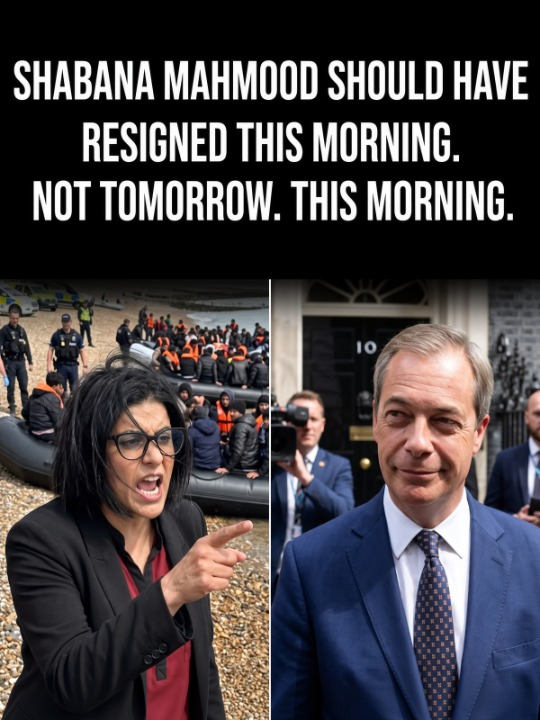
The prosecution of two Iranian nationals accused of preparing a terrorist attack against Jewish targets in Manchester has opened a politically explosive debate over asylum screening, national security and the effectiveness of Britain’s small-boats strategy. Reform UK leader Nigel Farage has called for Home Secretary Shabana Mahmood to resign, while the government argues that falling Channel crossings and the successful disruption of the alleged plot demonstrate that enforcement and intelligence operations are working. The allegations are serious, but they remain allegations: both defendants are before the courts and have not been convicted.
The disclosure that two Iranian men who entered Britain aboard small boats are accused of preparing a terrorist attack has brought two of the country’s most contentious political issues — irregular migration and national security — into the same debate. According to Counter Terrorism Policing and accounts of proceedings at Westminster Magistrates’ Court, Rahman Salehi, of Salford, and Salam Ahmadyan, of Liverpool, have been charged with engaging in conduct in preparation for terrorist acts. Prosecutors allege that they researched potential Jewish targets, conducted reconnaissance and obtained information and materials connected with the construction of a homemade explosive device. The men were arrested in Manchester on 20 September, around the beginning of Yom Kippur, one of the most important dates in the Jewish calendar. RTE
The details presented in court have made the case particularly disturbing. Prosecutors allege that the defendants were interested in locations including the Manchester Jewish Museum and Heaton Park Congregation Synagogue. They are accused of obtaining instructions relating to a homemade chlorine device and acquiring liquids, components and equipment that could potentially be used in an improvised explosive device. Authorities also allege that images, maps and plans of possible targets were collected and that physical reconnaissance took place. The prosecution further says the defendants communicated with a third individual believed to be an Iranian national and probably operating from Iran. These claims have not yet been tested at trial, and the defendants are entitled to the presumption of innocence. RTE
That distinction is important. Political arguments surrounding terrorism cases can quickly move ahead of the judicial process, particularly when immigration is involved. Being charged with an offence is not equivalent to being convicted of it, and information released at an early court hearing represents the prosecution’s case rather than an established judicial finding. What can be stated with considerably greater confidence, however, is the immigration history presented to the court. Both defendants entered Britain by small boat. Salehi arrived in 2020 after having previously sought asylum in Germany and was subsequently granted asylum in Britain in 2023, according to the court account. Ahmadyan arrived by small boat in 2023 and has an outstanding asylum application. RTE
The Question Now Facing the Home Office
Those circumstances inevitably create difficult questions for the Home Office. The most immediate is whether anything known about either defendant before or after arrival should have triggered additional security scrutiny. A second is whether Britain’s asylum-screening arrangements are sufficiently equipped to identify individuals who may subsequently become involved in extremist activity or establish relationships with hostile foreign actors. A third — and substantially more complicated — question is whether the alleged case demonstrates a systemic weakness in the asylum system or an intelligence problem that no border-screening regime could reasonably have been expected to detect.
The available public information does not yet provide a definitive answer. There is an important difference between someone arriving in Britain already acting on behalf of a hostile organisation and someone becoming radicalised, recruited or otherwise involved in extremist activity years after entering the country. The first scenario raises obvious questions about initial security screening. The second is primarily an intelligence, counter-terrorism and integration challenge. At present, publicly reported allegations do not conclusively establish when the defendants allegedly developed the intentions or overseas relationships now attributed to them.
That uncertainty has not prevented an intense political response. Critics of the government’s migration policy argue that the case demonstrates an inherent national-security vulnerability created whenever people enter Britain without obtaining permission beforehand. Their argument is straightforward: passengers arriving at airports normally travel with documented identities and pass through formal immigration controls, whereas people arriving clandestinely across the Channel can sometimes have incomplete documentation, making verification of identity, travel history or associations substantially more difficult.
The government does not dispute that irregular migration creates security challenges. Mahmood herself explicitly connected the defendants’ immigration history to the need to combat illegal Channel crossings. Responding to the charges, she described the case as a reminder of threats from both terrorists and foreign state actors and said the fact that both suspects had arrived by small boat reinforced the importance of tackling irregular migration. She also acknowledged that, despite declining crossing numbers, further action remained necessary. RTE
That response is significant because it avoids claiming that the men’s immigration route was irrelevant. Instead, the government appears to be arguing that the appropriate conclusion is to strengthen border enforcement rather than accept the much broader claim that Britain’s asylum system is fundamentally incapable of protecting national security.
Farage Turns the Case Into a Question of Political Responsibility
Nigel Farage has taken a considerably harder position. The Reform UK leader has called for Mahmood’s resignation and characterised the development as evidence of a national-security emergency. The argument fits a political case Farage has made repeatedly over many years: that uncontrolled or inadequately controlled migration can create risks extending beyond housing, public spending and social integration into organised crime, extremism and national security. The Financial Times reported Farage’s call for Mahmood to resign following disclosure of the defendants’ backgrounds. Financial Times
But attributing personal responsibility to the current Home Secretary is more complicated than the rhetoric suggests. One defendant entered Britain in 2020 and the other in 2023, years before Mahmood held her current office. Salehi’s asylum decision was also reportedly made in 2023. Consequently, any examination of what happened at the point of arrival or during the original asylum decision necessarily crosses several governments and Home Secretaries.
Mahmood can nevertheless legitimately be questioned about the system she now oversees, including what changes have been introduced since taking office, whether historic asylum cases involving people from countries presenting heightened counter-intelligence concerns are reassessed when new intelligence emerges, and whether the Home Office has sufficient access to international databases and intelligence partners.
Those are different questions from whether she personally allowed these particular men into Britain.
That distinction matters if the objective is to determine what failed rather than merely decide who should carry political blame.
What Did Officials Know When the Men Arrived?
Perhaps the most consequential unanswered question concerns what information was available when the defendants entered Britain.
Asylum screening is not equivalent to a comprehensive security investigation. Officials can check identities against available domestic and international records, take fingerprints and biometrics and examine information supplied by applicants. Intelligence services can investigate individuals where sufficient grounds exist. But no screening system can discover information that has never been recorded, shared or linked to the person being screened.
This problem becomes particularly difficult with arrivals who lack reliable identity documents.
A person may have no criminal or terrorism record anywhere accessible to British authorities. Alternatively, information may exist overseas but may not be available through international databases. Intelligence held by another government might not have been shared. Names may be transliterated differently. Documentation can be incomplete or fraudulent.
Consequently, the central policy question should not simply be whether screening occurred, but what screening was possible and whether reasonable opportunities were missed.
Salehi’s reported history raises another question because the court heard that he had previously sought asylum in Germany before entering Britain. RTE Whether German authorities possessed information relevant to the present allegations is unknown publicly. There is no basis at present for assuming that they did.
A serious review would therefore need to reconstruct each stage of the process: identification on arrival, biometric checks, European records, interviews, asylum decision-making, subsequent immigration contact and any later intelligence indicating potential extremist activity.
Without those details, claims that officials simply conducted “zero proper checks” go beyond what has publicly been established.
The Iranian Dimension Makes the Case More Serious
There is another dimension extending well beyond immigration.
Prosecutors allege that the defendants communicated with an overseas third party who may have been located in Iran and who allegedly directed or coordinated elements of the planned attack. If that allegation is ultimately proven, the case could become part of Britain’s broader concern about hostile Iranian activity on British soil. RTE
British security officials have warned for years about Iranian-linked threats against individuals and organisations in the UK. The significance of the present case therefore depends partly on whether investigators eventually establish an operational connection between the alleged plot and actors overseas.
There is a major analytical difference between an attack independently contemplated by two Iranian nationals living in Britain and an operation directed, encouraged or materially assisted from abroad.
The latter could raise questions of foreign-state interference and potentially state-sponsored terrorism.
For that reason, the allegation concerning the unidentified third party may ultimately prove more important from a national-security perspective than the defendants’ method of entry into Britain.
Counter Terrorism Policing has itself placed the investigation in the context of wider threats associated with Iran while stressing that authorities do not believe there is an ongoing threat to the public from this particular alleged plot. RTE
Why the Alleged Targets Matter
The choice of alleged targets has intensified concern.
According to prosecutors, the men carried out reconnaissance involving Manchester Jewish Museum and Heaton Park Congregation Synagogue. Sky News
The latter carries especially painful significance. The synagogue had already been attacked on 2 October 2025, when two congregants were killed and others were injured. The latest arrests occurred shortly before Yom Kippur, further increasing anxiety within a community already dealing with heightened security concerns. AP News
Greater Manchester authorities have therefore treated the allegations not merely as an abstract counter-terrorism case but as a direct source of fear for Jewish residents.
That context should remain separate from broader arguments about immigration. Britain’s Jewish communities face security threats from multiple ideological and geopolitical sources, and reducing those threats to a single immigration question would risk overlooking the broader counter-extremism challenge.
At the same time, the immigration backgrounds of the defendants are plainly relevant because both allegedly entered through an unauthorised Channel route.
Both facts can be true simultaneously.
Have Small-Boat Crossings Actually Fallen?
One of the strongest government responses to criticism is numerical.
Small-boat arrivals fell substantially during the summer of 2026. Home Office-linked figures reported in September showed 7,371 people arriving by small boat during June, July and August, compared with 14,191 during the equivalent summer period a year earlier. The number of individual crossings also declined sharply. Government figures additionally said French enforcement had prevented more than 48,000 attempted crossings since Labour came to power in 2024. The National
Those figures represent genuine progress if measured purely by the number of successful Channel journeys.
But critics make a different argument: national-security risk cannot be measured simply by aggregate numbers.
If 50,000 people cross and none poses a serious security threat, the security outcome is different from a year in which 5,000 cross and one person successfully carries out a terrorist attack. From a counter-terrorism perspective, risk is partly about identifying rare but extremely consequential individuals.
That is why the government’s statistical success and its critics’ security concerns are not necessarily contradictory.
Britain can simultaneously have fewer Channel crossings and still have vulnerabilities within its immigration-screening system.
The important question is whether those vulnerabilities can realistically be reduced.
The France Deal Has Produced Mixed Results
The controversy also arrives at an awkward moment for Britain’s migration relationship with France.
The much-discussed “one in, one out” arrangement was intended to establish a deterrent by allowing Britain to return certain Channel migrants to France while admitting an equivalent number of people through a legal route. By September, Mahmood told a parliamentary committee that more than 1,400 people had been returned under the arrangement and argued that numbers moving in each direction had broadly tracked one another. Nghị viện Vương quốc Anh
But the programme remained small compared with overall migration flows.
Its future has also become uncertain. Reporting at the end of September indicated that the bilateral arrangement was expiring as France pushed for a broader European framework. More than 1,400 Channel arrivals had reportedly been returned to France while 1,117 people had travelled legally from France to Britain under the reciprocal mechanism. The Guardian
Critics therefore argue that the scheme has never operated at sufficient scale to create the deterrent originally promised.
Supporters respond that it should be considered alongside other enforcement measures rather than in isolation.
The broader decline in crossings during 2026 is undeniable. Determining exactly which government policy caused that decline is considerably more difficult.
Border Security and Counter-Terrorism Are Related — but They Are Not the Same Thing
The political temptation following a case such as this is to treat border enforcement and counter-terrorism as identical problems.
They are not.
Strong border controls can reduce security risks. Knowing who enters a country, establishing identity and checking relevant databases are fundamental components of national security.
But border controls cannot eliminate terrorism.
Britain has previously faced terrorism from people born domestically, from legal residents, from citizens, from people radicalised after entering the country and from individuals connected to overseas organisations. An effective counter-terrorism strategy therefore has to operate long after someone passes through an immigration checkpoint.
MI5, Counter Terrorism Policing, financial intelligence, communications intelligence, community reporting and international cooperation all form subsequent layers of protection.
In the current case, one uncomfortable fact for the government is that the defendants were allegedly able to progress far enough for prosecutors to claim that materials were acquired and reconnaissance conducted.
Another fact points in the opposite direction: authorities arrested them before the alleged attack occurred.
From the perspective of counter-terrorism operations, disruption before an attack is precisely what the security system is designed to accomplish.
Counter Terrorism Policing has said investigators believe they disrupted a plot and that there is no continuing public threat associated with the case. RTE
Whether that represents a security success, an immigration failure, or elements of both will depend heavily on evidence that has not yet become public.
The Difficult Question of Asylum and Future Behaviour
The case involving the defendant who received asylum is particularly politically sensitive.
Granting asylum means the state concluded that an applicant met the legal requirements for international protection. It does not amount to a lifetime prediction of someone’s future conduct.
A person can legitimately qualify for refugee protection and subsequently commit a crime. Likewise, someone may pose no detectable security threat when asylum is granted but become radicalised years later.
If evidence existed at the time of the asylum decision demonstrating involvement with terrorism and officials failed to discover or properly assess it, that would constitute a serious screening failure.
But if the alleged extremist activity developed later, the policy implications would be substantially different.
That distinction should be established before political conclusions are drawn.
The public also deserves clarity about what happens when security information emerges after refugee status has been granted. Immigration status does not shield anyone from criminal investigation or prosecution, and national-security authorities retain powers to investigate suspected terrorism regardless of how a person originally entered Britain.
Farage’s Warnings and the Political Argument Over Vindication
Supporters of Farage have presented the case as vindication of warnings he has issued over many years about uncontrolled migration and terrorism.
There is a legitimate historical argument here.
Farage has repeatedly warned that irregular migration routes could potentially be exploited by dangerous individuals. That underlying proposition is not inherently unreasonable: any uncontrolled entry route can create a security vulnerability.
Where the political argument becomes more contentious is when the existence of a vulnerability is treated as proof that asylum seekers generally constitute a terrorism threat.
The current case involves two individuals among many thousands who have crossed the Channel. It can demonstrate that the route may be exploited or that screening deserves examination; by itself it cannot establish the risk profile of the broader asylum population.
Sound security policy requires both avoiding complacency and avoiding generalisation.
The government would be wrong to dismiss legitimate questions about how two people now facing extremely serious terrorism allegations entered and remained in Britain.
Its critics would equally be wrong to assume that every undocumented arrival presents the same threat.
Should Mahmood Resign?
That is ultimately a political rather than purely factual question.
The case for resignation would become considerably stronger if evidence emerged that Mahmood had been warned about specific weaknesses, failed to address them and that those failures materially enabled the alleged plot.
No such evidence has publicly emerged at this stage.
There is also the chronological problem: both men entered Britain before Mahmood became Home Secretary, while the asylum decision concerning Salehi reportedly occurred in 2023. RTE
Nevertheless, ministerial responsibility does not begin and end with the date a problem originated.
Mahmood is responsible for the Home Office now.
She therefore faces legitimate questions about whether the present screening system is adequate, whether people arriving without reliable documentation receive appropriate national-security checks, whether intelligence is effectively shared with European partners and whether additional scrutiny should apply where applicants have complicated migration histories or come from countries associated with significant hostile-state activity.
Calls for resignation are consequently best understood as a political judgment about responsibility rather than a conclusion established by the facts of the criminal case.
What a Serious Review Would Need to Examine
The most useful government response would be a detailed security review rather than a contest of political slogans.
Such a review would need to establish what identities the defendants gave when they arrived, what documentation they possessed, what biometric searches were performed, what information was available from European partners, what was discovered during asylum interviews, whether either individual subsequently appeared in intelligence holdings, and when authorities first became aware of the alleged overseas contact.
It should also determine whether there was information that could reasonably have changed the asylum decision concerning Salehi.
If there was, Britain has a screening problem requiring urgent correction.
If there was not, policymakers need to establish whether any realistic screening mechanism could have discovered the alleged risk at the time.
Those findings would provide far more useful information than simply knowing that the men crossed the Channel.
A Wider Debate About Britain’s Security Architecture
The case exposes a broader problem faced by democratic governments.
Immigration authorities are being asked to perform several functions simultaneously: determine identity, assess refugee claims, identify criminality, detect fraudulent applications and recognise potential national-security threats.
Those tasks require different expertise.
An asylum officer deciding whether someone faces persecution is not necessarily equipped to conduct a sophisticated counter-intelligence investigation. Intelligence agencies, meanwhile, cannot realistically conduct exhaustive investigations into every asylum applicant without evidence providing grounds for suspicion.
The practical objective must therefore be a layered system.
Initial biometric and database screening should identify known threats. Intelligence-led screening should investigate higher-risk cases. Information should be continuously reassessed when new evidence becomes available. Foreign intelligence cooperation should help establish previous movements and associations.
And where an individual’s identity cannot be established with reasonable confidence, policymakers must decide how that uncertainty should affect immigration decisions.
Those are difficult policy choices involving security, international refugee obligations and individual rights.
Pretending that there is a simple technological check capable of determining whether someone will ever become dangerous would provide false reassurance.
The Government Cannot Rely Only on Falling Numbers
For Mahmood, one political lesson is already clear.
Pointing to lower Channel crossings will not by itself answer concerns created by this case.
The reduction is significant. Summer crossings were markedly lower than a year earlier, and French enforcement prevented thousands of attempted journeys. The National
But immigration statistics measure volume.
Counter-terrorism measures risk.
The Home Secretary therefore needs to explain not merely how many people are prevented from crossing but what happens to those who do arrive: how identities are verified, how security information is obtained, how unresolved identities are handled and how cases are revisited when new intelligence appears.
That is particularly important because the government itself has acknowledged the connection between the defendants’ route into Britain and the broader challenge of illegal migration.
Nor Can Critics Ignore What the Security Services Achieved
There is another side of the equation.
The alleged attack did not occur.
The defendants were arrested. Counter-terrorism investigators say the suspected plot was disrupted. Searches were conducted at addresses in Epworth Street in Liverpool and Lancaster Road in Salford. Authorities say there is no continuing threat to the public arising from this particular investigation. ITVX
That does not resolve questions about immigration screening.
But it does matter.
A counter-terrorism system cannot guarantee that nobody will ever contemplate an attack. Its central purpose is to identify dangerous activity and intervene before people are killed.
On the information currently available, that intervention happened.
What Happens Next
The criminal proceedings will now become crucial.
Both defendants have been remanded in custody, and further proceedings are expected at the Old Bailey. Reporting from their initial appearance said the next hearing was scheduled for 23 October. Financial Times
As the case progresses, evidence may clarify when the alleged plot began, how the defendants allegedly came into contact with the overseas individual, whether there was any connection to the Iranian state and whether relevant warning signs existed during their immigration histories.
Until then, several of the most politically explosive conclusions remain premature.
There is evidence that two Iranian nationals entered Britain by small boat.
There is evidence that one subsequently received asylum while the other’s application remained outstanding.
There are serious criminal allegations that they researched Jewish targets and prepared for a terrorist attack.
There is also an allegation of contact with a third party thought to be operating from Iran.
What has not yet been established publicly is that either man entered Britain specifically for the purpose of committing terrorism, that British officials possessed intelligence identifying them as terrorists when they arrived, or that the alleged overseas relationship existed at the time asylum decisions were made.
Those distinctions matter.
A Case That Britain Cannot Afford to Politicise Away
The government’s opponents are entitled to demand answers.
How were the men screened?
What did authorities know?
Could more have reasonably been discovered?
Should people arriving through undocumented routes face additional security procedures?
And does Britain have sufficient mechanisms for revisiting asylum cases when new intelligence emerges?
Those questions should not be dismissed simply because they are politically uncomfortable.
But neither should a pending terrorism prosecution become evidence for claims that have not yet been established.
Britain now has two responsibilities.
The first is judicial: allow the criminal process to determine whether the defendants committed the offences alleged against them.
The second is governmental: establish whether weaknesses in Britain’s border or asylum systems contributed to the situation and correct them if they did.
The government can legitimately point to falling Channel crossings. Its critics can legitimately argue that the number of crossings is not the only measure of border security.
Both positions miss something if considered alone.
The most consequential lesson from Manchester may ultimately be that migration control and national security overlap without being interchangeable. Preventing irregular entry is one layer of national defence. Screening is another. Intelligence gathering, counter-radicalisation, foreign-state monitoring and counter-terrorism policing continue long after somebody crosses a border.
If the forthcoming evidence shows that warning signs were available and overlooked, ministers will face difficult questions about institutional failure and accountability.
If the evidence instead shows that the alleged plot developed years after arrival and was detected through intelligence operations before it could be carried out, the conclusions will be very different.
For now, the most important fact is also the one most easily lost in the political confrontation: two men face exceptionally serious allegations concerning a planned attack on Britain’s Jewish community, but those allegations remain before the courts.
Britain deserves answers about how they entered the country and how its security system handled them.
It also deserves those answers based on evidence rather than assumptions.
And whatever eventually emerges from the criminal proceedings, the case has ensured that the argument over Britain’s borders has changed. It is no longer solely a debate about migration numbers, hotels, asylum backlogs or Channel cross