
Bumbling Zack Polanski sparked fresh fury after defending the Green Party’s ‘Zionism is Racism’ motion on the BBC’s Sunday with Laura Kuenssberg. Mr Polanksi, who was defeated by Labour in the Holborn and St Pancras by-election, went on a rant about the Israeli Government as he dodged growing claims of anti-Semitism within his own party. And as he refused to say whether Israel even has a right to exist he was blasted by a Jewish community group as a ‘danger’.
The Green Party’s controversial motion defines Zionism as a form of racism, and an ideology that supports “an ethnonationalist Jewish state”. It also backs a “single democratic Palestinian state in all of historic Palestine”.
Asked if he thinks Zionism is racist, Mr Polanski said: “The first thing I’d say is I don’t think this is actually controversial. I think what’s controversial is that 75,000 Palestinians have been murdered in the last few years, including more child amputees than ever in modern history. So, when you take that into account – the fact that they’re being murdered because they’re Palestinian, that’s very obviously a racist ideology.”
And Mr Polanski confirmed the motion will not be overturned.
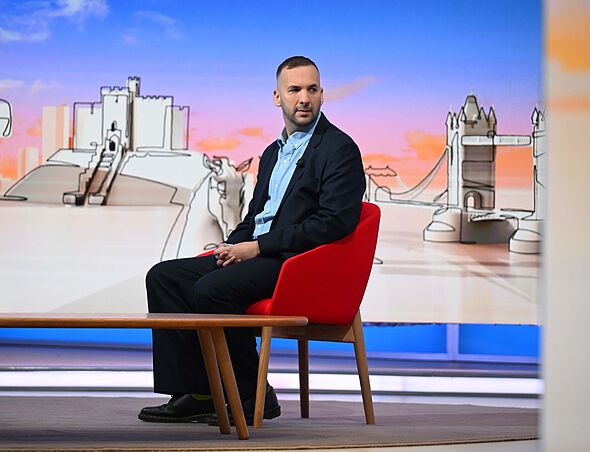
He said: “You say it’s controversial in the party, but actually there was polling that showed the vast majority of Green voters from 2024 support this policy.
“I might not agree with every single word in it, I might want to see it amended in the future…[but] I’m not going to try and overturn it.”
“At the first available opportunity I do want to amend it. I want to move away from saying ‘one state’ to saying that Israelis and Palestinians should decide that future for themselves.”
The party leader missed the crucial conference vote which endorsed a policy effectively calling for Israel to be abolished and replaced with a single Palestinian state.
Former leader Caroline Lucas said Mr Polanski “should have been there and he should have voted” while ex-co-leader Adrian Ramsay has called for the party to get “back on track” and return to its “core purpose” of championing environmental causes.
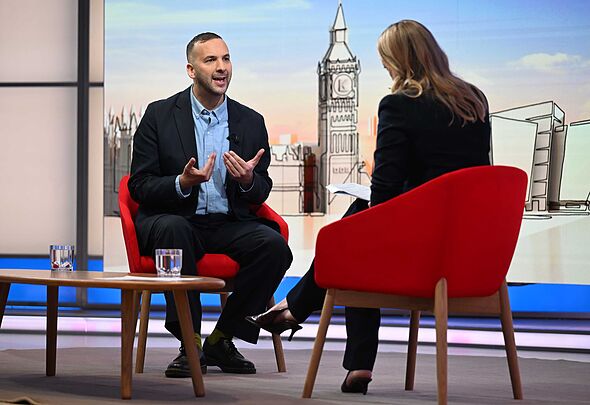
The Green Party leader said: “I think the controversial thing is that Western governments across the world have turned away while Palestinians have been murdered because they’re Palestinian. That’s very clearly racist, that’s quite obvious.
Asked if he believes that Zionism is “inherently racist”, Mr Polanski said: “The reason why I’m answering that question is that, rather than have a debate about semantics, it’s about the practical application of Zionism.”
And he dismissed the premise that for “many Jewish people, Zionism is simply the right to have a safe place to live”.
Mr Polanski told the BBC: “I think that’s what people think it means, but actually in practical application – which is what we’re talking about here – that homeland has come at the cost of the Palestinian people.
“I want equal rights for Israelis and Palestinians, and practical application of Zionism has not resulted in that.
“It’s for me as a leader to tell the truth, and in 1948 there was the Nakba; 750,000 Palestinians were ethnically cleansed. That’s racist.
“It’s my job to do two things.
“One is to reassure Jewish communities that under my leadership, no one will be excluded in the Green Party based on their faith or background. Jewish people, including myself very obviously, are very welcome.
“Second, it is my job to tell the truth. And this story of a Jewish homeland has come at the expense of Palestinians.
“There are many Jewish communities around this country and around the world, including left-wing Jews like myself, who feel great shame at the fact that in the name of Judaism, we are seeing Palestinians murdered.
“We absolutely need to stop conflating being Jewish and criticizing the Israeli state – they’re two separate things.”
Shimon Cohen, Campaign Director of Shechita UK, said: “Zack Polanski is a danger to British Jews. The reason isn’t that he hates us. It’s that he lacks the courage to stand up for us when it counts.
“He watched his party declare Zionism a form of racism, reviving a Soviet-era smear. He knew it would brand most British Jews as racists by association, and he equivocated. He calls the motion an unhelpful distraction, yet he still leads the party that passed it. In doing so he has given respectability to a slur that fuels hatred on our streets.
“Then there is the double standard. Polanski rightly condemns the antisemitism aimed at him. But when the wider community reports fear after arson and stabbings, he asks whether that fear is “real or perceived,” and he dismisses concern as political weaponisation. Jewish safety cannot matter only when it is his own. The logic of the motion collapses under the slightest pressure. Is the SNP’s campaign for Scottish independence racist? Are Commonwealth republicans racist for wanting their own head of state? Every people’s right to self-determination is respected, except one. That is not anti-racism. It is the oldest prejudice in a new costume.
“Even his own allies see the damage. The European Greens have publicly distanced themselves, and senior Green MPs have voiced dismay. Polanski has turned a party that once stood for principle into one that stands for a slur.”
Phil Rosenberg, President of the Board of Deputies, said: “Zack Polanski remains all over the place. Having failed to muster any leadership over the Green Party’s racist vote on Zionism, he now presides over a party whose own policy he admits even he will disagree with until at least 2028. This is not a tenable situation.
“Let us remember that, as of now, the Green Party’s platform erases Jewish identity and experience, calls for Israel’s elimination, and tells the vast majority of Jews who overwhelmingly believe in the right of Israel to exist, that they are not welcome in the party.”
Zack Polanski Sparks Fresh Controversy After BBC Interview as Questions Over Jewish Safety Intensify
Zack Polanski has become an increasingly prominent figure in British politics, but his outspoken views and the positions associated with the Green Party have also placed him at the centre of difficult debates about antisemitism, the Israel-Palestine conflict and the limits of political criticism. A contentious BBC interview, described by critics as a serious misstep, has renewed attention on how political leaders discuss these issues and the responsibilities that come with addressing such a sensitive subject.
The phrase “danger to British Jews” is a serious accusation and should not be accepted as an established fact simply because it appears in a political headline. Nevertheless, concerns about antisemitism and the safety of Jewish communities deserve careful consideration. The important questions are what was actually said during the interview, how Polanski responded to challenges and whether his explanations addressed the concerns raised by critics.
For a politician seeking to influence national debate, the ability to communicate clearly under pressure is essential. Interviews on major broadcasters provide an opportunity to explain policies, defend decisions and respond to difficult questions. They can also expose weaknesses when a politician appears unable to resolve contradictions or explain how broad principles would work in practice.
A difficult balancing act for Zack Polanski
Polanski’s political profile is closely associated with the Green Party’s progressive agenda, including environmental policy, social equality and criticism of government decisions. His approach to international affairs, particularly the conflict involving Israel and the Palestinians, has also attracted significant attention.
These issues require political leaders to navigate competing concerns. Criticism of the Israeli government is not automatically antisemitic, and support for Palestinian rights does not inherently indicate hostility towards Jewish people. At the same time, antisemitism can appear within political movements through conspiracy theories, collective blame, discriminatory language or the denial of equal rights and dignity to Jewish people.
Distinguishing between legitimate political criticism and antisemitism is therefore essential. It requires attention to the actual words used, the context in which they were spoken and the implications of the argument being advanced.
For Polanski, public scrutiny is likely to remain intense whenever he discusses the Middle East. Critics may question whether his language sufficiently recognises the fears of British Jewish communities, while supporters may argue that politicians must remain free to challenge Israeli government policies and advocate for Palestinian civilians.
Neither concern should automatically settle the debate. The substance of the statements and the evidence supporting each interpretation matter more than partisan labels.
Why a BBC interview can become a political flashpoint
A high-profile broadcast interview can quickly become a defining moment when a politician faces questions about a controversial position. Viewers expect direct answers, particularly when the subject involves discrimination, public safety or the treatment of minority communities.
When an interview becomes confrontational, the exchange can shift from policy substance to the politician’s manner, choice of words and ability to respond. A hesitant answer may be interpreted by opponents as evasive, while an assertive response may be portrayed as dismissive. Short clips shared online can further intensify these impressions by removing parts of the original discussion.
That makes the full interview important. Before concluding that Polanski suffered a major political setback, it is necessary to establish the exact questions he was asked, the answers he gave and whether the most widely circulated excerpts fairly represent the conversation.
Without those details, descriptions such as “car-crash interview” remain commentary rather than an objective assessment.
Nonetheless, the broader challenge facing Polanski is clear. Political leaders who speak about contentious international conflicts must be prepared to explain how their positions relate to the safety and rights of people living in Britain. General declarations of opposition to racism are important, but audiences may also expect clear responses to specific concerns.
A convincing explanation should demonstrate that the speaker understands the distinction between holding a government accountable and directing hostility towards people because of their religion or identity.
British Jewish communities and the concern over antisemitism
Antisemitism is not merely an abstract political controversy. Jewish people in Britain have legitimate reasons to expect protection from harassment, intimidation, discrimination and violence. When concerns about antisemitism arise, political leaders have a responsibility to address them seriously rather than treating them solely as opportunities for partisan conflict.
The issue becomes particularly sensitive when international events influence relationships between communities at home. Anger about the actions of a foreign government can spill over into hostility towards local people who share a perceived religious, ethnic or cultural connection. Such collective blame is unjustified.
Jewish communities are not politically uniform. British Jews hold a range of views about Israel, its government, Palestinian rights and the future of the region. Treating them as a single political bloc risks reinforcing the very assumptions that responsible public debate should challenge.
Likewise, criticism of a politician’s position on Israel should be based on what that politician has actually said or proposed. Serious accusations of antisemitism require careful examination, not merely disagreement with a political position.
The same standards should apply to everyone. A politician should be able to criticise government policy without facing unfounded allegations, while Jewish people should not have to tolerate prejudice disguised as political activism.
The Green Party’s wider political challenge
Polanski’s prominence also creates challenges for the Green Party. A leader’s public statements can influence perceptions of the entire organisation, particularly when those statements concern divisive subjects.
For a party seeking to broaden its appeal, environmental policy remains important, but it is not the only issue voters consider. Questions about public services, housing, taxation, economic priorities, national security and social cohesion can all shape how the party is perceived.
Controversies surrounding a leader may attract substantial media coverage and divert attention from the party’s policy programme. However, the political impact should not be assumed in advance. Some supporters may regard a leader’s willingness to challenge established positions as a strength, while others may prefer more measured language and clearer explanations.
Different voters may also evaluate the same interview differently. Someone who agrees with Polanski’s underlying position may see hostile questioning as an attempt to discredit him. Another viewer may believe that the interviewer raised legitimate concerns that deserved more precise answers.
The key question for the party is whether it can explain its positions consistently and demonstrate that its commitments to equality apply to all communities.
If the party wants to be taken seriously as a potential force in government, it must be prepared to discuss difficult questions without relying solely on accusations of bias or political hostility.
Political criticism must not become collective blame
Debates about antisemitism often become especially difficult when criticism of a politician or movement is mixed with broader claims about the motives of its supporters. It is important to separate documented conduct from assumptions about entire groups.
A statement may be offensive or poorly judged without necessarily establishing that its speaker holds a particular form of prejudice. Conversely, a politician’s general declaration against discrimination does not automatically resolve questions about a specific remark or its effects.
The appropriate response is to examine the evidence. What words were used? What did they mean in context? Was a particular group targeted unfairly? Did the speaker acknowledge the concern and clarify the intended meaning? These questions provide a stronger basis for discussion than labels alone.
This approach protects both the seriousness of antisemitism and the principle of fair political debate. If every criticism of Israel is automatically classified as antisemitic, legitimate scrutiny of government policy becomes harder. If claims of antisemitism are dismissed as nothing more than political tactics, genuine prejudice can be overlooked.
British political leaders should reject both errors.
The role of the media in a heated debate
Broadcasters have an important responsibility when covering accusations involving discrimination and community safety. Interviewers should be able to challenge politicians firmly, including by identifying inconsistencies and asking for direct answers. Politicians, in turn, should be expected to explain their positions rather than avoiding uncomfortable questions.
But the public also benefits when coverage distinguishes clearly between fact, allegation and interpretation. A critical headline may capture the intensity of a dispute, yet it cannot substitute for the evidence needed to evaluate it.
Social media can complicate the process. A brief clip may circulate widely before viewers have seen the full exchange. Supporters and opponents can then use the same fragment to advance entirely different narratives.
This environment rewards dramatic confrontation, sometimes at the expense of careful analysis. A more reliable assessment considers the complete interview, the policy context and any subsequent clarification.
For Polanski, the most effective response to legitimate criticism would be to explain his position in clear terms, acknowledge the seriousness of antisemitism and demonstrate how his political principles protect Jewish people alongside other communities.
Such an approach would not require him to abandon criticism of Israeli government policy. It would require him to show precisely where that criticism ends and prejudice begins.
What the controversy means for British politics
The debate surrounding Polanski illustrates a wider difficulty in modern British politics: disagreements over international affairs increasingly intersect with domestic questions of identity, security and trust.
Political parties must be able to discuss human rights and foreign policy openly while ensuring that domestic communities are not subjected to intimidation or discrimination. That responsibility cannot be confined to one party or one political leader.
For the Green Party, the challenge is to demonstrate that its stated principles translate into consistent language and action. For Polanski, the immediate task is to ensure that his public explanations are precise enough to withstand scrutiny and that concerns about antisemitism receive a serious response.
For critics, the responsibility is equally important: accusations should be grounded in identifiable statements and evidence rather than assumptions about political affiliation.
The exact significance of the reported BBC exchange depends on its full context. Without a verified transcript or complete recording, it would be premature to conclude that the interview establishes Polanski is a danger to British Jews or that it has produced a lasting political crisis.
What can be said is that the issues involved are too serious to be reduced to a shouting match. Jewish safety, the fight against antisemitism, Palestinian rights and freedom of political expression all deserve thoughtful and consistent treatment.
Ultimately, politicians are judged not only by the positions they take but also by their ability to explain those positions responsibly. In a debate where language can have real consequences for vulnerable communities, clarity, evidence and a commitment to equal dignity are essential. Those standards should apply to Zack Polanski, his political opponents and every public figure who seeks to influence Britain’s national conversation.