

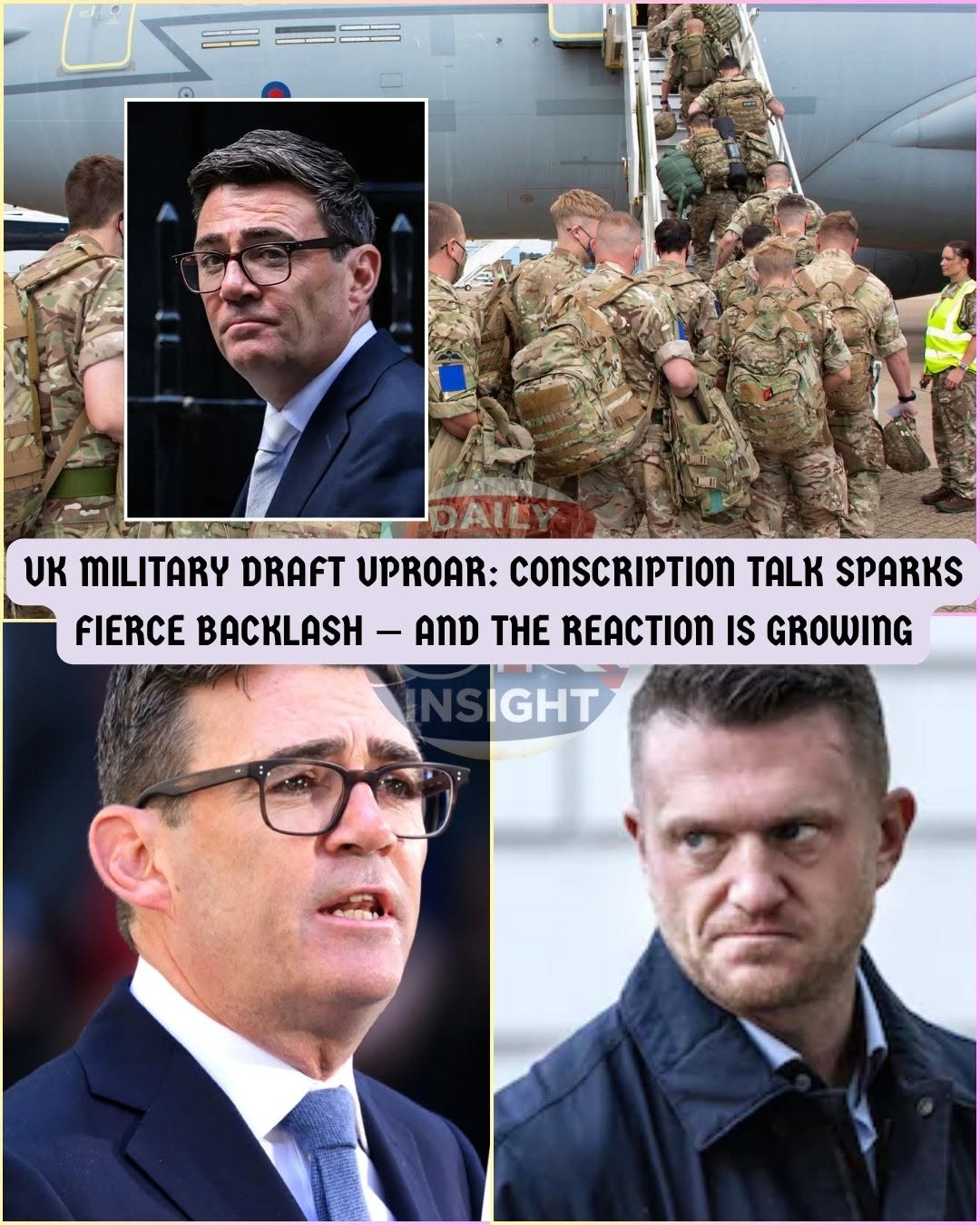
UK Military Draft Uproar: What Britain’s New Defence Plans Actually Mean for Reservists and Civilians
Fresh warnings about conscription have reignited a fierce debate over whether Britain is preparing its population for a future war. With the Government expanding military readiness, extending recall liability for some former personnel and considering a broader role for reserves in national defence, fears of compulsory National Service have spread rapidly. But the measures currently before Parliament do not introduce a general draft for ordinary civilians. So what is actually changing — and why has the issue become so controversial?
Britain is preparing for a more dangerous security environment.
That much is clear.
What is considerably less clear from some of the dramatic headlines circulating online is whether the country is preparing to force ordinary young men and women into military service.
The answer, based on the legislation currently before Parliament, is no.
The Armed Forces Bill would significantly strengthen Britain’s ability to recall certain reservists and former military personnel during a serious crisis. But it does not establish compulsory National Service and does not create a general civilian military draft.
That distinction is central to understanding the controversy.
What Is Britain Actually Changing?
The most important proposals concern Britain’s Strategic Reserve.
Under the Armed Forces Bill, recall liability for relevant personnel would be extended up to the age of 65. The rules would also be harmonised across the Royal Navy, Army and Royal Air Force.
The legislation would additionally allow the Defence Secretary to authorise recall when “warlike operations” are in preparation or progress.
That is a meaningful expansion.
Existing legislation already provides powers to recall eligible personnel in circumstances involving national danger, a great emergency or an attack on the United Kingdom.
The proposed legislation would allow the Government to act earlier.
The reasoning is that modern warfare may require Britain to mobilise experienced personnel before the country itself has actually been attacked.
Why Raise the Age to 65?
The proposal to increase the maximum recall age has produced some of the most dramatic reactions.
But it does not mean the Government intends to conscript every British citizen up to the age of 65.
The change concerns people who fall within the relevant Strategic Reserve arrangements — broadly, former service personnel who retain recall liability after leaving regular service.
Parliamentary scrutiny of the Bill has highlighted the potential value of retaining access to experienced people with specialist capabilities.
Modern militaries require far more than frontline infantry.
Cyber specialists, engineers, intelligence personnel, communications experts, logisticians and medical professionals can remain highly valuable long after leaving regular service.
The Government therefore argues that extending recall liability provides access to skills that could become essential during a major emergency.
The House of Commons Library says the reforms are expected to come into force in spring 2027 if the legislation completes Parliament.
What Does “Warlike Operations” Mean?
This is another phrase generating concern.
The Bill would create a power allowing the Secretary of State to authorise recall when “warlike operations are in preparation or progress”.
That threshold is deliberately broader than waiting until Britain is actually under attack.
Supporters of the change argue that this reflects the reality of modern conflict.
During parliamentary scrutiny, Professor Vincent Connelly of Oxford Brookes University argued that the provision would allow experienced personnel to be available before an actual attack, particularly given hybrid threats and the preparations NATO countries may need to undertake during a transition towards war.
Critics may reasonably ask how broadly such powers could eventually be interpreted.
But whatever the merits of that argument, the people potentially recalled under these provisions are not the entire civilian population.
They are people covered by the reserve legislation.
So Is National Service Returning?
Not under this Bill.
Compulsory National Service would represent a fundamentally different policy.
It could involve requiring civilians who have never served in the military to undertake military or potentially civilian national service.
Nothing in the current Armed Forces Bill establishes that system.
The distinction matters because “recall” and “conscription” describe different things.
Recall brings back someone who already has a relevant military obligation.
Conscription imposes compulsory service on people who would otherwise have no such obligation.
Conflating the two makes Britain’s current defence reforms appear substantially more extensive than they are.
Why Is Britain Preparing Now?
The wider context is the deterioration of European security.
Russia’s invasion of Ukraine transformed assumptions about the possibility of major conventional warfare in Europe.
At the same time, governments must consider cyberattacks, sabotage, attacks on critical infrastructure, disruption of communications and threats to undersea cables and energy networks.
Britain’s response is consequently broader than simply purchasing more tanks or recruiting more soldiers.
The Government has also accepted a Strategic Defence Review recommendation for separate Defence Readiness legislation, intended to strengthen national resilience and the Armed Forces’ ability to respond to crises. Work on that legislation is continuing across government and with industry.
That wider programme helps explain why the word “conscription” keeps appearing in public debate even though a draft has not actually been announced.
People are asking where additional manpower would come from if the security situation became dramatically worse.
Could Britain Ever Introduce Conscription?
Theoretically, a future government and Parliament could decide that circumstances justified much more extensive compulsory service.
Britain has used conscription during major periods of its history.
But the possibility that Parliament could introduce something in the future is not evidence that it has already decided to do so.
A genuine general draft would be a major political and legal decision requiring a clear framework setting out who could be called up, exemptions, duration of service, enforcement and other safeguards.
The Armed Forces Bill currently moving through Parliament is not that framework.
What About a New “Home Guard”?
Another development has contributed to confusion.
The Government has been considering how reserves and potentially a new home-defence capability could protect critical national infrastructure and strengthen domestic resilience during a crisis.
The House of Commons Library notes that expanding the role of reserves in protecting critical infrastructure has been under consideration for years, while current government work is examining the country’s broader home-defence arrangements.
Again, however, discussing a home-defence force does not automatically mean compulsory civilian military service.
How such capabilities are recruited and organised is precisely one of the questions policymakers still have to resolve.
The Bigger Question: Who Would Fight?
Beneath the confusion about legislation lies a much more difficult political issue.
Would enough people volunteer if Britain faced a major war?
Military readiness depends on equipment, ammunition and industrial capacity, but ultimately it also depends on personnel.
That has prompted debate about recruitment, retention and the relationship between the Armed Forces and wider society.
The Government’s immediate answer is partly to make better use of people who already possess military experience.
Evidence presented to Parliament indicates that defence planners want to test a more robust reserve-recall system and examine how quickly the reserve could expand during a crisis.
That is significantly different from assuming millions of civilians will be drafted.
Public Trust Matters Too
The controversy nevertheless highlights something legislation cannot easily solve.
If Britain ever faced circumstances serious enough to require a much larger mobilisation, public confidence would matter enormously.
Citizens would want to know what threat they were being asked to confront, why military action was necessary and whether political leaders had exhausted reasonable alternatives.
Support for defending Britain directly could also be very different from support for participating in an overseas conflict.
Those questions cannot be answered simply by extending reserve liability.
A government can create the legal power to mobilise people who already have military obligations.
Creating broad public willingness to serve is another challenge entirely.
Where Does the Bill Stand Now?
The legislation has not yet completed Parliament.
The Armed Forces Bill passed its Commons stages and is now in the House of Lords. Committee examination concluded on September 8, and its Lords Report Stage is scheduled for October 20. Royal Assent has therefore not yet occurred.
That means even the reserve changes should be described as proposed reforms, rather than rules already fully in force.
The difference is important in a debate increasingly dominated by dramatic claims.
Britain Is Preparing — But It Is Not Drafting the Population
Britain’s defence posture is unquestionably changing.
The Government wants greater access to experienced former personnel. It wants the Strategic Reserve capable of responding earlier in a developing conflict. It is considering wider national resilience and home-defence measures.
Those developments deserve serious public scrutiny.
But they are not the same as restoring compulsory National Service.
There is currently no general draft requiring ordinary British young people who have never served to join the Armed Forces. The proposal to raise recall liability to 65 applies to relevant Strategic Reserve personnel, not every civilian below that age.
The real controversy is therefore more nuanced than the phrase “UK conscription plans” suggests.
Britain is asking how it would mobilise faster if Europe faced a major conflict — and how much responsibility should remain with professional forces, reservists and former personnel.
If the Government ever decides that ordinary civilians must be compelled to serve, that would represent a dramatically different policy.
For now, Britain is strengthening its reserves.
It is not drafting the nation.
PUBLIC ANGER OVER THE POSSIBILITY OF A MILITARY DRAFT
The phrase “military draft” can quickly generate anxiety, particularly among young adults and their families. For many people, the prospect of compulsory service raises immediate questions about education, employment, personal freedom and the possibility of being sent to fight overseas.
That is why politicians and defence officials need to communicate clearly about what is actually being proposed.
In Britain, discussions about improving military readiness have included the use of reservists, civilian preparedness and opportunities for young people to experience military life voluntarily. None of these measures automatically introduces compulsory service.
The distinction is particularly important for school leavers and university students who may worry that a change in defence policy could disrupt their plans.
The government has instead promoted voluntary routes into the armed forces, including a military “gap year” scheme intended to give young adults aged 18 to 25 an opportunity to undertake paid training and shorter-term service before deciding whether to pursue a longer military career. <Cite refs={[“turn754371search1″,”turn754371search3”]}/>
Whether these programmes attract enough participants remains an important question. But they represent a different approach from compelling an entire age group to enlist.
COULD THE STRATEGIC RESERVE BE CALLED UP?
Another development contributing to the confusion concerns Britain’s Strategic Reserve.
The government is preparing to test its ability to mobilise former service personnel during a major exercise planned for 2027. The exercise is intended to examine how retired regular and reserve personnel could be contacted, equipped and brought back into service if circumstances required it. <Cite refs={[“turn754371search3”]}/>
This has understandably prompted questions about who could be required to return to military duties.
The Strategic Reserve is not the same as a system of conscription for the general population. It concerns people who have previously served and remain subject to applicable reserve arrangements.
The Armed Forces Bill 2026–27 also proposes changes to recall liability, including extending the relevant age limit to 65 for certain members of the Strategic Reserve. The legislation provides for exceptions, and the changes are expected to take effect in spring 2027. <Cite refs={[“turn754371search4”]}/>
These measures are intended to improve the armed forces’ ability to draw on existing experience during a serious crisis.
Nevertheless, the proposals highlight an important issue: Britain must know not only how many people it has previously trained, but also whether those people could realistically be contacted, equipped and deployed when required.
WHY EUROPE’S SECURITY SITUATION MATTERS
Britain’s military debate cannot be separated from developments elsewhere in Europe.
Russia’s war against Ukraine has encouraged several European countries to reconsider compulsory military service or introduce new forms of mandatory training. Countries including Sweden, Latvia and Lithuania have adopted systems that differ from Britain’s professional volunteer model.
Their decisions reflect different assessments of national security, geography, military requirements and the size of their populations.
Supporters of compulsory service in Britain argue that a larger pool of trained citizens could strengthen national resilience if a major conflict occurred. They point to the importance of maintaining enough personnel to protect infrastructure, reinforce military units and support essential services.
Opponents question whether compulsory service would provide the right skills at the right time. They argue that modern warfare increasingly depends on specialist training, advanced technology and experienced professional personnel.
There are also questions about the financial cost of training large numbers of people who might serve for only a short period.
Britain’s government has continued to favour a professional military staffed by volunteers, while acknowledging the need to improve defence readiness and national resilience. <Cite refs={[“turn754371search0″,”turn754371search1”]}/>
WHAT BRITISH FAMILIES SHOULD KNOW
For people concerned about a possible military draft, the most important fact is that compulsory military service has not been reinstated in the United Kingdom.
There is no current government plan requiring all young British citizens to complete military service. The latest parliamentary answer on the feasibility of military service, published on 15 September 2026, explicitly confirmed that the government has no current plans for compulsory service. <Cite refs={[“turn754371search1”]}/>
That position does not prevent future governments from reconsidering defence policy if the security environment changes dramatically. It does mean, however, that speculation about a possible future draft should not be mistaken for an announcement of a new legal obligation.
People who have previously served in the armed forces should also distinguish general discussion of mobilisation from the specific legal obligations attached to their reserve status.
Anyone affected by a formal recall notice would need to consult the relevant official documentation rather than rely on social media claims.
THE REAL QUESTION IS BRITAIN’S READINESS
The current uproar over conscription reflects genuine uncertainty about the future of European security, but the central policy question is whether Britain can prepare effectively without introducing compulsory service.
That requires the government to address recruitment, retention, equipment, ammunition, logistics and the ability to mobilise trained personnel when necessary.
It also requires a clear explanation of the relationship between military reserves, civilian emergency planning and the obligations of people who have previously served.
For now, Britain’s position remains unchanged: the armed forces operate on a professional volunteer basis, and the government has no current plans to bring back compulsory military service.
The debate over defence readiness is likely to continue as Britain responds to a more uncertain international environment. But increased defence spending, reserve exercises and voluntary military programmes should not be presented as proof that a nationwide draft is about to begin.
The challenge facing Westminster is to strengthen national security while giving the public accurate information about what is changing, what remains the same and what any future proposal would actually require.