

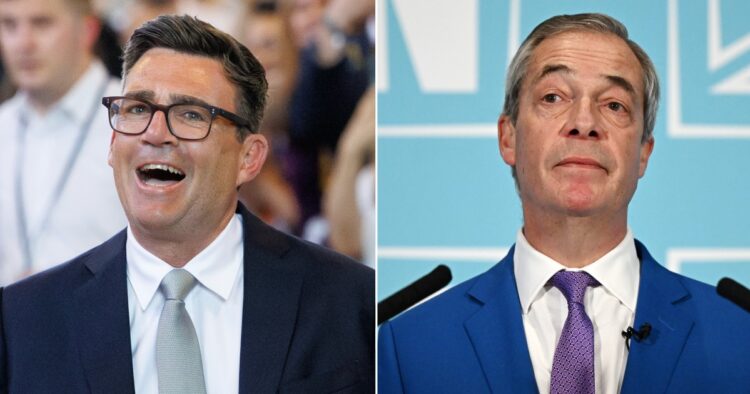
This is quite the intervention from the Prime Minister – and Andy Burnham has become the first British leader in the last 10 years to confirm that the Brexit referendum was targeted by ‘clear interference’ from state-sponsored Russian agents.
Andy Burnham reveals ‘clear interference’ from Russia in Brexit vote
Suspicions had been raised in the immediate aftermath of the referendum result, but the architects behind the Vote Leave campaign have vehemently denied there was any involvement or support from Russia. Alas, the PM has gone public with his concerns over the weekend.
Speaking to Alastair Campbell and Rory Stewart on The Rest is Politics podcast, Burnham says one of the first questions he asked upon entering Downing Street was about the extent of Russian interference in British democracy – and the response he received was as damning as it was clear.
“I’ve asked a question coming in as Prime Minister. But I don’t think we knew, back then, the extent to which there was state-sponsored interference in the British democratic process. I’ve asked if there was interference in the 2016 Brexit referendum from Russia – and I’ve had the clear answer of ‘yes, there was’.”
“These things are important now to put clearly in the record, and help voters to understand that some of these politics are instigated by our enemies, and those in Russia. We have been too much on the backfoot, and we haven’t informed people sufficiently about these disruptions.” | Andy Burnham
How will this impact the UK relationship with the EU?
The statements coincide with Andy Burnham’s recent declarations of wanting the UK to align much more closely with the EU, stating that ‘nothing is off the table’ in terms of repairing the relationship. Returns to the customs union and the single market are, reportedly, up for consideration.
A full ‘rejoin’ – essentially undoing the Brexit vote – has also not been ruled out. Given the Labour leader’s strong words on the matter here, Burnham may find himself emboldened to take a stronger position on plotting the way forward. Just in time for the upcoming UK-EU summit, no less…
Russia ‘Clearly Interfered’ in Brexit Referendum, Andy Burnham Says
Andy Burnham has reignited the political controversy surrounding Britain’s decision to leave the European Union after claiming that Russia clearly interfered in the 2016 Brexit referendum.
The Greater Manchester Mayor’s intervention has added fresh pressure on the government to examine the circumstances surrounding one of the most divisive political decisions in modern British history.
Burnham’s comments come amid growing calls for a closer relationship between Britain and the European Union, with senior Labour figures increasingly questioning whether Brexit delivered the economic and political benefits promised by its supporters.
The Labour politician believes that the possibility of foreign interference should not be ignored when assessing the referendum result. His comments also raise wider questions about the role of disinformation, social media and foreign influence in democratic elections.
For Nigel Farage and other prominent Brexit supporters, the allegations represent another challenge to the legitimacy of their political arguments.
However, establishing whether Russia interfered in the referendum is different from proving that such interference changed the result. The distinction is important, particularly given that millions of British voters supported leaving the EU for their own political and economic reasons.
Andy Burnham Makes Serious Allegations About Russian Interference
Burnham’s comments have brought renewed attention to concerns about Russia’s activities during the 2016 referendum campaign.
The Greater Manchester Mayor argued that there was clear evidence of Russian interference in the political environment surrounding Brexit.
His intervention reflects longstanding concerns about the Kremlin’s attempts to influence democratic processes in Western countries.
Russia has previously been accused of using social media campaigns, misleading information and online networks to amplify political divisions.
The 2016 Brexit referendum took place during a period of growing international concern about foreign interference in democratic elections.
The United States presidential election that year also faced allegations of Russian interference, making the question of foreign influence in Britain particularly significant.
Burnham believes that these concerns deserve serious consideration rather than being dismissed as politically inconvenient.
His comments are especially relevant as Labour considers whether Britain should move towards a closer relationship with the European Union.
What Happened During the 2016 Brexit Referendum?
The referendum took place on 23 June 2016, when British voters were asked whether the United Kingdom should remain a member of the European Union or leave.
The result was 51.9 per cent for Leave and 48.1 per cent for Remain.
Turnout reached approximately 72 per cent, demonstrating the enormous public interest in the decision.
The Leave campaign was supported by several prominent political figures, including Boris Johnson, Michael Gove and Nigel Farage.
The campaign focused heavily on national sovereignty, immigration and the argument that Britain should regain control over its laws and borders.
The Remain campaign, meanwhile, warned that leaving the EU could damage Britain’s economy, weaken international cooperation and create uncertainty for businesses.
The result shocked many political observers and triggered a prolonged period of political instability.
David Cameron resigned as Prime Minister shortly afterwards, beginning a new chapter in British politics.
However, the question of whether foreign interference influenced the referendum has never entirely disappeared.
Russia’s Alleged Role in the Brexit Campaign
Concerns about Russian involvement have been examined by several investigations and parliamentary committees.
One of the most important was the Intelligence and Security Committee’s Russia Report, published in July 2020.
The report examined allegations of Russian interference in British democratic processes.
It concluded that Russia had developed an interest in influencing political developments in the United Kingdom and had used various methods to advance its objectives.
However, the report also criticised the British government’s failure to investigate properly whether Russia had attempted to influence the Brexit referendum.
It described the referendum as a potentially attractive target for Russian influence operations.
The committee said that the government had not commissioned a formal assessment of possible Russian interference in the vote.
This absence of investigation became one of the most controversial aspects of the report.
It meant that important questions about the extent of foreign activity surrounding the referendum remained unanswered.
Importantly, the report did not establish that Russia had changed the outcome of the referendum.
That distinction remains central to the debate.
Social Media and the Spread of Political Disinformation
One of the main concerns surrounding foreign interference involves the use of social media.
During the Brexit campaign, millions of voters received political messages through platforms such as Facebook and Twitter.
These platforms allowed campaigners to reach specific groups of voters with targeted advertisements and political content.
Concerns have since emerged about the possibility that foreign-linked accounts used these networks to amplify divisive political messages.
Russia has previously been associated with online influence operations designed to increase distrust in democratic institutions and deepen existing political disagreements.
Such operations do not necessarily require convincing voters to support one particular political position.
Instead, their objective can be to increase division, undermine confidence in institutions and create a more unstable political environment.
The Brexit referendum was particularly vulnerable to these concerns because it involved highly emotional questions about national identity, immigration and Britain’s future.
Nevertheless, evidence of online activity does not automatically establish that a foreign government controlled the campaign or determined how people voted.
The extent and impact of any interference must be assessed carefully.
Nigel Farage Faces Renewed Questions
Burnham’s comments are likely to attract particular attention from Nigel Farage.
Farage was one of the most prominent public figures campaigning for Brexit and played a major role in building support for leaving the European Union.
He has repeatedly defended the referendum result and argued that Brexit represented a democratic decision that must be respected.
Reform UK continues to present Brexit as an important achievement and a demonstration of Britain’s ability to make independent political decisions.
However, renewed scrutiny of possible Russian interference could create difficulties for Farage and other prominent Leave campaigners.
Critics may argue that the referendum’s political environment should be examined more thoroughly before politicians use its result to justify their current policies.
Farage has consistently rejected suggestions that Brexit should be reversed and remains opposed to Britain rejoining the European Union.
For him, the issue is likely to become another major political dividing line between Reform and Labour.
Should Britain Reconsider the Brexit Result?
Burnham’s intervention comes at a time when several Labour politicians are calling for a fundamental reassessment of Britain’s relationship with Europe.
Sadiq Khan has argued that Labour should make reversing Brexit an issue at the 2029 general election.
He believes Britain should move towards returning to the EU’s customs union and single market before considering full membership.
Burnham has also suggested that the country should be more open about discussing the possibility of rejoining the European Union.
The economic consequences of Brexit remain a major subject of debate.
Critics point to additional trade barriers, reduced investment and difficulties faced by businesses exporting to European markets.
Supporters, however, argue that leaving the EU restored Britain’s ability to make independent decisions about trade, immigration and regulation.
They also maintain that the country should focus on making Brexit work rather than reopening the referendum debate.
Burnham’s comments about Russia add another dimension to this disagreement.
If foreign interference occurred, politicians may argue that the circumstances surrounding the referendum deserve greater scrutiny.
However, any discussion of reversing Brexit would still need to address the democratic reality that a majority of voters chose Leave in 2016.
What the Intelligence Report Actually Established
It is important to distinguish between the allegations made by politicians and the conclusions reached by official investigations.
The Intelligence and Security Committee’s 2020 Russia Report raised serious concerns about the possibility of Russian interference in the Brexit referendum.
It criticised the government for failing to conduct an appropriate assessment.
However, it did not establish that Russian activity had changed the result or that the Leave campaign was directed by the Kremlin.
The report also examined wider Russian influence activities, including attempts to exploit political divisions and undermine public confidence in democratic institutions.
This means Burnham’s comments should be understood within a broader debate about foreign interference rather than as proof that the referendum outcome was determined by Russia.
A democratic election can be exposed to foreign influence without its entire result becoming invalid.
The challenge for British institutions is to establish what happened, identify any weaknesses and ensure that future elections are properly protected.
Conclusion: Brexit’s Controversial Legacy Returns to the Political Spotlight
Andy Burnham’s claim that Russia clearly interfered in the Brexit referendum has reopened one of the most sensitive debates in modern British politics.
His comments have renewed attention on the Intelligence and Security Committee’s findings, particularly its criticism of the government’s failure to investigate possible Russian involvement properly.
The issue is especially significant as Labour politicians increasingly call for Britain to rebuild its relationship with the European Union.
Nigel Farage and other Brexit supporters will strongly resist attempts to use allegations of foreign interference to undermine the referendum result.
However, the wider question of protecting British democracy from foreign influence remains important regardless of political allegiance.
The available official findings raise serious questions, but they do not establish that Russia changed the referendum outcome.
Ultimately, Britain must distinguish between legitimate democratic disagreement, foreign attempts to influence political debate and evidence of actual electoral interference.
Ten years after the referendum, Brexit remains a defining political issue.
Burnham’s intervention demonstrates that the arguments surrounding Britain’s departure from the European Union are far from finished.