
More than nine in 10 councils will be housing asylum seekers by the end of the year, Home Office documents have revealed.
The number of local authorities housing migrants sat at 82 per cent in the summer.
That number has since risen, and is now projected to hit 92 per cent “by the year’s end”, the Express revealed on Sunday.
Home Office “Service User Demand Plans” detail just how many migrants can be shunted across each region.
But with the department pushing to close the migrant hotels – “Operation Scatter”, as critics call it – tens of thousands of migrants will soon be housed on Britain’s streets.
A document sent to the Home Affairs Select Committee details what those numbers look like, with a report on asylum accommodation to be released on Monday.
Some 40,000 people are set to be given accommodation in London, the East of England, southeast England and southwest England.
Current plans allow for 46,640 migrants – but 66,000 of them are in the queue for “dispersal accommodation”.

The Home Office claims it is ‘furious’ about the hotel situation – its solution is to shift the migrants into properties up and down the country
The Home Office is looking into the use of military bases and abandoned properties to stop even more hotels being taken over.
In the North West, 13,486 people are meant to be living in dispersal accommodation.
But Home Office records show 17,218 are actually there – with 1,809 in the queue.
In the South East, the picture is very different. 14,092 people are meant to be living in dispersal accommodation.
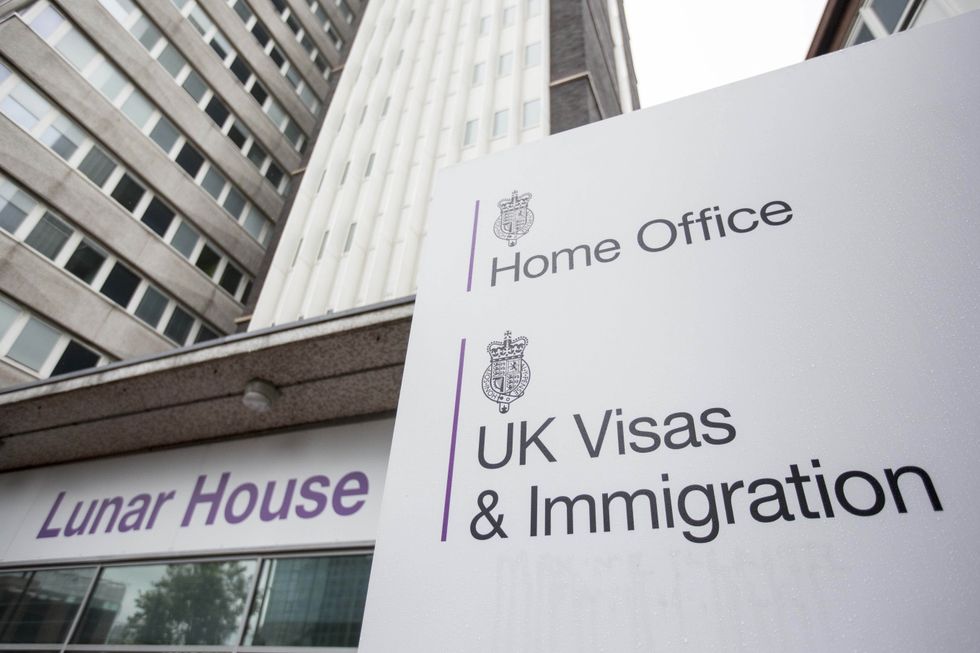
The Home Affairs Select Committee will release the full bombshell document on Monday
PA
But 3,118 are there now, with 12,032 migrants in the queue.
Five of the Home Office’s 12 regions have not hit even 50 per cent of their accommodation targets.
Home Office Minister Alex Norris said in a letter to MPs: “The plans consider a range of factors, such as the availability of housing, the presence of other supported Home Office cohorts, the capacity of the local authority to meet user needs (e.g. GP availability) as well as broader social considerations like homelessness and social cohesion.
“As of July 1, 82 per cent (297) of local authorities and districts are accommodating service users.
“Among the 64 that do not currently provide accommodation, a further 36 local authorities are projected to have estate by the year’s end, increasing national coverage to 92 per cent.”

Reform UK’s Lee Anderson branded the news ‘an absolute betrayal of every hardworking family’
Reform UK’s Lee Anderson branded the news “an absolute betrayal of every hardworking family”.
“Communities up and down the country are being transformed against their will, saddling them with the bill in the process,” he said.
“Reform is the only party offering credible solutions to the illegal migration crisis. We will leave the ECHR, stop the boats and detain and deport those who illegally enter into our country.”
The Home Office, meanwhile, said it was “furious”.
“The Government is furious about the number of illegal migrants in this country and in hotels,” a spokesman spat.
“That is why we will close every single asylum hotel – saving the taxpayer billions of pounds.
“We have already taken action – cutting the number of hotels in half and exploring the use of military bases and disused properties.”
Nine in 10 Councils Will Be Housing ‘Asylum Seekers’ by December as Pressure Mounts on Britain’s Local Authorities
Britain’s immigration and housing systems are facing renewed pressure amid claims that nine in ten local councils could be accommodating asylum seekers by December. The development has reignited a heated national debate about the government’s handling of irregular migration, the availability of affordable housing and the financial responsibilities placed on local authorities. As communities across the country express concerns about pressure on public services, ministers are facing increasing demands to explain how they intend to manage the growing challenges associated with asylum accommodation.
First of all, the issue of asylum accommodation has become one of the most controversial subjects in British politics. Over recent years, the number of people arriving in the United Kingdom to claim asylum has placed considerable pressure on government departments responsible for processing applications and providing temporary accommodation.
Under the UK’s asylum system, individuals who have claimed asylum and meet the relevant eligibility requirements may receive accommodation and financial support while their applications are being considered. This assistance is intended to ensure that people who cannot support themselves are not left homeless or destitute during the process.
However, the growing demand for accommodation has created significant logistical and financial difficulties. Hotels, temporary housing facilities and other properties have been used to accommodate asylum seekers when suitable alternative arrangements are unavailable.
The prospect of nine in ten councils becoming involved in asylum accommodation by December has therefore attracted considerable attention. If confirmed, such a development would demonstrate how widely the responsibilities associated with asylum housing have spread across Britain.
Local authorities already face enormous challenges. Many councils are struggling with limited budgets, increasing demand for social housing and pressure on essential services. Homelessness, temporary accommodation costs and shortages of affordable homes have become serious concerns in numerous communities.
Consequently, some residents are questioning whether councils have sufficient resources to accommodate additional households while continuing to meet the needs of existing residents.
One of the biggest concerns involves the availability of housing. Across Britain, families can spend months or even years waiting for suitable social housing. Rising rents and limited property availability have made it increasingly difficult for low-income households to secure affordable accommodation.
Critics argue that the government must explain how asylum accommodation will be provided without worsening existing housing shortages. They believe that local communities should receive clear information about proposed accommodation arrangements and the financial support available to councils.
Another important issue concerns the cost to taxpayers. Providing accommodation, food and essential support to asylum seekers requires substantial public expenditure. The use of hotels has been particularly controversial because temporary arrangements can be expensive compared with longer-term housing solutions.
The government has previously acknowledged the financial burden associated with hotel accommodation and has promised to reduce its reliance on this approach.
For taxpayers, the central question is whether public money is being used efficiently. Many people accept that Britain has legal and humanitarian responsibilities towards genuine asylum seekers, but they also expect ministers to manage the system responsibly and prevent unnecessary expenditure.
The Labour government under Keir Starmer has promised to reform immigration enforcement, tackle people-smuggling networks and improve the processing of asylum applications. Ministers have argued that faster decisions and more effective enforcement will reduce the need for expensive temporary accommodation.
Nevertheless, opposition parties have criticised the government’s progress. Conservative politicians and Reform UK have repeatedly argued that Britain needs stronger border controls and a more effective system for removing individuals who have no legal right to remain in the country.
Nigel Farage and his colleagues have also made immigration a central part of their political campaigns, arguing that uncontrolled migration places excessive pressure on housing, healthcare and public services.
However, the debate requires a distinction between people seeking asylum through legal procedures and individuals who have no right to remain in Britain. An asylum claim must be assessed individually, and not everyone arriving through an irregular route will necessarily have a valid claim. Equally, an unsuccessful application does not automatically mean that removal can happen immediately, as legal appeals and other protections may apply.
Local councils also face practical difficulties when accommodating vulnerable individuals. They must consider access to healthcare, education, translation services and appropriate support. These responsibilities require effective cooperation between local authorities, the Home Office and other public organisations.
Another concern involves the relationship between asylum accommodation and local communities. Residents may want reassurance that new facilities will be properly managed and that local infrastructure will not be placed under unreasonable pressure.
Open communication is therefore essential. Councils should explain accommodation arrangements, provide opportunities for residents to raise legitimate concerns and ensure that any problems are addressed quickly.
At the same time, asylum seekers should not become targets of hostility simply because they require temporary accommodation. They are individuals whose applications must be assessed according to the law. Public debate should focus on government decisions and the effectiveness of immigration policy rather than encouraging discrimination against vulnerable people.
There are several measures that could help improve the situation. Firstly, the government should accelerate the processing of asylum applications while maintaining fair legal procedures. Secondly, it should reduce dependence on expensive hotel accommodation through suitable longer-term arrangements. Thirdly, councils must receive adequate financial support for the responsibilities placed upon them. Finally, individuals whose applications are rejected and who have exhausted their legal options should be subject to appropriate and lawful immigration enforcement.
The government must also address the wider housing shortage. Increasing the supply of genuinely affordable homes, improving social housing provision and supporting local authorities would benefit both existing residents and people requiring temporary accommodation.
Ultimately, immigration policy cannot be separated from Britain’s wider housing and economic challenges. A sustainable system requires careful planning, transparent spending and effective cooperation between national and local government.
In conclusion, the claim that nine in ten councils will be housing asylum seekers by December has highlighted the growing pressure on Britain’s local authorities. The issue raises important questions about public spending, housing availability and the government’s ability to manage immigration effectively. Keir Starmer’s administration must demonstrate that councils have the resources and support necessary to fulfil their responsibilities without neglecting existing residents. Britain has legal obligations towards people seeking protection, but those responsibilities must be managed through a fair, efficient and financially sustainable system. Ultimately, public confidence will depend on the government’s ability to restore control, reduce unnecessary costs and ensure that local communities are treated fairly.