

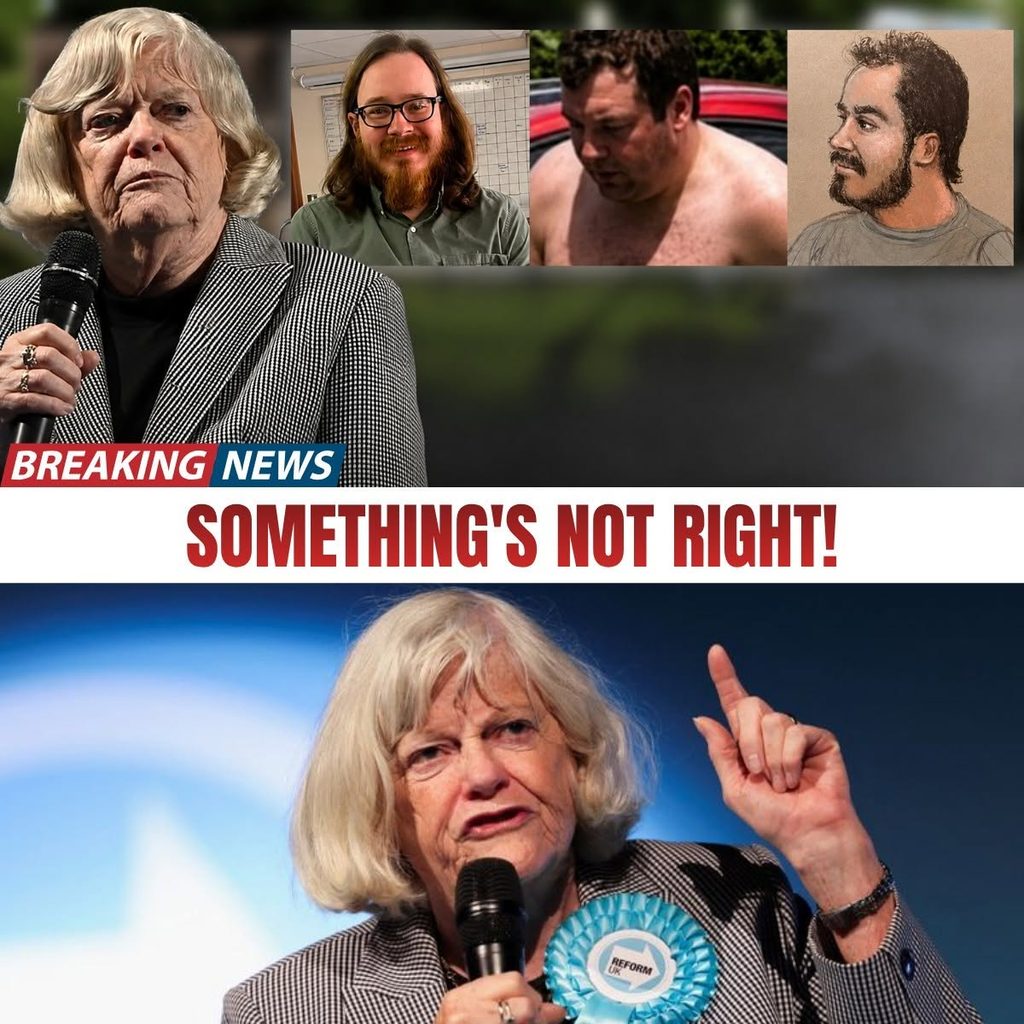

Fresh controversy has erupted in the United Kingdom following the killing of Reform UK immigration spokesperson Anne Whittickam, as political figures and commentators continue raising questions about the police investigation and the information released to the public.
Several senior Reform UK figures have publicly expressed concern over what they describe as inconsistencies surrounding the case. Darren Grimes highlighted apparent differences between publicly circulated images of the suspect, while GB News presenter Alex Armstrong commented that “something is not right.” Reform UK representative Russell Quirk also questioned the differing images, adding to a growing online debate. Some commentators have pointed out that one widely shared image may have been enhanced using artificial intelligence after the original photograph was blurred, while another image reportedly dates back several years.
The discussion comes amid wider criticism of Devon and Cornwall Police, whose handling of the investigation has already drawn significant attention. Critics argue that public confidence was damaged after officers initially arrested another individual before later confirming that he was not the suspect they were seeking. According to media reports, that individual was allegedly a delivery driver who had visited Anne Whittickam’s home.
Police also stated during the early stages of the investigation that they did not believe the incident was terrorism and urged members of the public not to speculate while inquiries continued. However, those comments have since been heavily criticized by some politicians and media figures, who argue that the investigation appeared to change direction as more evidence emerged.
Commentators have questioned how investigators initially assessed the situation after prosecutors later told the court that the attack had been captured on CCTV installed at the property. Because criminal proceedings remain ongoing, many details cannot legally be discussed outside what has already been presented in court.
The issue has become increasingly political after historian David Starkey suggested during a television interview that authorities may have deliberately withheld certain information in an effort to prevent public disorder. His remarks have generated significant debate but remain his personal opinion rather than an established finding.
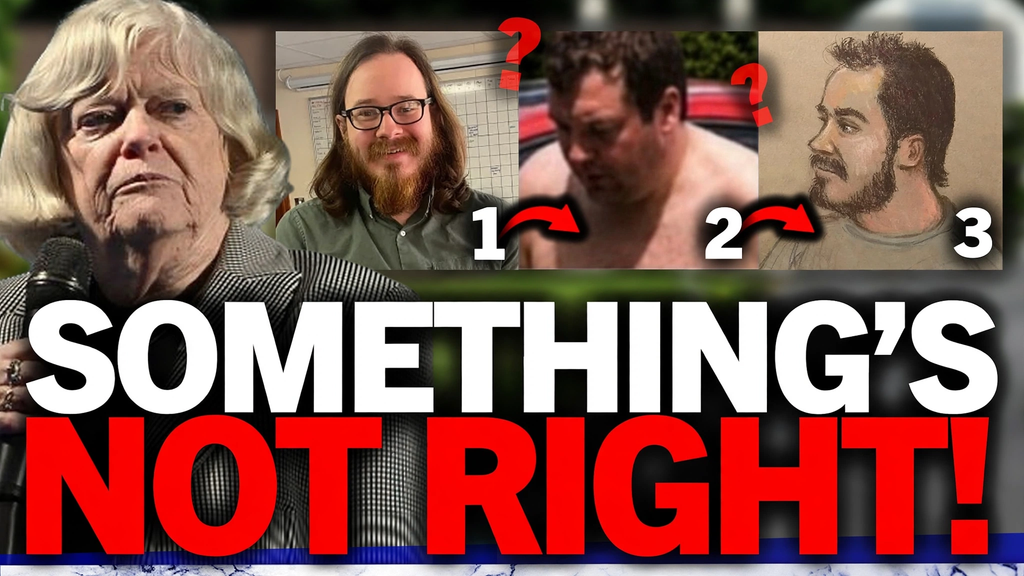
Questions have also been raised about statements made by police regarding public safety. During the investigation officers indicated that they were not aware of any continuing danger to the public, although prosecutors later described an attack involving multiple blows with a hammer. Some critics argue these developments have further weakened public confidence in the official narrative.
The debate expanded further after Elon Musk commented on social media, writing that “the lunatic left is horrifically violent.” His remarks came as commentators highlighted online material from a radical activist group that has reportedly promoted violent imagery, including posters featuring hammers alongside anti-transphobia slogans.
Reports have noted that the group encouraged activists to organize independently and target political figures or organizations they oppose. However, there is currently no publicly available evidence linking that organization or its supporters to the suspect in Anne Whittickam’s case, and commentators have acknowledged that no such connection has been established.
Nevertheless, some Reform UK members argue that political violence and intimidation deserve greater scrutiny regardless of ideology. They point to previous online campaigns targeting politicians and activists across the political spectrum as evidence that extremist rhetoric has become increasingly normalized.
During the televised discussion, several guests argued that concern should focus less on the specific weapon allegedly used and more on the motivations behind politically motivated violence. Others claimed that left-wing extremism has not received the same level of public attention as other forms of political violence, although those views remain matters of political opinion.
The conversation also turned toward campaign group Hope Not Hate after participants noted that the organization had previously published material about Anne Whittickam before later removing it from its website. Some panelists questioned why the article had disappeared, while others suggested there was no evidence that the publication had any connection to the events under investigation.
Religious commentator Father Calvin Robinson claimed that campaign groups have increasingly contributed to a hostile political climate by labeling opponents in ways that could encourage harassment. Similar concerns were echoed by other panel members, who argued that individuals across the political right have frequently been portrayed negatively in reports published by activist organizations.
Several participants also criticized what they described as inconsistent responses from authorities in other recent security incidents, arguing that public trust has been undermined by conflicting official statements. They suggested this broader loss of confidence explains why many people remain skeptical about the handling of Anne Whittickam’s case.
Despite the speculation circulating online, the criminal proceedings remain active, and key questions surrounding motive and other aspects of the case have yet to be determined in court. Under UK contempt of court laws, public commentary is subject to significant legal restrictions while the trial continues.
As investigations move forward, the case has evolved beyond a criminal inquiry into a broader debate over policing, political extremism, public trust, and transparency. Supporters of Anne Whittickam continue calling for a full and impartial investigation, while political figures across the country await further evidence that may clarify the circumstances surrounding her death.
Shocking New Questions Rock UK After Reform Figure’s Death as Police Face Growing Scrutiny Over Investigation
The death of a figure associated with Reform UK has prompted renewed questions and public discussion, placing the police investigation under increasing scrutiny. As concerns emerge over what happened, attention is turning towards the circumstances surrounding the death, the information made available to the public and whether investigators will be able to provide clear answers to those seeking an explanation.
The case has also raised wider questions about public confidence in the police, the handling of high-profile investigations and the speed at which authorities communicate with families and communities affected by tragedy. In a political environment where speculation can spread rapidly, the challenge for investigators is to establish the facts while ensuring that unverified claims do not become confused with evidence.
Although the precise circumstances and identity of the individual involved require confirmation, the controversy illustrates how the death of someone connected with a prominent political movement can quickly become a matter of national attention.
Questions Mount Over the Circumstances of the Death
When an individual connected to a political organisation dies in circumstances that attract public attention, questions about the events leading up to the death are inevitable. Friends, relatives, colleagues and members of the wider community may want to understand what happened, particularly when the available information is limited.
In such cases, the first responsibility of investigators is to establish a reliable account of the events. That may involve examining the timeline, interviewing witnesses, reviewing relevant records and considering any forensic evidence available. Depending on the circumstances, police may also work with specialist investigators, medical professionals or a coroner.
However, investigations of this kind can take time. Information that initially appears significant may later prove unrelated, while details that seem minor at first can become important as investigators reconstruct the sequence of events.
This is why early statements must be treated carefully. The absence of an immediate explanation does not automatically demonstrate that an investigation has been mishandled, just as an initial police account should not prevent legitimate questions from being asked as further evidence emerges.
For the public, the key issue is whether investigators are following the available evidence and communicating appropriately about what can be disclosed.
Why the Case Has Attracted Political Attention
Reform UK has become an increasingly prominent part of Britain’s political debate, particularly around immigration, economic pressures, public services and dissatisfaction with the established parties. As a result, developments involving people associated with the movement can attract attention from supporters, opponents and political commentators alike.
The death of a political figure can create a particularly sensitive atmosphere. Supporters may demand answers, while critics may question how the situation is being discussed in the media. Online communities can also amplify rumours, sometimes before reliable information has been established.
Yet a person’s political affiliation does not, by itself, establish a connection between their death and political activity. Any suggestion of a political motive, suspicious circumstances or wrongdoing would need to be supported by evidence from the investigation.
That distinction is essential. Investigators must be allowed to follow the facts without political pressure determining their conclusions. At the same time, public authorities should recognise that people may reasonably expect transparency when a case raises significant questions.
The responsible approach is to examine what is known, identify what remains unclear and avoid presenting speculation as established fact.
Police Face Questions About Transparency
Police forces regularly face difficult decisions about how much information to release during an active investigation. Publishing too little can leave families and members of the public feeling that important questions are being ignored. Releasing too much, however, can compromise witness evidence, affect potential legal proceedings or disclose information that should remain confidential.
These competing responsibilities are especially difficult in cases that attract widespread media coverage.
Investigators may be unable to discuss particular evidence, explain every line of inquiry or respond to every claim circulating online. There can also be legitimate reasons for withholding personal information about the deceased and their family.
Nevertheless, limited public communication does not remove the need for accountability. Where appropriate, police should explain the general progress of an investigation, clarify whether particular concerns are being examined and correct significant misinformation.
If an investigation identifies errors or shortcomings, those issues should be addressed through the relevant oversight procedures. If investigators conclude that no suspicious circumstances exist, the reasoning and evidence should be explained as far as legally possible.
The central principle is that public confidence depends not simply on the outcome of an investigation but also on whether the process is considered thorough, impartial and accountable.
The Importance of an Independent and Evidence-Based Investigation
In any death that raises legitimate questions, the integrity of the investigation is paramount. Investigators should consider relevant evidence objectively, regardless of the deceased person’s political beliefs, public profile or personal connections.
Where the circumstances require it, independent review can help establish whether appropriate procedures were followed. Depending on the case, oversight may involve senior police officers, professional standards departments, the Independent Office for Police Conduct or the coroner’s process.
The appropriate route depends on the facts and the nature of the concerns raised. Not every controversial case requires an independent investigation, but credible evidence of serious misconduct should be assessed through the proper channels.
This framework matters because public confidence can be damaged in two different ways. A failure to investigate credible concerns can leave people feeling that important questions have been overlooked. Conversely, unsupported accusations can unfairly damage reputations and undermine trust in institutions without helping establish the truth.
A fair process must protect both the right to ask questions and the principle that allegations require evidence.
Social Media Adds to the Pressure
Modern investigations increasingly unfold in an environment where information travels almost instantly. A short statement, photograph or anonymous claim can circulate widely before police have completed even the initial stages of their work.
Political affiliation can make this process more complicated. Users may interpret developments through their existing views of a party, the police or the government. Some may regard a lack of information as evidence of a cover-up, while others may dismiss every concern as politically motivated.
Neither reaction necessarily reflects the available evidence.
Online speculation can also create difficulties for witnesses and relatives. Incorrect claims may spread beyond the original audience, while private details can be circulated without consent. In serious cases, speculation can interfere with the public’s understanding of what investigators have actually established.
Readers can help by checking whether claims come from official statements, named witnesses or reputable reporting. They should also distinguish between a confirmed fact and a question that someone has merely raised.
A claim repeated thousands of times does not become reliable simply because it has attracted attention.
The Impact on Family, Friends and Colleagues
Behind the political discussion is the death of an individual and the grief experienced by those who knew them. For family members and friends, intense public attention can make an already difficult period even more painful.
Relatives may have questions that cannot immediately be answered. They may also have concerns about how information is being shared and whether the person’s privacy is being respected.
Police investigations must therefore balance the public interest with compassion for those directly affected. Families should receive appropriate information through established procedures, although investigators may sometimes be unable to provide a complete account while inquiries continue.
Political organisations also face difficult decisions when someone associated with their movement dies. They may wish to express condolences, support those affected and respond to questions from members. However, they should avoid drawing conclusions about the cause or circumstances of a death before the evidence is available.
Respect for the deceased should remain central, regardless of political differences.
What Would Establish Whether the Investigation Was Mishandled?
The growing scrutiny surrounding a case can produce demands for immediate answers, but meaningful accountability requires specific questions and verifiable information.
First, investigators must establish the available timeline and explain, where possible, how they reached their conclusions. Second, any credible inconsistencies in witness accounts, official statements or documented events should be examined. Third, concerns about police conduct should be directed to the appropriate oversight body when they involve possible procedural failures or misconduct.
It is also important to distinguish between an investigation that is taking time and one that is failing. Complex inquiries can involve forensic testing, multiple witnesses and legal restrictions that delay the release of information. A lengthy process is not, on its own, proof of incompetence or wrongdoing.
Equally, the fact that police have issued a statement does not mean every question has been answered. If new evidence emerges, investigators may need to reconsider earlier conclusions or explain why particular lines of inquiry were ruled out.
The public deserves a process in which conclusions are supported by evidence rather than pressure, assumptions or political loyalty.
Public Confidence and the Need for Clear Answers
Trust in policing is built over time, but it can be weakened when people believe that their concerns are being ignored. High-profile cases place particular pressure on authorities because every announcement may be examined by journalists, political figures and online commentators.
The best response is not to rush towards a conclusion simply to satisfy public demand. Instead, investigators should work methodically, preserve relevant evidence and communicate clearly within the limits of the law.
Where there are legitimate grounds for independent scrutiny, the process should be transparent enough to demonstrate that concerns have been considered fairly. Where allegations prove unfounded, that should also be made clear.
Political neutrality is crucial. A person’s connection to Reform UK, or to any other political organisation, should neither increase nor diminish the seriousness with which credible evidence is assessed.
The same standards must apply to everyone.
A Case That Demands Facts Rather Than Speculation
The death of a Reform UK-associated figure has become the focus of questions about the circumstances involved and the handling of the investigation. Those questions deserve careful consideration, but the available evidence must determine what conclusions can reasonably be drawn.
Without confirmed details about the individual, the circumstances of the death and the specific actions taken by police, it would be premature to suggest that investigators have concealed information, committed misconduct or overlooked evidence. Such claims require substantiation.
What can be said is that public confidence depends on a credible process, appropriate communication and a willingness to examine legitimate concerns. If mistakes have been made, they should be identified and addressed. If the evidence supports the conclusions reached by investigators, those conclusions should be explained as clearly as possible.
For the family and friends of the deceased, the priority remains a reliable account of what happened and the opportunity to grieve without unnecessary speculation. For the wider public, the priority is ensuring that questions are answered through evidence and proper oversight.
Ultimately, the most important outcome is not the loudest political reaction or the most dramatic headline. It is a fair, thorough and transparent investigation that establishes the facts and treats everyone involved with dignity.
Until verified information provides a clearer picture, caution remains essential. Questions can be legitimate without being proof of wrongdoing, and scrutiny can strengthen public confidence when it is grounded in evidence rather than assumption.