
Poland Tightens Belarus Border as Migration Attempts Fall and Asylum Restrictions Continue
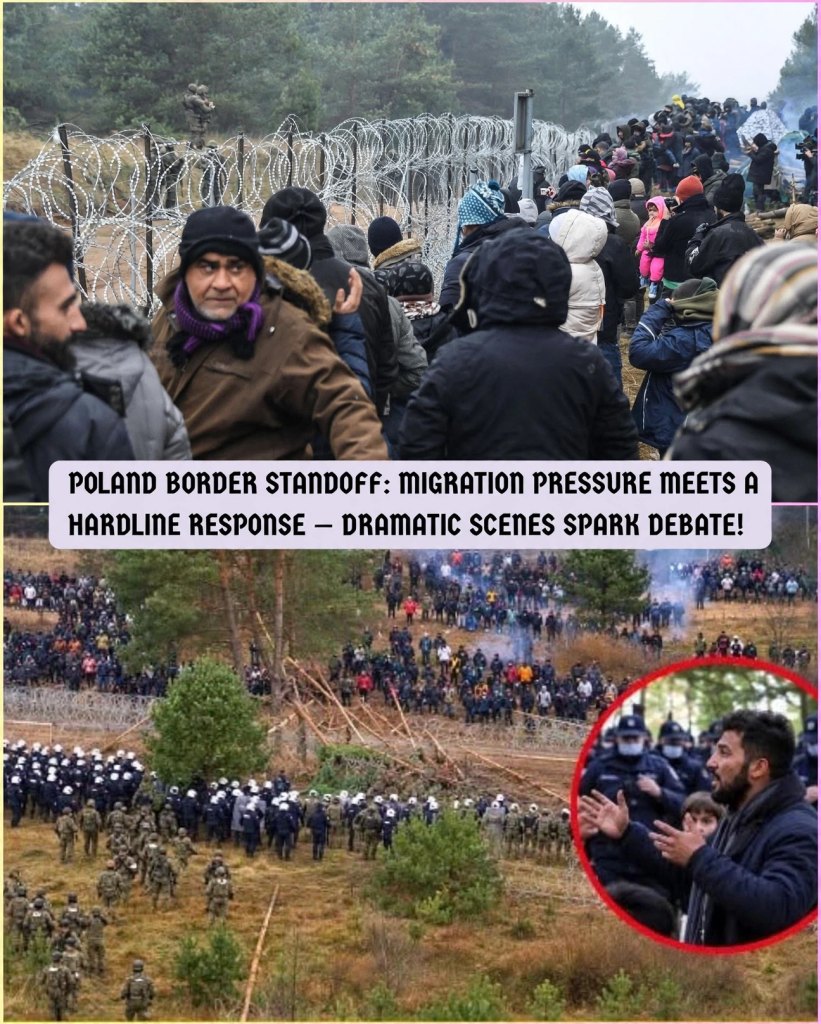
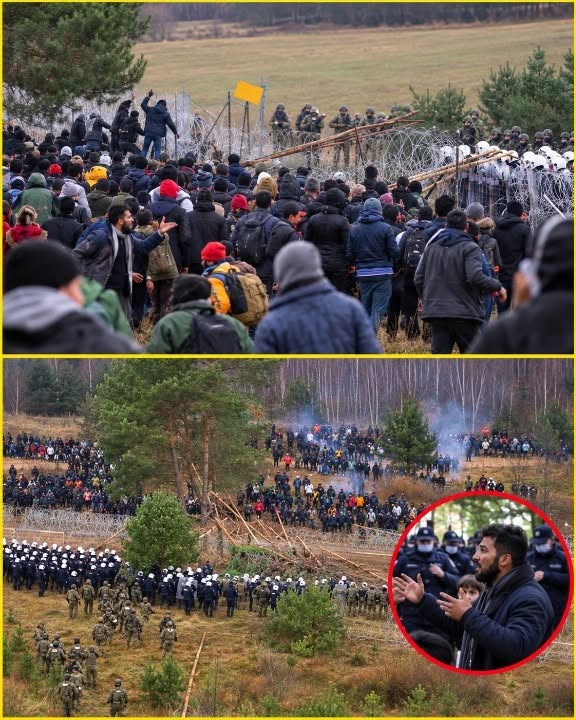
WARSAW — Poland is maintaining some of Europe’s toughest measures along its border with Belarus, with authorities reporting that hundreds of attempted irregular crossings have been stopped in 2026 while the government continues restricting access to asylum procedures at the frontier.
The policy has become a major European political and legal debate.
Polish officials argue that the migration route through Belarus is not an ordinary refugee movement but part of a deliberate effort by Belarus — supported by Russia — to place pressure on Poland and the European Union.
Human-rights organisations and refugee advocates dispute aspects of Poland’s response. They warn that restricting asylum applications and returning people at the border can prevent individuals with legitimate protection claims from receiving the assessment required under European and international law.
Recent viral posts have sometimes presented the confrontation more simply: large groups of Muslims supposedly attempted to enter Poland and were immediately rejected.
The available evidence supports a more complicated account.
Official Polish statistics document attempts by migrants to cross from Belarus. They do not establish that everyone involved was Muslim, and nationality, religion, immigration status and eligibility for asylum are separate questions.
What is actually happening at the Belarus border?
The latest figures indicate a dramatic reduction in irregular crossings compared with previous years.
On September 8, Poland’s Border Guard reported that more than 50 attempted crossings had been recorded over several days in the Narewka area.
According to the Border Guard, most of the migrants retreated toward Belarus after encountering Polish patrols, while the remaining individuals were apprehended.
By that point, authorities had recorded more than 410 attempted irregular crossings in the Podlaskie Border Guard region during 2026. Polish officials said every recorded attempt had been prevented.
Another seven attempts were recorded between September 11 and 13 near Narewka and Michałowo. Some people attempted to enter over land while others tried to cross the Świsłocz River. All retreated into Belarus after encountering Polish patrols, according to the Border Guard.
These figures show that migration pressure has not disappeared.
But they also contradict descriptions of an uncontrolled “mass migration” successfully entering Poland through this section of the border.
A dramatic decline from 2025
Poland has invested heavily in physical and electronic border infrastructure.
The Interior Ministry said in June that the government had spent nearly 3 billion złoty over two years strengthening border security, including improvements to a 190-kilometre physical barrier and electronic monitoring systems covering nearly 220 kilometres.
According to government figures, only 215 attempted irregular crossings were recorded between January and May 2026, compared with more than 10,600 during the equivalent period in 2025 — a decline of approximately 98%.
The Polish government presents those figures as evidence that its strategy is working.
Interior Minister Marcin Kierwiński said earlier this year that authorities had prevented every recorded attempt to cross illegally from Belarus during the first quarter of 2026.
However, government statistics and descriptions of the policy should be distinguished from independent assessments of whether every element of Poland’s approach complies with refugee and human-rights law.
Why does Poland blame Belarus?
The confrontation dates back several years.
Poland and other European governments accuse Belarusian President Alexander Lukashenko’s government of facilitating migration toward the EU’s eastern frontier as a form of political pressure.
Warsaw describes the tactic as the “instrumentalisation” or “weaponisation” of migration.
Polish authorities say Belarusian agencies have assisted migrants in reaching the border and have also participated, directly or indirectly, in confrontations with Polish soldiers and border officers.
The broader accusation that Belarus has deliberately facilitated migration toward EU borders is also widely accepted among EU governments.
That does not mean individual migrants themselves are necessarily agents of Belarus.
Many originate from countries affected by poverty, political instability or conflict and may have their own reasons for attempting to reach Europe. The political dispute concerns whether Belarus has deliberately facilitated their journeys and directed them toward EU territory.
That distinction matters.
A government may consider the overall migration route part of a hostile operation while individual people using that route may still have legitimate claims for international protection.
Poland has suspended many asylum applications at the border
The most controversial part of Poland’s strategy goes beyond physically preventing irregular crossings.
Since March 27, 2025, Poland has restricted the ability to submit applications for international protection at its border with Belarus.
On September 18, 2026, the government extended the measure for another 60 days — the eighth extension since the mechanism was introduced.
Warsaw argues that the temporary restriction is necessary because the asylum system is being exploited as part of Belarus’s pressure campaign.
The policy does contain exceptions.
Earlier EU asylum documentation noted exemptions for groups including unaccompanied minors, pregnant women, people with particular health or vulnerability needs, individuals facing a genuine risk of serious harm in Belarus, and Belarusian citizens.
Official statistics demonstrate that the restriction does not mean absolutely everyone is automatically rejected.
Between March 27, 2025 and May 19, 2026, Polish authorities declined to accept applications from 480 foreign nationals, while accepting applications from 141 people classified as belonging to vulnerable groups, according to the Interior Ministry.
Why human-rights groups object
Critics argue that Poland’s approach creates a serious legal problem.
Under the principle known as non-refoulement, states generally cannot return people to places where they face persecution, torture or other serious harm without properly considering relevant protection claims.
Refugee and human-rights organisations have therefore questioned whether restricting access to asylum at an international border is compatible with Poland’s international obligations.
The Asylum Information Database has documented concerns about access to Polish territory and asylum procedures, including disputes involving European Court of Human Rights interim measures.
The Polish government rejects the argument that its system simply abandons people requiring protection.
It points to the exemptions for vulnerable individuals and argues that extraordinary measures are justified because Belarus has artificially created the migration route.
This is therefore not merely a disagreement about whether borders should be controlled.
It is also a legal dispute over how far a state may restrict asylum rights when it believes another government is deliberately using migration to destabilise it.
Were “Muslims” rejected from Poland?
There is insufficient evidence to describe the current border situation that way.
Polish Border Guard reports generally identify the people involved as migrants or foreign nationals rather than classifying them according to religion.
Furthermore, people denied entry to Poland come from a wide variety of countries.
For example, on September 15 the Border Guard reported refusing entry at Warsaw’s Chopin Airport to 16 foreign nationals whose nationalities included Georgian, Colombian, Ukrainian, Russian, Azerbaijani, Japanese, Honduran, British, Turkish, South Korean, American, Uzbek and Moldovan. Reasons included inadequate documentation, exceeding permitted stays and security-related records.
That illustrates why religion is an unreliable shorthand for immigration enforcement.
A person can be Muslim and legally entitled to enter Poland. Another person can be Christian, Jewish, Buddhist, atheist or of any other belief and still be refused entry for failing immigration requirements.
The legal question is generally about immigration status and applicable law, not religion.
Poland now wants Europe to consider its approach
The controversy has expanded beyond Poland.
Warsaw is urging the European Union to develop broader rules allowing governments to temporarily restrict asylum procedures when migration is deliberately orchestrated by hostile states.
The European Commission is considering an emergency framework addressing what it describes as “engineered and weaponized” migration. Poland argues that its experience on the Belarus border demonstrates why such mechanisms are necessary.
Opponents fear the opposite precedent.
They argue that if governments are permitted to suspend asylum protections whenever migration is characterised as a security operation, emergency measures could gradually weaken protections created for people genuinely fleeing persecution.
That tension is likely to remain at the heart of Europe’s migration debate.
Poland’s border is undeniably much harder to cross irregularly than it was during earlier phases of the Belarus crisis. Official figures show a substantial decline in attempted crossings, and Polish authorities continue to intercept people attempting to enter outside authorised procedures.
But the evidence does not support reducing the story to “Muslims tried to mass-migrate into Poland and were rejected.”
What is actually unfolding is a dispute involving border security, irregular migration, asylum law, alleged Belarusian hybrid tactics and the limits of a European state’s authority to restrict access to international protection.
And that debate is increasingly moving beyond Poland’s eastern frontier to become a question for Europe as a whole.
Poland Rejects Migrants at the Border as Immigration and European Security Debate Intensifies
Poland’s approach to border security has become a major point of discussion across Europe as governments continue to debate irregular migration, asylum procedures and the protection of national borders. Reports of groups of migrants attempting to enter Poland have renewed questions about how Warsaw should respond to unauthorised crossings, how European countries should share responsibility for asylum seekers and what measures are appropriate when people arrive without the required documents.
The issue has particular significance for Poland because of its geographical position on the European Union’s eastern frontier. The country has faced migration pressures along its borders with Belarus, while the wider European debate has been shaped by disagreements over border controls, humanitarian responsibilities and the future of the EU’s migration policies.
Although dramatic online headlines sometimes portray border incidents as a confrontation between entire religious or ethnic communities, the facts of individual events must be established before conclusions can be drawn. Migrants are not a single, uniform group, and a person’s religion does not establish whether they have crossed a border legally or whether they qualify for international protection.
The central questions are how Poland manages border security, what happens when people attempt to cross without authorisation and how the authorities balance immigration enforcement with their legal obligations.
Why Poland Has Become a Focus of Border Security Debates
Poland occupies an important strategic position within the European Union. Its border with Belarus has become a major point of tension following an increase in migration movements that Polish and other European officials have described as involving the deliberate facilitation of crossings by Belarusian authorities.
Warsaw has argued that the situation represents not only an immigration challenge but also a matter of national security. Polish officials have accused Minsk of encouraging or facilitating the movement of migrants towards the EU’s external border as a means of putting pressure on neighbouring countries.
Belarus has disputed aspects of Western governments’ characterisation of the situation. The wider dispute has become intertwined with relations between Belarus, Poland, the European Union and Russia.
For Poland, the challenge is particularly complicated because border authorities must respond to attempts at unauthorised entry while also dealing with people who may be seeking asylum.
The government has consequently placed considerable emphasis on border surveillance, physical barriers, patrols and cooperation with European institutions.
Supporters of a strict approach argue that these measures are necessary to prevent irregular crossings and protect the integrity of the country’s borders. Critics, however, have raised concerns about access to asylum procedures and the treatment of people who reach the frontier.
What Happens When Migrants Are Rejected at a Border?
When people attempt to enter Poland without the necessary authorisation, border officials can take measures provided for under Polish law and applicable European rules.
Depending on the circumstances, authorities may verify identities, examine travel documents, assess whether an individual has a lawful basis for entry and initiate the relevant immigration procedures.
However, rejection at the border is not necessarily the end of the legal process. People who express a wish to seek international protection may have rights that must be considered under the applicable asylum framework.
The distinction between an unauthorised border crossing and an asylum application is important. A person may arrive without a visa or other entry document while still having a legitimate claim to protection from persecution or serious harm.
Likewise, submitting an asylum claim does not automatically guarantee permission to remain permanently. Applications must be assessed according to the relevant legal requirements, and authorities can reject claims that do not meet the criteria, subject to applicable procedural safeguards.
The circumstances of each case therefore matter. An account claiming that an entire group was simply turned away cannot establish whether the authorities followed the required procedures or what happened to each individual afterwards.
The Role of Belarus in the Migration Crisis
The situation along Poland’s eastern border has attracted attention because of allegations that Belarus has used migration movements to exert political pressure on neighbouring European states.
Polish authorities and EU institutions have argued that the facilitation of travel towards the border has contributed to an organised pressure campaign. They have maintained that the issue should be considered alongside wider security tensions in the region.
This interpretation has influenced Poland’s approach to border protection and its calls for stronger European cooperation.
The dispute also demonstrates how migration can become entangled with international relations. Border management is not always simply a question of how many people wish to enter a country. It can also involve the actions of neighbouring governments, organised smuggling networks and disputes over regional security.
Nevertheless, the circumstances of a particular border incident should not be assumed solely from the broader political context. Establishing what happened requires reliable information about the date, location, people involved and response of the authorities.
Europe’s Divided Response to Immigration
Poland’s border policies form part of a larger European disagreement about how migration should be managed.
Some governments favour stronger external-border controls, faster asylum decisions and more effective removal procedures for people who have no legal right to remain. They argue that the credibility of immigration systems depends on consistent enforcement and the ability to prevent unauthorised entry.
Other policymakers place greater emphasis on humanitarian protection, access to asylum procedures and cooperation between EU member states to ensure that vulnerable people are treated according to common standards.
These positions are not always mutually exclusive. Governments can seek to prevent irregular crossings while maintaining procedures for people who qualify for international protection.
The difficulty lies in determining how these goals should be implemented, how responsibility should be distributed between countries and what safeguards should apply when authorities make decisions affecting people’s liberty and safety.
The EU has continued to develop common migration and asylum arrangements, but disagreements remain over solidarity, border procedures, returns and the distribution of responsibility among member states.
Poland’s experience has therefore become part of a wider debate about whether Europe can establish an approach that is both operationally effective and consistent with its legal commitments.
Security Concerns and Humanitarian Responsibilities
Border security is a legitimate responsibility of national governments. Authorities need to know who is entering the country, enforce immigration rules and respond to organised criminal activity.
At the same time, border enforcement can have serious consequences for people fleeing conflict, persecution or other dangerous circumstances.
International refugee protection rests on the principle that people should not be returned to places where they face certain forms of serious harm. The precise legal obligations depend on the circumstances, but border procedures must take relevant protection claims into account.
Humanitarian organisations have raised concerns about dangerous conditions along some European border routes, including exposure to extreme weather, inadequate access to medical assistance and the risks associated with smuggling networks.
These concerns do not eliminate the need for effective border controls. They demonstrate why enforcement policies must be accompanied by appropriate safeguards and procedures for identifying vulnerable people.
A sustainable approach requires authorities to distinguish between different circumstances rather than treating every person who arrives at the border as presenting the same legal or security situation.
The Political Impact Inside Poland
Immigration and border security have become important issues in Polish domestic politics. Public discussion frequently connects the government’s approach to national sovereignty, European cooperation and the protection of communities near the frontier.
Politicians who advocate tougher enforcement argue that the state must demonstrate control over its territory and ensure that immigration decisions are respected.
Others have questioned whether certain enforcement measures provide adequate protection for people seeking asylum and whether restrictions could conflict with legal obligations.
These disagreements can influence debates about government spending, relations with the European Union and Poland’s broader foreign policy.
The political challenge is to develop measures that can command public confidence while remaining effective in practice. Strong rhetoric alone cannot resolve problems involving international cooperation, asylum procedures and the logistics of removing people who do not qualify to stay.
Policy decisions must ultimately be assessed by their results, their costs and their compliance with the law.
Why Accurate Reporting Matters
Sensational descriptions of migration incidents can spread quickly online, especially when they frame events as a confrontation between religious or ethnic groups.
Such descriptions can obscure important differences between individuals and encourage readers to draw conclusions unsupported by evidence.
The word “Muslims”, for example, describes people who follow a religion; it does not establish their nationality, immigration status, conduct or reasons for travelling. Likewise, the term “migrants” encompasses people in many different circumstances, including workers, students, asylum seekers and refugees.
Accurate reporting should identify what is known about a specific incident and distinguish confirmed information from political commentary.
Important details include whether a crossing occurred, how border authorities responded, whether anyone requested asylum and whether official records or independent reporting support the account.
Without those details, a dramatic headline cannot establish the scale of an event or justify generalisations about an entire community.
Conclusion: Poland’s Border Debate Continues
Poland’s response to irregular migration remains a significant issue for the country and the European Union. Its eastern border has become a focal point for disputes over security, international relations and the responsibilities of governments towards people seeking entry.
Supporters of strict enforcement emphasise the need to prevent unauthorised crossings and protect national sovereignty. Critics stress the importance of fair asylum procedures and safeguards for people who may face serious danger if returned.
The challenge is to address both concerns through clear rules, effective administration and reliable evidence.
Any claim that a particular group attempted a mass crossing and was rejected should be examined in the context of a verified incident rather than accepted solely on the strength of a dramatic headline.
Ultimately, Poland’s border policy will continue to be shaped by developments along its frontier, decisions within the European Union and the difficult task of reconciling security with humanitarian and legal responsibilities.