
The Home Office gave a British passport to a man who stood at Ismail Haniyeh’s shoulder as his bodyguard, and Haniyeh ran Hamas in Gaza. He was the son of another senior Hamas official. Egypt had detained him over a tunnel used to smuggle guns and gold into the strip. All of it had been publicly reported before his asylum claim reached a Home Office desk.
Theresa May’s department, which in those same years could find and deport Windrush pensioners who had been here since they were children, gave indefinite leave to Haniyeh’s bodyguard in 2015, and the Home Office later naturalised him.
He settled into the suburbs of a large English city as an IT consultant and changed his legal name more than once, and the Home Office stamped him through three times, at asylum, at settlement and at naturalisation.
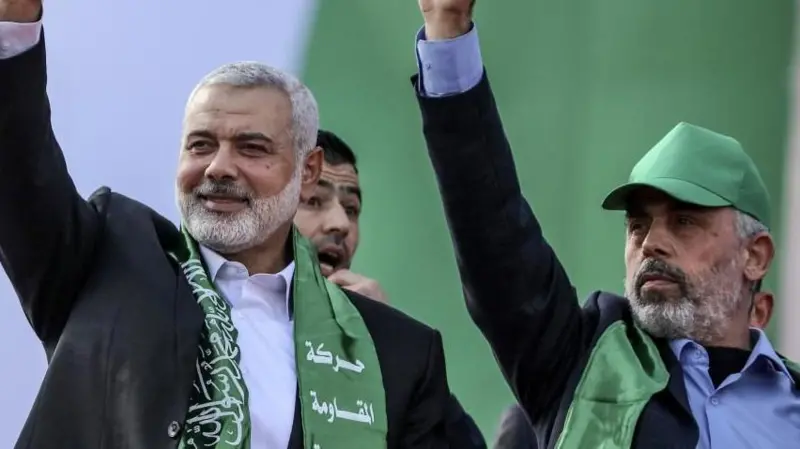
The British security services are not thought to have treated him as a priority as he began working with Hamas operatives on the Continent. It took Mossad and German intelligence to uncover a Hamas plot against Jewish community centres, Israeli diplomats and pro-Israel demonstrations in Germany and Austria, intended to coincide with the second anniversary of 7 October, before the National Crime Agency went to arrest him in London in November 2025.
A German indictment accuses him of moving pistols and ammunition from Berlin to a storage unit in Vienna. He has been convicted of nothing. The Home Office has not said what its officials had in front of them at any of the three decisions, and it has not said because every answer shames it.
In the same week the country learned that Hammersmith and Fulham Council has planned a £70,000 refurbishment, solar panels, loft insulation, new windows and doors, for the five-bedroom council house in Shepherd’s Bush where Abu Hamza’s wife holds a tenancy for life. The house is worth around £1.7 million.
Anyone reading that would ask how a state can be this incompetent. I have asked it for over eight years in Oldham, and I stopped believing the answer was incompetence a long time ago, because the same state is anything but incompetent when somebody objects.
CLEVELAND POLICE WENT TO STEPHEN GRAY’S DOOR
Cleveland Police sent officers to the home of one of its own retired officers over two Facebook posts. Stephen Gray is 65. He gave that force thirty years, and he and his wife foster children. A neighbour he had fallen out with complained, and the force found Gray’s Facebook page without any trouble, turned up at his door and sat him down under caution at Darlington police station.
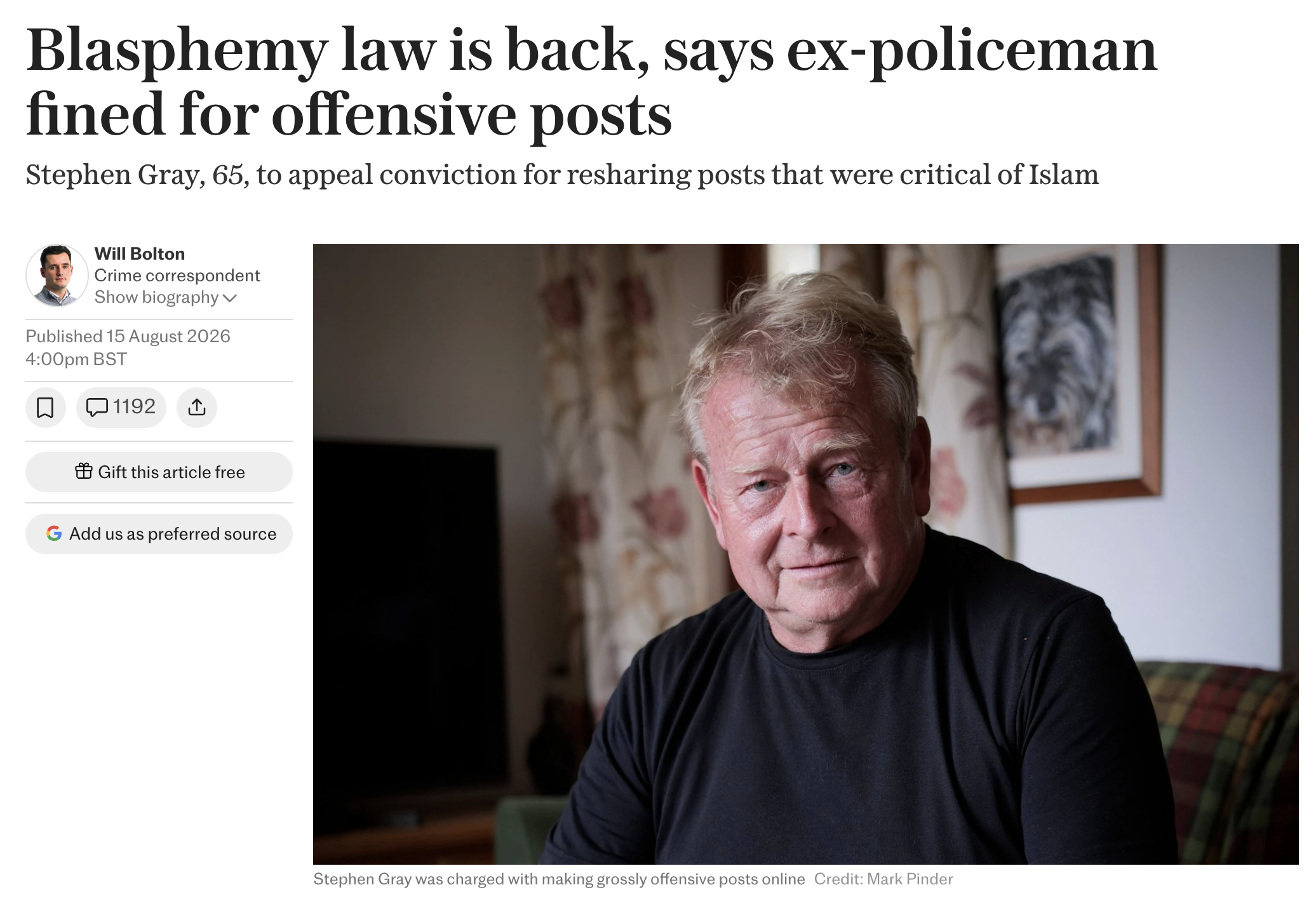
The Crown Prosecution Service read the posts and found nothing to prosecute. A neighbour filled in a review form under the Victims’ Right to Review, and the CPS found one. At Newton Aycliffe magistrates’ court in April 2026 one charge was dismissed. On the other, District Judge Steven Hood convicted him under section 127 of the Communications Act 2003, called the post grossly offensive and fined him more than £1,000 with costs. The Free Speech Union is funding his appeal.
The post was a picture of bacon and a man in a turban with the line that people who eat bacon have a lower chance of marrying a nine-year-old. Gray told the court it referred to Muhammad’s marriage to Aisha.
It was crude and it was meant to offend, and a district judge in County Durham decided that a joke about the Prophet’s marriage is a crime in this country.
The offence on the charge sheet is sending a grossly offensive message. The judge did not say the post was convicted because it was about Muhammad. I say it. Of the two posts, the one he convicted was the one about Islam, and his appeal is where that question will be put.
The Home Office had a Hamas bodyguard’s publicly reported history available to it at three separate decisions and has never said whether anyone looked. Cleveland Police had a complaint from a neighbour about a repost and delivered a police visit, an interview under caution, a prosecution and a conviction.
The two cases are nothing alike in law. The effort is what I am comparing, and the state put more of it into a retired officer’s Facebook page than it has ever shown for an asylum claim from a man photographed guarding the leader of Hamas.
THE HOME OFFICE TOOK NINETEEN YEARS
The Home Office holds the power to ban any organisation it believes is concerned in terrorism, and how it has used that power tells you what it is afraid of. Hizb ut-Tahrir called for a caliphate on British streets for decades, said democracy was haram and told Muslims they owed this country nothing.
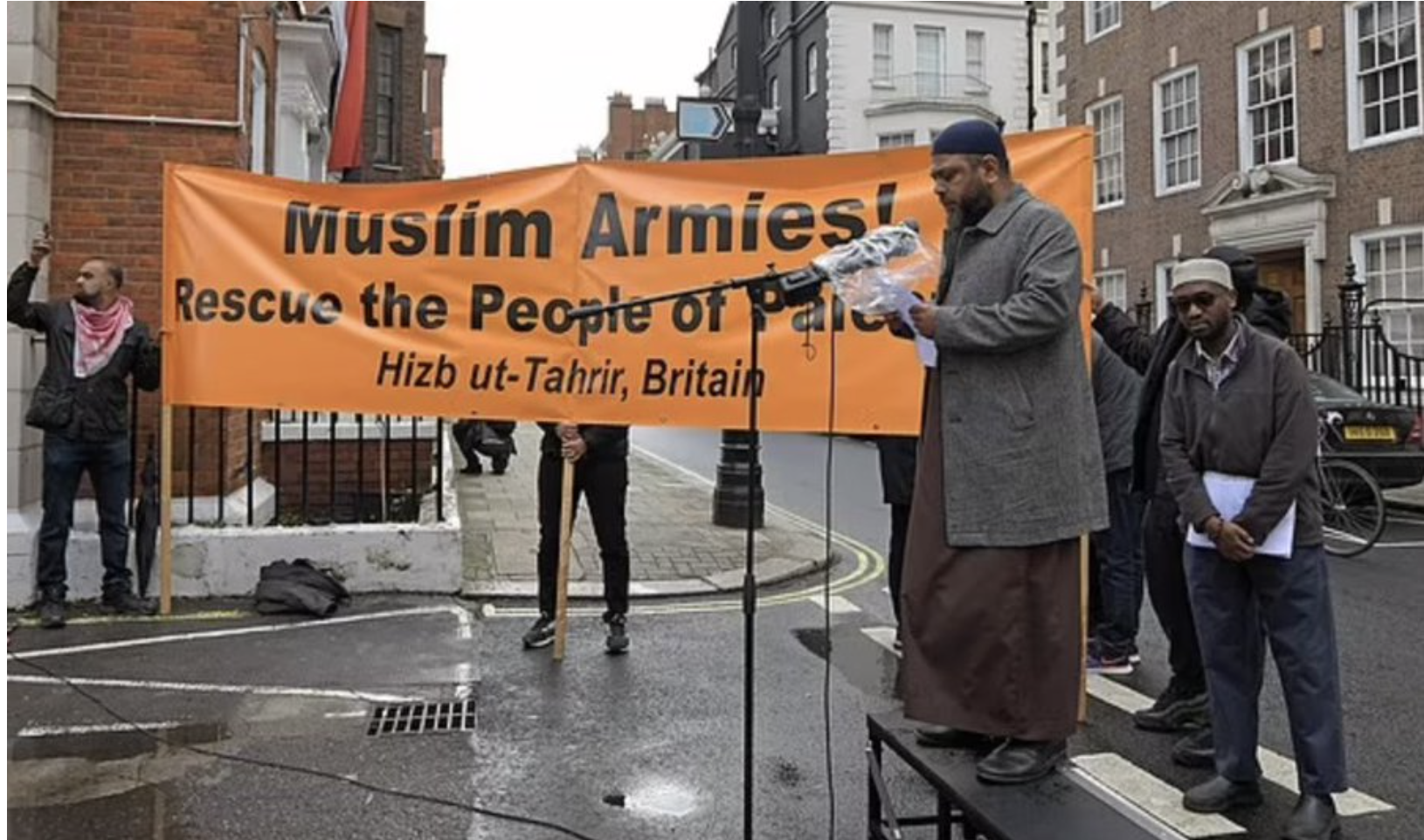
Tony Blair stood up on 5 August 2005, four weeks after the London bombings, and promised the country he would proscribe it. David Cameron put the same promise in his 2010 manifesto and won two elections on it. Two prime ministers took the applause for promising a ban and then let their lawyers talk them out of it.
James Cleverly proscribed Hizb ut-Tahrir on 19 January 2024, nineteen years after Blair’s promise, and the Home Office’s stated reason was that the group had praised and celebrated the 7 October attacks and its members had been filmed chanting for jihad on a London street.
Cleverly told the Commons the group had antisemitism at its core and rejected British values. It rejected British values in 2005, and in 2010, and in every year between, and the Home Office only found that intolerable once Hamas had murdered 1,200 people and the group’s own members had put the celebration on everyone’s phone.
Hamas itself took twenty. The military wing was banned in 2001. The organisation as a whole stayed lawful in Britain until Priti Patel proscribed it in November 2021, and in those twenty years the Home Office gave asylum, settlement and a passport to Haniyeh’s bodyguard.
The same state found a different speed for Tommy Robinson. Kent Police stopped him at the Channel Tunnel in July 2024 under Schedule 7 of the Terrorism Act, demanded his phone PIN and charged him when he refused.
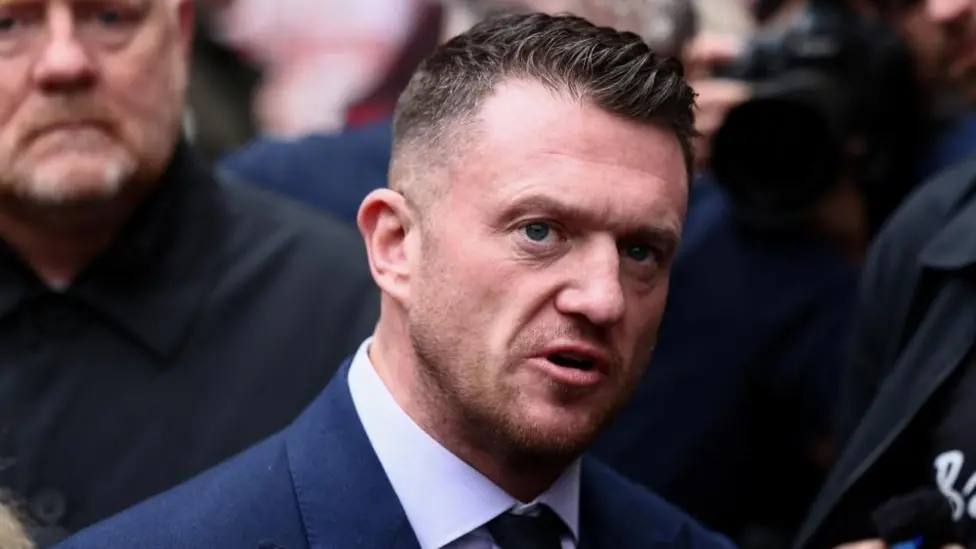
In November 2025 District Judge Sam Goozee acquitted him and found the stop unlawful, because what Robinson stood for and his beliefs had been the principal reason for it and not any suspicion of terrorism.
Seven months after that ruling, on 13 June 2026, the Metropolitan Police stopped him at Heathrow under Schedule 3 of the Counter-Terrorism and Border Security Act, a power Parliament wrote for spies and saboteurs working for foreign governments.
The Met’s own statement says he was stopped on his return from Russia via Turkey, questioned, his devices seized, and released. Russia is where the Met says he had come from. It has never said that was the reason, and it does not need to, because Schedule 3 requires no suspicion at all.
A power that needs no suspicion was used on a man a court had just found was stopped for his beliefs, and the Met has charged him with nothing and has never said what hostile activity, if any, it was looking for.
Nothing from his phones has been made public. He faces an unrelated jury trial in October 2026 on harassment charges, which he denies. A court had told the police in plain words that using terror powers on this man for his opinions was unlawful, and seven months later Mark Rowley’s force used a different terror power on the same man.
Nobody on the receiving end gets any of it back. Robinson does not get back the hours, or his phones for as long as the police chose to hold them. If Gray wins his appeal, the officers still came to his door and the interview under caution still happened. No conviction was required. Everyone watching has learned which subjects get you stopped at an airport.
STEPHEN PARKINSON TOOK A BURNT QURAN TO THE HIGH COURT
The Crown Prosecution Service prosecuted Hamit Coskun for burning a book, and when he cleared his name the Director of Public Prosecutions, Stephen Parkinson, went to the High Court to have the conviction put back.
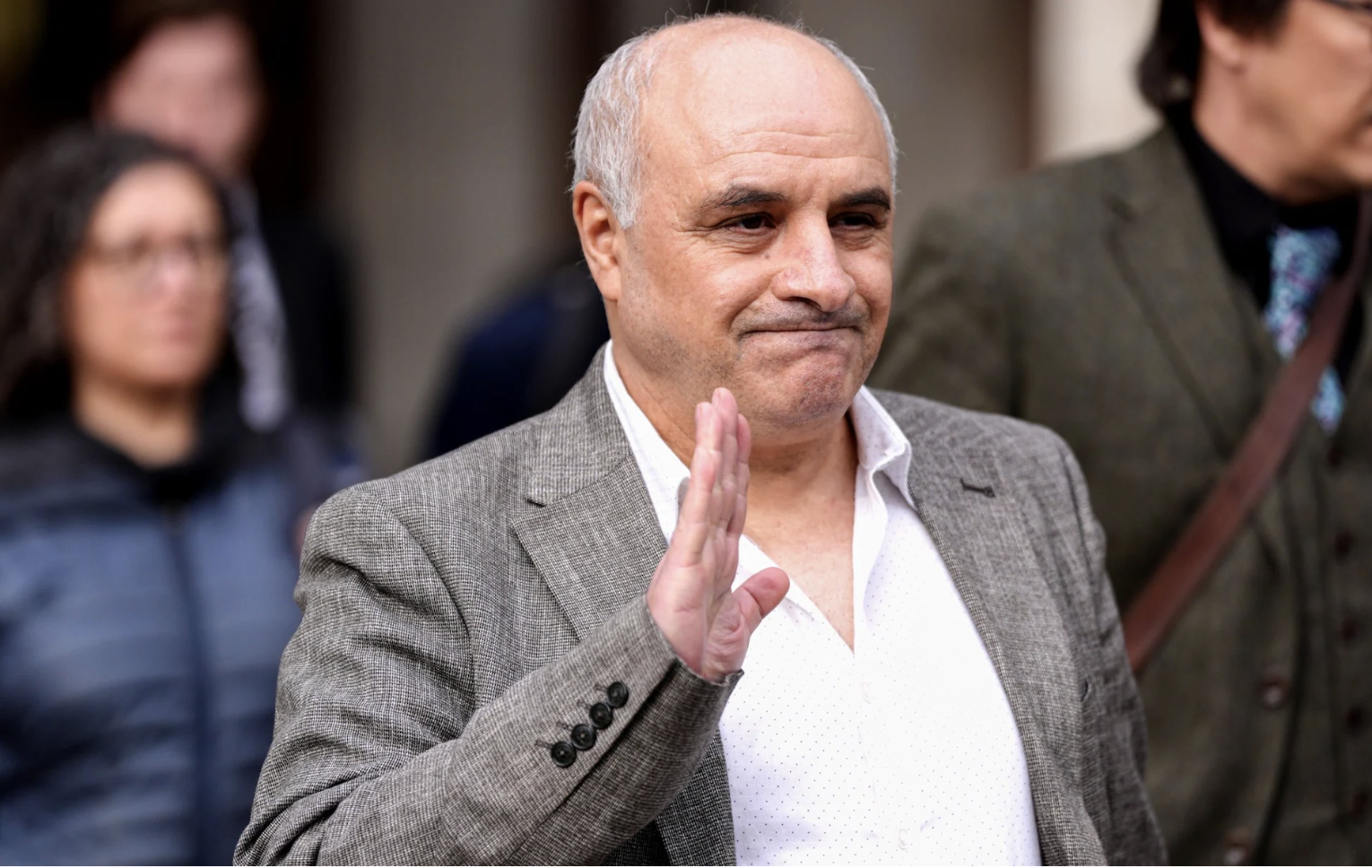
Coskun burned a Quran outside the Turkish consulate and was convicted at the magistrates’ court of a religiously aggravated public order offence. He appealed, and at Southwark Crown Court a High Court judge, Mr Justice Bennathan, sitting with magistrates, threw the conviction out. Parkinson then appealed the acquittal by way of case stated, and on 27 February 2026 two more High Court judges dismissed his appeal. Parliament abolished blasphemy in 2008, and the DPP’s office spent a year trying to prosecute it under another name.
Parkinson’s lawyers did not ask for a blasphemy law, because no prosecutor can say the word out loud. What they argued was that burning the book, with the words Coskun shouted and where he shouted them, was disorderly conduct in itself.
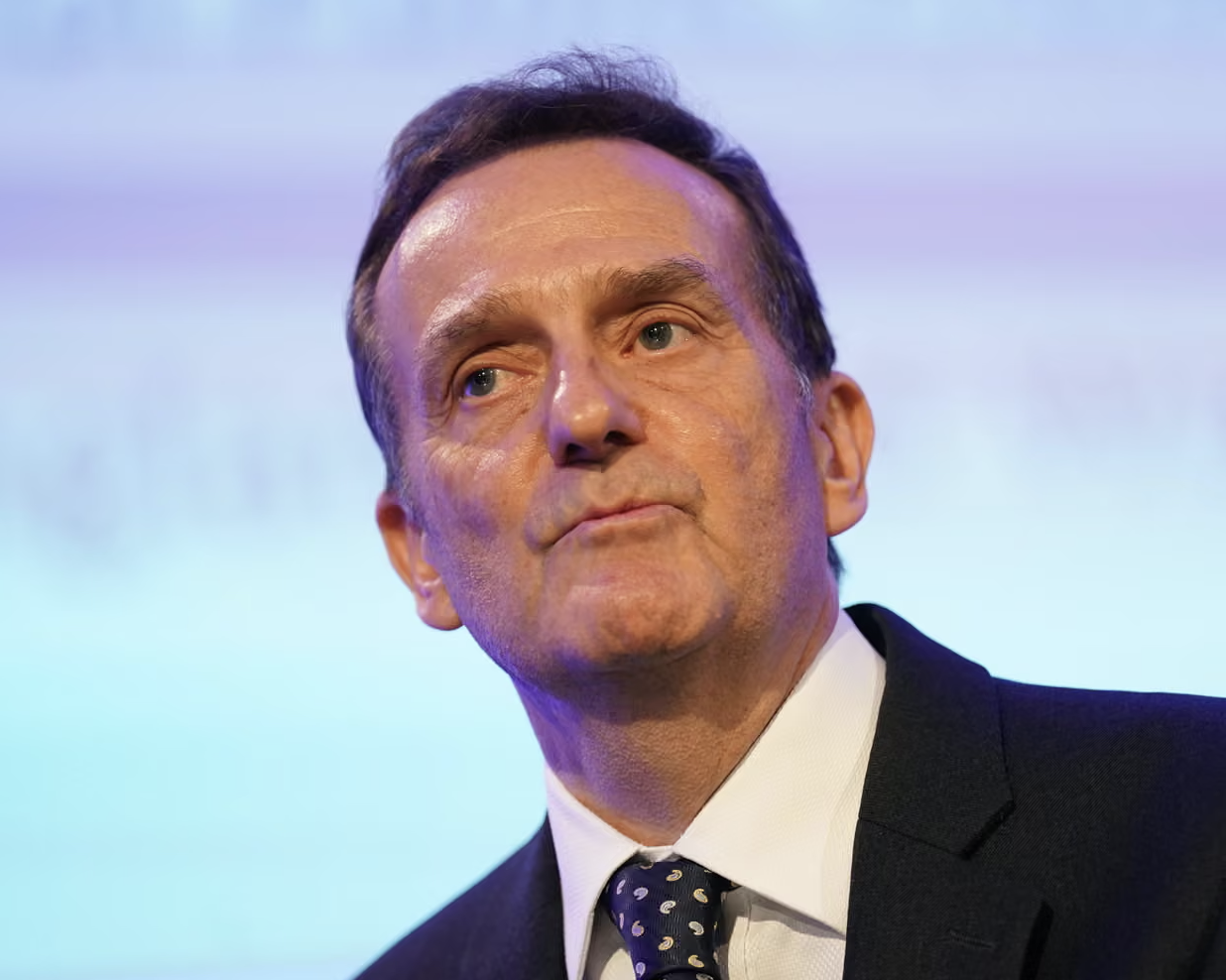
The Crown Court bench had already said it was not. The DPP would not take that answer, and the CPS spent public money carrying one reading of the public order law all the way to the Administrative Court after a court had rejected it.
Parkinson is the man accountable for that decision, and it was taken in the year a Hamas bodyguard was living on a British passport.
Then the government adopted its definition of anti-Muslim hostility in March 2026. The definition says on its face that it protects Muslims as people and not Islam as a religion, that it does not override the law, and that lawful criticism, debate and ridicule of Islam remain protected.
Ministers point to those lines every time they are asked. The wording does no damage on its own. The damage starts when a police force, an employer or a regulator writes a political definition that Parliament never voted on into its own records, and the first force to do it had done it by June.
South Wales Police aligned itself with the definition and then paused. The Free Speech Union says the force had issued officers guidance under which any discussion of Islam that went beyond what an officer judged legitimate would be logged as an antisocial behaviour incident, and that the force backed off after the FSU threatened judicial review.
South Wales Police enforcing its own Islamophobia definition that will have a chilling effect on free speech
South Wales Police is enforcing subjective guidance on Islam that will chill free speech. The FSU is demanding withdrawal and threatening judicial review.
Britain is facing an increasingly heated debate about immigration, Islamist extremism, freedom of expression and the principle of equal treatment under the law. An investigative article entitled “How Burnham’s Britain Protects the Islamist and Punishes the Infidel” has raised serious questions about whether public institutions are applying their powers consistently. Its central argument is that the authorities appear increasingly cautious when dealing with Islamist extremism but sometimes act much more aggressively against individuals who criticise religious ideas or challenge government policies. These allegations have created a wider political controversy surrounding Prime Minister Andy Burnham and his government’s approach to national security, civil liberties and social cohesion.
One of the most controversial issues concerns the immigration system and allegations involving individuals with connections to Hamas. The article describes a man who reportedly held a position close to former Hamas leader Ismail Haniyeh and subsequently obtained British immigration status and citizenship. It claims that information about his alleged connections had been publicly available before the Home Office made important decisions concerning his immigration status.
The case has attracted attention because Hamas is a proscribed terrorist organisation in the United Kingdom. Questions have therefore been raised about the effectiveness of immigration checks, intelligence sharing and the assessment of potential security risks. If an individual has genuinely participated in terrorist activities, the authorities must examine the available evidence carefully and apply the relevant immigration and national security laws.
However, allegations of association with a particular organisation do not automatically establish criminal responsibility. The individual concerned has not been convicted of the alleged activities described in the article. German prosecutors have reportedly accused him of involvement in a weapons-related operation, but accusations must be distinguished from judicial findings. The Home Office should explain its procedures without compromising legitimate security investigations or prejudicing legal proceedings.
A second major controversy concerns the treatment of people expressing controversial political and religious opinions. The article discusses the case of Stephen Gray, a retired police officer who was convicted under the Communications Act 2003 following a social media post considered grossly offensive by the court. The case has raised questions about where British law should draw the boundary between offensive expression and unlawful communication.
Freedom of expression is an essential part of a democratic society. People must be able to criticise religions, challenge religious practices and participate in political debates without automatically facing criminal punishment. At the same time, freedom of speech does not provide unlimited protection for threats, harassment or communications that meet the legal threshold for criminal offences.
The important question is whether the law is being applied consistently. People should not be prosecuted simply because their opinions offend religious believers, but neither should individuals be permitted to threaten or intimidate others under the excuse of political debate. The courts must assess each case according to the evidence and the relevant legislation rather than the religious or political identity of those involved.
The article also examines the government’s decision to introduce a non-statutory definition of anti-Muslim hostility in March 2026. Ministers argue that the definition is intended to protect Muslims from discrimination, intimidation and hatred while preserving the right to criticise Islam as a religion.
The official government guidance explicitly states that criticism, ridicule and academic discussion of Islam remain protected forms of expression within the law. It also makes clear that the definition focuses on hostility towards people rather than protecting religious beliefs from criticism.
Nevertheless, critics worry that organisations could interpret such guidance too broadly. If employers, police forces or public institutions begin treating legitimate criticism of religious ideas as evidence of prejudice, individuals may become reluctant to express controversial but lawful opinions. The government must therefore ensure that the definition is never used to create an informal restriction on freedom of speech.
Another important issue concerns the government’s approach to Islamist organisations. The article highlights the lengthy period before Hizb ut-Tahrir was proscribed in Britain. The organisation was formally banned in January 2024 after the government concluded that its activities met the legal threshold for proscription. Hamas was also proscribed in its entirety in November 2021, following the earlier prohibition of its military wing.
These decisions demonstrate that governments have the power to act against organisations involved in terrorism or activities meeting the statutory criteria. However, they also raise questions about why action sometimes takes many years despite repeated public concerns.
National security policy must be based on evidence, intelligence and legal standards. Authorities should neither tolerate genuine extremist activity nor use counter-terrorism powers simply because they disagree with an individual’s political opinions. The distinction between extremist conduct, lawful religious belief and ordinary political criticism must remain clear.
The article also raises concerns about the use of counter-terrorism powers against political activists. It discusses the cases of Tommy Robinson and other individuals who have been questioned or stopped under legislation designed to protect national security.
Such powers can be important in preventing terrorism, espionage and hostile foreign activity. However, they must be exercised proportionately and in accordance with the law. If courts determine that a particular police intervention was unlawful, the relevant authorities should examine the reasons for the decision and take appropriate corrective action.
The danger is that counter-terrorism legislation could gradually lose public legitimacy if people believe it is being used selectively against unpopular political figures. Equally, criticism of police conduct should not prevent legitimate investigations into genuine security threats. Independent oversight and judicial scrutiny are essential to maintaining public confidence.
The controversy becomes even more sensitive when considering the historical grooming gang scandals in Oldham and other parts of England. For years, vulnerable children suffered organised sexual exploitation while police forces, local authorities and safeguarding institutions failed to respond adequately. Survivors and campaigners have argued that concerns about community tensions and accusations of racism sometimes discouraged officials from investigating allegations effectively.
The national debate has since become more focused on the need to identify offenders, understand institutional failures and protect children regardless of their background. Baroness Louise Casey’s national audit highlighted serious weaknesses in the response to group-based child sexual exploitation, including inadequate data collection and institutional reluctance to confront uncomfortable issues.
These findings demonstrate that safeguarding must never be compromised by political sensitivity. Authorities must investigate allegations based on evidence, identify offenders and ensure that survivors receive justice. At the same time, responsibility must be assigned to individuals rather than entire ethnic or religious communities.
Andy Burnham’s political responsibility is particularly relevant because of his previous role as Mayor of Greater Manchester. His administration commissioned independent reviews into historical child sexual exploitation failures, including investigations relating to Oldham. Critics have questioned whether these reviews were sufficiently independent and whether all relevant institutional decisions received proper scrutiny.
However, the mayor’s political oversight responsibilities must be distinguished from the operational independence of the police. Allegations that Burnham personally directed officers to target whistleblowers or protect offenders require specific evidence. Political criticism alone cannot establish criminal or personal responsibility.
Ultimately, the controversy reflects a wider crisis of confidence in Britain’s institutions. Citizens expect the police, immigration authorities and government departments to protect everyone equally, regardless of religion, political opinion or social background. They also expect public institutions to acknowledge mistakes rather than dismiss criticism as politically inconvenient.
The government faces a difficult challenge. It must protect Muslim communities from discrimination and hatred while defending the right of every citizen to criticise religious beliefs. It must prevent Islamist extremism without treating ordinary Muslims as suspects. It must also protect political activists from unlawful interference while ensuring that genuine threats to public safety are investigated effectively.
In conclusion, the allegations raised in “How Burnham’s Britain Protects the Islamist and Punishes the Infidel” deserve examination because they concern fundamental democratic principles: equality before the law, freedom of expression, national security and government accountability. Some of the cases described involve documented legal proceedings, while other claims remain disputed or unproven. The government should respond with transparency, independent investigations and consistent enforcement of existing laws. Britain must never create a system in which one religious or political group receives preferential treatment, nor one in which criticism of a religion becomes a reason for intimidation or prosecution. A democratic country protects people, not religious doctrines from criticism, and applies the law equally to everyone. That principle must remain at the centre of Britain’s national identity and its future political direction.