
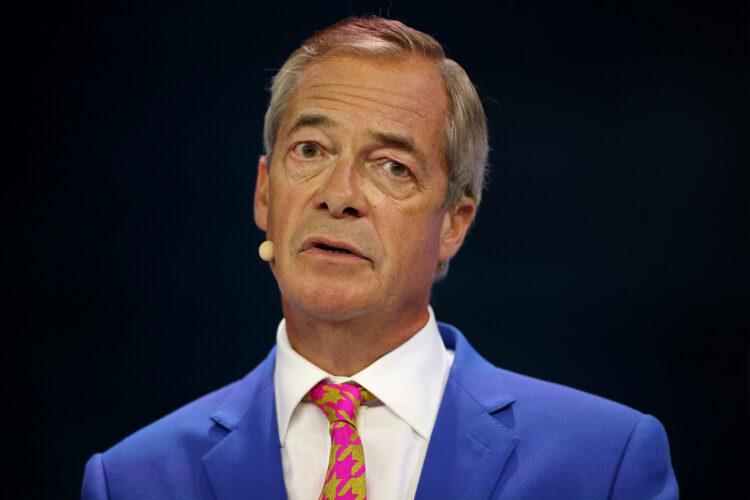
Culture secretary Lisa Nandy has slammed Nigel Farage as a “master of conspiracy” after he speculated that the RAF Fairford suspects could have links to Iran and small boats.
Following the news that five men had been arrested near the airbase on Sunday, Farage wrote in a post on X that he had been warning for months about “Iranian agents” coming into the UK across the Channel in small boats.
“We deserve to be told the truth about the Fairford bomb plotters’ identities,” he added.
These comments were echoed by a number of senior Reform figures despite police requesting people not speculate on the matter.
The following day, Farage posted a video on social media in which he claimed to have received intelligence that the Iranian regime was using the small boats “to get their operatives into Britain”.
However, less than an hour later, police confirmed all five men arrested were British nationals who were all residents of London.
This was followed by the men being released on bail while the police investigate “multiple lines of inquiry”.
Farage has been criticised by many for his comments, which seem to have been debunked by recent developments.
Speaking to the Guardian on Monday, culture secretary Lisa Nandy labelled the Reform leader a “master of the conspiracy theory” who is “good at using the very real sentiment that a lot of people feel, of anxiety and distrust.”
Nandy added: “Particularly in this era of mis- and disinformation, I think he’s very agile at exploiting that for political gain.”
Meanwhile, Green Party peer Jenny Jones accused Farage of “irresponsible nonsense” adding: “Once again Farage’s attempts to whip up division by scapegoating some of the world’s most vulnerable people has left him with egg on his face.”
Farage has denied accusations he had linked the Fairford suspects to Iran and small boats.
When it was put to him by Sky News that he “suggested these people could have come on small boats,” the Clacton MP replied: “I didn’t. We have a massive problem, counter-terrorism are constantly worried.”
Well, he might want to look back at what he said then.
Farage Slammed as ‘Master of Conspiracy’ Over RAF Fairford Speculation
Nigel Farage has come under fierce criticism after making controversial claims about an alleged terrorist plot near RAF Fairford, with Culture Secretary Lisa Nandy branding the Reform UK leader a “master of conspiracy theory”.
The Reform leader sparked a political storm after suggesting that five men arrested near the military airbase in Gloucestershire could be connected to Iranian agents entering Britain through small boat crossings.
His comments prompted accusations that he was exploiting public fears about national security and immigration before investigators had established the facts.
The controversy intensified when Counter Terrorism Policing confirmed that all five suspects were British nationals living in London.
The revelation dealt a serious blow to Farage’s claims and prompted renewed criticism from Labour, the Green Party and other political figures.
For his opponents, the episode demonstrated the dangers of making political accusations during an ongoing security investigation. For Farage, however, it became another opportunity to attack the government’s approach to immigration and border security.
Farage Links RAF Fairford Incident to Small Boat Crossings
The controversy began after five men were arrested near RAF Fairford on Sunday, 27 September 2026.
The incident triggered a major security operation after suspicious vehicles were discovered close to the military installation, which is used by American forces.
The arrests were made on suspicion of explosives-related offences and preparing a terrorist act.
The seriousness of the incident led to an extensive police response, including the evacuation of approximately 85 households while investigators examined the circumstances surrounding the vehicles.
However, before police had established the full details, Farage took to social media to suggest that the incident could be connected to Iranian operatives entering Britain through the English Channel.
Writing on X, he said:
“I have been warning both in and out of Parliament for many months about Iranian agents coming into the UK via small boats across the Channel.”
He added that the public deserved to know the identities of the suspects.
Farage subsequently published a video in which he claimed to have received intelligence suggesting that the Iranian regime was using small boat crossings to bring operatives into Britain.
He argued that the incident demonstrated the dangers of what he described as the government’s failure to protect national security.
His comments quickly attracted attention because they appeared to connect an ongoing counter-terrorism investigation with one of Reform UK’s central political arguments: the need for tougher immigration controls.
Police Confirm All Five Suspects Were British Nationals
Farage’s speculation suffered a significant setback when Counter Terrorism Policing released information about the five arrested men.
Police confirmed that all five were British nationals aged between 23 and 25.
They were residents of Camden, Westminster and Willesden, all areas of London.
The information directly contradicted suggestions that the suspects were Iranian nationals who had recently entered Britain through small boats.
The men were subsequently released on bail under stringent conditions while investigators continued examining multiple lines of inquiry.
Importantly, being released on bail did not mean the investigation had ended. Police continued to investigate the circumstances surrounding the incident.
The authorities also stressed that investigators were considering different possibilities and that it was too early to draw firm conclusions about the motivation behind the incident.
The revelation nevertheless raised serious questions about why Farage had been so quick to connect the suspects with Iranian agents and Channel crossings.
Critics argued that his comments risked encouraging hostility towards migrants and asylum seekers without any supporting evidence.
Lisa Nandy Brands Farage a ‘Master of Conspiracy Theory’
Culture Secretary Lisa Nandy delivered one of the strongest criticisms of the Reform leader.
Speaking to The Guardian at the Labour Party conference, Nandy described Farage as a “master of the conspiracy theory”.
She argued that he was particularly effective at exploiting public anxiety and distrust for political advantage.
Nandy said:
“I think that he’s good at using the very real sentiment that a lot of people feel, of anxiety and distrust.”
She continued:
“Particularly in this era of mis- and disinformation, I think he’s very agile at exploiting that for political gain.”
Her comments reflected growing concern among Labour politicians that Reform was attempting to use the Fairford incident to strengthen its arguments about immigration.
Nandy also defended the decision by authorities not to immediately release every detail about the suspects.
She explained that there could be legitimate reasons for withholding information during an ongoing investigation.
Although transparency was important, she argued that the public should understand that the absence of immediate information did not automatically indicate a government cover-up.
Her criticism placed Farage at the centre of another political argument about misinformation, public trust and the responsibilities of politicians during national security incidents.
Green Party Peer Accuses Farage of ‘Irresponsible Nonsense’
Green Party peer Jenny Jones also condemned the Reform leader’s comments.
She accused Farage of attempting to create division by associating vulnerable migrant communities with terrorism before the facts had been established.
Jones described his intervention as “irresponsible nonsense”.
She argued that his attempts to blame small boat crossings for the incident had backfired after police confirmed that all five suspects were British nationals.
Her criticism highlighted the wider consequences of political speculation during sensitive investigations.
When politicians make unverified claims about terrorism, immigration and national security, those statements can influence public attitudes long before the authorities have completed their work.
For critics, the Fairford controversy was another example of Farage using a developing news story to reinforce an established political message.
Farage Refuses to Back Down
Despite the criticism, Farage refused to accept that his comments had been irresponsible.
When challenged by Sky News after police confirmed the suspects were British nationals, the Reform leader defended his wider argument about border security.
He insisted that he had been raising concerns about national security for years and maintained that Britain faced serious threats.
When journalist Rob Powell questioned whether he had suggested the suspects could have arrived on small boats, Farage denied making that specific suggestion.
However, the journalist pointed to Farage’s earlier social media statements linking Iranian agents and small boat crossings.
The exchange attracted considerable attention because it appeared to contradict the impression created by Farage’s original comments.
Rather than withdrawing his wider claims, he continued to argue that the government had failed to take the national security implications of illegal immigration seriously enough.
For Reform, the strategy is clear: maintain pressure on Labour over immigration and present border security as one of the government’s most serious weaknesses.
However, the Fairford incident has demonstrated the risks of making specific claims before reliable evidence becomes available.
Robert Jenrick and Richard Tice Also Face Criticism
Farage was not the only senior Reform figure to attract criticism over the incident.
Robert Jenrick also attempted to connect the arrests with small boat crossings.
The former Conservative politician argued that Britain might now be witnessing the consequences of what he described as government complacency.
He claimed that the Home Office had previously failed to take sufficient action over concerns about terrorists entering Britain through the Channel.
Reform deputy leader Richard Tice also demanded further information about the suspects.
He questioned their ethnicity, nationality, immigration history and possible connections with security services.
These interventions attracted criticism because counter-terrorism investigators had not completed their inquiries.
Police had already requested that the public avoid speculation while the investigation continued.
Senior counter-terrorism officer Vicki Evans specifically warned about the volume of speculation surrounding the incident and asked people to give investigators the space needed to establish the facts.
The criticism directed at Reform therefore extended beyond Farage himself.
Opponents argued that the party’s senior leadership had collectively rushed to promote a particular explanation before the evidence supported it.
What Actually Happened at RAF Fairford?
RAF Fairford is an important military installation in Gloucestershire and has been used extensively by the United States Air Force.
The base has particular strategic importance because of its role in supporting American bomber operations.
The incident occurred against a background of heightened tensions involving Iran and the wider Middle East.
This geopolitical situation made questions about possible foreign involvement particularly sensitive.
However, the five men arrested near the base were British nationals, and investigators had not established that they were acting on behalf of Iran.
The Iranian embassy also rejected speculation linking the country to the arrests.
Police continued examining the circumstances surrounding the vehicles and the materials discovered during the operation.
Investigators were also careful not to rule out different possibilities prematurely.
This distinction is important because confirming the nationality of suspects does not, by itself, establish whether foreign influence or other connections were involved.
Equally, it provides no justification for presenting unverified allegations as established facts.
The investigation required evidence rather than political assumptions.
The Political Risks of Spreading Unverified Claims
The Fairford controversy raises a wider question about the responsibilities of political leaders during national security incidents.
Politicians have every right to question government decisions, demand greater transparency and challenge the effectiveness of Britain’s border controls.
National security is an important issue, and the public deserves honest answers about genuine threats.
However, there is a significant difference between asking questions and suggesting that particular individuals are foreign agents without supporting evidence.
The danger is that speculation can quickly become accepted as fact, particularly when it comes from politicians with large social media followings.
This can increase public anxiety, encourage hostility towards minority communities and undermine confidence in official investigations.
Farage has built much of his political appeal around challenging established institutions and questioning government explanations.
That approach can attract voters who feel ignored by traditional political parties.
Nevertheless, the Fairford incident demonstrates why political leaders must distinguish between legitimate concerns and claims that have not been verified.
Labour Seizes the Opportunity to Attack Reform
For Labour, the controversy has provided an opportunity to challenge Farage’s political judgement.
Nandy’s intervention was particularly significant because it focused not simply on the accuracy of his statements but on the political strategy behind them.
She suggested that Farage understood how to use public anxiety to strengthen his political position.
This criticism fits into Labour’s wider attempt to portray Reform as a party that thrives on division rather than offering practical solutions.
The government has also sought to defend the work of security agencies, arguing that investigations must be allowed to proceed without unnecessary political interference.
However, Labour must also recognise that public concerns about immigration and national security are genuine.
Simply criticising Farage will not resolve those concerns.