

“LIVE TV CAR CRASH”: The Angela Rayner £4 Million “Cayman Islands Mega-Donor” Claim — What Can Actually Be Verified
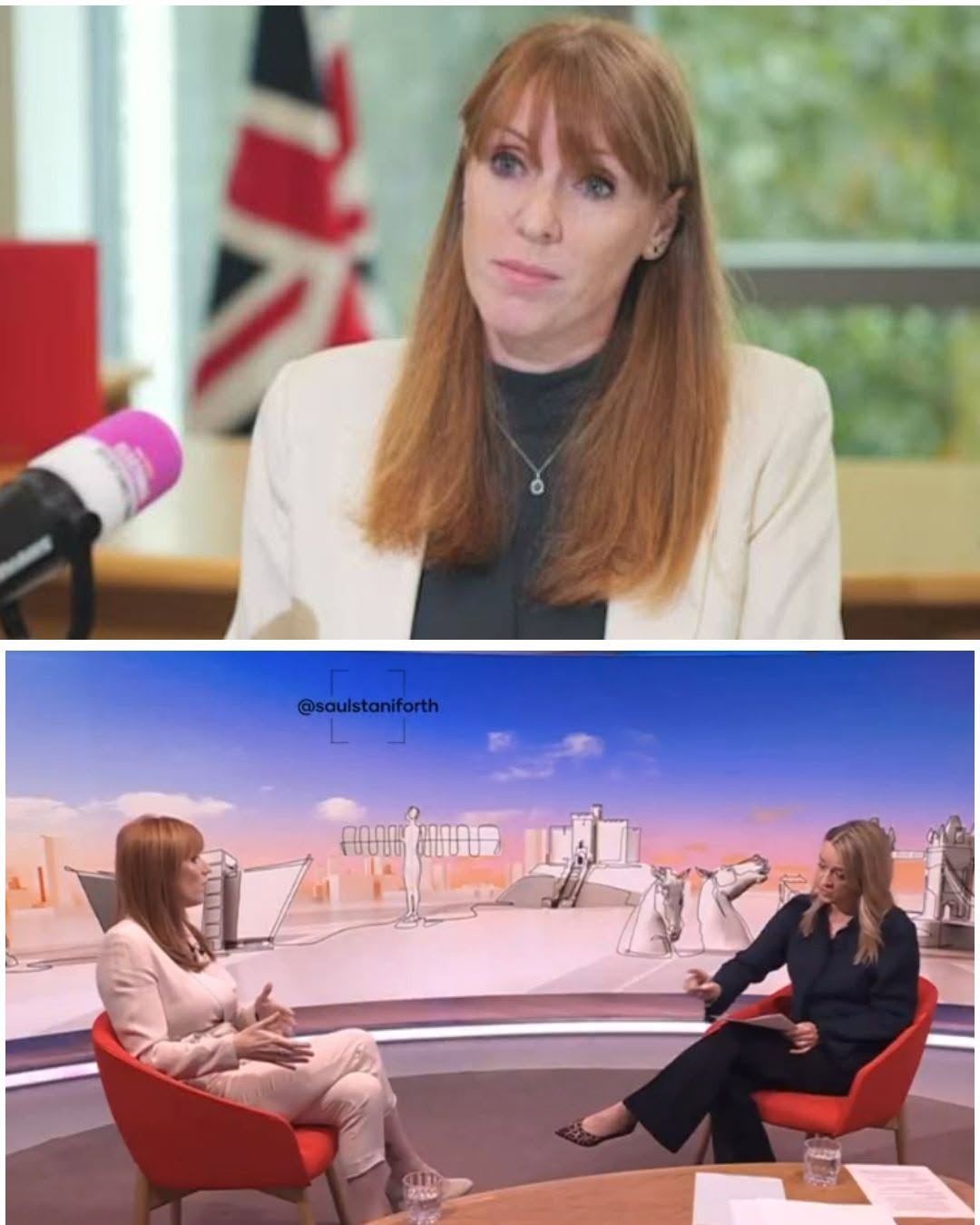
Editorial note: This article examines an unverified viral claim circulating on social media and content-farm websites. No authenticated broadcast, programme, presenter, transcript, or complete recording of the alleged television confrontation has been established. This article is written as a neutral fact-check: it separates what the record genuinely shows — including a real £4 million Labour donation and a real, separate row about Reform UK’s fundraising — from what the circulating claim asserts but cannot substantiate.
1. A Claim That Mixes Real Ingredients Into an Unproven Story
Few pieces of viral political content are pure invention. The most effective ones are composites: they take facts that are genuinely on the record, remove their context, attach them to a dramatic event that cannot be verified, and invite the reader to feel that the whole package is true. The claim now circulating about Angela Rayner follows exactly that pattern.
The full text supplied reads as follows:
“LIVE TV CAR CRASH! Deputy PM Angela Rayner just got utterly DESTROYED in a brutal on-air showdown! Pushed on a shady £4 MILLION Cayman Islands mega-donor, she completely froze and refused to answer the same question FOUR times! But just when she thought it couldn’t get worse, the host pulled up a shocking graph that caught her in a massive trap. You will not believe her reaction… See details in the first comment 👇”
Before doing anything else, notice what this text does well from a persuasion standpoint. “LIVE TV CAR CRASH” promises spectacle. “Deputy PM” attaches the authority of high office. “DESTROYED” tells you the outcome before any evidence is presented. “Shady” performs a character judgement on a donor who is never named. “FOUR times” is a precise number, and precision mimics accuracy. “Shocking graph” and “massive trap” promise a visual revelation that is never shown. And “See details in the first comment” is the operational heart of the post: it converts curiosity into engagement, which is the currency the post was built to earn.
What follows in this article is a careful separation of the claim’s ingredients. One ingredient is genuinely documented: a £4 million donation connected to a Cayman Islands-linked hedge fund, which Labour really did accept. Another ingredient is also genuinely documented, but it belongs to a completely different story: a fierce, real-time political row about £72 million in cryptocurrency-related donations to Reform UK, in which Rayner really has appeared on broadcast television. A third ingredient — the title “Deputy PM” — is more than a year out of date. And the central event the post describes — the humiliating on-air interrogation, the four refusals, the trap-setting graph — has no verifiable footprint at all. No programme, no presenter, no broadcast date, no transcript, no clip, and no coverage from any credible news organisation.
The honest verdict, stated up front, is this: the donation story is real; the televised “car crash” is not established. Readers who want to understand British political finance are well served by the real facts. Readers who want to believe a politician was destroyed on live television will have to make do without evidence.
2. What Evidence Would Be Needed — and What Is Missing
When a post claims that a senior politician was confronted on live television, the bar for verification is not high. Broadcast television leaves traces. A real event of this kind would produce, at minimum:
1. A named programme and broadcaster. British political interviews happen on identifiable programmes — Sunday with Laura Kuenssberg, Sky News’ Sunday shows, ITV’s Good Morning Britain, Channel 4 News, LBC radio. The viral text names none.
2. A named presenter and a broadcast date. Interviewers are public figures; programmes are scheduled. “The host” is not an attribution; it is a placeholder where an attribution should be.
3. A recording, clip, or transcript. The most remarkable moments of political broadcasting are clipped within minutes and analysed within hours by rival newsrooms, political opponents, and the commentariat. An exchange supposedly involving repeated refusals and a visual graph is precisely the kind of moment that would be replayed endlessly. No clip has surfaced. No transcript has been produced.
4. Coverage by credible news organisations. When a minister is genuinely embarrassed on air, it becomes a story in its own right — reported by the BBC, Sky, the Press Association, the broadsheets, and the political press, each with its own account of what was asked and answered. Searches for this alleged confrontation return only content-farm domains: mirrors with engagement-bait formatting, near-identical wording, and no original reporting.
5. A named donor. “A shady £4 MILLION Cayman Islands mega-donor” names an amount and a jurisdiction but no person or company. In a story about a real donation — and, as we will see, there is one — the donor’s name is the first thing a real report would supply.
Against this checklist, the circulating claim fails on every count. That does not make the underlying suspicion about political donations illegitimate — British political finance deserves scrutiny, as this article will show — but it does mean the post cannot be treated as a report of something that happened. It is a description of something that may not have happened at all, assembled from real elements that belong to other stories.
3. The Real £4 Million Donation: Quadrature Capital
Here is the one part of the viral claim with genuine foundations, and it deserves to be understood in full, because it is a genuinely interesting story about money in British politics.
In September 2024, the investigative outlet openDemocracy published a report that has not been disputed on its core facts: the Labour Party’s largest-ever single donation — £4 million — came from Quadrature Capital, a hedge fund described by openDemocracy as registered in the Cayman Islands, with shares worth hundreds of millions of pounds in fossil-fuel companies, private-health firms, arms manufacturers, and asset managers. At the time, it was the sixth-largest political donation in British political history. The donation was recorded in the Electoral Commission’s records as having been received on 28 May 2024.
The timing was as noteworthy as the amount. Electoral Commission records indicate the donation arrived in the one-week window between then-Prime Minister Rishi Sunak announcing the general election and the start of the pre-poll reporting period, during which all donations over £11,180 had to be published weekly rather than under the usual quarterly reporting. The practical effect was that, although the money was received on 28 May, it was not publicly disclosed until the quarterly returns were published — more than two months after Labour had won the election. openDemocracy reported that neither the Labour Party press office nor Downing Street responded to its questions about whether the timing was intended to minimise scrutiny during the campaign. The journalist Paul Holden, author of a book on Keir Starmer’s leadership, told openDemocracy that the timing fit a pattern of delayed disclosure of potentially sensitive donations.
The fund’s investments gave the story additional political charge. openDemocracy’s reporting detailed holdings across three reporting dates averaging $121 million in companies supplying arms, technology, or logistics to military operations, including more than $72 million in Palantir Holdings — which had announced a strategic partnership with Israel’s defence ministry — plus over $30 million in Northrop Grumman and over $5.5 million in Lockheed Martin, alongside stakes in Boeing, Caterpillar, and other defence-adjacent firms. Action on Armed Violence’s director, Dr Iain Overton, called the funding relationship “deeply troubling,” and Transparency International UK’s Rose Whiffen warned that reliance on huge donations from private interests raised questions about whom parties really worked for.
It is important to be precise about what this establishes and what it does not. The donation is real, officially recorded, and genuinely the largest single donation Labour had ever received at that point. The Cayman Islands connection is real: openDemocracy described the fund as Cayman Islands-registered, and later commentary noted its parent company structure was based there. At the same time, a fuller picture includes material that cuts against the simpler “shady offshore donor” framing. PA-wire reporting on the donation (carried by local papers including the Clacton Gazette) identified Quadrature’s owners as investors Greg Skinner and Suneil Setiya and noted that the donation was the firm’s first political donation, while its charitable arm had previously supported environmental causes. The political journalist Robert Peston, examining Quadrature’s UK accounts, found a UK-based investment-management operation paying UK tax — noting its seemingly low effective tax rate and observing that the offshore funds themselves paid corporation tax on trading profits. A 2025–26 analysis of corporate donations described the £4 million as coming from a company “whose parent company is based in the Cayman Islands” — a phrasing that reflects the offshore structure without claiming the donating entity itself was foreign.
This nuance matters for a straightforward legal reason: under UK political-finance law, a company making a political donation must be registered in the UK and carrying on business in the UK. A donation from an impermissible donor would be unlawful and reportable to the Electoral Commission. No enforcement action against Labour over the Quadrature donation has been reported. The controversy was therefore about perception, timing, and ethics — whether Labour should have accepted money from this source, and whether the reporting window was exploited — not about illegality.
Two final details complete the picture. First, the viral post misnames the firm as “Quadria Capital”; the actual name is Quadrature Capital. An error this basic in a post claiming to expose the donor is a small but telling signal about the post’s research standards. Second, the Quadrature donation is a 2024 story, received by Labour under Keir Starmer’s leadership. It is not a story about Angela Rayner’s personal finances at all — it was a donation to the party, not to her.
4. The Outdated Title: Rayner Is No Longer Deputy Prime Minister
Before examining the rest of the claim, one correction is necessary, because it is decisive for evaluating the post’s reliability.
Angela Rayner resigned as Deputy Prime Minister, Deputy Leader of the Labour Party, and Housing Secretary in September 2025, after the Prime Minister’s independent standards adviser found she had breached the ministerial code over the underpayment of stamp duty on a property purchase in Hove, East Sussex. She had declared the £800,000 flat as her main residence, paying around £40,000 less than the required surcharge. She settled the matter with HMRC in May 2026 without having to pay a penalty — which would have been required had the underpayment been found deliberate or careless — but the resignation stood.
Under Keir Starmer, the Deputy Prime Minister role passed to David Lammy. Rayner was elected out of the leadership picture when Lucy Powell won the Labour deputy leadership in October 2025. When Andy Burnham became Prime Minister on 20 July 2026, following Starmer’s resignation, he appointed Lucy Powell — now Labour’s deputy leader — as Deputy Prime Minister and Education Secretary. Rayner returned to government as Secretary of State for Housing, Communities and Local Government, replacing Steve Reed.
This chronology is well documented across multiple outlets — from Xinhua’s international coverage of the Burnham cabinet to Mortgage Introducer’s trade coverage to Wikipedia’s continuously updated entry on Powell. It means the headline’s central identification, “Deputy PM Angela Rayner,” is wrong by more than a year as of October 2026.
The error admits of two possible explanations, and neither helps the claim. If the alleged interview happened recently, then the post’s author does not know the current offices of the people it is writing about — which says a great deal about the care behind the rest of its assertions. If, on the other hand, the alleged interview is genuinely old — dating from before September 2025, when Rayner really was Deputy PM — then the post’s other elements collapse, because the surrounding story it tells (the Reform UK crypto-donation row, the government’s Representation of the People Bill) belongs to autumn 2026, a period in which Rayner was no longer Deputy Prime Minister. The viral text stitches together elements from different years and presents them as a single live event. That is not reporting; it is collage.
Rayner’s actual recent history also includes a genuine, separate controversy worth noting for completeness: she kept a £16,876 ministerial severance payout received after her 2025 resignation, and on being reappointed by Burnham declined to return it, telling the BBC: “No, my severance payment was given to me at the time, I had worked in government for a period of time and then I came out of government for just under a year.” The Conservatives attacked the decision; Rayner noted her own past criticism had concerned ministers returning after “40-odd days.” It is a legitimate, sourced story — and it has nothing to do with the Cayman Islands.
5. The Other Real Story: £72 Million for Reform UK and Rayner’s Actual Broadcast Interviews
The viral post’s talk of mega-donors and hypocrisy does not come from nowhere. It is grafted onto a second, genuinely documented political story — one of the biggest political-finance stories of 2026.
In September 2026, Reform UK received two donations of £36 million each, within roughly 24 hours of one another, from cryptocurrency billionaires Ben Delo (a co-founder of the BitMEX exchange) and Christopher Harborne (the Thailand-based investor who had previously been a major Conservative donor). The combined £72 million is, by some margin, the largest financial contribution ever made to a British political party — exceeding, according to Reuters reporting, the total spent by either Labour or the Conservatives during the previous general-election campaign, and dwarfing the £69 million donated to all UK political parties combined the previous year. Delo described his contribution in terms of freeing the party to focus on policy and ground operations; Harborne, writing in the Daily Telegraph, called his a “philanthropic gift” and said he expected no peerage or policy changes in return. Nigel Farage said he was “honoured and humbled.”
The government’s response was led, in broadcast terms, by Angela Rayner. In her capacity as Housing Secretary — and as the minister associated with the electoral-reform agenda — she gave real, attributable interviews to Sky News and to the BBC’s Sunday with Laura Kuenssberg. Her message was pointed. On Sky News, asked whether Reform could ultimately be forced to return the money, she called it a “really live question” and said: “We’re saying that if you don’t pay taxes in, you don’t live here, you can’t buy your way into our democracy because you’re a billionaire.” On the BBC, she confirmed that new rules covering overseas donors and recent returnees “will be retrospective,” with the provisions backdated to 25 March 2026, and told Kuenssberg that anyone receiving donations that did not comply with the proposed regime would have 60 days to return the money.
The legislative vehicle is the Representation of the People Bill, which had been approved by MPs and was under scrutiny in the House of Lords as of mid-October 2026. The proposals grew out of a review by Philip Rycroft, the former senior civil servant, aimed at countering foreign influence in UK politics. The headline measures: a £100,000-a-year cap on donations from overseas electors, continuing until returning donors had been back in Britain for a full calendar year; stronger “know your donor” duties on parties; and a moratorium on donations made using cryptoassets. Some restrictions would apply retrospectively to donations received since 25 March — the element Reform calls “confiscation.”
The controversy around the £72 million is genuine and live. Reform says both donations were entirely lawful: the party’s economic spokesman Robert Jenrick has said Reform is “100 per cent confident both are legal and won’t ever have to be handed back,” noting that Delo had returned to Britain and that Harborne had changed his voter registration to an address in Hampshire (per an electoral-register update published 1 June). Harborne holds Thai citizenship and has been based in Thailand for decades; Delo spent a period living in Hong Kong before recently returning to Britain — the precise circumstances the new residency test would probe. The Times reported that Reform’s lawyers regarded the donations as safe from the new rules. Reform’s home-affairs spokesman Zia Yusuf went further, accusing the government of planning to “confiscate” donations that were lawful when received: “She is arguing that we will have broken rules her party intends to create and apply retroactively to confiscate donations that were lawful when received. This is unprecedented. Literally changing the rules after the fact to punish a political opponent.” Labour’s party chair Bridget Phillipson countered: “Farage can’t buy his way out of the sleaze and scandal he and Reform UK are drowning in — or the multiple police investigations that are ongoing into Reform’s dodgy finances.”
This is the real broadcast context in which Rayner has been publicly tested on donations in autumn 2026. Note what it is not: it is not an interview about Quadrature Capital, it is not an interview in which she was asked the same question four times about a Cayman Islands donor, and it is not an interview featuring a welfare-versus-defence graph. The viral post takes the real tension — Labour attacking Reform’s mega-donors while having accepted its own record donation — and fabricates a television scene to dramatise it.
6. The Interview That Cannot Be Found
So much for the real ingredients. Now for the central event the post describes: the brutal on-air showdown.
The most detailed version of the allegation circulates on content-farm pages. It claims a host pressed Rayner on a £4 million donation from “Quadria Capital” — misspelling the real firm’s name — and on the supposed hypocrisy of Labour attacking Reform’s crypto-billionaire donors while having accepted hedge-fund money itself. It says the host asked a hypothetical question — “Would the Labour Party on principle take a donation of tens of millions of pounds from people who’ve made their money from cryptocurrency?” — four times, and that Rayner refused a yes-or-no answer, falling back on phrases about “robust processes and rules.” It then says the programme displayed an on-screen graph showing social spending soaring while defence spending stagnated, and that Rayner responded by claiming defence spending had increased while noting welfare peaked under the Conservatives — a peak, the page concedes, largely driven by the temporary COVID-19 furlough scheme.
Everything about this description is assertive. Almost nothing about it is verifiable.
No broadcaster is named. No programme is named. No presenter is named. No broadcast date is given. The page carrying the most detailed version is dated 15 October 2026 and was updated on 19 October, but a publication date on a content-farm page is not a broadcast date — it is the date someone wrote the text. No clip of the exchange exists in any accessible archive. No transcript has been produced. No credible news organisation — not the BBC, not Sky, not ITV, not the Press Association, not the broadsheets — has reported the confrontation, despite the fact that a senior government figure being repeatedly humiliated on live television is exactly the kind of event every political newsroom in Britain exists to cover. A search for the specific elements — the four-times-repeated question, the graph, the named donor — returns only the content-farm mirrors themselves, quoting and requoting one another.
There is a further reason for scepticism, beyond the missing evidence. Consider what the alleged scene requires us to believe. It requires that a minister appeared on a major broadcast, was asked the same pointed question four times, visibly “froze,” was then shown a graph that “caught her in a massive trap” — and that none of this was picked up by any journalist, any rival party’s rapid-response operation, any clip account, or any viewer with a phone, in the middle of one of the most closely watched political-finance rows of the year. Reform UK, which is currently in open political warfare with Labour over donation rules and would have every incentive to amplify such a moment, has not — in any accessible record — circulated the clip. The absence is not merely the absence of proof; at this scale, the absence is close to proof of absence.
It is also worth noting the rhetorical technique. The content-farm version does something clever: it invents direct quotations (“We have very strict rules in place about where we get our donations from”), then immediately editorialises about them (“People will hear that essentially you’re not quite giving us a direct answer”), and then supplies its own concessions (“Critics argue her defense was misleading, as the massive peak in Conservative welfare spending was largely driven by the temporary COVID-19 furlough scheme”). This is the anatomy of a fabricated scene: dialogue invented, stage directions invented, and then — to create an illusion of balance — a mild fact-check of one of the invented lines. A genuine interview does not need to be summarised by an anonymous page; it can be watched.
None of this means that Rayner has never been robustly challenged on air, or that she answers every question put to her — politicians of all parties routinely decline to give yes-or-no answers to hypothetical questions, and there is a legitimate debate about whether that is evasiveness or prudence. What it means is that the specific event described — the fourfold refusal, the freezing, the graph trap — is an unverified claim from unverifiable sources, and it should not be repeated as though it happened.
7. How the Claim Was Built: Anatomy of a Content-Farm Composite
Understanding how this post was constructed is the best defence against the next one like it, because the method is visible in the text itself.
Step one: take a real, under-covered story. The Quadrature donation was genuinely reported by openDemocracy in 2024 and genuinely attracted less mainstream attention than its size might have warranted. That relative obscurity is an asset to the fabricator: readers cannot easily recall the details, so simplified or distorted versions face little resistance.
Step two: attach it to a current, high-emotion story. In October 2026, the live political-finance story is Reform’s £72 million and the government’s retrospective legislation. Rayner is the ministerial face of that row. By framing the old Quadrature donation as the subject of a current interrogation, the post makes a 2024 fact feel like breaking news and turns a legitimate “what about Labour’s donors?” argument into a personal humiliation narrative.
Step three: invent the scene. The interview is described with the grain of specificity — four times, a graph, a pivot to welfare versus defence — because specificity is what makes a scene feel remembered rather than imagined. None of the specifics can be checked, which is precisely why they were chosen.
Step four: outsource the evidence. “See details in the first comment” performs two functions. It drives the engagement metrics the post exists to harvest, and it displaces the burden of proof onto a comment section that the reader may never open. The post itself never has to show the graph, name the presenter, or quote the exchange, because the promise is always one click away.
Step five: let the audience do the work. Readers who share the post “just asking questions,” readers who angrily reply, and readers who post debunks linking back to it — all extend its reach, because the algorithm counts everything as engagement. By the time anyone checks the facts, the composite has travelled far beyond any correction.
There is nothing unusual about politicians facing hostile questions about donations, and there is nothing illegitimate about asking whether Labour’s criticism of Reform’s donors sits comfortably alongside its acceptance of Quadrature’s £4 million. That is a fair editorial question, and it does not need a fabricated television scene to be worth asking. But a fair question built on a fabricated scene is not fair journalism — it is propaganda with a fact attached, and the fact does not redeem the fabrication.
8. The Rules That Actually Govern This Money
Because the viral post gestures at a “shady” donation without ever explaining the legal framework, it is worth setting out how political finance in Britain actually works — because the real system, with its real gaps, is more interesting than the invented version.
The system is governed primarily by the Political Parties, Elections and Referendums Act 2000 (PPERA) and overseen by the Electoral Commission. Its core principles are simple to state and complicated in practice.
Permissible donors only. Parties may accept donations only from permissible sources: individuals on the UK electoral register (including, under current law, some British citizens living overseas), UK-registered companies carrying on business in the UK, trade unions, and certain other UK-based bodies. Foreign individuals may not donate. A donation above a small threshold from an impermissible source must be returned, and the Electoral Commission can investigate and sanction breaches.
No general cap on amount. As the House of Commons Library confirmed in April 2026, there is no general maximum limit on the size of a donation from a permissible donor. This is why a lawful £36 million individual donation is possible, and why the debate is about rules, not amounts. The absence of a cap is a deliberate legislative choice — repeatedly debated since the early 2000s, and repeatedly left unmade by successive governments of both main parties.
Disclosure with delays. Donations above reporting thresholds (£11,180 for central parties in the pre-poll period, with different thresholds in other contexts) must be reported to the Electoral Commission and are published — but, as the Quadrature case illustrated, the normal quarterly rhythm can mean a donation received in May is not visible to voters until after a July election. The system is transparent in the long term and porous in the short term.
The company loophole debate. A company donation is lawful if the company is UK-registered and trading in the UK — regardless of where its parent company sits or where its ultimate owners are citizens of. This is the structural feature that makes both controversies in this article possible. Quadrature’s donation was lawful (if controversial) because the donating entity was UK-based, despite its Cayman-registered parent structure. Conversely, critics have long warned that UK-registered subsidiaries of foreign-controlled groups can launder foreign influence through a domestic legal form. The Rycroft review’s proposals — residency tests, “know your donor” duties, caps on overseas electors — are aimed at these gaps, though they primarily target individuals rather than corporate structures.
Retrospectivity is the flashpoint. Changing the rules for the future is one thing; applying new rules to donations already lawfully received is another. The government, through Rayner, argues that backdating to 25 March 2026 simply closes a loophole donors knew was under review. Reform argues that retroactive confiscation attacks the rule of law itself. Retrospective civil legislation is not unknown in British law (particularly in tax), but applying it to political donations from identifiable opponents is politically explosive. The Lords’ scrutiny of the Bill will be the next test.
The register of interests is a separate tool. Individual MPs’ financial interests — including donations toward their parliamentary activities — are published in the House of Commons Register of Members’ Financial Interests. This is the place to check claims about money given to an individual politician personally, as distinct from money given to their party. Claims about Rayner personally receiving £4 million from a Cayman Islands source find no support in any register; the £4 million went to the Labour Party in 2024, when Rayner was not in any position to accept it on the party’s behalf.
The overall picture is of a system that is formally transparent but practically permissive — one in which very large sums from very wealthy sources are lawful, disclosed late, and argued about afterwards. That is a legitimate subject for public concern. It is also a subject that requires precise facts to discuss usefully, which is exactly what the viral post does not provide.
9. The Graph That Was Never Shown: Welfare, Defence, and a Real Argument Hiding Inside a Fake One
The alleged “shocking graph” — social spending soaring on a red line, defence spending flat — deserves its own examination, because the underlying argument is real even if the televised moment is not.
The trade-off between welfare and defence spending is one of the central fiscal debates in British politics in 2026, and it has been conducted in genuinely public settings. On 9 September 2026, Prime Minister Andy Burnham clashed with Conservative leader Kemi Badenoch at Prime Minister’s Questions. Badenoch proposed £10 billion in additional defence spending, reaching 3 per cent of GDP by 2030, funded by £4 billion in housing-benefit cuts and £3.1 billion from restoring the two-child benefit cap. Burnham rejected the proposal, calling the government’s defence commitment “absolute,” saying: “Yes, we do everything to support our national security, but it can’t come at the expense of social security… we will set out a plan to get to 3.5% [of GDP on defence] by 2035 at the spending review.” The regular army stands at roughly 71,000 personnel, its smallest size in two centuries — a fact cited by defence advocates across the spectrum.
The numbers behind any welfare-versus-defence graph are genuinely contested, and how they are presented decides the argument before it starts:
- Welfare spending as defined by the DWP’s benefit expenditure tables is dominated by the State Pension, which is not “welfare” in the colloquial sense most readers imagine. Any graph that shows “welfare” rising over decades is largely showing pensioner demographics.
- The COVID-19 peak is real and distorting. Benefit and support spending spiked in 2020–21 because of the furlough scheme and emergency measures under the Conservative government. Depending on whether a graph starts before, during, or after that spike, the same data can show welfare “soaring,” “falling,” or “flat.”
- Defence spending fell as a share of GDP for decades after the Cold War — from over 4 per cent in the 1980s to around 2 per cent recently — and has begun rising again since Russia’s full-scale invasion of Ukraine. A graph of defence in cash terms shows increases; a graph of defence as a share of GDP shows a long decline and a partial recovery. Both are true; they tell different stories.
- The government’s own commitments straddle the argument: Burnham’s 3.5-per-cent-by-2035 target is slower than Badenoch’s 3-per-cent-by-2030, and both are slower than some NATO allies now demand.
A presenter confronting a minister with a well-chosen graph is a legitimate and often illuminating television technique. But that is precisely why fabricating such a moment matters: it borrows the authority of a real journalistic practice to deliver a conclusion the audience has not actually seen tested. The welfare-versus-defence debate deserves real charts, real programmes, and real ministers answering real questions. An invented graph in an invented interview contributes nothing to it except heat.
10. The Fair Question Inside the Unfair Post
Strip away the fabricated scene, and one legitimate question remains — the question the post’s authors presumably wanted to ask, and which does not require fabrication to be worth asking: Does Labour’s criticism of Reform UK’s mega-donors sit comfortably alongside Labour’s own acceptance of a record £4 million donation from a hedge fund with Cayman Islands structures and arms investments?
That question has been asked, in respectable venues, since September 2024. openDemocracy asked it. Transparency International UK asked it. Peston’s analysis, while adding important context about Quadrature’s UK tax position, did not pretend the question away. It is also a question with a genuine counter-argument, which a neutral account should record: Labour’s position, as articulated by its ministers, is that its donations were lawful, declared, and vetted under the existing rules — and that the point of the Representation of the People Bill is to change those rules for everyone, including rules that would have affected its own donors. Reform’s position includes a mirror-image counter: that a party which has historically relied on trade-union funding and accepted corporate millions is ill-placed to moralise, and that retrospective legislation targeted at its donors is a partisan weapon dressed as reform. Both arguments are made by identifiable people, in identifiable places, and can be evaluated on their merits.
What cannot be evaluated on its merits is a television confrontation that no one can produce. And this is the deeper harm of posts like this one. They take a debate that is genuinely important — who funds British politics, under what rules, with what disclosure — and convert it into a piece of personalised theatre about one politician’s supposed humiliation. The theatre crowds out the debate. Readers who shared the post believing they were advancing the cause of political-finance transparency were, in fact, mostly advancing the reach of a content farm. The £4 million donation, the £72 million donations, the retrospective bill, the residency tests — all of these are real, current, and consequential. None of them needed an invented “car crash” to matter.
11. A Reader’s Guide: Verifying Political Claims in the Donation Wars
Claims about political money will multiply as the donation debate intensifies. These habits are the most reliable defences:
Start with the title. “Deputy PM Angela Rayner,” in October 2026, is wrong. When a post cannot get a publicly known office right, treat the rest of its assertions as unchecked. Titles, dates, and names are the cheapest facts to verify — and the first things a careless author gets wrong.
Demand the broadcast facts. A television claim should come with a channel, a programme, a presenter, and a date. “The host” and “live TV” are not attributions. If a post cannot tell you where to watch what it describes, you have no reason to believe it happened.
Separate the donation from the donor description. “£4 million” and “Cayman Islands mega-donor” are doing different jobs in this post. The £4 million is real (Electoral Commission, openDemocracy, PA wire). The characterisation as a personal, shady gift to Rayner is not. Always ask: who gave, to whom, when, and according to what record?
Check the date of the underlying fact. The Quadrature donation is a 2024 story about a party under different leadership. Presenting it as the subject of a current interrogation is anachronism, not revelation. Ask whether the facts in a post belong to the same time as the event the post claims to describe.
Look for the original interview elsewhere. Real broadcast interviews about Reform’s donations exist — Sky News, the BBC’s Sunday with Laura Kuenssberg — with real quotes from real journalists. If a supposedly explosive exchange has no presence in any news archive, its absence is the finding.
Beware the misspelled proper noun. “Quadria Capital” for Quadrature Capital is the kind of error that reveals a writer working from memory of a headline, not from research. It is a small tell, but tells accumulate.
Distinguish lawful from illegitimate. Britain’s donation system permits very large gifts and discloses them late. That is a design worth criticising — but “lawful and questionable” is not “shady and corrupt.” A post that collapses the distinction is asking you to skip the argument and arrive at the verdict.
Prefer the registers. The Electoral Commission’s donation database and the Commons Register of Members’ Financial Interests are public. They will not give you drama, but they will give you names, amounts, and dates — the things viral posts rarely bother with.
12. Timeline: How the Real Facts and the Viral Claim Fit Together
28 May 2024. Quadrature Capital Ltd gives £4 million to the Labour Party, received in the window between Rishi Sunak calling the general election and the start of the pre-poll reporting period. Reported to the Electoral Commission on 30 July 2024.
4 July 2024. Labour wins the general election.
5 July 2024. Angela Rayner becomes Deputy Prime Minister and Housing Secretary under Keir Starmer.
18 September 2024. openDemocracy publishes its investigation of the Quadrature donation: largest single donation in Labour’s history, Cayman Islands-registered fund, holdings in fossil fuels, private health, and arms manufacturers; timing delayed disclosure until after the election. Robert Peston adds context on Quadrature’s UK accounts and tax position.
September 2025. Rayner resigns as Deputy PM, deputy Labour leader, and Housing Secretary after the standards adviser finds a ministerial-code breach over stamp duty on her Hove flat. David Lammy becomes Deputy PM under Starmer; Lucy Powell wins the deputy leadership election in October 2025.
May 2026. Rayner settles the stamp-duty matter with HMRC without penalty.
20 July 2026. Andy Burnham becomes Prime Minister. Lucy Powell is appointed Deputy Prime Minister and Education Secretary. Rayner returns as Housing Secretary.
9 September 2026. At PMQs, Burnham and Kemi Badenoch clash over defence versus welfare spending: her £10 billion / 3%-by-2030 proposal funded by benefit cuts; his “absolute” defence commitment and 3.5%-by-2035 plan.
September 2026. Reform UK receives two £36 million donations — Ben Delo and Christopher Harborne — totalling £72 million, the largest donations ever made to a British political party. The government, through Rayner, warns the new donation rules will be retrospective to 25 March 2026, with 60 days to return non-compliant funds. Reform insists the donations are lawful; the dispute is covered by The Times, Sky News, and the BBC. Rayner gives the attributable interviews that actually exist: Sky News (“you can’t buy your way into our democracy because you’re a billionaire”) and Sunday with Laura Kuenssberg.
Mid-October 2026. The “LIVE TV CAR CRASH” posts begin circulating on content-farm domains, describing an unverified interview in which Rayner is pressed four times on the Quadrature donation and confronted with a welfare-versus-defence graph. No programme, presenter, date, clip, or transcript is produced; no credible news organisation reports the exchange.
20 October 2026. As of this article’s publication, the donation remains real and on the record; the alleged television confrontation remains unverified.
13. What Is Established, What Is Not
Established by reliable evidence:
- Labour received £4 million from Quadrature Capital Ltd on 28 May 2024, the largest single donation in the party’s history and the sixth-largest in British political history (Electoral Commission records; openDemocracy; PA-wire reporting).
- Quadrature is a hedge fund with Cayman Islands-registered structures and a UK-based investment-management operation; its owners are identified in PA-wire reporting as investors Greg Skinner and Suneil Setiya; its funds held hundreds of millions of dollars in fossil-fuel, private-health, and arms-manufacturing shares (openDemocracy; Peston analysis).
- The donation fell in the gap between the election call and the pre-poll reporting period, delaying public disclosure until after the election (Electoral Commission records; openDemocracy).
- Angela Rayner resigned as Deputy Prime Minister in September 2025; Lucy Powell is Deputy Prime Minister under Andy Burnham as of October 2026; Rayner is Secretary of State for Housing, Communities and Local Government (multiple outlets; cabinet announcements).
- Reform UK received £72 million in two £36 million donations from Ben Delo and Christopher Harborne in September 2026 — the largest individual donations in British political history (Reuters; The Times).
- Rayner gave real broadcast interviews about retrospective donation rules — on Sky News and the BBC’s Sunday with Laura Kuenssberg — saying the rules would be backdated to 25 March 2026 with 60 days to return non-compliant funds (Sky News; BBC).
- The government is legislating through the Representation of the People Bill, following Philip Rycroft’s review, to cap overseas-elector donations at £100,000 a year, impose residency tests, strengthen “know your donor” duties, and restrict cryptoasset donations (reporting by The Times and others).
- The welfare-versus-defence fiscal debate is real and was conducted at PMQs on 9 September 2026 between Burnham and Badenoch, with the regular army at roughly 71,000 personnel.
Not established by any reliable evidence:
- That any television interview occurred in which Angela Rayner was asked four times about a Cayman Islands-linked donor, “froze,” and was shown a welfare-versus-defence graph that “caught her in a massive trap.”
- That any broadcaster, programme, presenter, or broadcast date corresponds to the alleged confrontation.
- That the £4 million Quadrature donation had any connection to Angela Rayner personally, or that it was unlawful, undeclared, or involved misconduct by any party official.
- That Rayner holds the office of Deputy Prime Minister at the time of writing.
14. Conclusion: The Scandal That Exists Deserves Better Than the One That Was Invented
There is, in the end, something almost frustrating about this claim. Buried inside it is a real and important story: Britain’s political parties can lawfully accept millions from hedge funds with offshore structures; the disclosure rules allowed Labour’s largest-ever donation to stay hidden through an election campaign; and the same system now permits record-breaking individual donations while the government tries to rewrite the rules retrospectively for its opponents. Those are facts worth arguing about, and millions of voters have a genuine interest in the outcome.
But the viral post does not make that argument. It makes a different, easier, cheaper one: a politician was humiliated on television. It converts a structural question about democratic finance into a personal drama, and in doing so it lets the real questions off the hook. If the audience is busy imagining a freezing minister, it is not asking how the disclosure window works, or whether the company-donation rules are fit for purpose, or whether retrospective legislation is justified. The post does not advance scrutiny. It simulates it.
The neutral verdict is therefore twofold, and both halves matter. The £4 million donation is real, documented, and legitimately controversial. The “live TV car crash” is an unverified composite from unverifiable sources — built from that real donation, a real and separate row about Reform’s fundraising, an outdated job title, and a television scene no one can produce. The responsible reader’s response is to take the first half seriously and the second half as it is: a story told to earn a click, not to establish a fact.
Accuracy, in political-finance reporting, is not a courtesy. It is the mechanism by which public anger finds the right target. Misdirected anger — at an invented scene rather than the real rules — leaves the rules exactly as they were.
Reporting basis: openDemocracy’s investigation “Labour given £4m from tax haven-based hedge fund with shares in oil and arms” (18 Sep 2024); Robert Peston’s analysis of Quadrature’s UK accounts; PA-wire reporting carried by regional papers (e.g. the Clacton Gazette) on Electoral Commission Q2 2024 donation figures; democracyforsale Substack analysis of corporate donations; Sky News and BBC (Sunday with Laura Kuenssberg) interviews with Angela Rayner on retrospective donation rules; The Times’ reporting on Reform UK’s £72m donations; Reuters reporting on the scale of the Reform donations; London Insider’s summary of the Rayner/Sky/BBC interviews; Xinhua, Mortgage Introducer, Dods Political Intelligence, and europesays coverage of the Burnham cabinet appointments (July 2026); Wikipedia entries for Angela Rayner and Lucy Powell; Hansard-adjacent and PMQs reporting for 9 Sep 2026; BritBrief reporting on the severance-payout row. Searches across BBC, Sky, ITV, PA, and the broadsheets found no credible report of the alleged “four times / graph” interview; the detailed version exists only on content-farm domains (trends.mymixspace.com, newsgb.cfx.bz, newshot24.cfx.bz).