

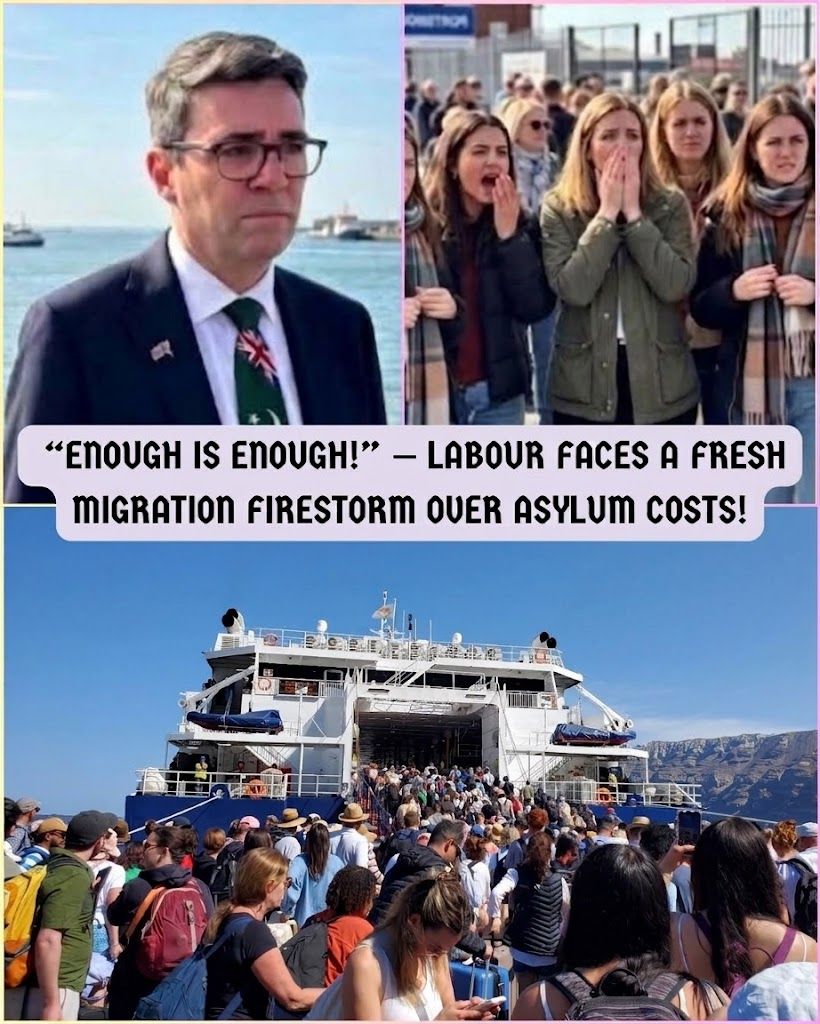
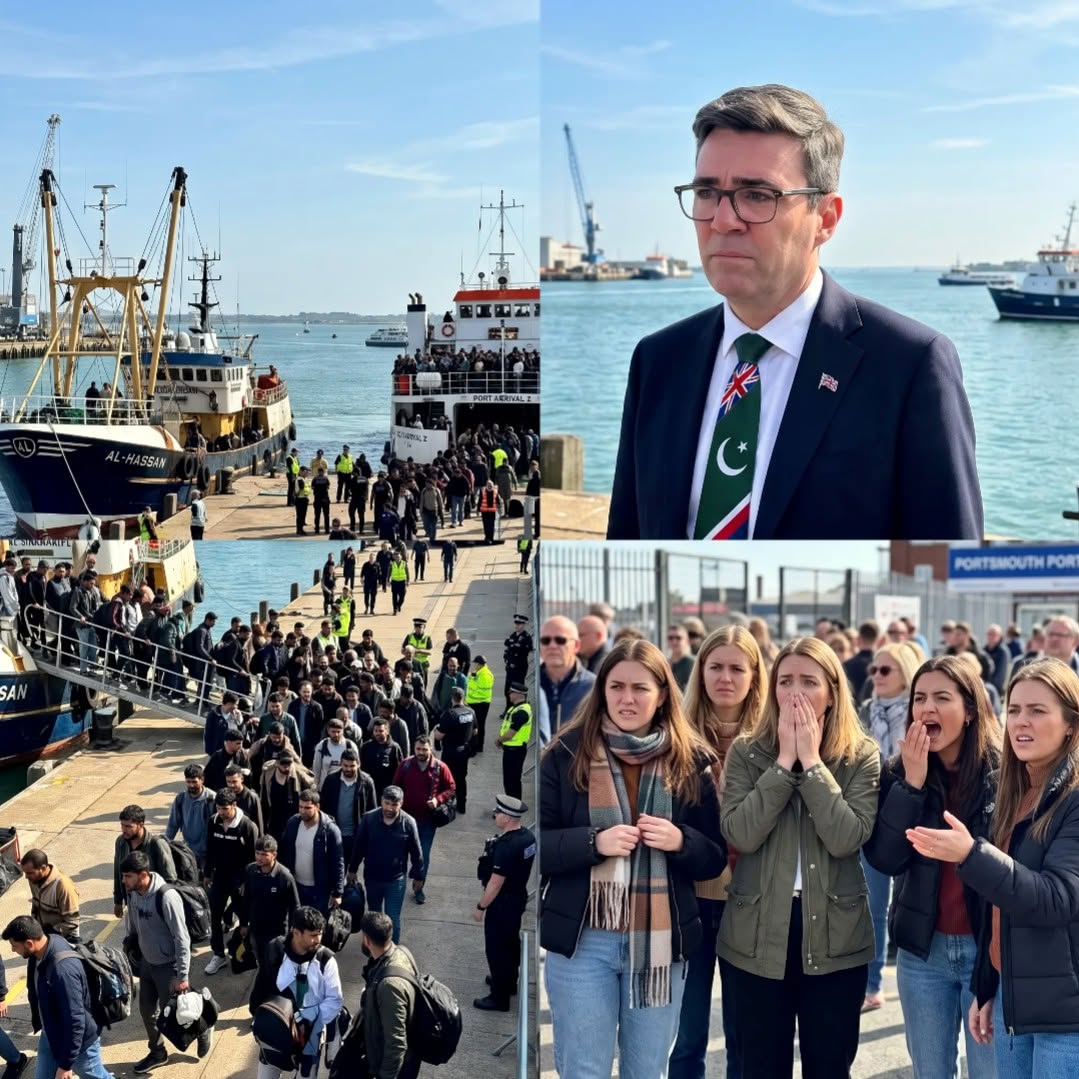
A blistering attack on Britain’s immigration system is fuelling a fresh political argument over border control, asylum accommodation and whether the country should consider the radical step of dramatically restricting immigration for as long as a decade.
The message, circulating in uncompromising language online, portrays Britain’s immigration system not merely as being “under pressure” but as fundamentally broken. It accuses the Labour government of losing control of both the border and the financial cost of accommodating asylum seekers, while dismissing legitimate public concerns as extremist.
At the centre of the argument is a striking demand: a ten-year immigration pause.
Such a proposal would represent an extraordinary change in British policy. But exactly what a “pause” would mean is unclear. Would it apply to workers, international students, family visas and refugees? Would doctors and nurses be excluded? What about highly skilled employees recruited by British companies?
Those unanswered questions demonstrate the difference between a powerful political slogan and a workable immigration system.
Yet the anger behind the proposal reflects concerns that governments cannot simply ignore.
The Asylum Accommodation Problem
One of the strongest sources of public frustration has been the use of hotels to accommodate asylum seekers.
When the asylum system cannot process claims quickly enough and dedicated accommodation is insufficient, governments have relied on hotels and other temporary facilities.
For critics, the arrangement represents almost everything they believe is wrong with immigration policy.
It is expensive.
It can place large numbers of asylum seekers in communities with little warning.
Local councils and residents may feel they have limited influence over decisions.
Hotels that would otherwise accommodate tourists or business visitors can be removed from normal commercial use.
The political impact can therefore be significant even in communities where there is little evidence of serious disorder involving residents of the accommodation.
That distinction matters.
People can legitimately object to the cost, scale or location of asylum accommodation without assuming that every person living there represents a threat.
Are Migrants Receiving ‘Private Lets and the Full Works’?
Claims about generous taxpayer-funded support require similar context.
People receiving asylum support can be housed in different forms of accommodation while their claims are considered.
But asylum accommodation should not be confused with an unrestricted package of benefits unavailable to British citizens.
Different immigration categories also have different rights.
An asylum seeker awaiting a decision is legally different from a recognized refugee.
A person who entered the country without authorization is different again from someone whose visa has expired, while a foreign national legally working in Britain falls into another category entirely.
Using “migrants” to describe all of them can obscure rather than clarify the debate.
The underlying financial question remains legitimate: how much should taxpayers be expected to spend because immigration and asylum cases have not been resolved quickly enough?
That is a question ministers need to answer with transparent figures.
‘If You Break In, You Don’t Jump the Queue’
The idea that irregular arrival allows someone to “jump the queue” has become one of the most powerful arguments in the border debate.
It appeals to a straightforward sense of fairness.
People applying for visas from overseas can spend substantial amounts of money, provide documentation and wait for permission before entering Britain.
Seeing someone arrive by small boat can therefore appear fundamentally unfair.
But asylum law complicates the comparison.
An asylum claim is not simply another application for an ordinary immigration visa.
People seeking protection may have their claims examined after reaching the UK. Some ultimately receive protection; others are rejected and may become liable for removal.
That does not settle the political argument over whether Britain should accept asylum applications from people arriving irregularly.
It simply means that “illegal arrival” and “no legitimate asylum claim” are not automatically the same thing.
A functioning system has to determine which cases are genuine—and do so quickly.
Labour Faces the ‘Loss of Control’ Charge
The political danger for Prime Minister Andy Burnham and Home Secretary Shabana Mahmood is that immigration is judged primarily through visible outcomes.
Ministers can announce enforcement operations, agreements with France, action against smugglers and increased returns.
But voters are more likely to ask simpler questions.
Are small boats still arriving?
Are asylum hotels still operating?
How long do cases take?
Are people with rejected claims actually leaving?
How much is the system costing?
If the public does not see improvement in those areas, government claims of progress can struggle to gain traction.
That does not necessarily prove that ministers have “lost control.”
It does mean they face a credibility problem if official improvements fail to translate into changes voters can see.
What About the ‘Far Right’ Label?
Another element of the criticism concerns political language.
Some people who object to immigration policy believe their concerns are too quickly characterized as extremist or “far right.”
There is an important distinction here.
Opposition to high immigration is not, by itself, evidence of extremism.
Neither is demanding tighter borders, faster deportation of people without permission to remain or lower legal migration.
Those are legitimate positions in democratic politics.
At the same time, genuine far-right organizations and individuals do participate in immigration protests, and authorities have a responsibility to distinguish peaceful political activism from intimidation, racism and violence.
The danger comes when either side collapses those categories.
Calling every immigration critic an extremist can silence legitimate debate.
Pretending extremism never exists within anti-immigration movements can be equally misleading.
Are People Being Policed for Their Opinions?
The claim that police have time to pursue “mums on Facebook” while failing to control Britain’s borders combines two separate issues: immigration enforcement and freedom of expression.
British law protects robust political speech.
People can criticize immigration, the government, religion, asylum policy and individual politicians.
But freedom of expression is not unlimited. Threats, harassment and certain other unlawful communications can potentially lead to police action depending on their content and circumstances.
Whether police strike the correct balance is a legitimate subject for public scrutiny.
But an arrest or investigation relating to online communications should not automatically be characterized as punishment merely for holding an unpopular opinion.
Individual cases need to be examined on their facts.
Could Britain Actually Stop Immigration for Ten Years?
This is where the proposal becomes much more complicated.
A literal ten-year halt to immigration would affect far more than small boats.
British employers recruit workers internationally.
The NHS and social-care sector employ substantial numbers of overseas-born staff.
Universities depend heavily on international students.
British citizens marry foreign nationals.
Companies transfer specialists between countries.
Refugee protection creates separate legal obligations.
A genuine blanket moratorium would therefore have enormous consequences.
Supporters might respond that this is precisely the point: Britain needs a dramatic intervention to reduce population pressures on housing, infrastructure and public services.
Opponents would warn of labour shortages, university funding problems, slower economic growth and difficulties recruiting essential workers.
A more targeted version could instead sharply reduce selected visa categories while retaining exceptions for strategically important skills and humanitarian obligations.
But that would no longer be a complete immigration pause.
Legal and Irregular Migration Must Be Separated
Perhaps the greatest weakness in Britain’s immigration debate is the tendency to treat every form of migration as the same problem.
Reducing Channel crossings requires border enforcement, cooperation with European countries, action against smugglers and credible return arrangements.
Reducing work migration requires changing visa rules.
Reducing international student numbers requires education policy.
Reducing asylum costs requires faster decisions and less expensive accommodation.
These policies overlap, but they are not interchangeable.
Closing a worker visa route will not automatically stop a dinghy leaving France.
Stopping a dinghy will not reduce the number of international students.
Closing an asylum hotel does not necessarily mean its former residents have been removed from Britain.
Anger Is Real, but Policy Requires More Than Anger
The language surrounding the latest intervention is deliberately confrontational.
That may resonate with voters who believe Westminster has ignored them for too long.
But governing requires turning frustration into specific choices.
How low should migration fall?
Which categories should remain open?
How quickly should asylum claims be decided?
Where should asylum seekers live while decisions are made?
What should happen after a rejected claim?
How should Britain meet labour shortages if overseas recruitment is sharply reduced?
And how much economic disruption would voters accept in exchange for lower immigration?
Those are harder questions than declaring the system “finished.”
But they are the questions any government—or opposition party proposing a radical alternative—eventually has to answer.
Britain’s immigration debate has reached a point where dismissing public concern is unlikely to work. Neither will pretending every migrant, asylum seeker and irregular arrival represents the same problem.
The demand for a ten-year pause captures the intensity of public frustration.
Whether it could become serious policy is another matter entirely.
The ultimate test for Burnham’s government will not be whether it can win the argument on social media. It will be whether voters eventually see a system in which legal migration is controlled, asylum decisions are made quickly, people without a right to remain are returned where legally possible, and communities believe their concerns are being heard.
Until then, the accusation that Britain has lost control of immigration will remain one of the most potent—and contested—arguments in British politics.
‘Enough Is Enough’: Calls for a Ten-Year Immigration Pause Ignite a New Battle Over Britain’s Borders
Calls for a ten-year pause on immigration have reignited one of Britain’s most divisive political debates, placing border control, economic priorities and the country’s future direction at the centre of public discussion. Supporters of the proposal argue that the United Kingdom needs a prolonged period to address pressure on housing, public services and infrastructure, while opponents warn that a blanket suspension could create serious economic and humanitarian consequences.
The slogan “Enough Is Enough” captures the frustration felt by some voters who believe successive governments have failed to establish a migration system that commands public confidence. For these campaigners, the issue is not simply about reducing annual arrival figures. It is about whether the country can manage population growth, provide adequate public services and ensure that immigration policy reflects the priorities of the people who live there.
Yet a ten-year pause would represent a major policy shift, raising difficult questions about how such a measure would work, who would be affected and whether the intended benefits could be achieved without creating new problems.
Why a Ten-Year Pause Is Gaining Attention
Immigration has remained a prominent issue in British politics, with debates covering asylum applications, work visas, family migration, student routes and the enforcement of immigration rules.
Supporters of a lengthy pause argue that the country needs time to bring the system under control. They point to concerns about the availability of affordable housing, pressure on local services and the capacity of councils to respond to changing populations. Some also argue that rapid population growth can make it harder for governments to plan infrastructure and maintain public confidence in their decisions.
For those advocating a ten-year suspension, a temporary reduction may not go far enough. They believe a longer period would give Britain an opportunity to reassess its labour market, strengthen domestic training, expand housing supply and establish clearer priorities for future migration.
The argument appeals to people who feel that immigration policy has changed substantially without sufficient public discussion. They want political leaders to explain not only how many people may enter the country, but also how the government intends to manage the consequences for communities.
However, the popularity of a slogan does not establish that a particular policy would be practical or effective. A ten-year pause would require detailed definitions, legal changes and decisions about exemptions. Its impact would depend heavily on the scope of the restrictions and the circumstances in which they were applied.
Housing and Public Services at the Centre of the Debate
Housing is one of the most prominent issues in arguments about immigration. In areas where demand for accommodation is high and construction has failed to keep pace with need, residents may worry about competition for rented homes and rising living costs.
Supporters of tighter migration controls argue that reducing population growth could ease some of this pressure, particularly if housing supply and infrastructure take time to adjust.
But immigration is only one factor affecting Britain’s housing market. Planning rules, construction rates, interest rates, investment, household formation and the distribution of employment all influence affordability. A substantial reduction in migration would not automatically produce cheaper homes if the country continued to build too few properties in the places where people need them.
The same complexity applies to public services.
Population growth can increase demand for GP appointments, school places, transport and local authority support. At the same time, migrants also use their skills to provide essential services, including healthcare, social care and other occupations where employers struggle to recruit sufficient staff.
The overall effect depends on who arrives, their employment, where they settle, the taxes they pay and the services they require. A serious assessment of a ten-year pause would therefore need to consider both additional demand and the contributions migrants make.
The central question is whether the government could improve the balance between population needs, public investment and service capacity without creating shortages in important sectors.
The Economic Risks of Restricting Migration
A ten-year immigration pause could have far-reaching consequences for employers and the wider economy.
Businesses in sectors such as healthcare, agriculture, hospitality, construction and social care may rely on international recruitment to fill vacancies. If access to overseas workers were sharply restricted, employers could face greater competition for domestic staff, rising recruitment costs or difficulties maintaining existing services.
Supporters of restrictions respond that businesses should do more to train British workers, improve wages and make jobs more attractive. They argue that an economy should not depend indefinitely on overseas recruitment when domestic workers could be given better opportunities.
That argument raises an important policy question: how quickly could employers develop a sufficient domestic workforce?
Training programmes take time, particularly in occupations requiring specialist qualifications or extensive practical experience. Better wages and working conditions can improve recruitment and retention, but employers may also need transitional arrangements to avoid sudden gaps in staffing.
The economic effects would also vary between industries. Some employers might adapt by investing in technology, changing working practices or increasing productivity. Others could struggle to maintain output, expand operations or meet demand.
A ten-year pause would therefore need to be assessed through detailed sector-by-sector analysis rather than the assumption that all employers could adjust at the same speed.
The Human Consequences
Immigration policy affects more than economic statistics. It also shapes the lives of families, students, workers and people seeking protection from persecution or serious danger.
A broad pause could affect family reunification, international students, skilled workers and people whose circumstances change while they are in the country. Depending on its design, it could also raise questions about existing visa holders, permanent residence applications and people already entitled to remain in Britain.
Asylum presents a separate legal and humanitarian issue. People seeking international protection may have claims that require individual assessment under domestic law and the UK’s international obligations. A general restriction on ordinary migration would not automatically remove those obligations.
Any proposal would therefore need to explain precisely which routes would be suspended, which would remain available and how individual rights would be protected.
Supporters of tighter controls may argue that a clear and enforceable system would reduce uncertainty and discourage misuse. Critics may question whether a prolonged suspension could separate families, undermine universities or leave employers unable to recruit essential staff.
These competing concerns require specific answers. A slogan alone cannot establish how a policy would operate in practice.
Political Parties Face Difficult Questions
Calls for a ten-year pause could intensify pressure on Britain’s political parties to explain their immigration policies in greater detail.
Politicians who favour stronger restrictions may find that public concern creates demand for more ambitious proposals. They would still need to demonstrate how the measures could be implemented, how exemptions would work and what the economic consequences might be.
Parties opposing a blanket pause would face their own challenge. They would need to explain how they would manage migration levels, enforce existing rules, process asylum applications and respond to concerns about housing and public services.
For voters, the distinction between political rhetoric and an operational plan is crucial.
A party promising lower immigration should explain which categories would be affected, how progress would be measured and what would happen if employers could not recruit enough workers. A party favouring a more flexible system should explain how it would prevent exploitation, maintain public confidence and ensure that infrastructure keeps pace with population change.
The debate should also distinguish between different forms of migration. Work visas, international education, family reunification and asylum involve different legal frameworks and policy objectives. Treating them as a single category can obscure the practical consequences of proposed restrictions.
Could Britain Manage Without New Immigration for a Decade?
Whether Britain could sustain a ten-year pause would depend on the precise meaning of the proposal.
A complete suspension of nearly all new immigration would be substantially different from a moratorium on selected visa routes, a temporary cap on work permits or a policy aimed at reducing net migration while retaining exceptions for critical occupations.
Each approach would have different implications for public finances, labour supply, education, family life and international relationships.
The government would also need to consider the UK’s ageing population. As more people retire, demand for healthcare and social care can increase while the proportion of the population in employment changes. Domestic training, higher productivity and greater participation in the workforce could help address these challenges, but the speed and scale of those changes would matter.
A lengthy pause might also affect universities that attract international students, research institutions that recruit globally and businesses that compete in international markets. The scale of any effect would depend on whether students, researchers and highly specialised workers were included in the restrictions.
Conversely, supporters would argue that a period of lower migration could give policymakers more time to invest in domestic skills and infrastructure. The key issue is whether the proposed transition could be managed effectively and whether the benefits would outweigh the costs.
These questions would require credible modelling, transparent assumptions and independent scrutiny.
Public Confidence and the Future of Border Control
One reason immigration remains politically sensitive is that confidence depends not only on the rules themselves but also on whether people believe those rules are being enforced fairly and consistently.
Delays in asylum decisions, uncertainty over removals, unclear communication about visa routes and conflicting political promises can weaken public trust. When governments announce targets without explaining how they will achieve them, scepticism can grow.
Improving confidence would require reliable data, timely decisions and clear explanations of policy outcomes. It would also require distinguishing between people who have a lawful right to enter or remain, people seeking protection and people who have no legal basis to stay.
For supporters of a ten-year pause, the proposal represents a demand for a decisive change in direction. For critics, it risks treating a complex set of economic, legal and social questions as though one sweeping measure could resolve them all.
Both the practical details and the evidence would matter more than the force of the slogan.
A Defining Debate for Britain
The demand for a ten-year immigration pause has placed a fundamental question before British policymakers: how should the country balance democratic control over its borders with economic needs, humanitarian responsibilities and the long-term requirements of society?
For some voters, “Enough Is Enough” expresses a belief that existing arrangements have failed and that a much longer period of restriction is necessary. Others argue that a blanket pause could damage essential services, restrict family life and weaken industries that depend on international talent.
The debate cannot be settled by assuming that either unrestricted migration or a complete halt would automatically solve Britain’s problems. Housing shortages, public-service pressures, labour-market gaps and weak public confidence each have their own causes and require carefully designed responses.
Any serious proposal must explain how it would work, which people it would affect, what exceptions would apply and how its consequences would be measured.
Britain’s borders will remain a major political issue, but the lasting test for any government will be whether it can turn public demands into policies that are lawful, workable and transparent.
A ten-year pause may be a powerful political demand. Whether it could deliver the outcomes its supporters expect is a separate question—one that requires evidence, detailed planning and an honest assessment of the trade-offs facing the country.