
Viral Video From London Rally Ignites New Row Over Counter-Protesters, Policing and Claims of Media Bias
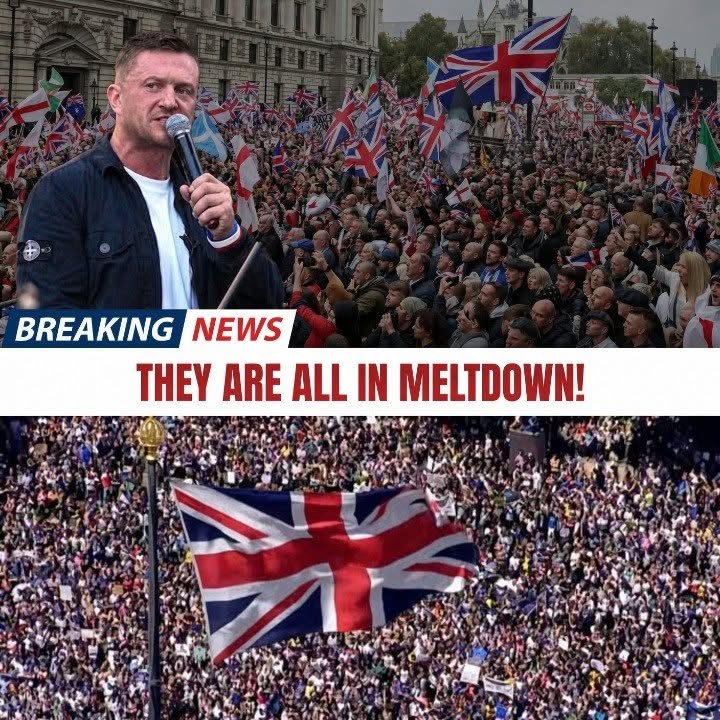
A video circulating online following a major London demonstration has triggered a fresh political storm, with footage said to show counter-protesters making inflammatory remarks about Tommy Robinson prompting accusations that the public is receiving only part of the story surrounding Britain’s increasingly confrontational street protests.
The clip has spread rapidly across social media, where supporters of Robinson have contrasted the alleged remarks with extensive coverage of arrests, inflammatory rhetoric and confrontations associated with demonstrations linked to his movement.
For some viewers, the footage is being presented as evidence of a glaring double standard: controversial behaviour by one political camp receives national attention, they argue, while equally disturbing behaviour from opponents receives significantly less scrutiny.
But establishing such a claim requires considerably more evidence than one viral recording.
The precise wording, context and identities of the people shown in the circulating footage have not been independently established from the material provided. Nor is there sufficient evidence to conclude that their remarks represent the wider counter-protest movement.
Nevertheless, the controversy raises a legitimate question that extends far beyond Tommy Robinson:
When rival political movements take to Britain’s streets, are unacceptable words and actions being judged consistently regardless of who is responsible?
A Highly Charged Political Environment
Robinson, whose real name is Stephen Yaxley-Lennon, remains one of the most polarising political activists in Britain.
Supporters regard him as an outspoken campaigner on immigration, Islamism and free speech who is willing to discuss subjects they believe mainstream politicians avoid.
Critics regard him as a far-right activist whose campaigns have contributed to hostility toward Muslims and migrants.
Those radically different interpretations mean demonstrations involving Robinson rarely remain ordinary political events.
They become battles over national identity, immigration, religion and the boundaries of acceptable political speech.
That polarization also affects how individual incidents are interpreted.
A confrontation involving one of Robinson’s supporters may be viewed by opponents as evidence of extremism.
A similar incident involving a counter-protester may be presented by Robinson’s supporters as evidence of hypocrisy.
Social media then amplifies whichever interpretation fits a user’s existing political worldview.
The Video at the Centre of the Latest Row
According to the description accompanying the circulating footage, counter-protesters close to the main demonstration appear to make inflammatory remarks about Robinson.
Without the complete recording, those comments should not be quoted or characterized more specifically as established fact.
Context is particularly important with video.
What happened immediately before the recording began?
Were the individuals responding to someone else?
Were their remarks literal, rhetorical or sarcastic?
Did they cross a criminal threshold?
And were the people involved actually members of an organized counter-protest or simply individuals standing nearby?
Those questions matter.
But context should not become an excuse for ignoring genuinely threatening language if reliable evidence ultimately establishes that it occurred.
Political affiliation should not determine whether disturbing rhetoric deserves scrutiny.
What the Arrest Numbers Tell Us
Available evidence from previous large Robinson-linked demonstrations provides an important counterpoint to claims that authorities focus exclusively on one side.
During two major demonstrations in London in May—the Unite the Kingdom rally associated with Robinson and a separate pro-Palestinian march—the Metropolitan Police recorded 43 arrests across the policing operation.
Twenty of those arrested were associated with the Unite the Kingdom event, while 12 were associated with the pro-Palestinian demonstration. Other arrests were not attributed to either side.
Police also investigated alleged hate offences involving participants from both demonstrations.
That does not prove media coverage was perfectly balanced.
But it does show that law enforcement was not simply ignoring alleged offences associated with one political camp.
The more meaningful question is whether comparable conduct leads to comparable enforcement.
Why Media-Bias Claims Are So Powerful
Accusations of media bias thrive during politically charged demonstrations because news organizations inevitably make editorial choices.
Thousands of people may attend.
Hundreds of hours of video may exist.
Reporters cannot show everything.
Editors therefore decide which moments best explain what happened.
If police officers are assaulted, that is likely to become a major story.
If dozens of arrests occur, those arrests will appear in headlines.
If a prominent speaker makes an inflammatory statement, that statement may dominate coverage.
The problem emerges when audiences believe incidents pointing in the opposite political direction are systematically ignored.
For Robinson’s supporters, the latest viral video appears to reinforce that suspicion.
They argue that aggressive rhetoric from anti-racist, left-wing or pro-Palestinian demonstrators sometimes receives less attention than controversial behaviour associated with nationalist groups.
Opponents make almost the mirror-image accusation.
They argue that enormous attention is devoted to confrontational left-wing protests while intimidation or extremist rhetoric associated with nationalist movements is sometimes normalized as ordinary public anger.
Both sides increasingly believe the other receives preferential treatment.
Social Media Creates Its Own Bias
Traditional media organizations are not the only institutions selecting which footage people see.
Social-media algorithms perform an even more aggressive form of selection.
A user who regularly watches videos criticizing immigration may increasingly receive footage showing migrant crime, confrontational counter-protesters or controversial police interventions.
Someone whose online activity focuses on anti-racism may instead receive footage showing racist abuse, violence at nationalist demonstrations or attacks on minorities.
Both people can spend hours watching genuine videos and emerge with completely different impressions of Britain.
Neither necessarily sees fabricated information.
They see selectively assembled reality.
That makes viral political footage extraordinarily powerful.
Counter-Protesters Are Not One Political Entity
Another important distinction concerns the term “counter-protester.”
People opposing Robinson can include anti-racism organizations, trade union activists, pro-Palestinian campaigners, religious groups, local residents and unaffiliated individuals.
Their political beliefs may differ substantially.
The words of one participant therefore cannot automatically be attributed to everyone demonstrating on the same side of a police barrier.
The same principle applies to Robinson’s rallies.
If one participant commits an offence or makes a racist statement, that does not automatically establish that every person attending shares that view.
Collective guilt is a poor substitute for evidence regardless of which movement is being discussed.
Where Free Speech Ends
The controversy also raises the difficult question of how far political speech can go.
Britain protects extremely robust criticism.
People are allowed to say offensive things about politicians and political activists.
They can mock them, condemn them and demand that they disappear from public life.
The criminal threshold is much higher than merely causing offence.
Threats, harassment and certain forms of incitement can cross that threshold depending on their wording and circumstances.
Police therefore have to distinguish between language that is ugly but lawful and language that may constitute an offence.
That judgment should not depend on whether the speaker supports Tommy Robinson or despises him.
Police Cannot Win the Political Argument
Law enforcement increasingly finds itself trapped between competing accusations.
When officers arrest nationalist protesters, critics accuse them of “two-tier policing.”
When they arrest pro-Palestinian or anti-racist protesters, another group accuses them of suppressing legitimate dissent.
When officers do not immediately intervene, viral videos appear asking why nothing was done.
During the May London demonstrations, approximately 4,000 officers were deployed, while police imposed conditions designed to prevent rival groups from confronting one another directly. Despite 43 arrests, the Metropolitan Police said the demonstrations had largely passed without significant incidents.
That scale illustrates the challenge.
Police are not merely enforcing individual laws. They are attempting to prevent thousands of politically hostile people from turning confrontation into violence.
The Standard Should Be the Same
There is a relatively straightforward principle capable of cutting through much of the argument.
If a Robinson supporter makes a credible threat, investigate it.
If a counter-protester makes the same threat, investigate that too.
If someone assaults a police officer, political ideology should be irrelevant.
If someone expresses an offensive but lawful opinion, the same protection of free speech should apply regardless of whether that opinion comes from the right or left.
The difficulty lies in demonstrating that consistency in thousands of individual policing decisions.
One Video Cannot Reveal the ‘Whole Truth’
The latest footage deserves scrutiny.
If a complete recording verifies genuinely threatening or unlawful statements, those responsible should not escape attention simply because they were opposing a controversial political figure.
But the reverse is equally important.
One video cannot establish that an entire counter-protest was violent, that the media deliberately concealed wrongdoing or that police systematically ignored offences.
Those are much larger claims requiring much larger bodies of evidence.
Britain’s increasingly polarized protest culture is creating competing versions of reality in which each side believes cameras expose the wrongdoing of its opponents while journalists hide it.
That is precisely why verification matters.
The real test is not whether disturbing behaviour comes from supporters or opponents of Tommy Robinson. It is whether the same evidential, journalistic and legal standards are applied to both.
If Britain wants to preserve both free expression and public order, political allegiance cannot determine whose behaviour deserves scrutiny.
And in an age when a 20-second clip can reach millions before investigators have established what happened, perhaps the most important question is no longer simply what the camera captured.
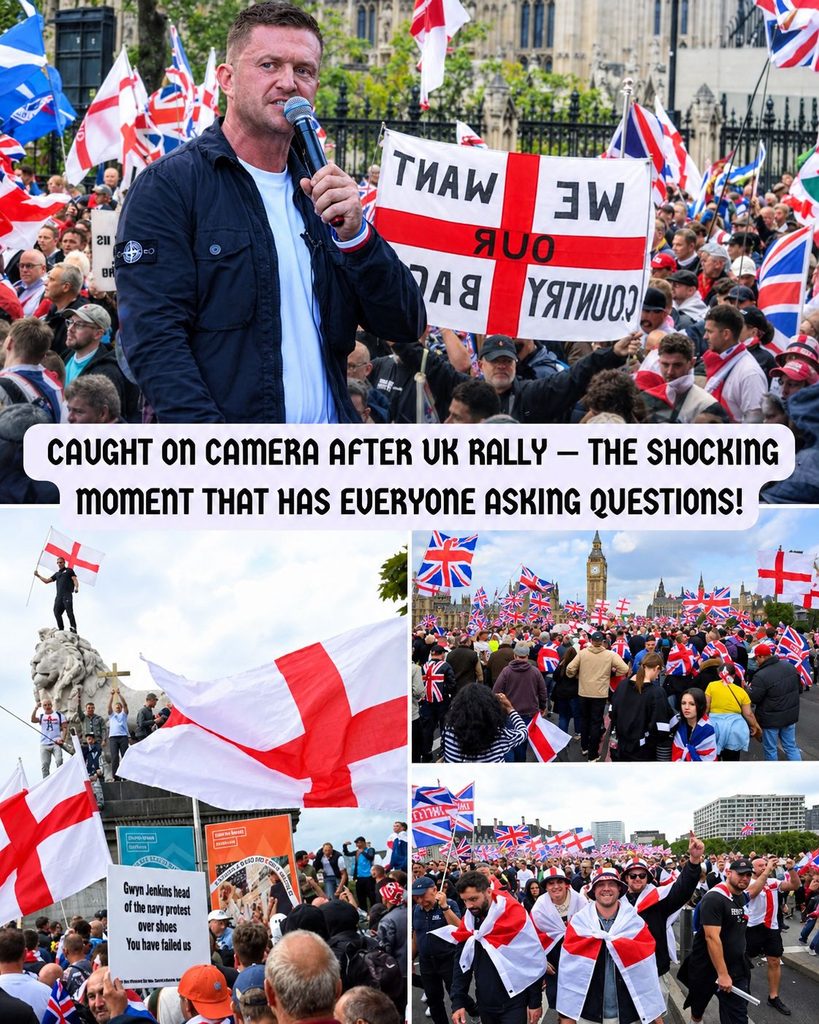
“They Didn’t Expect This to Be Caught on Camera!” Footage From UK Rally Sparks Fierce Political Storm
A political rally in the United Kingdom has become the focus of intense public debate after footage allegedly showing events at the gathering began attracting attention online. What happened during and after the demonstration has prompted questions about political accountability, public order and the growing hostility surrounding some of Britain’s most divisive issues.
The controversy reflects a wider problem in modern British politics: events that once might have remained local incidents can now become national talking points within hours. A short video, a heated exchange or an unexpected confrontation can spread rapidly across social media, drawing reactions from supporters, critics, politicians and commentators before all the facts have been established.
The headline surrounding the rally suggests that something was captured on camera that those involved may not have expected to become public. However, without independently verified details about the specific footage, it is important not to assume who was recorded, what the images show or whether any individual deliberately attempted to conceal their actions.
What is clear is that political demonstrations have become increasingly vulnerable to intense scrutiny, with every visible confrontation capable of triggering a much wider argument about the state of public life in Britain.
Footage Changes the Conversation
Video recordings have transformed the way political events are reported and discussed. In the past, people who did not attend a rally generally relied on journalists, official statements or eyewitness accounts to understand what had happened. Today, participants and bystanders can record incidents on smartphones and distribute the footage to large audiences almost immediately.
This can have important benefits. Video may help establish the sequence of events, challenge inaccurate claims and provide investigators with evidence when an offence is suspected. It can also give the public a direct view of an incident that might otherwise be described differently by competing sides.
However, footage does not always tell the complete story.
A short clip may begin after an argument has already started, omit an earlier confrontation or end before the situation has been resolved. The person recording may capture one individual clearly while missing the actions of others nearby. Captions can further influence how viewers interpret what they see, particularly when a video is shared alongside claims about political motives or misconduct.
Consequently, the appearance of dramatic footage does not automatically establish every allegation made about it.
The public has a legitimate interest in understanding what occurred at the rally, but conclusions should depend on the content of the recording, its context and any supporting evidence. Where accounts differ, those differences should be examined rather than dismissed simply because one version is more emotionally compelling.
Why Political Rallies Have Become Flashpoints
Political demonstrations are an established feature of British democracy. They allow people to express support for a cause, criticise government decisions and demand changes to public policy.
Yet rallies can also become flashpoints when they address issues that divide communities. Immigration, national identity, economic inequality, policing and the future direction of the country can generate powerful reactions among people with very different experiences and expectations.
For supporters of stricter immigration controls, demonstrations may provide an opportunity to demand stronger border enforcement, faster asylum decisions and greater transparency over public spending. Some believe that established political parties have failed to respond adequately to concerns raised by residents.
Those who oppose anti-immigration demonstrations may argue that such events risk encouraging hostility towards migrants and minority communities. They may emphasise humanitarian responsibilities, the rights of asylum seekers and the danger of treating people as collectively responsible for government policy.
Neither position should automatically be equated with support for violence or unlawful conduct. People can disagree strongly about immigration while rejecting intimidation, harassment and physical attacks.
The difficulty arises when political disagreement becomes personal, when opponents are portrayed as enemies rather than fellow citizens, or when provocative behaviour encourages confrontation.
In such circumstances, a camera may record an incident that becomes more consequential than the rally itself. A single exchange can be replayed thousands of times, interpreted in conflicting ways and used to support broader claims about political movements or institutions.
The Political Storm After the Rally
When footage from a politically sensitive event begins circulating, the immediate reaction often extends well beyond the people who attended.
Supporters may argue that the recording confirms concerns they already held. Critics may see it as evidence that a political movement has a problem with discipline or public conduct. Others may focus on whether police responded appropriately or whether journalists have accurately described the incident.
Politicians can also face pressure to comment, particularly if the people involved are prominent figures or representatives of a recognised organisation.
The danger is that the political argument may begin before the essential questions have been answered. Who appears in the footage? When and where was it recorded? Does it show the complete exchange? Have the people involved provided explanations? Is there independent evidence supporting the claims being circulated?
These questions matter because allegations can have serious consequences for individuals and organisations. An edited clip or misleading description may damage a reputation, while genuine evidence of misconduct should not be ignored merely because it is politically inconvenient.
A responsible response requires distinguishing what the footage demonstrably shows from what commentators believe it means.
If the recording reveals unlawful conduct, the appropriate authorities can investigate. If it shows behaviour that is legal but politically controversial, the public can assess it through open debate. If claims surrounding the video prove inaccurate, corrections should receive attention as well.
Social Media Amplifies Every Detail
The speed of online distribution has made political controversies more difficult to contain. A video posted by an ordinary attendee can be reposted by large accounts, discussed by commentators and incorporated into political arguments before its origins are fully understood.
The process can create an impression that an incident represents a much larger pattern, even when the available evidence is limited. Repeated viewing may also make an allegation seem established simply because people encounter it frequently.
Emotion plays an important role. Videos that appear to show hypocrisy, aggression or unexpected behaviour often attract more attention than routine footage of a peaceful event. Strong reactions encourage further sharing, creating a cycle in which increasingly dramatic interpretations compete for visibility.
This does not mean that viral footage should be dismissed. Some recordings have exposed serious misconduct and prompted legitimate calls for accountability. The important distinction is between taking evidence seriously and assuming that every accompanying claim is accurate.
Viewers can help by checking whether the original recording is available, examining the surrounding context and looking for corroboration. They should also be cautious about sharing personal information or encouraging harassment against people identified in a clip.
Public scrutiny can serve the democratic interest. Online punishment based on incomplete or misleading information can undermine it.
Accountability Must Apply to Everyone
The controversy surrounding the rally also raises a broader question about political accountability.
Public figures and campaign organisers are entitled to express their views, but they should expect legitimate scrutiny of their public actions. When credible evidence raises questions about conduct at an event, it is reasonable for journalists and the public to seek explanations.
At the same time, accountability should be based on evidence rather than political loyalty. An individual should not be presumed guilty because they belong to an unpopular movement, and an allegation should not be dismissed simply because it concerns a political group someone supports.
The same standards should apply across the political spectrum.
If a rally participant assaulted someone, the circumstances should be investigated. If an organiser encouraged unlawful behaviour, any available evidence should be assessed. If the footage has been misrepresented, that should also be established clearly.
Police and other authorities must balance public safety with the right to peaceful assembly. Their decisions should be assessed against the law, the evidence and the circumstances confronting officers at the time.
This approach may be less dramatic than the competing claims circulating online, but it is essential if public confidence is to be maintained.
The Wider Problem of Political Polarisation
The incident comes against a backdrop of strong political disagreements across Britain. Public arguments about immigration, living costs, public services and trust in political institutions have become central to national debate.
For many people, frustration is rooted in practical concerns. They want effective public services, secure communities, affordable housing and a government that explains its decisions clearly. Others are concerned about discrimination, unequal treatment and the effect of hostile political rhetoric on vulnerable groups.
These concerns can be debated without assuming that everyone who disagrees is acting in bad faith.
However, political polarisation can encourage people to interpret every incident as proof that their opponents are dangerous or dishonest. Once that happens, facts may become secondary to the desire to win an argument.
A controversial video can then serve as a symbol for a much larger dispute. The original incident may receive relatively little examination, while the online debate focuses on what it supposedly reveals about an entire party, movement or section of society.
Britain’s political debate would benefit from a stronger distinction between individual behaviour and collective responsibility. Criticism should be directed at actions that can be demonstrated, not extended indiscriminately to people who share a broad political position.
What Happens Next?
The consequences of the rally controversy will depend on the evidence and on how those involved respond. If the footage raises credible questions about misconduct, further reporting or an official investigation may follow. If the dispute is primarily about interpretation, additional context may help clarify the sequence of events.
Political organisations may also face pressure to explain their approach to demonstrations, manage tensions between supporters and opponents, and distance themselves from any proven unlawful behaviour.
The public, meanwhile, should resist the temptation to treat an attention-grabbing headline as a complete account of what happened. The phrase suggesting that participants never expected to be filmed may be compelling, but it remains an interpretation unless supported by evidence about their intentions.
The recording itself, rather than the most dramatic description attached to it, must be the starting point.
Ultimately, the controversy illustrates the power of cameras in contemporary politics. Public events are increasingly documented by participants, journalists and bystanders, making it harder for competing accounts to remain unchallenged. That scrutiny can strengthen democracy when it exposes wrongdoing and encourages transparency.
But it can also deepen divisions when incomplete footage is used to fuel anger or when allegations are treated as established facts before they have been investigated.
The central issue is therefore not simply whether someone was caught on camera. It is whether the public can establish what happened, understand the relevant context and judge the evidence fairly.
In a political climate already marked by mistrust, that distinction matters. Britain needs open debate, meaningful accountability and the freedom to protest peacefully. It also needs a commitment to accuracy, due process and the principle that no individual or political group should be judged solely on an unverified claim circulating online.