

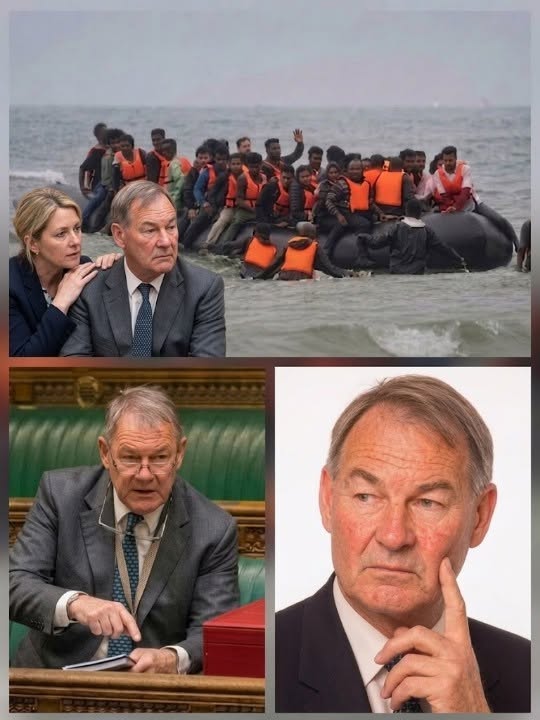
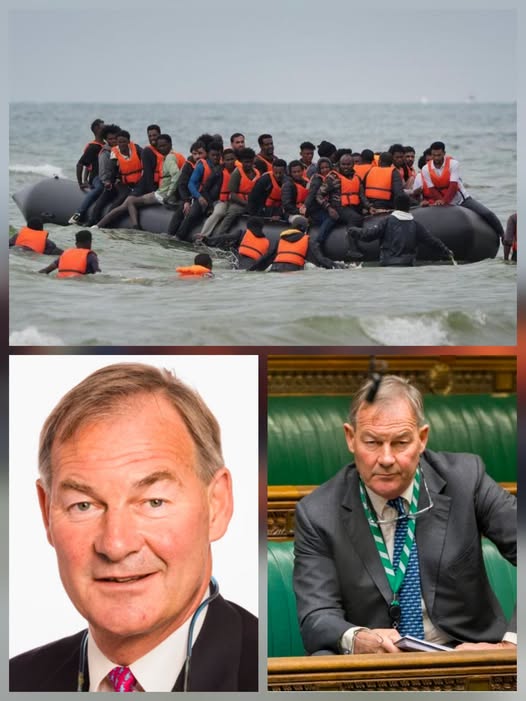
Rupert Lowe Calls for Benefits Ban on Foreign Nationals as Welfare Row Erupts in Parliament
LONDON — Rupert Lowe has called for foreign nationals to be barred from claiming UK welfare benefits and argued that migrants who cannot financially support themselves should be required to leave the country, triggering a sharp confrontation in Parliament over immigration, fairness and the purpose of Britain’s welfare state.
The Restore Britain MP for Great Yarmouth put the issue directly to ministers during Work and Pensions questions in the House of Commons, arguing that billions of pounds currently associated with Universal Credit claims involving foreign nationals should instead remain with British taxpayers.
His intervention produced an immediate rejection from the government.
But beneath the heated exchange lies a much more complicated question than the political slogans suggest: who can actually claim benefits in Britain today, how much is being spent, and what would Lowe’s proposal mean for foreign nationals who have lived and worked in the UK for years?
Lowe Calls for a Sweeping Benefits Ban
Speaking in the Commons on April 27, Lowe cited a figure of £10.1 billion out of £61.2 billion in Universal Credit expenditure during 2024 as being associated with foreign nationals.
He then proposed a far-reaching solution.
Lowe said Britain should prohibit foreigners from claiming benefits and remove migrants who were unable to financially support themselves. He argued that the resulting savings should effectively be returned to British taxpayers.
That position is consistent with the policy Lowe has continued to promote publicly.
In a more recent statement, he said ending benefits for foreign nationals was something he had advocated before it became politically fashionable and added that people unable to support themselves financially should be removed from Britain.
Restore Britain has presented the proposal as part of a broader welfare overhaul.
The principle is straightforward: British welfare should primarily support British citizens, while foreign nationals living in the country should be expected to maintain themselves and their families.
But implementing such a rule would represent a major departure from the current system.
Government Pushes Back on the £10.1 Billion Claim
The government’s response in Parliament was unusually direct.
Work and Pensions Minister Andrew Western said he “fundamentally” disagreed with Lowe’s approach, particularly when applied to people who had lived in Britain for years, worked, paid taxes and subsequently needed financial assistance.
The minister also challenged Lowe’s £10.1 billion figure.
According to Western, the calculation conflated benefit expenditure involving households containing a foreign national with money actually paid directly to foreign nationals.
A household may contain people of different nationalities. Some individual claimants within households classified in the data as having a foreign national may actually be British or Irish citizens.
Western therefore described Lowe’s interpretation as a significant overestimate.
That distinction is crucial when evaluating the scale of the proposal.
It does not mean foreign nationals receive no Universal Credit. Some legally do.
But it means the £10.1 billion figure cannot simply be described as £10.1 billion handed directly to foreign citizens.
Can Any Foreign National Currently Claim Benefits?
No.
One of the biggest misconceptions surrounding the debate is that arriving in Britain automatically provides access to the welfare system.
Current immigration rules generally work in the opposite direction.
The government states that most non-UK nationals receive immigration permission containing a No Recourse to Public Funds, or NRPF, condition.
That normally prevents them from claiming mainstream taxpayer-funded benefits.
Migrants with permission to access public funds must still satisfy the relevant benefit rules, including residency requirements. The government says settlement — usually obtained after several years — is the stage at which many migrants become eligible for public funds.
There are exceptions.
Refugees, people granted certain forms of protection, some people under the EU Settlement Scheme and others with qualifying immigration statuses may be eligible.
Contribution-based benefits are another important distinction.
Someone who has paid sufficient National Insurance contributions may qualify for benefits such as New Style Jobseeker’s Allowance even where some mainstream public funds are unavailable.
What About Illegal Migrants?
Here the existing rules are clearer.
People living in Britain without valid immigration status are not entitled to ordinary Department for Work and Pensions public-fund benefits.
The DWP confirmed this explicitly in response to an earlier parliamentary question from Lowe.
The government has also stated that people with pending asylum applications generally do not claim mainstream benefits such as Universal Credit. Instead, eligible asylum seekers who would otherwise be destitute may receive separate Home Office asylum support.
Refused asylum seekers and people without lawful immigration status are likewise generally prohibited from accessing mainstream public-fund benefits, although limited forms of support can exist under specific legal circumstances.
This makes the terminology particularly important.
“Foreign national,” “illegal migrant,” “asylum seeker,” “refugee” and “settled migrant” are not interchangeable categories.
They carry very different legal rights.
Lowe Wants to Go Much Further
Lowe’s proposal would therefore not merely prevent illegal migrants from claiming Universal Credit — they are already generally barred from doing so.
His position is substantially broader.
He has proposed removing access to benefits for all foreign nationals, including Universal Credit, social housing and disability benefits, while maintaining that people living in Britain as guests should support themselves.
That could potentially affect people who have lived legally in Britain for many years and paid significant amounts of income tax and National Insurance.
This is the central disagreement between Lowe and the government.
Lowe frames welfare as a national safety net that should principally be reserved for citizens.
The government argues that immigration status and existing eligibility rules already restrict access and that people who have contributed to Britain over many years should not necessarily be excluded simply because they do not hold British citizenship.
The Difficult Question of Contribution
Consider a hypothetical worker who has legally lived in Britain for 15 years.
They have paid income tax and National Insurance throughout that period but have never acquired British citizenship.
If they lose their job or become seriously ill, should they receive the same welfare protection as a British colleague who paid identical taxes?
Under Lowe’s citizenship-based approach, the answer could be no.
Under the existing system, the answer depends on immigration status, residency requirements, the benefit involved and other eligibility conditions.
This illustrates why the debate cannot be reduced simply to “British taxpayers versus foreigners.”
Some foreign nationals are themselves British taxpayers.
The political question is whether contributing financially to the country should eventually create entitlement to its social safety net, or whether citizenship should be the decisive dividing line.
Would Removing Benefits Reduce Immigration?
Lowe and supporters of tighter welfare restrictions argue that generous benefit systems can create incentives for migration.
His parliamentary motion on the issue describes access to benefits as a potential immigration “pull factor” and calls for legislation prohibiting foreign nationals from claiming UK welfare benefits.
Determining the actual effect would require evidence about why different categories of migrants come to Britain.
Many temporary migrants already have NRPF restrictions, meaning they cannot normally rely on Universal Credit or other specified benefits.
That complicates claims that unrestricted welfare access is a general feature of Britain’s immigration system.
A Debate Likely to Grow
Lowe’s intervention nevertheless touches on an increasingly prominent question in British politics.
Who should Britain’s welfare state exist to protect?
One position emphasises citizenship and argues that scarce public resources should primarily be reserved for British nationals.
Another emphasises contribution and legal residence, arguing that someone who has worked and paid into the system for years should not automatically lose access to support because of nationality.
The current system sits somewhere between those positions.
Most temporary migrants cannot access public funds. People without lawful immigration status are generally excluded. But certain legally resident foreign nationals — particularly those with settled status or other qualifying immigration status — can receive benefits if they meet the same eligibility requirements imposed on other claimants.
That is why Lowe’s proposal represents more than a crackdown on illegal immigration.
It would potentially redraw the boundary of Britain’s welfare state around citizenship itself.
And that leaves Parliament with a fundamental question that is unlikely to disappear:
Should welfare entitlement ultimately depend on the passport someone holds — or on their legal status, residence, contributions and individual circumstances?
Explosive Scenes in Parliament as Rupert Lowe Demands a Crackdown on Benefits for Non-Citizens
Britain’s increasingly heated debate over immigration and public spending has returned to the political spotlight following renewed calls by MP Rupert Lowe for tougher restrictions on welfare payments to foreign nationals. The proposal has reignited questions about who should qualify for taxpayer-funded support, whether the current benefits system is sufficiently strict and how the government should balance the interests of British citizens with the rights of people who have settled in the country.
The issue strikes at the heart of several major challenges facing the United Kingdom. Household budgets remain under pressure, affordable housing is difficult to secure in many areas, and public services face competing demands for limited resources. Against this background, proposals to restrict benefits according to citizenship and immigration status are likely to generate strong reactions among politicians and voters alike.
Although dramatic descriptions of parliamentary confrontations can circulate quickly online, the precise details of any reported incident must be verified before it can be presented as an established event. Nevertheless, the underlying policy debate is real and raises important questions about Britain’s approach to welfare, immigration and national responsibility.
Rupert Lowe’s Call for Tougher Welfare Restrictions
Rupert Lowe has become a prominent voice in political debates concerning immigration, national sovereignty and government spending. His call for a crackdown on benefits for non-citizens reflects a broader argument that access to taxpayer-funded assistance should be more closely controlled and that British citizens should receive priority when public resources are allocated.
Supporters of this approach argue that citizenship should carry practical advantages, particularly when the government faces pressure to control expenditure. They believe that people who have contributed to the country over many years should be confident that the welfare system is sustainable and that its rules are consistently enforced.
For these voters, welfare reform is closely connected to the question of fairness. They want to know whether public money is reaching people who qualify under the law, whether fraudulent claims are identified and whether the government has adequate information about the costs associated with different categories of claimants.
Lowe’s position appeals to those who believe that existing immigration and welfare arrangements need a more fundamental overhaul.
However, a proposal to restrict benefits for all non-citizens would be substantially broader than a policy targeting people who have no legal entitlement to public assistance. The distinction would be central to any serious assessment of the proposal.
Why Welfare Has Become a Political Flashpoint
The cost of living has made public spending a particularly sensitive subject in Britain. Families face expenses associated with housing, food, energy, transport and childcare, while some workers struggle to build financial security despite remaining in employment.
Pensioners, disabled people and low-income households can also be affected by changes to welfare policy. When people believe that their own financial circumstances are deteriorating, questions about how public money is distributed can become especially contentious.
Immigration has consequently become closely linked to wider concerns about the availability of housing, access to public services and the government’s ability to manage population changes.
Supporters of tighter restrictions argue that ministers must demonstrate that the benefits system has clear boundaries and that eligibility requirements are properly enforced. They contend that public confidence depends partly on the belief that financial assistance is distributed according to transparent and consistent rules.
Yet the pressures facing Britain’s public services cannot be explained by immigration alone. Housing shortages, regional economic disparities, demographic change, weak productivity and funding decisions also play important roles.
A comprehensive response would therefore need to examine the overall performance of the welfare system rather than assume that changing the nationality of eligible claimants would resolve the country’s wider economic difficulties.
What Are the Current Rules for Foreign Nationals?
The UK’s benefits system does not treat every foreign national in the same way. Eligibility depends on immigration status, residence requirements, the particular benefit being claimed and, in some cases, employment or contribution history.
Some people who enter the country on particular visas are subject to a condition known as “no recourse to public funds”. This generally prevents them from accessing specified benefits and forms of public assistance.
Other foreign nationals, including some people with settled status, indefinite leave to remain or recognised refugee status, may qualify for certain benefits if they satisfy the applicable requirements.
There are also differences between means-tested payments and contributory benefits. As a result, the phrase “claiming benefits” can cover several distinct arrangements, each with its own eligibility criteria.
A universal ban on benefits for non-citizens would therefore raise questions about people who have lived and worked in Britain for decades, paid taxes and National Insurance contributions, and established families and communities.
It would also require careful consideration of existing legal rights and the UK’s domestic and international obligations.
Any government seeking to introduce such a measure would need to explain which benefits would be covered, which categories of residents would be affected and how the restrictions would operate in practice.
The Case for Prioritising British Citizens
Those who support Lowe’s proposal argue that a government has a particular responsibility to the citizens it represents.
From this perspective, access to taxpayer-funded assistance should reflect a country’s obligations to its own population, especially when public resources are limited. Supporters believe that tighter eligibility rules could help reinforce confidence in immigration controls and demonstrate that the government is responding to the concerns of working families.
They also argue that clearer restrictions could discourage people from viewing access to welfare as an additional reason to move to Britain.
However, the effect of benefit eligibility on migration decisions depends on many factors, including employment opportunities, family connections, housing costs and the immigration rules themselves. The extent to which a particular restriction would change migration patterns would require evidence rather than assumption.
There is also a difference between prioritising citizens in selected programmes and excluding every non-citizen regardless of individual circumstances.
A policy could be designed to target people who are not legally entitled to support, strengthen checks against fraud and enforce existing restrictions more consistently. Such measures would be distinct from removing access from every foreign national who currently qualifies under the law.
Critics Warn of Legal and Economic Consequences
Opponents of a blanket restriction argue that nationality alone does not provide a complete picture of a person’s contribution or circumstances.
Many foreign nationals work in sectors such as healthcare, social care, agriculture, hospitality and construction. Those who pay taxes and National Insurance may contribute to the public finances while also qualifying for particular forms of support under existing rules.
Critics argue that excluding all non-citizens could create financial hardship for people who have established lawful residence and employment in Britain. Families with children and people who lose their jobs could be particularly affected, depending on the design of the policy.
There could also be consequences for employers and local communities if workers became less willing to remain in Britain because they feared losing access to assistance during periods of unemployment or financial difficulty.
Legal questions would be equally important. The government would need to determine whether proposed restrictions were compatible with applicable legislation and existing protections.
These concerns do not mean that welfare rules should never be tightened. They highlight the importance of distinguishing between fraudulent claims, people who do not meet eligibility requirements and lawful residents who qualify for assistance.
Could a Crackdown Save Taxpayers Money?
The financial consequences of stricter eligibility rules would depend on the details of the policy.
Restricting access to certain benefits could reduce expenditure if a significant number of current claimants became ineligible. However, the government would need reliable figures showing how many people would be affected and how much the relevant payments cost.
It would also need to consider the expenses associated with implementing the policy, including administrative checks, appeals and enforcement.
Potential indirect consequences would matter as well. If people lost support that helped them maintain stable housing or remain financially independent, local authorities and charities could face additional demands.
Meanwhile, foreign nationals who are employed and pay taxes may make important contributions to public revenue. Their overall fiscal impact varies according to earnings, employment patterns, household circumstances and the public services they use.
It would therefore be misleading to assume that every foreign national receiving benefits represents a net cost to taxpayers or that a universal ban would automatically produce substantial savings.
A credible assessment would require transparent data and a detailed comparison of the costs and benefits of different reform options.
The Political Stakes for Westminster
The controversy reflects a broader struggle among British political parties to demonstrate that they have credible answers to public concerns about immigration and the welfare state.
Politicians advocating stricter restrictions often argue that established parties have failed to enforce immigration rules consistently or explain the financial consequences of existing policies.
Calls for tougher benefit eligibility can therefore serve as part of a wider argument about government accountability, national sovereignty and the allocation of public resources.
However, turning such proposals into legislation would involve difficult decisions about legal protections, public finances and the operation of individual benefits.
Parliament would need to consider the evidence supporting the proposed restrictions, the groups affected and the practical consequences of implementation. The details would matter more than the forcefulness of the political announcement.
For the government, the challenge is to address legitimate concerns about fairness and public spending while ensuring that changes are lawful, proportionate and economically defensible.
Conclusion: A Debate Far From Settled
Rupert Lowe’s demand for tougher restrictions on benefits for non-citizens reflects one of the most contentious issues in contemporary British politics: how to balance citizenship, immigration control and access to public support.
Supporters argue that British citizens should receive priority and that tighter rules could improve public confidence in the welfare system. Critics warn that a blanket ban could affect lawful residents, create legal difficulties and produce unintended economic consequences.
The central questions remain practical as well as political. Which groups should qualify for assistance? How should contributions through taxation and employment be considered? What safeguards should apply to vulnerable people? And how much money could realistically be saved through the proposed changes?
Those questions require evidence, detailed legislation and careful examination of the consequences for the people affected.
The debate is likely to continue as Britain considers the future of its immigration and welfare policies. Whether Lowe’s proposals translate into concrete changes will depend on political support, legal requirements and the government’s ability to demonstrate that the measures would achieve their stated objectives.