

Reform UK’s £72million war chest is set to come under scrutiny from the elections watchdog in a bid to “restore trust” following the party’s record-breaking fundraising.
The head of the UK elections watchdog has said the review will look to ensure voters trust the system as a “level playing field” amid a row over Reform’s donations.
Vijay Rangarajan said the rules needed to be “fit for purpose” to maintain public confidence in the way political campaigns are financed.
The probe follows two £ 36million donations to Reform by crypto-billionaires Ben Delo and Christopher Harborne earlier this month, though ministers first sought the independent review in July.
Stories
Videos
Your Say
Under existing restrictions, parties standing candidates in Britain must not spend more than £34million in the year before a general election.
Chief executive of the Electoral Commission, Mr Rangarajan, told the Sunday Times: “Trust in elections depends on people believing that the rules are fair and transparent, and how much parties and campaigners can spend is a significant part of that picture.
“Funding is essential to democratic participation and political debate, but the framework must give voters confidence that our elections are being contested on a level playing field.
“Our review will look across the campaign spending framework as a whole, including spending limits, the interaction between party and candidate spending, and the reporting requirements that support public confidence in the system.
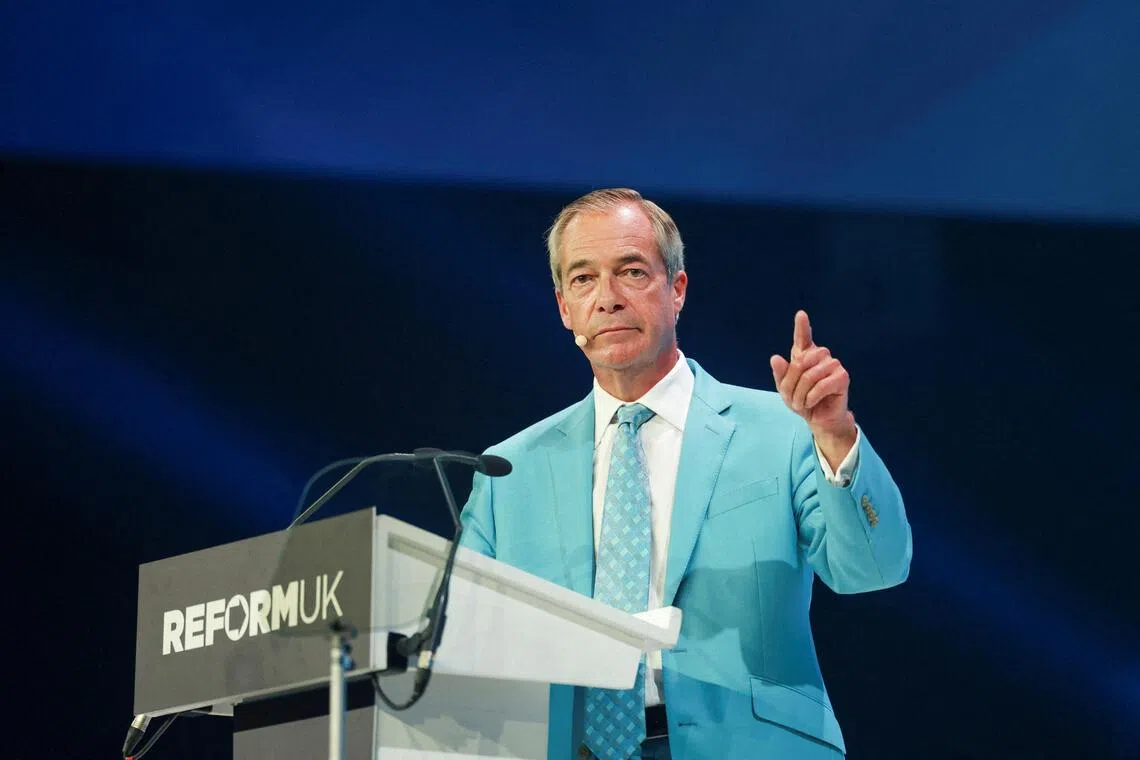
Reform’s record breaking donations are set to be probed by the elections watchdog
|
GETTY
“Campaigning has changed significantly in recent years, and a significant amount is spent between election periods, so it is right that we examine whether the current arrangements remain fit for purpose.”
The watchdog is required to uphold political impartiality and will give recommendations from its review in July next year.
It raises further questions about the potential impact of Reform’s windfall after Nigel Farage criticised Government plans to retrospectively apply a £100,000 cap on contributions from overseas donors.
The party has insisted the donations are in line, both with current rules and planned restrictions on money from donors based abroad, which would also apply for the first 12 months after expats come back to Britain.

Mr Farage said the money was compliant with the law as it stands but appeared to acknowledge it may fall foul of moves to clamp down on foreign funding, which ministers want to backdate to March 25 this year.
“Now, there is talk, and Angela Rayner was talking about this yesterday, there is talk of them retrospectively declaring donations illegal,” he told the BBC.
“Well, that simply cannot be.”
Mr Delo and Mr Harbone have been based in Hong Kong and Thailand respectively, though they are reported to have already returned to the UK.
Sir Ed Davey took aim at the donations during his Autumn Conference speech.
The Liberal Democrat leader said the party “doesn’t speak for the real United Kingdom” as he fired out an explosive rant over Donald Trump, France’s Marine Le Pen and Germany’s AfD at his party’s annual gathering.
Urging liberals to “join him in his fight against populism”, he called on supporters to join the “fight against Reform, and their £72 million arsenal of hate and lies.
“The fight to defeat the nasty populism of Trump, Le Pen, the AfD and the rest.”
Reform’s Record-Breaking Donations at Risk Under Elections Watchdog Bid to ‘Restore Trust’
Reform UK has found itself at the centre of a growing debate over political finance after receiving £72 million in record-breaking donations from two wealthy cryptocurrency figures. The unprecedented funding has given the party significant financial resources, but it has also intensified calls for changes to the rules governing political donations and election spending.
The Electoral Commission is now reviewing aspects of the UK’s political finance framework, with particular attention being paid to whether existing spending limits remain appropriate. The review could have important consequences for how political parties use large donations between elections and during future campaigns.
The two donations, worth £36 million each, were made by cryptocurrency entrepreneurs Christopher Harborne and Ben Delo. Reform UK has described the money as a legitimate contribution to its political ambitions. Party leader Nigel Farage has argued that the donations will help create a stronger challenge to the established political parties.
Reform said the contributions were lawful when they were received. In a statement published by the party, Farage described the £72 million as an investment in what he called “democratic renewal”, arguing that Reform had historically operated with fewer financial resources than the Conservatives and Labour.
The scale of the donations, however, has generated renewed discussion about whether Britain’s existing political finance rules are capable of dealing with very large individual contributions.
Under the current system, political parties are permitted to receive donations from individuals and organisations that meet the legal requirements for donating. The Electoral Commission maintains a public register of political donations and publishes information about party finances in order to increase transparency.
The issue is therefore not simply whether Reform can legally accept the money. A broader question has emerged: how much political spending should a party be allowed to undertake when it receives an exceptionally large donation well before a general election?
This question has become particularly important because the UK has spending limits during regulated election periods, but parties can have considerably more freedom outside those periods. According to reporting on the current debate, the existing maximum for a major party during the year before a general election is around £34 million. The government is considering whether spending restrictions should apply more extensively outside the traditional regulated period.
The Electoral Commission’s review could therefore affect how Reform and other parties use their financial resources in the years leading up to the next general election.
Vijay Rangarajan, the Electoral Commission’s chief executive, is considering changes to the rules governing party spending. The Commission has indicated that any recommendations should focus on fairness, transparency and public confidence while also being practical for political parties, campaigners and voters. Recommendations are expected in 2027.
For Reform UK, the timing is significant.
The party has suddenly acquired financial resources on a scale rarely seen in British politics. The £72 million from Harborne and Delo represents an extraordinary increase in the amount of money available to the party. Analysts have pointed out that the sum exceeds the combined spending of the major British parties during the 2024 general election.
That does not automatically mean Reform will be able to spend the entire amount on an election campaign. Campaign finance rules determine how much parties can spend during regulated periods, and the proposed changes could create additional restrictions.
This distinction is central to the current debate.
A donation and an election expenditure are not the same thing. A party can receive money without necessarily being able to spend all of it immediately on campaigning. The rules governing political finance establish limits on expenditure, reporting requirements and the circumstances under which donations can be accepted.
The Electoral Commission has repeatedly argued that the political finance system needs to be strengthened. In its first-quarter 2026 figures, the watchdog said political parties accepted £24.7 million in donations and public funds. It also said that voters care about where political parties obtain their money and that proposed reforms could strengthen donation controls and confidence in the system.
In the second quarter of 2026, Reform UK reported more than £5.5 million in donations, of which £5.33 million was accepted as donations excluding public funds. The figures illustrate that the party was already receiving substantial financial support before the two £36 million contributions were announced.
The debate is also connected to concerns about overseas money and the relationship between donors and Britain.
In July, the government announced proposed measures intended to tighten restrictions on foreign money entering UK elections. The proposals include a time-limited cap on donations from people who have recently moved to Britain from overseas, tougher checks on company donations and additional requirements concerning the legitimacy of campaign funding.
Supporters of stronger controls argue that political finance rules must keep pace with changes in the economy and the increasingly international nature of wealth. Cryptocurrency has added another dimension to the debate because substantial fortunes can be accumulated and transferred across international borders.
Critics of tighter restrictions, however, argue that legitimate British citizens should not be prevented from supporting political parties simply because they are wealthy or because their wealth comes from newer industries.
Reform itself has strongly defended the legality of its donations. Zia Yusuf, a senior Reform figure, argued that the two donations were made by British citizens and were lawful when received. Reform has also criticised proposed changes that could affect donations already made, arguing that changing the rules retrospectively would be unfair.
The government and supporters of reforming political finance present a different argument. Their concern is that the existing framework may allow exceptionally wealthy individuals to exercise a level of financial influence that was not anticipated when the current rules were developed.
This is not solely a Reform UK issue.
Britain has a long history of political parties receiving large donations from wealthy individuals, businesses and other organisations. The Conservatives, Labour and Liberal Democrats have all received substantial private contributions over the years. Research published by the Institute for Public Policy Research found that wealthy individuals have donated £179 million to British political parties since 2019, with donations of more than £1 million becoming increasingly common.
The Reform donations have therefore become part of a much wider argument about the future of political funding.
One possible approach would be to reduce spending limits during election periods. Another would be to extend the period during which party spending is regulated. Other proposals could involve greater restrictions on certain types of donations or additional transparency requirements.
Each approach would have consequences for political parties.
Large established parties could also be affected because stricter rules would apply across the political system rather than exclusively to Reform. Smaller parties might welcome measures designed to reduce the financial advantage of extremely wealthy donors, although they could also face greater administrative requirements.
The Electoral Commission has stressed the importance of evidence-based and workable reforms. Its role is not to decide which political party should benefit from the rules, but to regulate and monitor political finance under legislation established by Parliament.
There is also a question of public trust.
Political donations are legal when they satisfy the relevant requirements, but legality and public perception are not always identical. A donation can comply with existing law while still prompting debate about whether the law itself remains appropriate.
That distinction explains why the £72 million contribution has attracted so much attention.
For Reform UK, the money provides an opportunity to build its organisation, increase staffing and prepare for future political activity. At the same time, the controversy surrounding the donations means the party is likely to face continued scrutiny over how the money was obtained, reported and ultimately spent.
For the Electoral Commission and policymakers, the challenge is different: to design rules that protect transparency and public confidence without unfairly restricting legitimate political participation.
The outcome of this debate could shape British political finance for years to come. If spending restrictions are expanded beyond the traditional election period, Reform’s enormous financial advantage could become subject to tighter controls. If the rules remain broadly unchanged, the party could retain considerable freedom to use its new resources before the next general election.
Either way, the controversy has demonstrated that Britain’s political finance system is entering a period of significant debate.
The central issue is no longer simply how much money a political party can raise. It is also about how much influence financial resources should provide, how that influence should be regulated and how voters can be assured that the political system remains transparent.
As the Electoral Commission prepares its recommendations and Parliament considers further legislation, Reform UK’s record-breaking donations have become an important test of the existing framework. The decisions made over the coming months could determine whether Britain’s current rules remain adequate or whether a new model of political finance will be introduced before the next general election.