

Andy Burnham has been warned he has missed his chance to call an early General Election as fears of tax hikes among voters grow.
Speaking to GB News, political commentator Benedict Spence said the former Manchester Mayor had failed to take advantage of the so-called “Burnham bounce” when he replaced Sir Keir Starmer as Prime Minister.
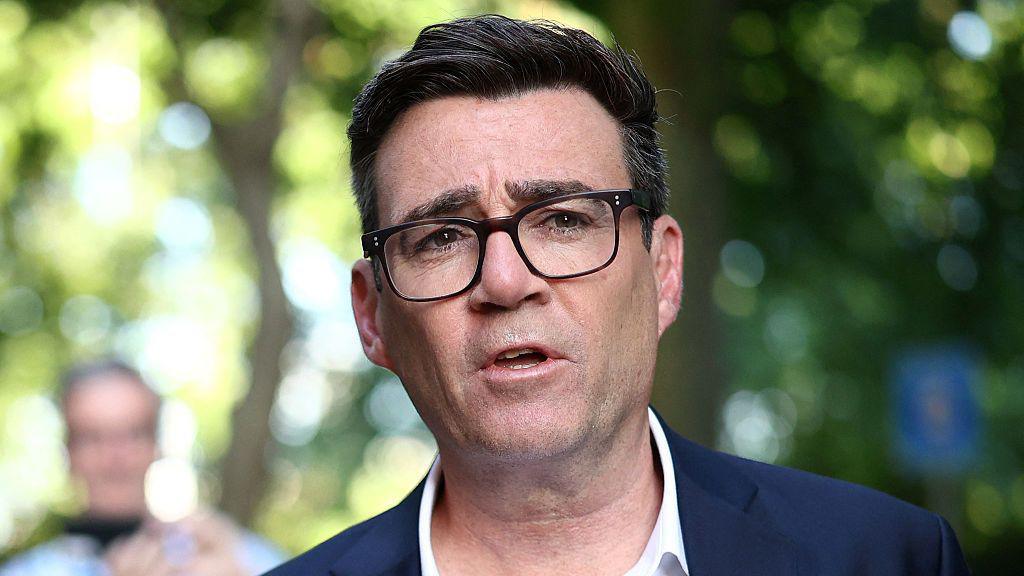
Upon entering Downing Street, Mr Burnham oversaw a surge in Labour’s polling of five to six points.
This led Labour to overtake Reform in the polls for the first time in 15 months, with the Prime Minister’s personal approval ratings also rising.
However, with Chancellor John Healey’s October budget looming, the Government’s polling appears to have levelled off.
Last week, Mr Burnham acknowledged that the upcoming economic statement would be “challenging” as the “picture around the world is challenging”.
Amid fears of tax hikes, Mr Spence said that the Prime Minister had already squandered the political capital that would have carried him to victory in an early General Election.
He said that Mr Burnham had “dithered” over whether an early election would represent change or continuity.
“I think he was hoping that saying continuity would mean that he wouldn’t have to go to the country early.”
Mr Spence claimed there had been a “very short window” entering Downing Street where Mr Burnham could hope for preserving a Labour majority.
“He did have that bounce, wasn’t much of a bounce, but it was there,” he said.
“I think he would have had half a chance with calling an early General Election.”
Political commentator Benedict Spence said tax hikes would damage Labour’s chances in a new vote
|
GB News
However, the political commentator warned that calling an election now to secure a mandate for tax rises would be much harder.
“If he’s having to do it, to give himself a mandate to say, ‘Oh, please, please let me put your taxes up, I’ll be ever so good about it’, I don’t think that the people of this country will support that.”
“They are already suffering from the highest tax burden in the post-war period and are not going to take too kindly to that as an idea.”
“If he wants to call the earlier General Election on that basis, I can see why he would feel that he might have to, but it’s not going to go well for him,” Mr Spence warned.
Mr Burnham acknowledged that the upcoming economic statement would be ‘challenging’
While Mr Burnham has not acknowledged any plans to hold an early General Election, Labour sources suggest the upcoming Holborn and St Pancras by-election could serve as a dry run.
The contest was triggered when Sir Keir announced his resignation in early September and will take place on October 8.
Green Party leader Zack Polanski will challenge Labour’s Sagal Abdi-Wali for the seat, a threat to Mr Burnham’s party from the left.
“Because Keir’s seat was a target and Polanski is running in it, this gives the PM a perfect opportunity to see if the Green threat has gone with a change of leader,” a Labour Party insider said.
Andy Burnham Told He’s ‘Missed His Chance’ to Call Early General Election as Tax Hike Fears Set In: ‘Not Going to Go Well for Him!’
Andy Burnham has been told that he may have missed an opportunity to call an early general election, as political attention increasingly turns towards the Government’s economic plans and the possibility of further tax changes.
The argument was made by political commentator Benedict Spence in comments reported by GB News. Spence suggested that Burnham’s early period in Downing Street provided a potential window in which the new Prime Minister could have sought to capitalise on an initial rise in public support. According to the commentator, that opportunity could become more difficult to exploit as the Government approaches a politically sensitive Budget and voters begin to focus more closely on taxation and household finances.
The issue is particularly significant because Burnham has previously discussed the possibility of an early election while setting out his political ambitions. Before returning to Westminster, he indicated that he did not expect to call a snap election if he became Prime Minister. In a June interview, he argued that voters would eventually tire of being repeatedly asked to campaign and suggested there should be limits to the amount of time politicians spend seeking votes.
That earlier position has become an important part of the current debate. Rather than immediately seeking a fresh mandate, Burnham has concentrated on establishing his Government, developing policy and preparing for major economic decisions.
Tax rises move closer to the centre of the debate
One of the biggest questions surrounding Burnham’s premiership is taxation.
Recent reporting has focused on proposals involving capital gains tax. The Times reported that Burnham is considering a proposal associated with Labour donor Dale Vince that would increase capital gains tax in order to help finance a substantial increase in the income tax personal allowance. The proposal has been presented as a way of shifting part of the tax burden while providing additional support to lower-income households.
The precise policy position remains subject to the Government’s formal decisions. The Treasury has not confirmed that such a proposal will become Government policy, and tax measures are ultimately expected to be announced through the appropriate fiscal process.
That distinction matters because political speculation about future taxation can move considerably faster than actual legislation.
Nevertheless, the possibility of tax changes creates an obvious challenge for any government considering an early election. A Prime Minister who seeks a public mandate before unpopular measures are introduced could face questions about whether voters have been given enough information about the policies they are being asked to endorse.
Conversely, waiting until after a Budget could allow the Government to demonstrate what it intends to do but could also expose it to criticism if the measures involve higher taxes or reductions in disposable income.
Burnham’s wider tax agenda
The current debate is not limited to capital gains tax.
Burnham has previously spoken in favour of major changes to the way taxation and public finances operate. During his time as Greater Manchester mayor, he expressed support for replacing council tax with a land-value-based system and argued that the existing system was regressive. The House of Commons Library has also documented his support for wider fiscal devolution and changes to local taxation.
However, the Commons Library makes an important distinction between proposals attributed to Burnham and confirmed Government policy.
Its July 2026 briefing noted that Burnham’s June speech did not contain a commitment to give mayors new powers to raise taxes. It also noted that the Government had already been developing plans to give regional mayors a share of some national tax revenues.
From spring 2027, regional mayors are due to retain a greater share of locally generated business rates, while plans have also been announced for mayors to receive a share of income tax receipts. The Government has stressed that the income-tax reform does not itself change income-tax rates.
These reforms are therefore more complicated than the simple suggestion that mayors will be given unrestricted powers to increase taxes.
The election question
The question of whether Burnham should call an early election is ultimately political rather than simply economic.
A newly installed government can potentially seek a mandate early, before its programme becomes fully associated with difficult decisions. But calling an election also carries risks: the Government must explain why an election is necessary, demonstrate what it intends to accomplish and persuade voters that the timing serves a legitimate public purpose.
Burnham himself appeared cautious about the idea when interviewed before his return to Westminster.
During the June interview, he said there would be no snap election if he became Prime Minister and questioned how much campaigning the public would want. The comments came at a time when he was still Greater Manchester mayor and preparing to contest the Makerfield by-election.
That statement provides important context for the current claims that he has “missed his chance”. It was not simply a matter of failing to announce an election; Burnham had already expressed reservations about holding one immediately.
The political calculation could nevertheless change as circumstances develop.
Economic decisions could shape the next phase
The approaching Budget is likely to be central to the debate.
Taxation, public spending, borrowing and economic growth are among the issues that could influence how the Government is perceived. Burnham has repeatedly argued that fiscal rules should be respected while also maintaining that public money should be used more effectively.
In his June interview, he rejected the idea that adherence to fiscal rules necessarily prevented Labour from pursuing investment. He argued that the rules could provide room for public investment if money was allocated productively.
He has also previously proposed significant changes in areas such as social care and housing. Before becoming Prime Minister, Burnham argued that social care required urgent reform and discussed possible funding mechanisms, including changes involving inheritance tax and care charges.
Those policies illustrate the difficult balance facing any government: ambitious reforms often require additional funding, while additional taxation can become politically controversial.
Claims about a “Burnham bounce”
The phrase “Burnham bounce” has been used by commentators to describe an alleged initial improvement in Labour’s political position following his arrival at the centre of national politics. GB News reporting has cited Spence arguing that this early period represented an opportunity that could diminish with time.
However, the existence and scale of any political bounce should be distinguished from commentary about it. Polling measurements can change from one survey to another, and an initial movement in support does not by itself establish a durable trend.
The same applies to claims that a future tax rise would damage the Government politically. The effect would depend on the specific measure, who would pay it, how the revenue was used and how voters responded.
A policy increasing one tax while reducing another, for example, could produce very different consequences from a straightforward across-the-board tax increase.
A more difficult political environment
Burnham’s position is also shaped by the broader political landscape.
His return to Westminster followed his election as MP for Makerfield, after nearly a decade outside Parliament while serving as Greater Manchester mayor. Reuters described his return as making him a prominent figure in discussions about Labour’s future and highlighted his concept of “Manchesterism”, centred on devolution and economic development.
That background means his decisions are being watched not only as those of a Prime Minister but also as part of a wider political project.
The immediate questions are therefore straightforward but consequential: what will the Government announce in its economic programme, how will voters respond to any tax changes, and will Burnham continue to reject the case for an early election?
For now, claims that he has definitively “missed his chance” remain political commentary rather than an established fact. The timing of any general election is ultimately a decision for the Prime Minister within the constitutional and statutory framework, and the Government has not established that a specific election date is imminent.
What is clear is that the political debate has shifted from Burnham’s rise and return to Westminster towards the practical consequences of governing. Taxation, spending, devolution and public services are now increasingly central to scrutiny of his administration.
If further tax measures are proposed, the debate is likely to intensify. Supporters may argue that additional revenue is necessary to fund public services or redistribute the tax burden, while opponents may focus on the impact on households, investment and economic activity.
That contest of arguments will provide a much clearer test of Burnham’s political programme than predictions about whether he has already missed an electoral opportunity.
For the moment, the central issue is not simply whether an early election was possible. It is whether the Government can translate Burnham’s promises of reform into policies that are financially credible, politically sustainable and understandable to voters before the next general election eventually takes place.