

The unrest began when pro-Palestinian demonstrators blocked major roads, causing extensive delays for motorists. In response, several British citizens exited their vehicles, seizing flags and placards from the protesters, and forcibly pushing them off the roads. This marked a pivotal moment, showcasing the willingness of some individuals to engage in direct action.
Subsequent protests saw similar incidents unfold. In one case, a truck driver, frustrated by the roadblocks, confronted demonstrators, leading to a tense standoff. Police were present to deescalate the situation, highlighting the challenges law enforcement faces in maintaining order amid rising tensions.
In another confrontation, a group of British patriots, proudly holding their national flags, faced off against pro-Palestinian protesters who attempted to seize their symbols. The altercation ended with the protesters retreating, underscoring the growing resolve among some citizens to assert their national identity in the face of perceived threats.
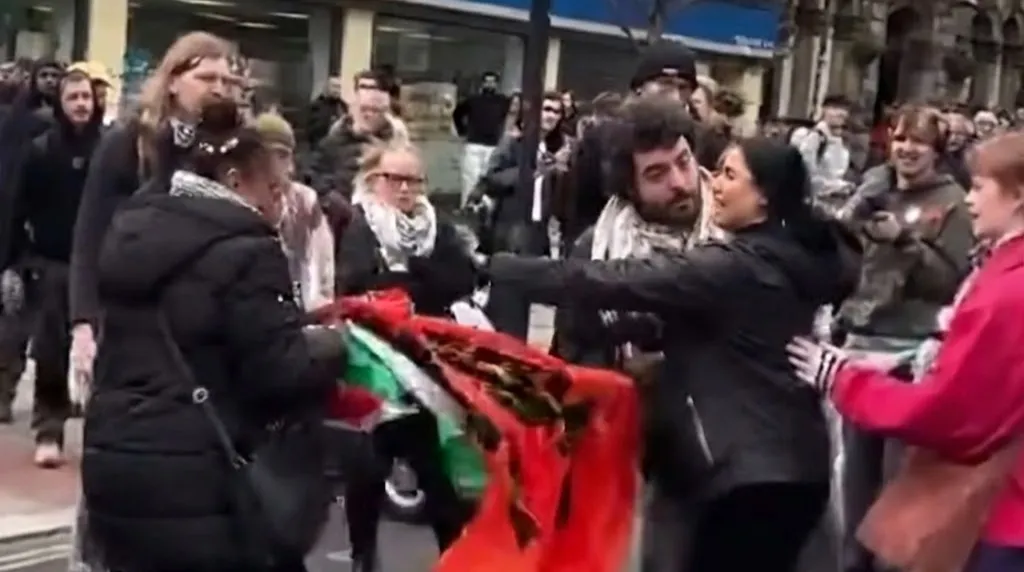
These confrontations reflect a broader sentiment among many British citizens who feel that their daily lives are being disrupted by the protests. Frustration over police inaction has fueled a sense of urgency among individuals who believe they must protect their communities from ongoing disruptions.
The situation has raised important questions about the balance between the right to protest and the rights of citizens to go about their daily lives unimpeded. As tensions rise, discussions around free speech and the responsibilities that accompany activism have become increasingly relevant.
Law enforcement agencies are 𝒄𝒂𝓊𝓰𝒉𝓉 in a difficult position, tasked with maintaining public order while respecting the rights of demonstrators. Their interventions aim to prevent violence, but the perception that police are insufficiently addressing the unrest has contributed to growing frustration among the public.
As these confrontations continue, the potential for further polarization within British society is evident. The divide between pro-Palestinian activists and British patriots raises concerns about community relations and the risk of escalating hostility.
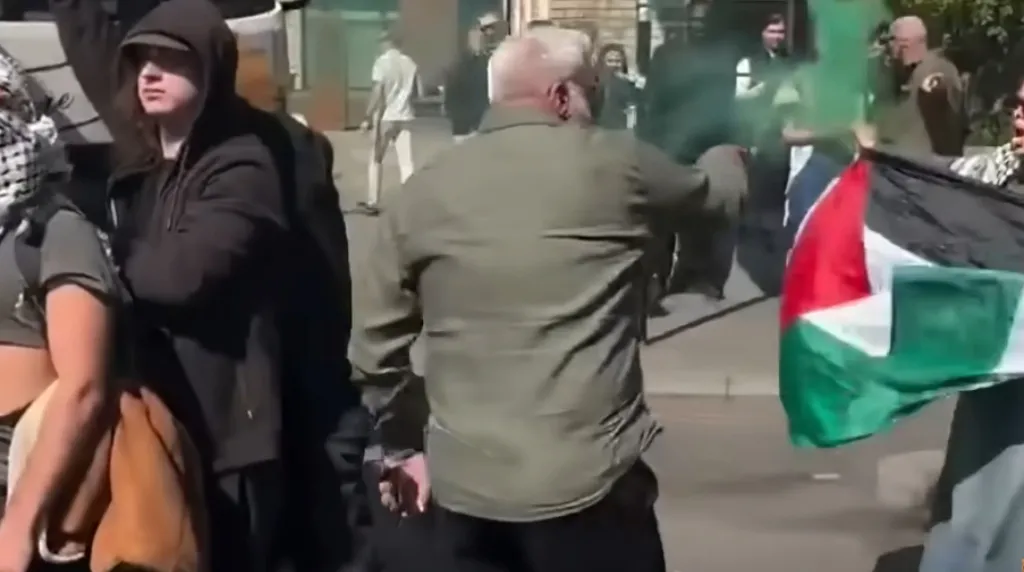
Moving forward, fostering dialogue between opposing sides will be crucial. Open communication may help bridge the divide and promote understanding, enabling all parties to express their grievances while working toward peaceful resolutions.
The recent clashes underscore the complexities of contemporary activism and societal divisions in England. As frustrations mount, the importance of patience, empathy, and constructive engagement becomes increasingly clear in navigating these challenges and fostering a more harmonious society.
A terrifying nightmare unfold on UK streets! 
 A female Uber driver has been filmed LOCKING passengers inside her car and refusing to let them out… all because they didn’t tip!
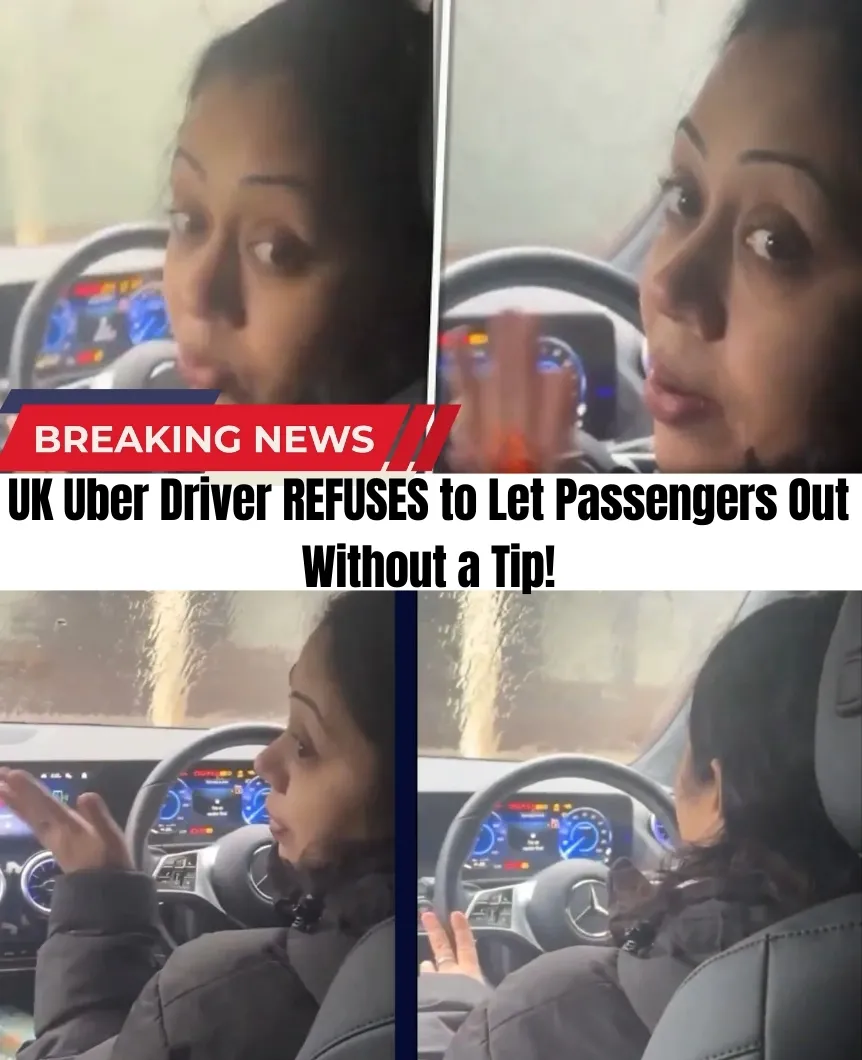
In a 𝓈𝒽𝓸𝒸𝓀𝒾𝓃𝑔 incident that has left many questioning the limits of service expectations, a female Uber driver in the UK has been filmed refusing to let passengers exit her vehicle unless they provided a tip. The 𝓿𝒾𝓇𝒶𝓁 video has ignited a heated debate about tipping culture in the UK, where gratuities are typically voluntary.
𝒄𝒂𝓊𝓰𝒉𝓉 in a tense standoff, the passengers pleaded for the driver to open the door, but she insisted that tipping was a mandatory rule in the UK. This bizarre demand took many by surprise, especially in a country where tipping is not a common practice. The driver’s insistence on receiving tips, despite the passengers’ discomfort, has raised eyebrows and prompted discussions about the ethics of gig economy jobs.
Critics argue that this incident blurs the lines of customer service and autonomy. Holding passengers hostage over a tip not only violates ethical norms but also highlights the growing tensions between service providers and consumers in the gig economy. Many are questioning whether this behavior reflects a broader issue within the industry.

As the video gained traction online, it became clear that this was not just an isolated incident but a symptom of a larger problem. The UK government has yet to comment on the situation, but it has sparked conversations about the need for clearer regulations to protect both gig workers and passengers from coercive practices.

The incident has also prompted a wider examination of tipping culture in the UK, where service charges are often included in the fare or not expected at all. The idea that a driver could hold passengers against their will for a gratuity raises serious legal and ethical concerns.

As discussions continue, the story serves as a reminder of the complexities of the gig economy. With the lines between independent contractors and traditional service providers becoming increasingly blurred, defining acceptable behavior is more crucial than ever.
With social media buzzing and public opinion divided, this incident may very well lead to a reevaluation of the norms surrounding tipping and service expectations in the UK. As the dust settles, one thing is clear: the conversation about customer rights and service provider responsibilities is far from over.
THE BRITISH PUBLIC HAS FINALLY SNAPPED! AFTER MONTHS OF FRUSTRATION OVER PROTESTERS BLOCKING ROADS, ANGER ERUPTS OVER POLICE RESPONSE AND THE GOVERNMENT’S FAILURE TO RESTORE ORDER!
Britain is facing another major public debate over the right to protest, road blockades, and the responsibility of police forces to protect ordinary people from serious disruption.
Across the country, frustration has been growing among commuters, business owners, emergency workers, and families who believe that repeated demonstrations have made everyday life increasingly difficult.
For many members of the public, the issue is no longer simply about whether people should be allowed to protest.
It is about how far protesters should be permitted to go before the authorities intervene.
When major roads are blocked, buses are delayed, businesses lose customers, and workers struggle to reach their destinations, the consequences can extend far beyond the demonstration itself.
People who have nothing to do with the political arguments can suddenly find themselves paying the price.
This has created an increasingly heated discussion about whether Britain’s police forces are striking the right balance between protecting democratic freedoms and enforcing public order.
Some demonstrators argue that disruptive protests are necessary because traditional campaigning does not always attract sufficient political attention.
Others believe that deliberately obstructing roads crosses a line, particularly when emergency vehicles, essential workers, and members of the public are affected.
The disagreement has become a major political issue, placing pressure on Prime Minister Keir Starmer and Home Secretary Shabana Mahmood to explain how the government intends to deal with increasingly controversial demonstrations.
ORDINARY BRITONS ASK WHY THEY MUST PAY THE PRICE
For someone travelling to work, a blocked road is not an abstract political statement.
It can mean arriving late, losing wages, missing an important appointment, or being unable to collect children from school.
For small businesses, repeated disruption can mean cancelled deliveries, fewer customers, and lost revenue.
Taxi drivers, delivery workers, tradespeople, and public transport operators can also experience significant financial consequences when major routes become inaccessible.
This is why road-blocking demonstrations have attracted such strong reactions.
Many people support the right to express political opinions but question whether deliberately preventing others from travelling is an acceptable way to communicate those opinions.
The argument becomes particularly serious when emergency services are affected.
An ambulance delayed by an obstruction could face difficulties reaching someone who urgently needs medical treatment.
Although the circumstances of individual incidents must be established through evidence, the potential consequences explain why road blockades generate such strong public concern.
POLICE FACE DIFFICULT DECISIONS
Police officers have a complicated responsibility during demonstrations.
They must protect peaceful protesters, maintain public safety, prevent violence, and enforce the law when criminal behaviour occurs.
However, the presence of a large crowd can make intervention difficult.
Officers must assess whether a demonstration is lawful, whether restrictions have been breached, and whether removing protesters could create additional safety risks.
In England and Wales, the Public Order Act 1986 and subsequent legislation provide police with powers to impose conditions on certain protests.
These conditions can relate to location, duration, numbers, and the level of disruption.
The Police, Crime, Sentencing and Courts Act 2022 and the Public Order Act 2023 also introduced additional provisions concerning disruptive protest activity.
However, police action must still comply with legal requirements and human rights protections.
This means officers cannot simply arrest everyone who attends a demonstration because members of the public disagree with its message.
The distinction between peaceful protest and unlawful obstruction is central to the debate.
THE GOVERNMENT UNDER PRESSURE
For Labour, the controversy presents a difficult political challenge.
Starmer has repeatedly emphasised the importance of public safety and maintaining confidence in Britain’s institutions.
Yet the government must also protect the right to freedom of expression and peaceful assembly.
Critics argue that allowing repeated disruption to continue without effective enforcement risks undermining public confidence in policing.
Supporters of stronger protest restrictions argue that people should not be allowed to hold entire communities hostage to political demands.
Civil liberties organisations, meanwhile, warn that excessive restrictions could undermine legitimate demonstrations and make it harder for citizens to challenge government decisions.
These competing arguments have created an increasingly complicated debate in Westminster.
The government must demonstrate that the law is being enforced consistently, regardless of the political cause behind a demonstration.
A COUNTRY DEMANDING ANSWERS
The anger surrounding road-blocking protests reflects a wider question about how Britain should balance individual freedoms with the rights of the wider public.
People should be able to demonstrate peacefully, criticise politicians, and campaign for changes to government policy.
But other members of society also have rights.
They have the right to travel, work, operate businesses, and access essential services.
A functioning democracy must protect both.
The challenge for police forces is to enforce the law fairly and proportionately while ensuring that demonstrations do not develop into dangerous situations.
For the government, the priority should be clear guidance, consistent enforcement, and transparent explanations whenever serious disruption occurs.
Ultimately, the public wants to know that the same legal standards apply to everyone.
THE BIG QUESTION NOW IS WHETHER BRITAIN CAN PROTECT THE RIGHT TO PROTEST WITHOUT ALLOWING ROAD BLOCKADES AND SERIOUS DISRUPTION TO BECOME AN ACCEPTED PART OF EVERYDAY LIFE.
The debate is far from over, and the pressure on Westminster and police leadership will continue as communities demand a clearer balance between democratic freedom, public safety, and the rights of ordinary citizens.