


Rupert Lowe’s Reform Olive Branch Torn Apart as Farage Ally Hits Out
The increasingly bitter rivalry between Nigel Farage and Rupert Lowe has taken another dramatic turn after an attempt by Lowe to open the door to cooperation with Reform UK was fiercely criticised by one of Farage’s closest political allies.
Lowe, the leader of Restore Britain and a former Reform UK MP, recently made an unexpected appeal for unity. He argued that the British right should stop fighting among itself and concentrate on removing Labour from government. His proposal was presented as an olive branch to Farage after months of political hostility.
However, the response from Gawain Towler, a Reform UK board member and prominent Farage ally, was anything but friendly. Towler dismissed Lowe’s proposal as an attempt to regain political relevance rather than a genuine effort to unite the right.
The dispute reveals the serious difficulties facing Britain’s populist right. While Reform UK is attempting to build itself into a credible governing party, Restore Britain is competing for many of the same voters. The question is whether the two movements can eventually cooperate or whether their rivalry will continue to divide the right-wing vote.
Lowe’s Unexpected Offer
Rupert Lowe’s proposal was striking because of the history between the two men.
Lowe entered Parliament as a Reform UK MP in 2024, alongside Farage and several other Reform representatives. His relationship with the party subsequently deteriorated dramatically, leading to his suspension and eventual departure.
He later established Restore Britain, creating a direct competitor to Reform.
Despite that history, Lowe recently attempted to change the tone. In a video message, he argued that millions of people wanted a stronger patriotic movement but were frustrated by divisions on the right.
His proposal was not an unconditional merger. Lowe attached five major demands to any possible cooperation.
Among them were reversing what he described as Britain’s immigration crisis, pursuing what he called demographic security, holding a referendum on the death penalty, rebuilding Britain’s economic self-sufficiency and restoring public confidence in politics.
Lowe also wanted former Conservative ministers within Reform’s political orbit to be excluded from any future government formed through cooperation between the two movements.
The proposal therefore represented both an offer and a challenge.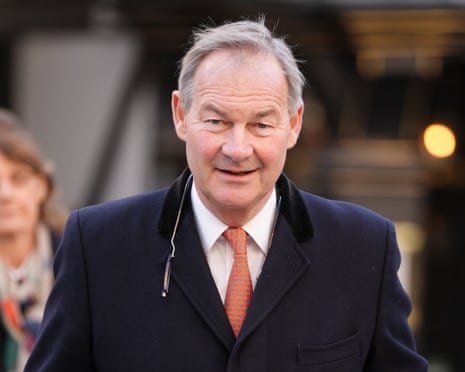
Lowe was effectively saying that he was prepared to cooperate, but only if Reform moved closer to his political position.
Farage’s Ally Delivers a Brutal Response
Gawain Towler immediately questioned Lowe’s motives.
Rather than welcoming the proposal, Towler argued that Lowe was trying to recover his political relevance after disappointing electoral performances by Restore Britain.
His criticism centred on the idea that Lowe was not genuinely offering an unconditional partnership. Instead, according to Towler, Lowe had created conditions that Reform was unlikely to accept.
Towler pointed particularly to policies such as a referendum on the death penalty and restrictions on halal and kosher slaughter. These are highly controversial positions and would create significant political difficulties for Reform if the party is trying to broaden its appeal.
The central message of Towler’s criticism was simple: if Lowe genuinely wanted unity, he should have approached Farage privately instead of announcing a list of demands publicly.
That accusation goes to the heart of the disagreement.
Is Lowe genuinely trying to unite Britain’s right, or is he attempting to reposition himself as an important political figure?
The Significance of the “Relevance” Attack
Towler’s final criticism was particularly damaging because it reduced the entire peace proposal to a question of political survival.
His argument was that Restore Britain had performed well enough to attract attention but not well enough to become a major electoral force.
The party’s performance in the Greater Manchester mayoral contest and the Makerfield by-election gave it visibility, but it remained far from winning major numbers of seats. The Guardian reported that Restore received 8.7 percent in the Greater Manchester mayoral election and 6.8 percent in the Makerfield by-election.
For a new party, these results are significant. They demonstrate that Lowe has found a section of the electorate willing to support him.
But they also reveal the limits of his current influence.
Restore is strong enough to take votes from Reform, but not yet strong enough to replace Reform as the main force on the British right.
This creates an unusual political position for Lowe.
He may not need to win elections to influence them. If Restore takes several percentage points from Reform in closely fought constituencies, it could prevent Farage’s party from winning seats.
That gives Lowe considerable bargaining power.
Why Reform Cannot Simply Ignore Restore
The problem for Farage is Britain’s electoral system.
Under first-past-the-post, national vote share does not directly determine parliamentary power. What matters is which party comes first in individual constituencies.
This means that a smaller party can have a disproportionate impact.
Imagine a constituency where Reform receives 39 percent, Labour receives 36 percent and Restore receives 9 percent. If many Restore voters would otherwise have supported Reform, the existence of Restore could change the winner.
This is precisely why the relationship between Reform and Restore matters.
Reform may be significantly more popular nationally, but if Lowe’s party becomes established in key constituencies, it could prevent Farage from converting national support into parliamentary seats.
The danger becomes even greater if Labour, the Conservatives, Liberal Democrats and Greens remain competitive in different areas.
A fragmented political landscape creates unpredictable results.
Lowe’s Five Conditions Create Another Problem
The difficulty is that several of Lowe’s conditions are politically challenging for Farage.
Reform has ambitions beyond being a protest movement. Farage wants the party to appeal to a broad coalition of voters, including former Conservatives, working-class Labour supporters and people who have become disillusioned with mainstream politics.
That requires careful positioning.
Some Restore policies could make such a broad coalition harder to achieve.
The demand for a referendum on the death penalty, for example, could appeal strongly to some voters but alienate others. The issue of halal and kosher slaughter is even more politically sensitive because of its implications for religious freedom and Britain’s diverse population.
Farage therefore has a strategic dilemma.
If he accepts too many of Lowe’s demands, Reform risks narrowing its electoral appeal.
If he rejects them all, Restore can continue presenting itself as the more uncompromising alternative.
A Divided Right Could Help Labour
The political consequences extend beyond the personal dispute between Farage and Lowe.
Labour could benefit if Reform and Restore compete aggressively against each other.
Even if Labour is unpopular in some constituencies, it could win seats if the right-wing vote is divided between two competing parties.
The same could apply to the Conservatives.
The Conservatives have lost significant numbers of voters to Reform in recent years. If those voters become divided between Reform and Restore, Conservative candidates could potentially recover support in some constituencies.
This is why some Reform figures appear more sympathetic to Lowe’s proposal.
Reform MP Andrew Rosindell reportedly welcomed the broader objective of bringing the centre-right together, arguing that the country needs political change. He nevertheless maintained that any agreement would have to involve Farage as the leader of Reform.
His response demonstrates that there is not necessarily complete agreement within Reform about how Lowe should be treated.
The Personal Element
Politics is rarely purely about policy, and the Farage-Lowe dispute is a clear example.
The two men have a history that makes cooperation difficult.
Lowe was once part of Farage’s political project. He then became one of its most outspoken critics. His decision to establish Restore Britain transformed an internal Reform dispute into an external political competition.
Farage has questioned Lowe’s motives, while Lowe has accused Farage of misrepresenting their communications.
The situation became particularly tense after Farage said he had contacted Lowe about the proposal. Lowe responded by publishing a screenshot of a message from Farage saying he would call later and accused him of not following through.
Instead of producing a quiet negotiation, the peace proposal therefore generated another public argument.
That is perhaps the clearest evidence of how difficult reconciliation will be.
Could a Deal Still Happen?
Despite the hostility, a deal cannot be completely ruled out.
Both sides have an obvious political interest in preventing the other from damaging the wider right-wing movement.
Farage wants to win a general election. Lowe wants Restore Britain to become an influential political force. Neither objective is easily achieved if the right becomes permanently divided.
A limited electoral arrangement could therefore be possible.
Rather than merging, Reform and Restore could theoretically avoid standing against each other in selected constituencies.
Such an arrangement would reduce vote splitting while allowing both parties to retain their separate identities.
However, reaching such an agreement would require considerable trust.
The current relationship between the two leaders suggests that trust is in very short supply.
The Future of Britain’s Right
The dispute illustrates a broader transformation in British politics.
Traditional party loyalties are becoming weaker. Voters are increasingly willing to move between parties, particularly when they feel that established political organisations no longer represent their concerns.
Reform has benefited enormously from this trend.
But the same phenomenon now threatens Reform itself.
Lowe is using the same anti-establishment political energy that helped Farage build his movement. Restore Britain is therefore not simply another competitor. It is competing for part of the political space that Reform itself created.
The outcome could determine whether Reform becomes a broad governing coalition or remains primarily a protest movement.
Conclusion
Rupert Lowe’s attempt to extend an olive branch to Nigel Farage has failed to produce an immediate reconciliation. Instead, it has exposed the deep divisions within Britain’s populist right.
Lowe says the right must unite for the good of the country. His critics argue that the proposal is conditional, strategically calculated and designed to increase his own political relevance.
Gawain Towler’s attack has made the disagreement even sharper, portraying Lowe’s offer as an attempt to force Reform to adopt policies that Farage is unlikely to accept.
Yet there is an uncomfortable truth for Reform.
However unpopular Restore Britain may be compared with Reform, it has demonstrated that it can attract enough support to influence electoral outcomes. Its vote share in recent contests may not be sufficient to win power, but it could be enough to deny Reform victory in closely fought constituencies.
For Farage, that makes Lowe impossible to ignore.
For Lowe, it provides leverage.
The future relationship between the two movements will therefore be one of the most important questions facing Britain’s political right. They may eventually discover that cooperation is the only way to prevent vote splitting. Alternatively, personal distrust and ideological differences may prove too strong.
For now, Lowe’s olive branch has not created peace. Instead, it has opened another front in the battle over who controls Britain’s increasingly powerful and increasingly divided right.