


Reform UK Unveils Plan to Cut £50 Billion a Year From Soaring Benefits Billiard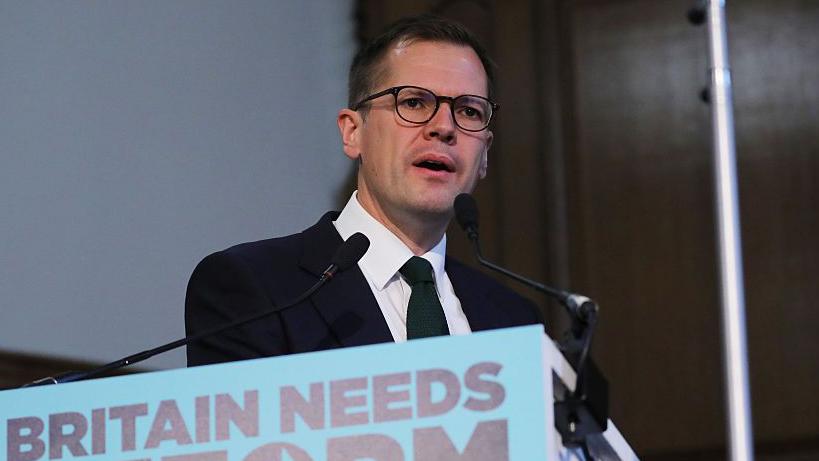
Reform UK has launched one of the most radical welfare reform programmes seen in modern British politics, promising to cut around £50 billion a year from the welfare bill if it wins the next general election.
The plan, unveiled by Reform’s Treasury spokesman Robert Jenrick, would fundamentally change the way benefits are distributed, with major reforms aimed at working-age claimants, disabled people and foreign nationals. Reform argues that the current system has become too expensive and too difficult to reform, while insisting that genuine pensioners and people in severe need would continue to receive protection.
The proposals have immediately triggered a fierce political argument.
Supporters say Reform is finally confronting a welfare bill that has grown to unsustainable levels. Critics argue that the £50 billion figure is extraordinarily ambitious and that achieving it would require substantial reductions in support for some of Britain’s most vulnerable people.
The Institute for Fiscal Studies has described the proposals as representing a “substantially different vision” of what Britain’s benefit system should do.
A £50 Billion Target
Reform’s headline promise is simple: reduce welfare spending by approximately £50 billion every year.
That is an enormous figure.
The Institute for Fiscal Studies estimates that working-age benefits alone are forecast to cost a little over £200 billion in 2030–31. Reform’s proposed saving would therefore represent roughly a quarter of that spending.
The party believes the savings can come from several major changes rather than a single cut.
These include restricting benefits for foreign nationals, completely redesigning disability benefits, encouraging more people into employment and introducing much tougher conditions for some long-term claimants.
Reform says the objective is not simply to take money away from people.
Instead, it argues that the welfare state should encourage people who are capable of working to return to employment while concentrating government resources on those who genuinely need long-term support.
That distinction will be central to the political battle that follows.
Foreign Nationals Targeted
One of the largest savings in Reform’s calculation would come from restricting access to benefits for foreign nationals.
The party has proposed preventing foreign citizens from claiming almost all forms of welfare, including Universal Credit, housing-related support, child benefit, jobseeker’s allowance and disability benefits.
Even some people with settled status would potentially be affected. Reform estimates that this measure could eventually save around £21 billion a year.
The policy is likely to become one of the most controversial parts of the package.
Reform argues that people who have not established British citizenship should not automatically have access to the same welfare system as British citizens, particularly when taxpayers are facing high levels of taxation.
Opponents argue that the proposal could create serious hardship for people who have lived and worked in Britain for many years.
The IFS has warned that removing benefits from non-UK citizens could produce significant increases in hardship because some claimants currently receive most or all of their income through benefits.
There is also a legal and diplomatic complication.
Reform acknowledges that implementing some aspects of the policy could require renegotiating existing agreements, including arrangements connected to the UK’s relationship with the European Union.
That means the proposal is not simply a matter of passing a new domestic law.
A Radical Overhaul of Disability Benefits
Perhaps the most politically explosive element concerns disability support.
Reform has proposed abolishing the existing Personal Independence Payment system for working-age people and replacing it with a new Health Security Allowance.
The new benefit would be aimed primarily at people with severe, enduring and high-risk medical conditions. Reform has also proposed removing the health element of Universal Credit for working-age adults under its new system.
The party estimates that these changes could save approximately £22 billion a year.
But the consequences could be enormous.
According to reporting on the proposal, around 2.89 million people currently receiving PIP or the relevant health element of Universal Credit could be affected by the reforms.
Reform argues that the existing system has expanded far beyond its original purpose and that the government should concentrate assistance on people with the most serious disabilities.
Critics see something very different.
They fear that people with less severe but still life-changing conditions could lose financial assistance despite facing significant additional costs.
Reform Wants More People Back at Work
Another major component of the plan is the party’s belief that Britain has too many working-age people outside employment.
Reform argues that the welfare system should not simply provide financial support indefinitely.
Instead, it wants greater emphasis on returning people to work.
Under a separate proposal announced as part of the welfare package, long-term claimants who are considered fit to work would be required to undertake 20 hours of community work each week.
Possible activities include cleaning parks and high streets, helping in libraries, assisting community centres and carrying out certain minor maintenance tasks. Claimants who refused without an acceptable reason could risk losing benefits.
The political message is deliberately straightforward.
If taxpayers are providing financial support, Reform argues, people who are capable of working should demonstrate a willingness to contribute to their communities.
Supporters say this could restore work habits and provide useful experience.
Critics describe it as compulsory unpaid labour and question whether it would genuinely help people move into permanent jobs.
The Party’s Economic Argument
At the heart of Reform’s policy is an argument about Britain’s public finances.
The party believes the country has reached a point where welfare spending is placing too great a burden on taxpayers.
According to reporting by the Financial Times, the total UK welfare bill was approximately £334 billion in 2025–26, although more than half of that amount was accounted for by the state pension.
Reform says it wants to protect pensioners while reducing other forms of welfare spending.
Nigel Farage has previously committed to retaining the state pension “triple lock”, which means pensions rise each year by whichever is highest among inflation, average earnings growth or 2.5 per cent.
That creates a difficult mathematical problem.
If pensions remain protected while Reform wants to save £50 billion, the reductions elsewhere in the welfare system necessarily have to be substantial.
That is why disability benefits, foreign-national claims and working-age welfare have become such prominent targets.
The £50 Billion Question
The biggest question surrounding the announcement is whether the savings are realistic.
The £50 billion target is politically impressive, but it is also extraordinarily large.
The IFS has noted that Reform’s calculation is based on a major reduction in working-age benefits and a fundamentally smaller welfare system.
Critics argue that some of the projected savings may prove difficult to achieve.
For example, preventing foreign nationals from claiming benefits could save substantial sums, but the amount would depend on how many people affected changed their immigration or citizenship status and how the policy interacted with existing legal agreements.
Similarly, reducing disability claims does not necessarily mean that every pound removed from one benefit becomes a permanent saving for the Treasury.
Some costs could potentially appear elsewhere through local authority services, healthcare or other forms of public support.
That is why independent scrutiny will be crucial.
A Direct Challenge to Labour
The welfare announcement also has a major political purpose.
Reform is attempting to seize ownership of an issue that has become increasingly important to voters: the cost of Britain’s welfare state.
The party can point to a simple contrast.
It argues that taxpayers are paying more while the number of people receiving working-age benefits has increased, and that successive governments have failed to address the problem.
Labour, meanwhile, has pursued a different approach.
The government has argued that welfare reform should focus on helping people into employment rather than simply cutting benefits. Its own programme includes investment in employment support and changes to Universal Credit and health-related benefits.
This gives voters two very different political choices.
Reform’s message is essentially reduce welfare spending and impose tougher conditions.
Labour’s argument is invest in employment support and reform the system while protecting vulnerable people.
The battle between these two approaches could become one of the defining political arguments before the next general election.
The Child Poverty Controversy
Another potentially damaging issue for Reform concerns children.
Campaigners have warned that the party’s proposals could push hundreds of thousands of additional children into poverty. The Guardian reported estimates suggesting that at least 250,000 more children could be affected by increased poverty under the wider package.
That criticism is particularly significant because Labour has recently moved in the opposite direction on child poverty.
The government abolished the two-child limit on Universal Credit in March 2026, with ministers claiming the measure would put approximately 450,000 children on a pathway out of poverty by the end of the parliamentary term.
Reform therefore faces an obvious political challenge.
It must convince voters that reducing welfare spending will ultimately improve Britain’s economic prospects rather than simply reducing household incomes.
Employers Would Also Face Changes
Reform’s proposals go beyond benefits paid directly by the government.
The party has proposed a new system under which employers would take greater responsibility for workers who are absent because of illness.
Companies could be required to fund sickness-related support for employees for up to two years, while their National Insurance contributions would be reduced to offset some of the cost.
Reform says this would encourage employers and insurers to invest in rehabilitation and help people return to work sooner.
The idea is based partly on approaches used in other countries, including the Netherlands.
But businesses are likely to examine the proposal carefully.
Large employers may be able to absorb additional responsibilities more easily than small companies.
That is why Reform has proposed an exemption for businesses employing five or fewer people.
A Political Gamble for Nigel Farage
For Nigel Farage, the welfare package represents a major political gamble.
Reform has built much of its support around dissatisfaction with the established political system, immigration and the cost of living.
Welfare reform gives the party another way to appeal to working taxpayers who believe the system is unfair.
But there is a danger.
Some Reform voters themselves receive benefits.
The Week noted that the party’s welfare proposals could potentially create political difficulties because some constituencies where Reform is strong also have high levels of welfare dependence.
Farage therefore has to persuade voters that the reforms are about fairness rather than simply cutting support.
That will be particularly difficult when disability benefits are involved.
Could the Policy Actually Increase Employment?
One of Reform’s strongest arguments is that Britain could benefit economically if more people move from welfare into paid employment.
If the reforms succeed in increasing employment, the Treasury could potentially benefit in two ways.
First, spending on benefits would fall.
Second, more people would be paying income tax and National Insurance.
That could create a significant fiscal improvement.
But moving people into employment is not always straightforward.
Some claimants face health problems, limited qualifications, caring responsibilities or regional shortages of suitable jobs.
Reform will therefore need to demonstrate that its employment policies provide genuine pathways into sustainable work.
Simply reducing benefits does not automatically create jobs.
The Human Cost
The most difficult part of the debate is that behind every number is a person.
A £50 billion saving may look impressive in a Treasury spreadsheet.
But for an individual claimant, losing hundreds or thousands of pounds a year can determine whether they can afford rent, heating, food or transport.
This is especially true for disabled people whose conditions may involve additional expenses that are not obvious from their employment status alone.
That is why Reform’s promise to protect people who are “genuinely” in need will face intense scrutiny.
Who decides who is genuinely vulnerable?
How will assessments work?
What happens when someone’s condition fluctuates?
How quickly can decisions be appealed?
And what happens to people who are technically capable of some work but unable to sustain a conventional full-time job?
These questions could determine whether Reform’s proposals are seen as a serious reform programme or simply a dramatic political statement.
Britain’s Welfare Debate Has Entered a New Phase
Whatever happens to the £50 billion target, Reform has already changed the welfare debate.
The party is no longer simply calling for tougher benefits rules.
It has presented a detailed alternative vision of the welfare state—one that is substantially smaller, more conditional and more focused on employment. The IFS has described this as a fundamentally different conception of what welfare should be for.
That makes the proposal politically significant even if individual elements are eventually changed.
Labour will have to respond.
The Conservatives will have to decide whether to support or criticise Reform’s approach.
And voters will ultimately have to choose between competing ideas about the balance between taxation, welfare, work and social protection.
Conclusion
Reform UK’s promise to cut £50 billion a year from Britain’s welfare bill is one of the most dramatic economic pledges made by a major British political party in recent years.
The plan would restrict benefits for many foreign nationals, radically redesign disability support, impose tougher conditions on some long-term unemployed people and place greater responsibility on employers for long-term sickness.
Reform argues that the measures would restore fairness, reduce dependency and make Britain’s welfare system financially sustainable.
Its critics warn that the savings are overly ambitious and could cause serious hardship, particularly among disabled people, migrants and low-income families. The IFS has specifically warned that some of the proposals could produce large reductions in claimants’ incomes and significant increases in hardship.
The central question is therefore not simply whether Britain should spend less on welfare.
It is how that reduction should be achieved.
If Reform can genuinely move large numbers of people from benefits into secure employment while protecting those who cannot work, its £50 billion strategy could become one of the most consequential economic reforms in decades.
But if the savings depend mainly on removing support from vulnerable households, the political and social consequences could be enormous.
Either way, the announcement has ensured that welfare will be one of the biggest battlegrounds in Britain’s next election—and Reform UK has made clear that it intends to fight that battle on its own terms.