

Bank of England Governor Would Have Delayed Farage Meeting if £5m Gift Had Been Under Investigation
The controversy surrounding Nigel Farage’s £5 million gift has taken a new and potentially damaging turn after Bank of England governor Andrew Bailey said he would have considered postponing a meeting with the Reform UK leader if he had known at the time that the gift was under investigation. The meeting took place in September 2025 and focused on cryptocurrency regulation, months before details of the gift from crypto billionaire Christopher Harborne became public. Bailey has defended the meeting as a normal professional discussion, but his comments have inevitably raised questions about political influence, transparency and the relationship between politicians and financial regulators.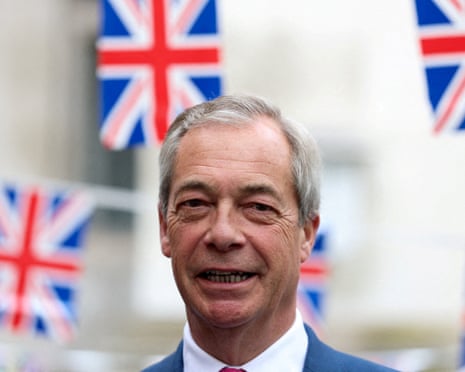
The issue is particularly sensitive because the meeting was not simply a general political conversation. Farage reportedly used the meeting to argue against aspects of the Bank of England’s proposed approach to cryptocurrency regulation, including plans relating to stablecoins. At the same time, Harborne, the wealthy businessman who gave Farage the £5 million gift, has major financial interests in the cryptocurrency sector. This coincidence has created concerns about whether political lobbying and private financial interests may have become too closely connected.
Bailey has made clear that he does not believe the meeting itself was inappropriate. He described the discussion as a “perfectly polite exchange of views” and said that he did not regret meeting Farage. However, he also acknowledged that knowing about the investigation into the £5 million gift would have been a significant factor in deciding whether the meeting should take place at that time.
This distinction is extremely important. Bailey was not saying that Farage should never have been allowed to meet the Bank of England. Political leaders from different parties regularly meet senior officials, and the central bank has a responsibility to listen to politicians who may influence future economic policy. The problem is the potential conflict of interest created by the financial relationship between Farage and Harborne.
Farage’s £5 million gift has attracted substantial attention because of its size and because Harborne is a major figure in the cryptocurrency industry. The gift was not initially declared in the way that parliamentary financial interests are normally expected to be disclosed, and the matter has subsequently become subject to scrutiny by the parliamentary standards system. Farage has rejected suggestions that he acted improperly and has portrayed the wider controversy as politically motivated.
Nevertheless, the timing of the Bank of England meeting makes the situation more complicated. Farage was not simply discussing immigration, taxation or another area of general political policy. He was discussing cryptocurrency regulation with the governor of the institution responsible for financial stability and banking regulation. When the politician involved has received millions of pounds from a major cryptocurrency investor, even an entirely legitimate meeting can create an appearance of a conflict of interest.
This is why Bailey’s comments matter. Public institutions must consider not only whether something is technically legal but also whether it could undermine public confidence. A regulator can be completely independent in its decision-making and still create reputational problems if its meetings appear to favour people with significant financial interests.
Bailey has insisted that he is capable of recognising lobbying and resisting inappropriate pressure. He has previously said that he is “able to spot” lobbying and maintained that he did not give in to Farage’s arguments. This is an important defence. Meeting someone does not mean agreeing with them. Politicians regularly attempt to influence regulators, ministers and civil servants. Listening to an argument is part of the democratic process.
However, the question is whether Farage should have been given the same access at precisely that moment if the Bank had known about the £5 million gift. Bailey’s answer appears to be no, or at least that he would have seriously considered postponing the meeting until the investigation was completed.
That admission creates an awkward situation for both men. For Bailey, it raises questions about whether the Bank’s procedures for assessing potential conflicts of interest are sufficiently robust. For Farage, it reinforces the argument that the financial relationship with Harborne was significant enough to affect how independent institutions viewed his political activities.
The cryptocurrency issue itself adds another layer to the controversy. Stablecoins are digital currencies generally designed to maintain a stable value by being linked to an asset such as the US dollar. They are increasingly important within the cryptocurrency industry because they can be used as a bridge between traditional currencies and digital assets.
The Bank of England has been developing rules for stablecoins as part of the UK’s attempt to establish a regulatory framework for digital finance. Farage reportedly argued against some of the Bank’s proposals during his meeting with Bailey. According to reporting, he opposed the idea of a state-backed rival to private stablecoins and also challenged proposed restrictions on how many stablecoins individuals could hold.
This is where the interests of Harborne become especially relevant. Harborne has substantial involvement in the cryptocurrency industry and has reportedly been a major source of financial support for Reform UK. The combination of a large political donation and a subsequent meeting concerning cryptocurrency regulation naturally invites questions about influence.
It would nevertheless be wrong to assume that the meeting proves that Harborne influenced Farage or that Farage acted on Harborne’s behalf. There is currently no evidence in the information available that establishes such a conclusion. Farage may genuinely oppose the Bank’s proposed regulations because of his own political and economic beliefs. Political lobbying is not automatically improper. MPs and party leaders routinely argue for changes to government policy.
The crucial issue is transparency.
If voters know about significant financial relationships, they can judge political arguments with the relevant information in mind. If those relationships remain undisclosed, the public may reasonably question whether decisions are being influenced by private interests. Transparency therefore protects both politicians and institutions. A politician who clearly declares financial support can argue that there is nothing hidden. A public institution can then establish appropriate safeguards.
The controversy also illustrates the importance of central bank independence. The Bank of England must be able to make decisions about financial regulation without political pressure from individual politicians or wealthy private interests. If the public begins to believe that cryptocurrency policy is being shaped by people with financial connections to political leaders, confidence in the regulatory system could be weakened.
At the same time, central banks cannot completely isolate themselves from politicians. The Bank of England operates within a political and legal framework established by Parliament. Party leaders and MPs have legitimate views about monetary and financial policy. Bailey himself stressed that the Bank has a responsibility to remain open to leaders of political parties within the Westminster system.
The challenge is therefore finding the correct balance between access and independence. Politicians should be able to communicate with regulators, but meetings should be conducted in a way that minimises conflicts of interest. When substantial undisclosed financial relationships exist, additional caution may be necessary.
Bailey’s comments could therefore encourage the Bank to reconsider how it handles meetings with political figures. Interestingly, he has said that the controversy would not lead to fundamental changes in the Bank’s approach. He argued that confidential discussions with political leaders are important because officials regularly receive market-sensitive information and need to maintain an environment in which people can speak openly.
There is a strong argument for this position. Excessively strict rules could prevent regulators from hearing useful information from politicians, businesses and other stakeholders. Regulation works best when policymakers understand how different groups are affected by proposed changes. Closing the door on political figures would not necessarily improve independence.
However, transparency should not be sacrificed in the name of access. The Bank could potentially maintain confidential discussions while strengthening procedures for identifying possible conflicts of interest. Such measures would help ensure that meetings are not only independent but are also perceived to be independent.
For Farage, the controversy is another challenge to his claim that criticism of his finances is merely a political “pile-on”. He has argued that the scrutiny surrounding his finances is coordinated and designed to damage Reform UK. Yet the Bank of England’s comments demonstrate that the issue has consequences beyond political opponents and journalists. An independent public institution has now acknowledged that knowledge of the financial investigation would have influenced its judgment about meeting him.
This does not mean that Farage has been found guilty of wrongdoing. That distinction must remain clear. The parliamentary investigation into his financial affairs should be allowed to reach its own conclusions. Until then, allegations should not be treated as established facts.
Nevertheless, the episode demonstrates why politicians should be particularly careful when dealing with industries from which they or their political allies receive significant financial support. The public may reasonably expect additional transparency when the subject of political lobbying directly overlaps with the business interests of a major donor.
In conclusion, Andrew Bailey’s statement that he would have considered delaying his meeting with Nigel Farage if he had known about the £5 million gift investigation highlights the importance of transparency in political and financial relationships. Bailey does not regret the meeting and has defended the Bank’s willingness to engage with political leaders.
Yet the circumstances show why appearances matter as much as intentions. Farage’s discussion with the Bank concerned cryptocurrency regulation, while the person who gave him £5 million had substantial interests in the cryptocurrency sector. There is no basis simply from these facts to conclude that Farage improperly influenced the Bank, but the circumstances understandably raise questions that deserve careful examination.
The wider lesson is that democracy depends on trust. Politicians must be free to lobby for policies they believe in, while regulators must remain independent from private financial influence. The best way to protect both principles is through openness, clear declarations and strong safeguards against conflicts of interest. Farage may ultimately be cleared of wrongdoing, but the controversy demonstrates that political influence becomes much more difficult to defend when the financial relationships behind it are not immediately transparent.