

Reform’s Fleet Street ‘Spoilers’: How the Party Tries to Get Ahead of Negative Stories
In modern politics, controlling the news agenda can be almost as important as controlling political policy. When a political party faces a potentially damaging investigation, the way it responds to journalists can have a major impact on how the public understands the story. Reform UK, the party led by Nigel Farage, has developed a particularly aggressive approach to media management. One tactic that has attracted attention has been described as a “Fleet Street spoiler”: providing a sympathetic newspaper with a version of a potentially damaging story before another newspaper can publish its own investigation.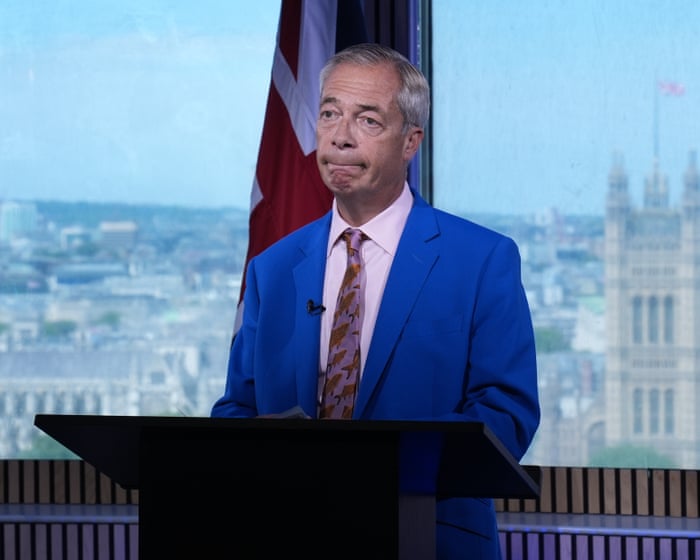
The strategy is significant because it demonstrates how political communication has changed. In the past, politicians generally had to respond to stories after journalists published them. Today, political organisations can attempt to shape the narrative before an investigation reaches the public. By giving information to a friendly media organisation, a party can influence the headline, choose which facts receive attention and present itself as the victim rather than the subject of criticism.
The term “Fleet Street spoiler” refers to precisely this kind of media tactic. According to reporting about Reform UK, the party has used sympathetic outlets, particularly The Telegraph, to publish stories connected to controversies that were also being investigated by other newspapers. The purpose is not necessarily to prevent a story from appearing. Instead, the objective is to make sure that the party’s preferred interpretation appears first.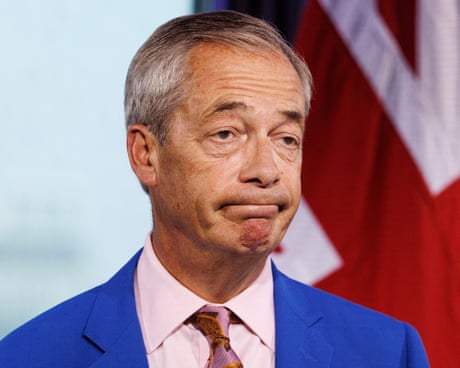
One important example occurred in July 2026, when Reform deputy leader Richard Tice accused the National Crime Agency of leaking information to the media. The story appeared in The Telegraph after The Guardian had approached Reform with questions concerning a £5m gift received by Farage from cryptocurrency billionaire Christopher Harborne. The timing was significant because it allowed Reform to shift some attention away from questions about the financial transaction and towards allegations concerning the behaviour of the authorities and the media.
From a political communications perspective, this is an effective tactic because journalists and political parties are competing for control of the same scarce resource: public attention. If a newspaper is preparing a detailed investigation into a politician, the politician cannot necessarily stop publication. However, the politician can attempt to create another story that competes with the investigation. Instead of allowing the public conversation to focus entirely on allegations about money, the party can encourage discussion about alleged leaks, media bias or political persecution.
This strategy is particularly useful for a party such as Reform UK because the party has built much of its political identity around opposition to what it describes as an established political and media system. Reform presents itself as an outsider challenging traditional institutions. Consequently, criticism from journalists can be incorporated into the party’s broader political message. Rather than simply defending itself against allegations, Reform can argue that it is being targeted by the establishment.
The approach has similarities with political strategies used internationally, especially by populist movements. A politician does not necessarily need to convince every voter that an unfavourable story is false. Instead, the politician may attempt to convince supporters that the media reporting the story is biased or politically motivated. If supporters become suspicious of the journalist rather than the politician, the damaging effect of the investigation may be reduced.
There was an earlier example involving Farage and Harborne. In April, after The Guardian approached Farage about a report concerning an undisclosed £5m gift from Harborne, The Telegraph published an interview with Farage. The interview focused heavily on claims that his home had been targeted in a firebombing incident and also referred to the money as being connected with security. This meant that information about the financial gift appeared alongside a more sympathetic explanation of why Farage might have needed substantial financial resources.
The tactic therefore does more than simply release information. It can also influence the emotional context in which information is received. A financial controversy may appear very different if readers are simultaneously told about concerns for a politician’s personal safety. The facts may remain available, but the order and emphasis of those facts can affect how audiences interpret them.
Reform’s relationship with journalists has also become increasingly confrontational. Farage has criticised media organisations and individual journalists, while the party has attempted to build communication channels that allow it to speak directly to supporters. These include social media, Farage’s Substack and the party’s own podcast. Such platforms reduce the party’s dependence on traditional journalism and allow politicians to communicate with their supporters without having their statements filtered through conventional news organisations.
This development is important because traditional newspapers no longer have complete control over political information. A politician can publish a statement online and reach millions of people directly. If a newspaper publishes a critical investigation, the politician can immediately respond through social media. The result is a much faster and more competitive information environment.
However, direct communication has both advantages and disadvantages. For political parties, it provides greater control over their message. They can decide exactly what to say and when to say it. Supporters can also receive information without relying on journalists whom they may distrust. On the other hand, political organisations are naturally motivated to present themselves positively. Independent journalism plays an important role precisely because journalists can investigate claims that political parties would prefer not to discuss.
This is why the use of “spoilers” raises questions about transparency and accountability. If a party gives a newspaper selective information shortly before another newspaper publishes an investigation, readers may not immediately understand that the story has been strategically provided by the political organisation. The resulting article can appear to be an independent discovery even though the political party has deliberately influenced its timing and content.
At the same time, it would be too simplistic to describe every relationship between politicians and newspapers as manipulation. Political parties routinely provide journalists with information, briefings and interviews. Newspapers also make independent decisions about whether information is credible and newsworthy. The existence of a close relationship does not automatically mean that a newspaper has abandoned journalistic standards.
Indeed, Reform’s relationship with The Telegraph illustrates the complexity of the modern media environment. While Reform has sometimes benefited from sympathetic coverage, the relationship is not necessarily permanently favourable. The Telegraph has also published critical coverage of Farage. On one occasion, its front page described his political strategy as having “turned to farce”, while a comment article criticised his approach to a by-election.
This demonstrates an important limitation of the spoiler strategy. A political party can provide information to a newspaper, but it cannot completely control what that newspaper subsequently publishes. Media organisations have their own editorial interests, commercial pressures and political perspectives. A party may therefore find that an outlet it once regarded as sympathetic becomes more critical.
Another major issue is public trust. Democratic politics depends on voters being able to distinguish between independent reporting, political advertising and strategic public relations. If voters believe that newspapers simply publish material supplied by political parties, confidence in journalism can decline. Conversely, if political parties constantly portray critical journalism as an attack by an establishment, supporters may become unwilling to consider evidence that challenges their existing views.
This can contribute to political polarisation. Supporters of a party may increasingly consume only media sources that confirm their opinions. In such an environment, competing versions of reality can develop. One newspaper presents an investigation, while another publishes the politician’s response. Social media then distributes both versions to different audiences, often without the broader context necessary to evaluate them.
The rise of Reform UK makes this issue particularly important. The party has achieved significant political influence while maintaining an outsider identity. As its power grows, however, the contradiction becomes increasingly difficult to ignore. A political organisation that becomes influential must accept greater scrutiny. The more money, seats and political influence a party has, the greater the public interest in understanding how it operates.
Ultimately, the “Fleet Street spoiler” tactic illustrates a broader transformation in political journalism. Political parties are no longer simply responding to news; they are actively attempting to shape the news cycle itself. Reform UK has demonstrated how a party can use sympathetic media outlets, direct communication platforms and aggressive responses to journalists to influence the public conversation.
Whether this strategy is successful in the long term remains uncertain. It may help Reform manage individual controversies and maintain support among its core voters. However, repeated attempts to redirect attention can also create the impression that a party is avoiding difficult questions. If voters believe that politicians are more interested in controlling the story than answering legitimate questions, public trust may eventually suffer.
The central lesson is that modern political power is not only about winning elections. It is also about controlling narratives. Reform UK appears to understand this very well. By attempting to get ahead of damaging stories, the party has developed a sophisticated approach to media politics in which timing, relationships and competing narratives are crucial. Yet the strategy also carries risks. In a healthy democracy, political parties should have the opportunity to defend themselves, but journalists must retain the freedom to investigate them independently. The challenge is ensuring that political communication does not become so powerful that it overwhelms independent scrutiny.
For voters, the best response is therefore not simply to believe one side or the other. Readers should compare different reports, examine the evidence and pay attention to who provided the information and why it was published at a particular moment. In an increasingly competitive media environment, understanding how stories are constructed has become an essential part of political literacy. Reform’s use of Fleet Street “spoilers” is a powerful example of why that skill matters.