
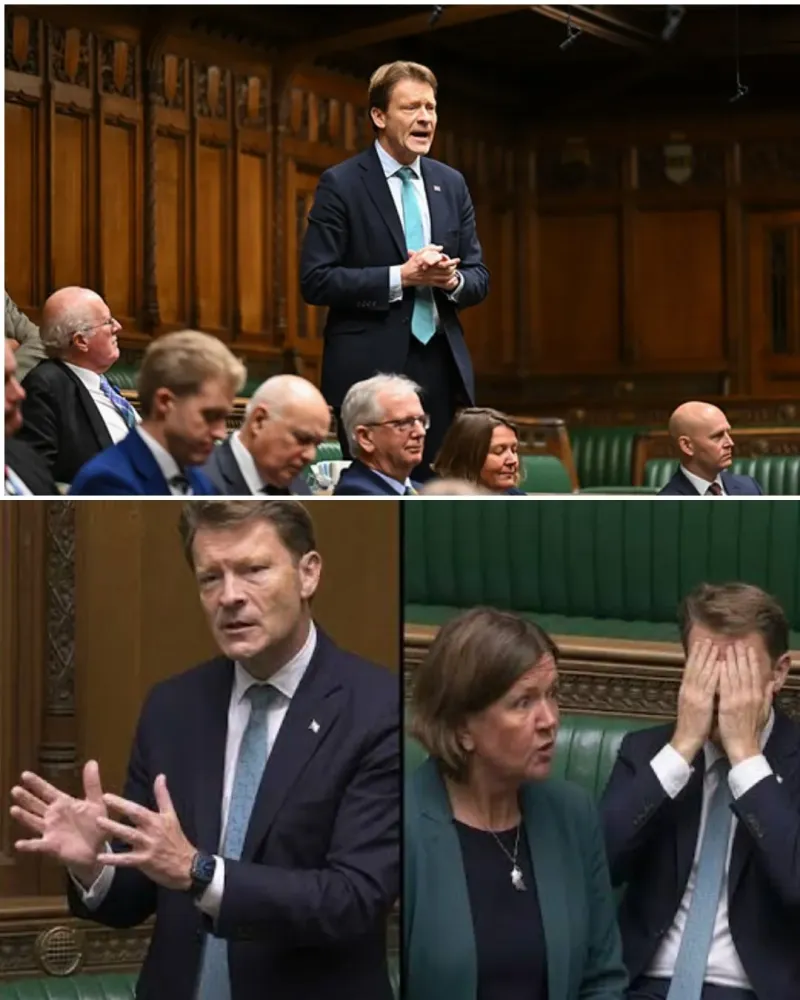
Tice opened the debate by pointing out the stark contrast between UK and US energy costs, stating that US gas prices are a “mere 20%” of those in the UK.
He attributed this economic advantage to the United States’ embrace of hydraulic fracturing, commonly known as fracking, over the past two decades.
Tice argued that the UK possesses vast unexploited resources, claiming there are 30 to 50 years’ worth of onshore gas available across the country .
He further asserted that Lincolnshire alone holds a decade’s worth of shale gas, which he argued could generate “thousands and thousands” of domestic jobs .
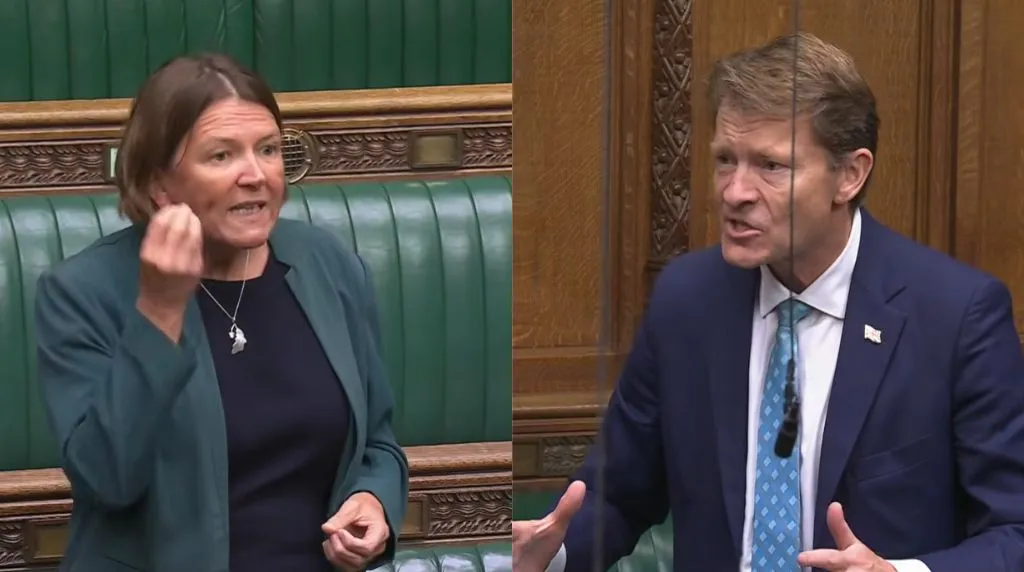
The Green Party MP strongly rebuked these assertions, interrupting to point out that there are currently no commercially proven reserves of shale gas in the UK .
She repeatedly demanded that Tice cite his sources for the reserve estimates, arguing that actual evidence shows the cost of renewable energy consistently declining.
The exchange momentarily broke parliamentary protocol, prompting an intervention from the Deputy Speaker.
The Deputy Speaker had to remind the Green MP of the courtesies of the House, noting that turning her back to the chair to face Tice made it difficult for microphones to pick up her comments and violated parliamentary convention .
When pressed repeatedly for his sources, Tice cited estimates from the British Geological Survey and referenced specific tests conducted in the Gainsborough Trough.
The Green MP dismissed these domestic fossil fuel ambitions as a “complete distraction.”
She argued that opening new fossil fuel production would do almost nothing to lower consumer bills or improve energy security.
She compared further investments in fossil fuels to investing in “typewriters during the era of the personal computer” or “horses and carriages during the era of the development of the car,” insisting that a clean, renewable energy transition is the country’s only viable hope .
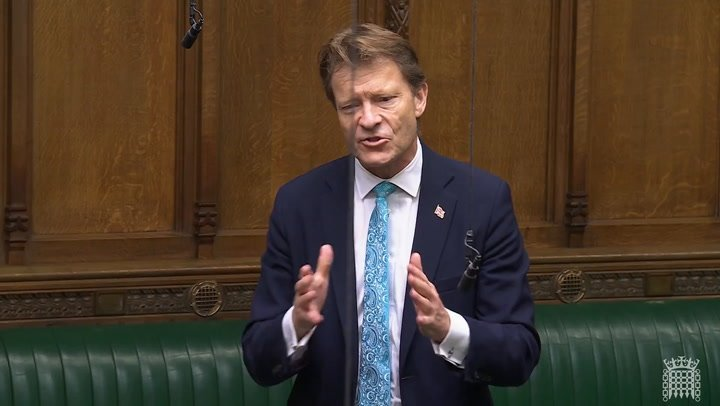
To counter Tice’s claims of mass job creation, she referenced the Jackdaw gas field, stating it would generate only 27 jobs—a number of people she noted could fit on the top of a double-decker bus.
Tice retorted sharply, accusing the Green MP of promoting a policy direction that would effectively offshore British wealth, skills, and jobs.
He characterized her stance as one that would leave the British public “impoverished in a tent on a sandbag” by refusing to utilize domestic natural resources.
The confrontation underscores the deep, ongoing ideological divide in Parliament regarding how to best secure the UK’s energy independence while navigating environmental concerns and a volatile global energy market.
PARLIAMENT ERUPTS IN TOTAL CHAOS! A MASSIVE SHOWDOWN OVER YOUR ENERGY BILLS ROCKS WESTMINSTER!
Britain’s growing energy crisis has become the centre of another major political confrontation, with rising household bills putting enormous pressure on the government and intensifying disagreements inside Parliament.
Millions of families are struggling with the cost of keeping their homes warm, while businesses are facing increasing operating expenses. Against this difficult background, the government’s latest energy announcements have triggered fierce debate over taxation, public spending and the future direction of Britain’s energy policy.
The controversy has become particularly significant following the Autumn Budget announced on 28 October 2026, which introduced several measures intended to provide immediate financial relief to households.
But while ministers insist that their plans will help families, opposition politicians continue to question whether the measures go far enough.
The question facing Britain is simple: will the government’s promises finally bring energy bills under control, or will households continue paying the price of an increasingly expensive energy system?
1. Energy Bills Become a Major Westminster Battleground
Energy costs have become one of the most important issues facing British households.
Families are having to balance electricity, gas, food, housing and other essential expenses, leaving many with little financial breathing space.
The situation has become more complicated following international tensions in the Middle East, which have contributed to higher energy costs.
During the parliamentary debate, ministers acknowledged that rising international energy prices were placing additional pressure on households and businesses.
The government argued that immediate assistance was necessary while longer-term reforms were developed.
However, opposition politicians questioned whether temporary payments could provide a lasting solution.
2. Government Announces £100 Energy Payment
One of the biggest announcements in the Autumn Budget was a £100 Household Energy Payment for eligible households.
The scheme is designed to help households in Council Tax bands A to D in England manage rising energy expenses.
According to the government, approximately 20 million households are expected to benefit.
The payment will be made directly into eligible households’ bank accounts.
Ministers described the measure as an attempt to provide financial breathing space during the winter months.
However, critics argue that a one-off payment cannot resolve the underlying problem of high energy prices.
For families already struggling with their monthly expenses, the question is whether £100 will make a meaningful difference once regular bills continue arriving.
3. The Government Promises Changes to Energy Bills
The Budget also introduced longer-term proposals intended to make energy costs fairer.
One important announcement concerns standing charges on household gas bills.
These charges are paid regardless of how much gas a household actually consumes.
The government says it intends to remove household gas standing charges through Ofgem from next year, with similar electricity reforms to follow.
Ministers believe this will help households that use relatively little energy.
Another proposal involves changing how energy projects are funded.
The government intends to reduce certain policy costs currently placed directly on household bills and move some funding responsibilities into general government spending.
This could change how the costs of Britain’s energy transition are distributed between taxpayers and consumers.
4. Opposition MPs Question the Government’s Strategy
The government’s announcements have not ended the political disagreement.
Opposition politicians have questioned whether Labour’s approach can deliver the reductions in energy costs that households desperately need.
Some critics argue that the government has focused too heavily on long-term renewable energy targets without providing sufficient immediate relief.
Others believe Britain needs a more balanced energy strategy involving renewable power, nuclear energy and domestic oil and gas production.
The government maintains that expanding clean energy production will reduce Britain’s exposure to volatile international fossil fuel markets.
This disagreement reflects a wider argument about how Britain should secure affordable and reliable electricity.
5. Britain’s Dependence on International Energy Markets
One of the most important issues behind rising energy costs is Britain’s exposure to international markets.
Gas prices can be affected by geopolitical tensions, supply disruptions and changing global demand.
When international gas prices rise, British households and businesses can experience the consequences through higher energy costs.
The conflict in the Middle East has highlighted the vulnerability of countries that depend on international energy supplies.
Ministers argue that increasing domestic clean electricity production will help protect Britain against future price shocks.
However, developing new infrastructure, expanding electricity networks and increasing renewable capacity require significant investment.
The government therefore faces the challenge of reducing costs today while building a more secure energy system for tomorrow.
6. Businesses Warn About the Impact of High Energy Costs
Households are not the only ones feeling the pressure.
Businesses across Britain have also faced difficulties as energy expenses increase.
Manufacturers, restaurants, hotels, supermarkets and smaller companies all depend on reliable and affordable energy.
Higher operating costs can reduce profits, discourage investment and potentially lead to increased prices for consumers.
The Autumn Budget therefore introduced a British Industrial Competitiveness Scheme intended to reduce electricity costs for around 10,000 energy-intensive businesses.
The government says eligible companies will receive a 25% reduction in electricity bills under the programme.
Ministers hope this will improve Britain’s industrial competitiveness and protect employment.
Nevertheless, businesses will want to see whether the scheme provides sufficient support to make a lasting difference.
7. The Political Battle Over Net Zero Continues
Another major disagreement concerns the government’s commitment to achieving net zero emissions by 2050.
Labour argues that expanding renewable energy will help reduce dependence on imported fossil fuels and create new economic opportunities.
However, opponents question the cost of the transition and whether the electricity system can become sufficiently reliable while renewable capacity expands.
The government has responded by announcing reforms to energy market arrangements and investment in electricity infrastructure.
It has also approved the Jackdaw gas field, arguing that domestic production can contribute to energy security.
This demonstrates the difficult balance facing ministers.
Britain wants to reduce emissions while ensuring that households and businesses have access to affordable and reliable energy.
8. What Happens Next for British Households?
The real test of the government’s strategy will be whether people actually see lower bills.
The £100 payment may provide temporary assistance, but households will continue to face regular energy expenses.
The removal of gas standing charges could benefit certain consumers, while the proposed changes to electricity market arrangements may take longer to produce results.
The government has also promised to bring Britain’s energy costs closer to European levels within ten years.
That is an ambitious objective, and achieving it will require substantial investment, effective regulation and consistent political decision-making.
For millions of households, however, ten years is a very long time to wait.
They want to know what ministers can do now.
CONCLUSION: THE ENERGY BILL BATTLE IS FAR FROM OVER
Britain’s energy debate has become one of the most important political challenges facing Westminster.
The Autumn Budget’s £100 household payment, proposed removal of gas standing charges and support for businesses demonstrate that the government recognises the pressure facing consumers.
However, questions remain about whether these measures will provide enough relief and whether the longer-term energy strategy can deliver genuinely affordable electricity and gas.
Opposition parties will continue demanding answers, while households will judge the government by the amount they actually pay.
The consequences extend far beyond Westminster.
They affect families trying to heat their homes, pensioners worried about winter expenses and businesses struggling to control operating costs.
Britain does not simply need another political argument about energy. It needs a reliable system that delivers affordable power, protects vulnerable households and gives businesses the confidence to invest.
Until that happens, energy bills will remain a major source of public frustration and one of the biggest tests facing the government.