

Happy New Year, Reform UK: Why Nigel Farage Already Has Reason to Smile
As Britain entered 2026, Nigel Farage had something that few politicians could have imagined only a few years ago: a political movement ending the year at the top of the national conversation.
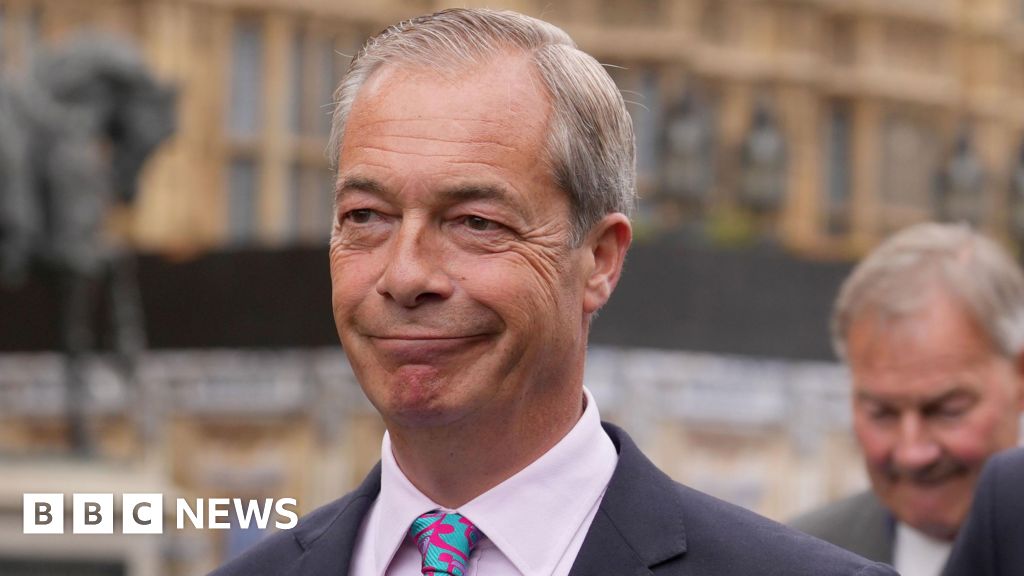
Reform UK finished 2025 with strong polling, major local-election gains and growing confidence that it could eventually challenge Labour for government. Farage himself claimed that Reform had led in 175 consecutive opinion polls, with an average advantage of around ten percentage points. He argued that a strong performance in the May 2026 local elections could put the party on course for a general-election victory.
Those claims should obviously be treated as political predictions rather than guarantees. Opinion polls can change, elections can produce surprises and Reform still faces enormous organisational and political challenges.
But the fact that Farage can make such a prediction with a straight face tells us something important.
Reform UK is no longer a fringe force waiting for its moment. It has become one of the central players in British politics.
And that alone gives Farage a reason to smile as the new year begins.
A remarkable transformation
The rise of Reform is one of the most extraordinary developments in recent British political history.
For years, Farage was associated primarily with the Brexit campaign and the struggle to remove Britain from the European Union. After Brexit was achieved, many observers wondered whether his political career had reached its natural conclusion.
Instead, he returned.
Reform UK gave him a new political vehicle, and the party gradually expanded its message beyond Brexit. Immigration, taxation, government spending, national sovereignty, regulation, energy policy and dissatisfaction with Westminster all became central themes.
The strategy proved increasingly successful.
By the end of 2025, Reform had won hundreds of council wards in the local elections and had already demonstrated that it could win Westminster by-elections. GB News reported that Reform had taken 676 wards in the 2025 local elections and won the Runcorn & Helsby parliamentary by-election in May.
That was a remarkable transformation from the party’s earlier status.
Reform was no longer simply influencing Conservative policy.
It was directly competing with the Conservatives and Labour.
Farage enters 2026 with momentum
The political importance of momentum should not be underestimated.
A party that repeatedly performs well begins to look electable.
Electability matters because voters do not always vote purely according to ideology. Some voters are reluctant to support a party if they believe it has no realistic chance of winning.
That psychological barrier can disappear when a party starts leading polls and winning elections.
This may be one of Reform’s greatest achievements.
The question is no longer simply whether voters agree with Farage.
It is increasingly whether voters believe Farage could actually govern Britain.
That is a much more consequential question.
And it is precisely why Labour and the Conservatives cannot afford to dismiss Reform as a protest movement.
Keir Starmer’s uncomfortable New Year
The contrast with Labour is striking.
Prime Minister Keir Starmer entered 2026 attempting to reassure voters that his government was delivering change after what he acknowledged had been a difficult period for Britain.
In his New Year message, Starmer highlighted measures involving the cost of living, energy bills, childcare, wages and the NHS. He also warned against what he called the “decline and division” offered by political opponents.
The message was carefully constructed.
Starmer wanted to present himself as a serious governing politician focused on stability and long-term improvement.
Farage wanted to present himself as the leader of an insurgent movement capable of replacing the political establishment.
Those are two completely different political narratives.
And right now, Reform’s narrative has considerable energy behind it.
The problem for Labour
Labour’s fundamental difficulty is that it cannot simply rely on the fact that it won a large parliamentary majority in 2024.
That election belongs to the past.
The political environment has changed.
Reform has gained strength.
The Conservatives are attempting to rebuild.
The Greens are becoming more influential.
The Liberal Democrats remain capable of winning constituencies through targeted campaigns.
And voters increasingly appear willing to move between parties.
This means Labour must persuade voters that its government is delivering tangible improvements rather than merely promising that improvements are coming.
That distinction is crucial.
Voters can be patient for a while.
But eventually they want to see results.
If they do not, an opposition party can turn dissatisfaction into political momentum.
Reform is attempting to do exactly that.
The Conservative dilemma
The Conservatives have an even more complicated relationship with Farage.
On many issues, Reform is competing directly for traditional Conservative voters.
Immigration is perhaps the clearest example.
For years, the Conservatives promised to reduce immigration and strengthen Britain’s borders. When voters became frustrated with the results, Reform was able to argue that the Conservatives had failed to deliver what they promised.
The same dynamic exists around taxation, regulation and government spending.
Reform can say that it is willing to go further.
The Conservatives therefore face a difficult choice.
Should they move towards Reform’s positions and risk strengthening Farage’s argument that Reform is setting the agenda?
Or should they move towards the centre and risk losing even more right-wing voters?
Neither option is comfortable.
Farage’s prediction for May
This is why the May 2026 local elections are so important.
Farage has effectively turned them into a political test.
If Reform performs strongly, he can argue that the party’s national polling is reflected in real votes.
If it performs poorly, opponents will immediately question whether the polling boom has reached its limit.
Farage has already made the stakes clear.
He argued that if Reform comes first in the local elections, the result would put the party “way ahead” of its rivals and create a pathway towards winning the next general election.
That is an ambitious prediction.
But it also reveals how Farage is thinking.
He is no longer simply planning for Reform to win a few dozen parliamentary seats.
He is talking about government.
The danger of overconfidence
Yet Reform supporters should be careful.
Political momentum can disappear.
A party that dominates the headlines can quickly become the target of intense scrutiny. Every candidate becomes important. Every controversial statement becomes news. Every local-government decision becomes evidence for or against the party’s ability to govern.
This is especially important for Reform because it has expanded extremely quickly.
Rapid growth can be a strength.
It can also create organisational weaknesses.
A national governing party needs experienced politicians, competent administrators and detailed policies across virtually every area of government.
Campaigning against the establishment is one thing.
Running the country is another.
Reform will increasingly be judged on that distinction.
From protest to government
This may ultimately be the biggest challenge facing Farage.
His political career has been remarkably successful at identifying public frustration.
But frustration alone cannot form a government.
Eventually, voters will ask what Reform would actually do once it has power.
How would it manage the NHS?
What would its economic policy mean for ordinary households?
How would it control immigration while addressing legitimate labour shortages?
How would it manage relations with businesses?
What would happen to public spending?
How would it deal with Scotland, Wales and Northern Ireland?
And perhaps most importantly, could a Reform government deliver the radical transformation its supporters expect?
These questions will become increasingly difficult to avoid.
Why 2026 could be decisive
The year ahead could therefore be the most important period in Reform’s history.
The party has already demonstrated that it can attract attention.
It has demonstrated that it can win council seats.
It has demonstrated that it can win parliamentary contests.
It has demonstrated that it can lead national polls.
The next test is whether those achievements can be converted into a durable national organisation capable of winning a general election.
That is a much higher standard.
But Farage has reason to believe it is possible.
The party enters the year with political momentum and an increasingly confident supporter base.
And confidence matters.
A party that believes it can win behaves differently from a party that merely hopes to influence the winners.
Reform is increasingly behaving like the former.
Britain’s political map is changing
The rise of Reform also reflects a broader transformation in British politics.
The old assumption was that Labour and the Conservatives would dominate Westminster indefinitely.
That assumption is no longer secure.
Voters are increasingly willing to abandon traditional loyalties.
The 2025 local elections demonstrated that dramatically.
Reform’s gains showed that the party could attract support from areas that had historically been dominated by other parties.
This fragmentation creates opportunities for smaller parties but also makes elections more unpredictable.
A three-party contest can produce very different results from a two-party contest.
A party can win a constituency with a relatively small share of the vote if its opponents divide the rest.
This is why Reform’s national polling position cannot simply be translated into a guaranteed number of MPs.
The geography of support will matter enormously.
Farage’s biggest advantage
Farage’s greatest advantage may not actually be any individual policy.
It may be his ability to make Reform feel like a political movement rather than simply another party.
His supporters believe they are participating in a historic challenge to the political establishment.
That sense of purpose can be powerful.
It encourages activism.
It encourages donations.
It attracts new members.
And it can persuade voters that supporting Reform is not a wasted vote.
Labour and the Conservatives need to understand this psychological dimension if they want to defeat him.
Simply telling people that Farage is dangerous or inexperienced will not necessarily persuade them.
They need to offer something more convincing.
The fight for working-class Britain
One of the most important battles will be over working-class voters.
For decades, Labour could rely on strong support in many working-class communities.
That loyalty has weakened significantly.
Reform has attempted to fill the gap by combining economic messages with concerns about immigration, national identity and political accountability.
The Conservatives are also trying to recover those voters.
This creates a three-way struggle that could reshape Britain’s electoral map.
If Reform succeeds in winning a substantial share of former Labour voters while retaining support from former Conservatives, it could build a formidable coalition.
If it cannot, Labour or the Conservatives may eventually recover enough support to contain its advance.
The next few years will determine which scenario becomes reality.
A happy new year—but a difficult year ahead
So, should Reform UK really be celebrating?
Absolutely.
But it should celebrate carefully.
Ending 2025 near the top of the polls, after major local-election gains and a parliamentary by-election victory, gives Nigel Farage something that his political career has often lacked: a genuine prospect of national power.
Yet opportunity is not victory.
The road from leading opinion polls to occupying Downing Street is long.
Reform will face attacks from every established party.
Its policies will receive greater scrutiny.
Its candidates will be examined more closely.
Its internal organisation will be tested.
And voters will eventually demand evidence that the party can govern responsibly.
That is the real challenge of 2026.
The year of Reform?
Perhaps the most fascinating question is whether 2026 will ultimately become known as the year when Reform UK went from insurgent movement to genuine government-in-waiting.
Farage certainly believes that possibility exists.
His New Year prediction was unusually bold: a strong performance in the local elections, he argued, could put Reform on the road to winning the next general election and fundamentally changing Britain’s system of government.
That is an extraordinary ambition.
But after everything that happened in 2025, it can no longer simply be dismissed as fantasy.
Reform has momentum.
Farage has a national platform.
Labour faces significant political pressure.
The Conservatives are struggling to determine how to respond.
And voters are increasingly willing to consider alternatives.
The champagne may therefore be justified—but only for a moment.
Because the hardest part begins now.
Reform has spent years trying to break into Britain’s political establishment. In 2026, Nigel Farage has the opportunity to do something far more difficult: prove that Reform can replace it.
And if the party continues to climb, the coming year could turn out to be the moment when Britain’s political revolution stopped being a prediction and started becoming a possibility.
Leave a Reply
You must be logged in to post a comment.