

Fixing Social Care Is Personal for Andy Burnham – And a Second Chance on Unfinished Business
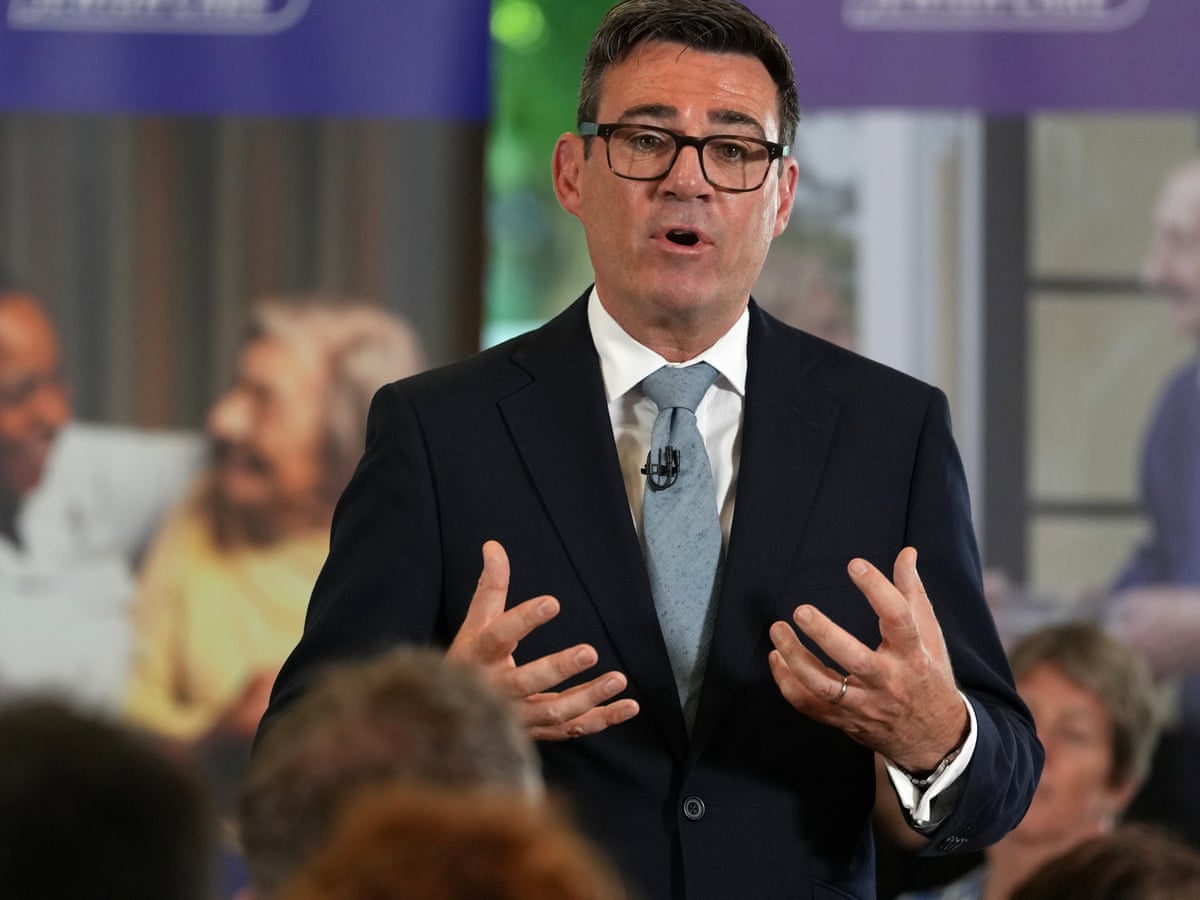
Among the many challenges facing the British government, few are as complex, emotionally sensitive, and politically difficult as reforming the social care system. Unlike issues that dominate headlines for a few weeks before fading from public attention, social care affects millions of families every year. It shapes the lives of older people, adults with disabilities, unpaid family carers, and the professionals who provide essential support in communities across the country.

For Prime Minister Andy Burnham, social care is more than another government department competing for funding. It has become one of the defining priorities of his administration and, in many ways, a deeply personal political mission. Throughout his career, Burnham has spoken about the importance of dignity, fairness, and equal access to public services. His long-standing interest in health and community welfare has convinced many observers that social care reform is not simply another manifesto commitment but an issue he genuinely believes deserves national attention.
Whether this becomes the government’s greatest achievement or another unfinished ambition will depend on its ability to transform a system that has frustrated successive governments for decades.
Why Social Care Matters
Social care is often confused with healthcare, but the two systems perform different functions.
Healthcare focuses primarily on diagnosing illnesses, providing medical treatment, and preventing disease. Social care, by contrast, helps people maintain independence and quality of life when illness, disability, or age makes everyday activities difficult.
Support may include assistance with washing, dressing, preparing meals, mobility, personal safety, and participation in community life. For many people, these services determine whether they can remain in their own homes or require residential care.
Although social care rarely attracts the same political attention as hospitals or emergency medicine, it is equally essential.
Without effective social care, hospitals struggle to discharge patients safely. Families experience increasing pressure as unpaid carers take on greater responsibilities. Local authorities face growing financial demands, while vulnerable individuals risk isolation or declining health.
The system therefore influences many other areas of public policy.
A System Under Growing Pressure
Britain’s social care system has faced increasing strain for many years.
Population ageing represents one of the most significant long-term demographic changes affecting public services. People are living longer than previous generations, often with multiple long-term health conditions requiring continuous support.
This success in life expectancy brings important social responsibilities.
Demand for care continues growing while local authorities face financial pressures. Recruiting and retaining care workers has also become increasingly difficult because of relatively low wages, demanding working conditions, and competition from other sectors.
As a result, many providers struggle to maintain staffing levels.
Families frequently report long waiting times, inconsistent service quality, and uncertainty about future costs.
These pressures have developed gradually over decades rather than emerging suddenly.
Consequently, reform requires structural solutions rather than temporary financial assistance alone.
Why Burnham Sees This as Unfinished Business
Political leaders are often shaped by issues they have encountered repeatedly throughout their careers.
For Burnham, improving health and social care has remained a consistent theme rather than a recent political priority.
He has long argued that healthcare cannot function effectively without an equally strong social care system.
Hospitals depend upon community services to support patients after treatment. General practitioners rely upon care workers assisting vulnerable individuals in their own homes. Families depend upon professional services that allow relatives to live independently for as long as possible.
Viewed this way, social care is not separate from the NHS but an essential partner.
Supporters believe Burnham’s continued focus demonstrates persistence rather than political convenience.
Critics acknowledge his commitment while questioning whether meaningful reform can succeed where previous governments have struggled.
Funding: The Central Challenge
Every discussion about social care eventually returns to one unavoidable question: how should it be funded?
Providing high-quality care for an ageing population requires substantial long-term investment.
Governments face several possible approaches.
They can increase general taxation.
They can introduce specific social care contributions.
They can ask individuals to contribute more directly.
Or they can combine multiple funding sources.
Each option involves political risks.
Higher taxes are rarely popular.
Greater individual contributions may create concerns about fairness.
Borrowing increases public debt.
Reducing services affects vulnerable people.
No government has yet discovered a universally accepted solution.
This financial reality explains why social care reform has repeatedly been delayed despite widespread recognition that change is necessary.
Supporting the Care Workforce
Successful reform depends not only on funding but also on people.
Care workers provide essential services under challenging conditions.
They assist individuals with complex physical, emotional, and practical needs while building trusting relationships with those they support.
Despite this responsibility, many care workers receive relatively modest wages and limited opportunities for career progression.
Staff shortages have therefore become increasingly common.
Burnham’s emphasis on reform includes improving recruitment, training, professional recognition, and working conditions.
Supporters argue that investing in the workforce benefits everyone.
Better employment conditions encourage retention.
Experienced staff improve service quality.
Stable care relationships enhance the wellbeing of those receiving support.
Viewed together, workforce investment represents an investment in the quality of care itself.
Families at the Centre of Reform
One of the strongest arguments for improving social care concerns the millions of unpaid carers across Britain.
Family members often provide daily assistance for parents, spouses, children, or relatives with disabilities.
Many combine caring responsibilities with full-time employment.
Others reduce working hours or leave employment entirely.
These unpaid contributions save the public sector enormous sums each year.
However, carers frequently experience financial pressure, emotional stress, and physical exhaustion.
Supporters of reform argue that governments should recognise carers not merely as informal volunteers but as essential partners within the wider care system.
Providing respite services, financial assistance, training, and flexible employment arrangements could significantly improve outcomes for both carers and those receiving care.
Integrating Health and Social Care
Many policy experts believe closer integration between healthcare and social care offers the greatest opportunity for improvement.
Patients often experience fragmented services.
Hospitals, general practitioners, local authorities, and care providers may operate under different administrative systems despite supporting the same individual.
Poor communication can delay treatment, create unnecessary duplication, and increase costs.
Greater integration could allow professionals to coordinate services more effectively.
Patients would experience smoother transitions between hospital treatment and community support.
Resources could potentially be used more efficiently.
Achieving such integration requires significant organisational change, shared information systems, and long-term cooperation across multiple institutions.
Political Risks and Opportunities
Few domestic policy reforms carry greater political risk than social care.
Failure becomes highly visible because it directly affects vulnerable people and their families.
Success, however, often develops gradually and receives less immediate attention.
Governments therefore face difficult incentives.
The costs of reform appear immediately.
Many benefits emerge only after several years.
This timing discourages ambitious long-term investment.
Burnham nevertheless appears willing to make social care one of his defining priorities.
If successful, meaningful reform could improve millions of lives while strengthening hospitals, supporting families, and reducing long-term public expenditure.
If unsuccessful, social care may remain another example of political promises overwhelmed by practical difficulties.
Looking Beyond Politics
Perhaps the most important aspect of social care reform is that it extends beyond party politics.
People requiring care come from every community, every political background, and every generation.
Most families will encounter social care in some form during their lives.
Consequently, sustainable reform requires broad public support rather than short-term political advantage.
Cross-party cooperation, engagement with professionals, consultation with service users, and realistic long-term funding may ultimately prove more valuable than dramatic political announcements.
Conclusion
For Andy Burnham, reforming social care represents far more than another government policy. It reflects a long-standing belief that society should provide dignity, independence, and security for those who need support most.
The challenges are enormous. Population ageing, workforce shortages, financial pressures, and fragmented services have created problems that no previous government has fully resolved.
Yet these same challenges also create an opportunity.
If Burnham’s administration succeeds in delivering meaningful reform, it could transform one of Britain’s most important public services and improve the lives of millions of people.
Whether this becomes the completion of unfinished political business or another unfulfilled ambition will depend not on speeches or promises, but on sustained investment, practical reforms, and the willingness to confront difficult decisions over many years.
Ultimately, the true measure of social care reform will not be found in government statistics or political debates. It will be seen in the everyday lives of older people, disabled individuals, unpaid carers, and families who depend on a system that offers not only practical assistance, but dignity, compassion, and hope for the future.