
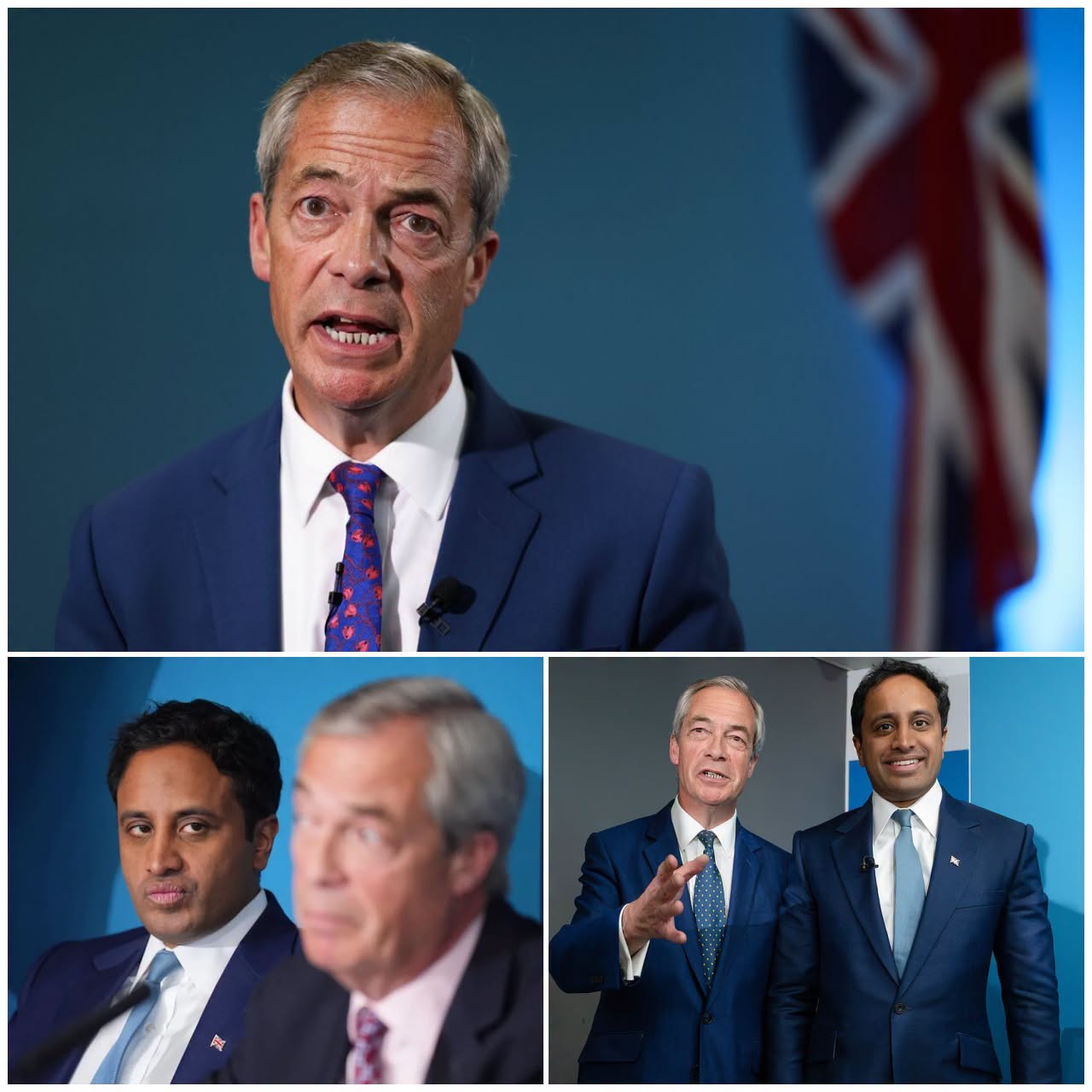
Reform UK Reports ITV to Police After Undercover Documentary Sparks Dispute Over Journalism and Political Accountability
Reform UK has escalated its dispute with ITV after the broadcaster aired an undercover investigation documenting offensive remarks allegedly made by party councillors, candidates and activists. The party says it has reported several journalists and members of ITV’s board to the police and is preparing legal action, arguing that the methods used during the investigation may have breached the law.
The controversy has created a wider debate about the boundaries of investigative journalism, political accountability and the use of undercover reporting in public-interest investigations.
The dispute intensified on 21 October 2026, when Zia Yusuf, Reform UK’s home affairs spokesperson, announced that the party had reported ITV and several journalists to the police. He also said the party intended to pursue civil proceedings against those involved.
ITV has rejected the implication that its investigation was unlawful, saying it stands by its journalism and that the programme was produced in compliance with relevant laws and broadcasting regulations.
At the centre of the dispute is Undercover: A Year in Reform, an ITV Exposure documentary that examined the conduct of people associated with Reform UK. The programme included secretly recorded conversations in which several individuals allegedly made racist, discriminatory or otherwise offensive comments.
The allegations have placed renewed attention on the party’s candidate-vetting procedures and its response to misconduct, while also raising questions about how journalists should investigate political organisations.
What Did ITV’s Undercover Investigation Reveal?
ITV’s investigation involved an undercover reporter who joined Reform UK’s political operation in January 2026, working inside the party’s Westminster headquarters in a press-related role.
The investigation also followed party members and campaigners during local election campaigns and by-elections. According to ITV, the reporters recorded conversations involving councillors and candidates across England and Wales.
The resulting documentary, broadcast in October 2026, included remarks that attracted widespread criticism.
In one recording, a Reform councillor allegedly referred to Black children as “animals”. Other footage included comments about Asian families, Muslims and female political colleagues that ITV characterised as racist, discriminatory or sexist.
The programme also examined discussions within the party about how to respond when individuals associated with Reform were accused of expressing extreme or offensive views.
The findings prompted questions about whether the party’s procedures were sufficient to identify unsuitable candidates before they entered public office.
ITV reported that Reform had begun investigations into the conduct of individuals featured in the programme. The party said that some people who did not share its values had initially passed through its vetting procedures, while insisting that racism had no place in the organisation.
The documentary did not establish that every Reform UK member shared the views expressed by the people recorded. Its findings concerned specific individuals and conversations.
Nevertheless, the material presented a challenge for the party because some of those recorded held elected positions or were involved in political campaigning.
ITV’s reporting is available through its investigation into Reform UK councillors and candidates.
Why Has Reform UK Reported ITV to Police?
Reform UK’s complaint focuses primarily on the methods used to obtain the recordings rather than simply disputing the content of the programme.
Yusuf alleged that the undercover reporter who obtained a position within the party had digitally altered a passport to secure employment. He also questioned the activities of undercover reporters who participated in campaigning during local elections in Portsmouth.
The party argues that these activities may have breached fraud or electoral law. It has also raised concerns about whether the reporters’ involvement in political campaigning crossed the line between observing events and participating in them.
Yusuf said the party intended to pursue legal action against the journalists and ITV’s board. He accused the broadcaster of manipulating party staff and volunteers and described the investigation as a form of psychological warfare.
These are allegations made by Reform UK, not established findings of criminal wrongdoing.
A police complaint allows concerns to be brought to the attention of law-enforcement authorities. It does not, by itself, demonstrate that an offence has occurred or that the allegations will result in prosecution.
As of 24 October 2026, reporting indicated that Hampshire Police was reviewing an allegation relating to activity in Portsmouth, while the Metropolitan Police was assessing a complaint connected with the broadcast. Neither force had announced a full investigation into the complaints described in the reporting.
The precise legal questions will depend on the evidence, the conduct of the journalists involved and the relevant legislation.
The Independent’s coverage provides further details of Reform UK’s complaint against ITV.
ITV Defends Its Journalism
ITV has maintained that the documentary was produced in accordance with the Ofcom Broadcasting Code, applicable laws and the public interest.
The broadcaster said its journalists had been instructed to operate within that framework under the supervision of the programme’s producers. It also stated that it would cooperate with police if contacted.
The broadcaster’s position reflects a longstanding principle of investigative journalism: undercover methods may sometimes be considered when information of public importance cannot readily be obtained through ordinary reporting.
However, undercover reporting raises legitimate ethical and legal questions. Journalists must consider whether deception is justified, whether the information could be obtained by less intrusive means and whether their own actions have influenced the events they are documenting.
The use of covert recording can be particularly controversial when the investigation involves political organisations, because the resulting material may affect public confidence in elected representatives.
The legality of a particular investigation depends on the circumstances. A broadcaster’s assertion that its reporting was lawful does not independently settle the issue, just as a political party’s complaint does not prove that the journalists acted unlawfully.
Any formal assessment must examine the available evidence rather than relying solely on statements from either side.
Candidate Vetting and Political Accountability
The dispute has also renewed attention on Reform UK’s procedures for selecting candidates and responding to allegations about members’ behaviour.
Nigel Farage has previously acknowledged that political parties can attract individuals whose conduct does not reflect their stated values. Following the documentary, he argued that parties cannot always predict what candidates may say or do in the future.
That argument highlights a genuine difficulty in candidate selection: vetting can identify some past behaviour and warning signs, but it cannot guarantee how an individual will act in every future situation.
At the same time, parties remain responsible for establishing standards, investigating credible complaints and deciding how to respond when evidence of misconduct emerges.
Reform UK has said it has initiated internal investigations and that some individuals featured in the programme have been suspended or have left the party.
The question of whether its response is sufficient remains contested. Critics have argued that the documentary raises wider concerns about the party’s culture and its handling of candidates who express discriminatory views.
Supporters of Reform may regard the undercover methods as unfair or politically motivated. Others may consider the recordings important evidence of conduct that voters would reasonably want to know about.
These positions are not mutually exclusive in every respect: the public importance of a story and the legality of the methods used to obtain it are separate questions.
Political Reactions Across Westminster
The controversy has extended beyond Reform UK and ITV.
At Prime Minister’s Questions, Andy Burnham argued that political parties should take firm action against racist and discriminatory conduct. His comments reflected wider concern among political opponents about the remarks documented in the investigation.
The dispute has also developed against the background of a separate controversy involving Reform UK’s finances. In September 2026, the Metropolitan Police opened a criminal investigation into allegations concerning potentially impermissible foreign donations, following a different undercover investigation published by Channel 4 News and independent journalists.
Reform UK has denied wrongdoing in that matter and said it would cooperate with the investigation.
The financial investigation is separate from the complaint against ITV. The existence of one inquiry does not establish the truth of allegations in another, and the two should not be conflated.
Together, however, the controversies have intensified scrutiny of the party’s internal procedures, its relationship with investigative journalists and its approach to political accountability.
The Wider Question: Where Should Investigative Journalism Draw the Line?
Undercover journalism can reveal information that would otherwise remain hidden, particularly when people with power or influence are unwilling to discuss their conduct openly.
But it also presents difficult questions about privacy, deception, fairness and the possibility that a journalist’s actions could affect the behaviour being recorded.
A responsible assessment must consider both the public interest in exposing potentially serious misconduct and the methods used to obtain the evidence.
In this case, ITV argues that its documentary complied with the relevant rules and served the public interest. Reform UK disputes the conduct of the journalists and has asked the police to examine potential legal breaches.
The outcome will depend on evidence and any decisions made by the relevant authorities. It should not be assumed in advance that either side’s interpretation will prevail.
The investigation’s findings about the recorded remarks can be examined separately from the legal questions surrounding the reporting methods.
What Happens Next?
The immediate next steps concern the complaints made by Reform UK, ITV’s response and any decisions by police about whether further investigation is warranted.
The party has indicated that it intends to pursue civil proceedings, although the precise progress and outcome of any legal action will need to be established through reliable reporting.
ITV continues to stand by the documentary and has said it will cooperate with the authorities.
Meanwhile, Reform UK faces continuing questions about how it vets candidates and responds to offensive conduct by people associated with the party.
Neither the complaint against ITV nor the documentary’s findings should be treated as a final legal judgment. Each raises distinct issues that require evidence-based examination.
Ultimately, the dispute highlights a central tension in democratic politics: the public has a legitimate interest in the conduct of political representatives, while journalists and political organisations must operate within the law.
Whether ITV’s methods withstand scrutiny and whether Reform UK’s complaints lead to further action remain questions for the relevant authorities.
The central issue is not simply whether Reform UK or ITV will emerge from the dispute with its reputation intact. It is whether the allegations can be assessed fairly, the evidence examined carefully and the public given a clear account of what has been established and what remains contested.