
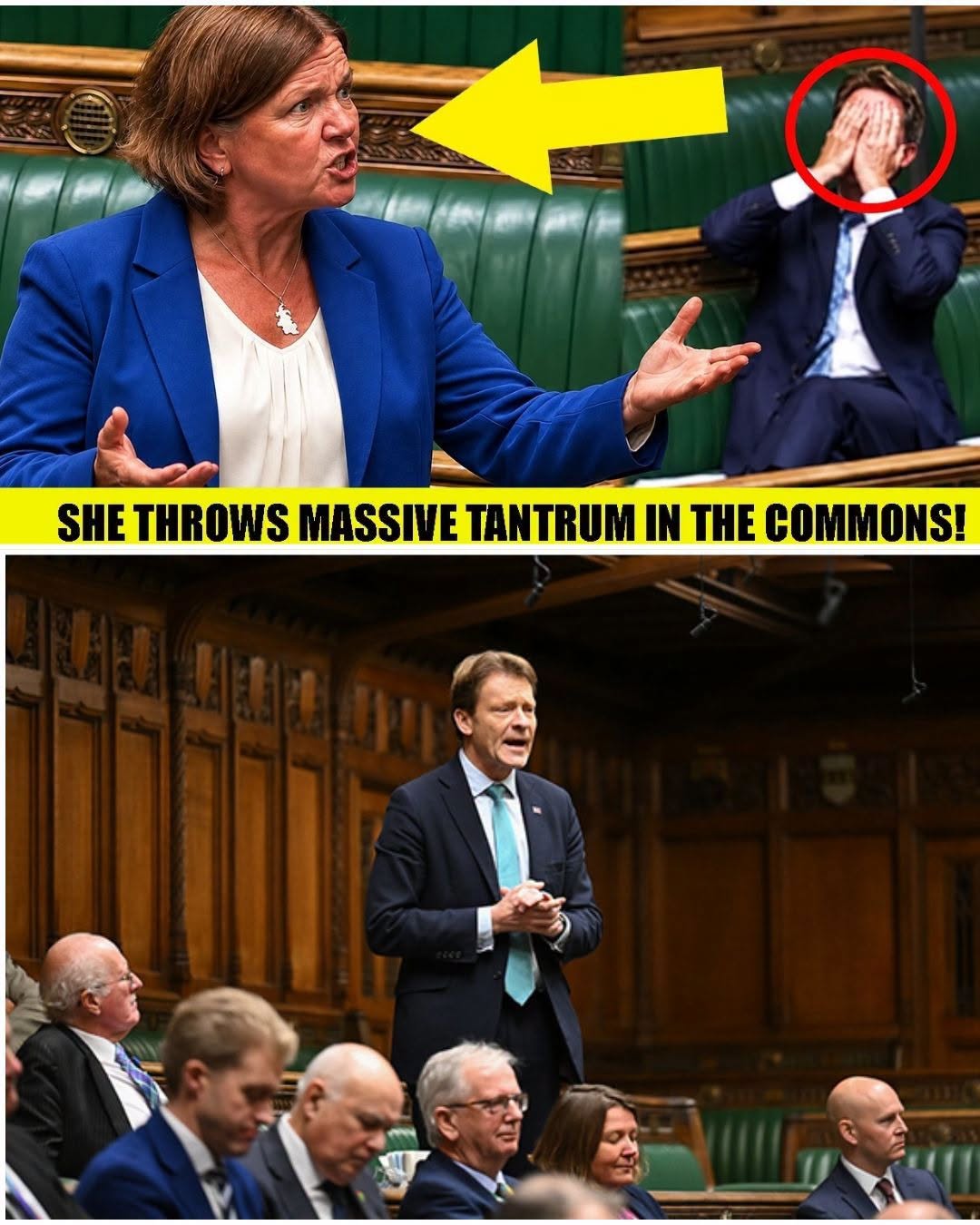
Parliament’s Energy Showdown: Richard Tice Clashes With Green MP Over Fracking, Energy Bills and Britain’s Future
An increasingly heated debate over Britain’s energy policy has brought Reform UK’s Richard Tice into direct confrontation with Green MP Ellie Chowns. With household energy bills remaining a major public concern, Tice argued that domestic shale gas could help reduce costs, while his opponents questioned the evidence behind his claims. The Deputy Speaker eventually intervened to restore parliamentary order.
Britain’s energy debate took a contentious turn in the House of Commons on September 15, 2026, when Reform UK deputy leader Richard Tice challenged the country’s approach to domestic gas production.
The discussion focused on the continuing restrictions on hydraulic fracturing, commonly known as fracking, and whether Britain should reconsider its position on extracting shale gas.
Tice argued that the country was overlooking potentially valuable domestic energy resources while households and businesses continued to face high electricity and gas costs.
His comments prompted a strong response from Green MP Dr Ellie Chowns, who challenged his claims about Britain’s shale gas reserves and questioned the evidence supporting his proposed approach.
The exchange became increasingly tense, eventually requiring Deputy Speaker Caroline Nokes to intervene after Chowns repeatedly challenged Tice during his speech.
Although some online descriptions have portrayed the incident as an extraordinary parliamentary explosion, the official Hansard record provides a more precise picture of what happened.
At the centre of the disagreement was a fundamental question: should Britain reconsider fracking as part of a strategy to improve energy security and reduce household bills?
Richard Tice’s Argument: Britain Should Reconsider Its Energy Resources
Richard Tice, MP for Boston and Skegness and deputy leader of Reform UK, has consistently argued that Britain needs a different approach to energy production.
During the September debate, he questioned why British consumers continued to face relatively high energy costs compared with countries that have substantial domestic gas production.
He specifically highlighted the United States, where extensive shale gas extraction has helped increase domestic supply.
Tice argued that American gas prices were considerably lower than those in Britain and attributed part of the difference to the country’s use of hydraulic fracturing.
His position was that Britain should investigate whether similar methods could help unlock domestic resources.
He also questioned the wisdom of relying so heavily on renewable energy while restricting opportunities to develop other sources of electricity and heating.
Rather than immediately committing to widespread extraction, Tice proposed allowing independently monitored trials using different techniques and at different depths.
He argued that gathering additional evidence would allow Parliament to make a more informed decision about whether domestic shale gas could become commercially viable.
His broader message was that Britain should not dismiss potential energy resources before properly investigating them.
Why Energy Bills Have Become a Political Flashpoint
Energy affordability remains one of the most important concerns for British households.
Electricity and gas prices influence the cost of heating homes, operating businesses and providing essential services.
When energy costs increase, the effects can spread throughout the economy.
Businesses may face higher production expenses, while households have less disposable income available for other necessities.
For this reason, political parties have increasingly presented energy policy as a question of economic security as well as environmental responsibility.
Reform UK has argued that expanding domestic oil and gas production could reduce dependence on imported energy.
Supporters believe that greater domestic supply could strengthen energy security and potentially help moderate wholesale prices.
However, the relationship between domestic production and household bills is complicated.
Even if Britain produces more gas, prices remain influenced by international markets, infrastructure costs, taxation and the wider energy system.
Domestic extraction alone would not guarantee an immediate reduction in household bills.
Ellie Chowns Challenges the Evidence
Green MP Dr Ellie Chowns, who represents North Herefordshire, strongly challenged Tice’s claims during the debate.
Her central objection concerned the difference between estimated geological resources and commercially proven reserves.
Tice suggested that Britain could have between 30 and 50 years of available onshore gas.
Chowns argued that there were currently no commercially proven UK shale gas reserves capable of supporting the scale of production he appeared to envisage.
She also pointed to the falling costs of renewable energy and questioned whether fracking offered the economic advantages claimed by its supporters.
Her challenge was straightforward: if Tice believed substantial domestic resources could be extracted profitably, he should provide clear evidence supporting those figures.
The disagreement therefore involved more than competing political philosophies.
It concerned the technical distinction between identifying gas underground and demonstrating that it can be extracted economically and safely.
These are not necessarily the same thing.
The Deputy Speaker Steps In
As the exchange became increasingly tense, Chowns repeatedly attempted to challenge Tice about the sources behind his claims.
The Deputy Speaker, Caroline Nokes, eventually intervened.
She reminded Chowns that parliamentary conventions required members wishing to interrupt another speaker to ask permission to intervene.
Nokes also criticised the Green MP for turning her back towards the Chair while addressing Tice.
She explained that doing so made it difficult for microphones to capture the discussion and was discourteous to the Chair.
Her intervention was recorded in the official parliamentary transcript.
The Deputy Speaker subsequently allowed the discussion to continue.
Although the incident attracted attention online, it was an example of parliamentary procedure being enforced rather than evidence of an uncontrolled physical confrontation. <Cite refs={[“turn701692search1″,”turn701692search4”]}/>
The Fracking Question: Economic Opportunity or Environmental Risk?
Hydraulic fracturing involves injecting a mixture of water, sand and chemicals into underground rock formations at high pressure to release trapped oil or natural gas.
The technique has transformed energy production in the United States, helping the country become a major producer of natural gas.
Supporters of fracking argue that Britain should examine whether similar opportunities exist domestically.
They believe additional production could reduce reliance on imports, create employment and improve energy security.
However, opponents raise concerns about groundwater contamination, methane emissions, industrial disruption and the possibility of induced seismic activity.
The United Kingdom introduced restrictions on fracking following concerns about earthquakes associated with shale gas operations.
The environmental debate remains significant because the country must consider both immediate energy requirements and long-term climate commitments.
A decision to expand domestic fossil-fuel extraction would therefore involve economic, environmental and regulatory considerations.
Could Fracking Really Save Britain Billions?
One of the most attractive arguments presented by supporters of fracking is the possibility of reducing energy costs.
Tice’s comparison with American gas prices illustrates why the proposal appeals to some households and businesses.
However, lower American wholesale gas prices cannot automatically be replicated in Britain.
The United States has different geological conditions, infrastructure, production volumes and energy-market arrangements.
Britain would also need to consider the cost of exploration, extraction, transportation and regulatory compliance.
Furthermore, commercially viable reserves would need to be established before any realistic estimate of potential savings could be made.
Chowns’s challenge therefore raises an important issue: the economic case must be supported by credible geological and financial evidence.
Without that evidence, claims of substantial savings remain projections rather than guaranteed outcomes.
The Case for Renewable Energy
The Green Party’s position is that Britain should accelerate its transition towards renewable electricity.
Wind, solar and other low-carbon technologies have expanded significantly in recent years.
Supporters argue that renewable energy can reduce exposure to volatile international fossil-fuel markets while helping the country meet its climate objectives.
They also point to falling technology costs and opportunities to develop domestic manufacturing and employment.
However, renewable generation creates its own challenges.
Wind and solar production depend on weather conditions, making storage, grid infrastructure and backup generation important components of a reliable electricity system.
The debate is therefore not simply about choosing one energy source over another.
It concerns how Britain can build a system that is affordable, dependable and environmentally sustainable.
What the Parliamentary Record Actually Shows
The September 15 debate confirms that Tice and Chowns disagreed sharply over fracking, domestic gas reserves and the evidence supporting alternative energy strategies.
It also confirms that Deputy Speaker Caroline Nokes intervened to remind MPs of parliamentary conventions.
However, the official record does not establish that the Green MP delivered an extraordinary personal insult or that Tice announced a fully developed plan guaranteed to save billions of pounds.
His proposal was to investigate domestic shale gas extraction through controlled trials.
That distinction is important when evaluating the claims circulating online. <Cite refs={[“turn701692search2″,”turn701692search5”]}/>
A Debate That Will Shape Britain’s Energy Future
The confrontation between Richard Tice and Ellie Chowns reflects a much larger disagreement about Britain’s economic and environmental priorities.
For Tice, the country should investigate every realistic opportunity to increase domestic energy production and reduce dependence on foreign supplies.
For Chowns, the economic and environmental evidence does not justify treating unproven shale gas resources as an easy solution to Britain’s energy problems.
Both positions raise questions that deserve serious consideration.
Britain needs affordable electricity, reliable heating and a secure energy supply.
It must also consider climate obligations, environmental protection and the long-term costs of different technologies.
The most important outcome of the parliamentary exchange is not the interruption itself, but the unresolved question of which energy strategy can genuinely deliver lower bills and greater security for British consumers.
Until the geological and economic evidence is properly established, claims about the financial benefits of widespread fracking should be treated cautiously.
For households facing high energy costs, the debate is ultimately about practical results rather than political theatre.
The challenge for Parliament is to ensure that future decisions are based on reliable evidence, transparent economic assessments and a realistic understanding of Britain’s long-term energy needs.