

the debate centered on the legitimacy of the recent £72 million contribution to Reform UK, made by two individuals.
The host questioned Anderson about the legality of the funds, particularly regarding residency requirements for political donors.
Anderson firmly defended the donations, stating, “I spoke to our compliance team; everything’s above board and legal… these are permissible donors.”
Anderson quickly pivoted the conversation, launching a counter-attack against the Labour Party’s primary funding source: trade unions.
Advertisement
He argued that the Labour government is hypocritical for criticizing Reform’s donations while accepting millions from unions, which he claimed “sway government policy.”
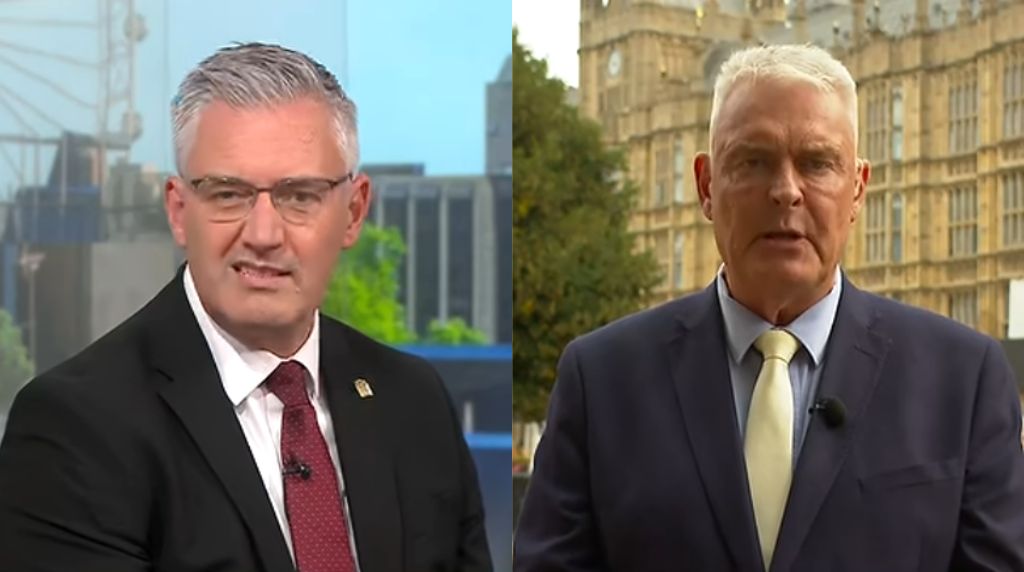
Anderson issued a stark warning regarding future legislative retaliation.
Advertisement
“If they want to play these silly games, when we’re in government, we can play these silly games as well.
We can introduce legislation that’ll stop trade unions donating to the Labour Party, see how they like it,” he stated.
The host played a clip of Paul Nowak, General Secretary of the Trades Union Congress (TUC), defending union contributions.
In the clip, Nowak argued there is no similarity “between care workers chipping in a few quid a year through their union, and a party bought and paid for by billionaires.”
Anderson dismissed Nowak’s argument, criticizing the union leader’s six-figure salary and suggesting he does nothing for minimum-wage workers.
Anderson asserted that care workers in his community are turning away from Labour and will vote for Reform UK in the next election.
Advertisement
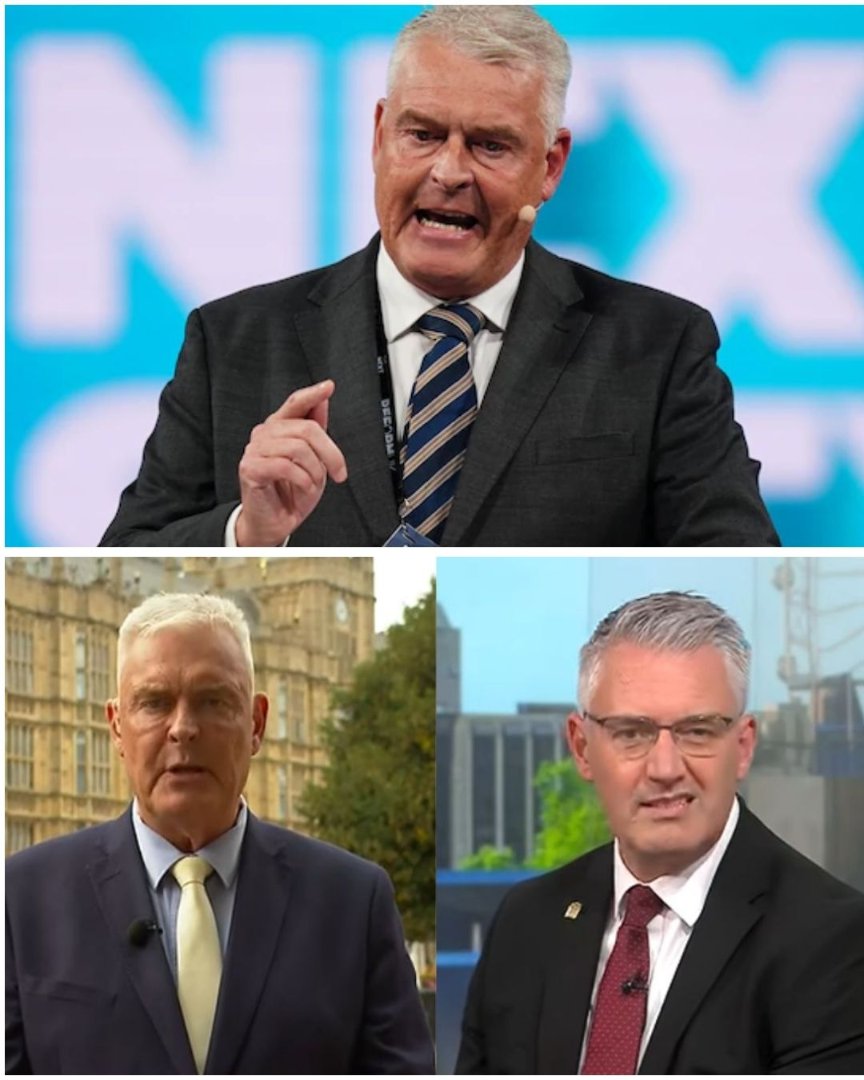
A Labour MP then joined the discussion, echoing Nowak’s sentiment.
The Labour representative argued that the public can differentiate between massive individual donations and small, collective contributions.
“I think the everyday man and woman on the street can see the total difference between two individual billionaires giving a total of £72 million to one political party, and hundreds of thousands of individuals… giving small amounts of money to something they believe in,” the MP stated.
He also pointed out that Reform UK is currently facing police inquiries regarding the way it solicits donations.
Anderson dismissed the Labour MP’s arguments as a “typical blinkered response from an out-of-touch Labour MP.”
He challenged the Labour representative to look ahead to the next election, stating, “Keep your union money, we’ll keep our donors’ money, we’ll meet you all at the ballot box.”
Advertisement
The clash highlights the growing financial arms race in British politics and the sharply differing philosophies regarding the ethics of political funding, setting the stage for intense scrutiny over campaign finance leading up to the next general election.
EXPLOSIVE TV CLASH! REFORM UK’S LEE ANDERSON GOES SCORCHED EARTH ON LABOUR — AND ANGELA RAYNER IS IN THE FIRING LINE!
Reform UK firebrand Lee Anderson has reignited Britain’s political battle after launching a furious attack on Labour’s Angela Rayner over government proposals concerning political donations, trade union influence and alleged double standards in British politics.
The outspoken Reform politician accused Labour of hypocrisy, questioned the Government’s motives and suggested that its proposed changes to political funding could give the governing party an unfair advantage.
The confrontation has added another chapter to the increasingly bitter relationship between Reform UK and the Labour Government led by Andy Burnham.
Anderson’s intervention was particularly significant because it targeted an issue that goes beyond ordinary party politics: who should be allowed to finance Britain’s political parties, and whether the same rules should apply to everyone?
For Reform UK, the argument is about political fairness. For Labour, the challenge is defending reforms that ministers say are necessary to protect British democracy.
But Anderson was clearly not prepared to accept Labour’s explanation without a fight.
Anderson launches his attack on Angela Rayner
The controversy intensified during a televised political discussion on 14 September 2026, when Anderson turned his attention towards Angela Rayner.
The Reform UK chairman accused Labour of applying one standard to its political opponents while defending a different arrangement when its own financial interests were involved.
He specifically challenged Labour’s reliance on trade union funding and questioned the Government’s proposals to introduce restrictions on political donations.
Anderson’s argument was that if ministers genuinely believed political funding needed stricter regulation, those restrictions should apply equally to every political party.
He also criticised Rayner’s previous description of Reform UK donors as “fascist oligarchs”.
In a particularly confrontational moment, Anderson accused Labour of having already sold out.
The exchange reflected the growing hostility between the two political movements.
For Anderson, Labour’s proposals were not simply technical changes to electoral legislation. He portrayed them as an attempt to reshape the political funding system while protecting the advantages enjoyed by the established parties.
The accusation was politically explosive, although it remains an allegation rather than an established finding of misconduct.
The political donations battle
At the heart of the confrontation is the Government’s plan to strengthen the rules governing political donations.
Ministers argue that Britain’s electoral system must be protected against foreign interference, illegal funding and attempts by wealthy individuals to purchase political influence.
The proposed reforms include restrictions on certain donations from overseas electors, stronger controls involving cryptocurrency and additional enforcement powers.
However, Reform UK has questioned whether Labour’s approach is genuinely impartial.
Anderson believes that the Government must explain how its proposals will affect the financial relationship between Labour and the trade unions.
Trade unions have historically been important financial supporters of the Labour Party.
Their contributions have helped finance election campaigns, political activities and the wider organisation of the party.
Anderson argues that political funding regulations should not be designed in a way that disadvantages parties without traditional trade union support.
His position is that every organisation should face transparent and consistent financial rules.
Labour, meanwhile, maintains that its proposals are intended to protect democracy rather than undermine political competition.
The disagreement has created another major battleground between the Government and Reform UK.
Why trade union funding matters
The relationship between Labour and the trade union movement stretches back more than a century.
Several major unions have traditionally supported Labour financially and politically, although their relationships with the party have changed over time.
Supporters argue that trade union contributions represent legitimate collective political participation.
They believe workers should have the same opportunity to influence politics as wealthy business owners and private donors.
Critics, however, question whether large institutional donations give trade unions disproportionate influence over Labour’s political priorities.
Anderson has attempted to make this relationship central to his criticism of the Government.
He argues that Labour cannot demand restrictions on political donations from other sources while refusing to reconsider its own funding arrangements.
The argument has obvious political appeal to Reform supporters.
Nevertheless, trade union donations are subject to existing legal requirements, and criticism of the system should not be confused with evidence that Labour has broken the law.
The wider question is whether Britain’s political funding arrangements provide a sufficiently fair balance between individual donors, businesses, trade unions and political organisations.
Anderson turns immigration into another Labour confrontation
Political donations are not the only subject on which Anderson has challenged Labour.
Immigration remains one of his strongest political themes.
The Reform MP has repeatedly accused the Government of failing to control illegal Channel crossings and has demanded a much tougher approach to asylum policy.
In August 2026, he launched another furious attack on Labour after Equalities Minister Bridget Phillipson criticised Reform’s proposals concerning the Equality Act.
Phillipson warned that Reform’s plans to repeal the legislation could threaten important protections for women.
Anderson responded by accusing Labour of hypocrisy over immigration and criminal offending.
His language was highly controversial and attracted criticism from political opponents.
The exchange demonstrated how immigration has become one of the most emotionally charged issues in British politics.
Labour argues that immigration enforcement must operate within the law while protecting legitimate asylum rights.
Reform maintains that the Government has failed to deliver sufficiently strong border controls.
Anderson believes the issue should remain at the centre of political debate until ministers demonstrate meaningful results.
The migrant accommodation controversy
Another flashpoint involved Anderson’s criticism of Labour’s handling of asylum accommodation.
The Reform politician has repeatedly questioned the use of hotels and other temporary facilities to house asylum seekers.
He argues that local communities should not be expected to accept decisions made by central government without proper consultation.
During a televised discussion on GB News on 16 October 2026, Anderson criticised Labour representatives over the treatment of communities affected by migrant accommodation arrangements.
The debate included disagreements over the Government’s responsibilities, the impact on local residents and the possible use of community work requirements for asylum seekers and benefit claimants.
Anderson argued that people living in affected communities were not receiving sufficient attention from politicians.
His critics countered that asylum accommodation is a complex national issue and that inflammatory political rhetoric risks increasing hostility towards vulnerable people.
The exchange illustrated the growing divide between Labour’s approach and Reform’s demands for tougher enforcement.
Why Lee Anderson has become such a powerful Reform voice
Anderson’s political career has been unusual.
He was originally elected as a Conservative MP before leaving the party and joining Reform UK in March 2024.
His move gave Farage’s party its first sitting Member of Parliament.
Since then, Anderson has become one of Reform’s most recognisable political figures.
His background in mining communities and local politics has helped him develop an image as a politician who speaks directly to voters frustrated with Westminster.
He frequently uses confrontational language, challenges established political conventions and focuses on issues such as immigration, welfare, crime and taxation.
Supporters appreciate his straightforward communication style.
Critics argue that his rhetoric can be unnecessarily divisive and that his political arguments sometimes lack sufficient policy detail.
Nevertheless, his visibility makes him an important figure in Reform UK’s efforts to challenge Labour.
As party chairman and chief whip, he also has responsibilities beyond television appearances, including maintaining party discipline and communicating its political strategy.
Labour cannot afford to ignore the challenge
For Andy Burnham’s Government, the growing confrontation with Reform UK presents a serious political challenge.
Labour must defend its record while demonstrating that it can deliver improvements in living standards, public services and immigration enforcement.
The political donations debate also creates a difficult situation.
If the Government introduces major electoral reforms, it must demonstrate that the rules are fair and that independent scrutiny has been properly considered.
Otherwise, even legitimate proposals could become vulnerable to accusations of political self-interest.
Rayner and other senior Labour figures will need to explain why the proposed changes are necessary and how they will protect democratic competition.
Simply dismissing Anderson’s criticism as political theatre may not be enough.
Voters increasingly expect politicians to provide clear explanations about how political parties are financed and how decisions affecting elections are made.
Farage’s wider strategy
Nigel Farage is likely to welcome Anderson’s willingness to challenge Labour publicly.
The Reform leader has built his political movement around the argument that established parties have become disconnected from ordinary voters.
Anderson’s confrontational style fits comfortably within that strategy.
By attacking Labour over trade union funding, immigration and political accountability, Reform is attempting to portray itself as the principal challenger to the political establishment.
However, the party must also demonstrate that it can operate responsibly and maintain transparent financial arrangements of its own.
Reform UK has faced separate scrutiny over allegations concerning political donations, making consistency particularly important.
The party denies wrongdoing in relation to those allegations.
Ultimately, voters will expect Reform to demonstrate that the standards it demands from Labour are also standards it is prepared to follow itself.
A political showdown with more battles ahead
The confrontation involving Anderson and Rayner reflects a much deeper disagreement about the future of British politics.
Labour believes stronger political funding controls are necessary to protect democratic institutions.
Reform argues that the Government must not use those changes to weaken political opponents or preserve its own advantages.
Immigration, trade union funding and electoral fairness are increasingly becoming interconnected issues in the wider political battle.
For Anderson, the message is clear: Labour must be held accountable for its decisions, and the Government should not expect its proposals to go unchallenged.
For Rayner and Burnham, the challenge is to demonstrate that Labour can defend its policies with evidence rather than simply dismissing criticism.
The coming months could bring further confrontations as Parliament examines electoral reforms and the parties prepare for the next round of political battles.
One thing is certain: Lee Anderson has no intention of softening his attacks on Labour.
And with Reform UK determined to position itself as Britain’s strongest alternative to the governing party, the political war between the two sides is only getting started.