
In a recent TalkTV interview, political commentator David and Robert Bates, research director for the Center for Migration Control, analyzed the implications of the government’s approach, which is being spearheaded by Labour leadership.
The segment highlighted a growing fracture between the government’s objectives and the resistance of local communities across the UK.

Advertisement
The controversy centers on the Home Office’s strategy to move asylum seekers out of centralized hotel accommodations and into Houses in Multiple Occupation (HMOs) situated within residential neighborhoods.
While the government recently announced the closure of an additional 13 asylum hotels, critics argue this simply displaces the issue into local high streets and suburbs.
Furthermore, there is a push to distribute these populations into wealthier areas, such as the Cotswolds, to ensure all regions shoulder the burden.
Bates criticized the strategy as “politically naive,” warning that attempting to impose asylum housing in more affluent areas will only re-energize opposition and bring previously uninvolved demographics into the immigration debate .
He noted that tight-knit communities, such as those in Crowborough and Pittington, have already demonstrated highly effective, organized resistance against the sudden arrival of unvetted young men.
Advertisement

The pushback is not limited to grassroots community efforts.
According to the segment, Reform UK, alongside several Conservative and even some Labour-led councils, is mounting legal challenges to block the conversions of single-family homes into HMOs for migrants .
Advertisement
These councils are leveraging HMO directions and planning laws to prevent the Home Office from bypassing local planning authorities.
In response to this resistance, the Labour government is reportedly utilizing an “urgent planning process” to push through housing initiatives—such as at military bases in Oxfordshire and Suffolk—by submitting applications directly to the Housing Secretary, entirely bypassing local democratic structures .
Advertisement
Bates warned that the Home Office’s heavy-handed tactics are creating a “David versus Goliath” dynamic, pitching the central government against local residents .
He projected that this friction will result in “mini uprisings all across the country” .
Police in Norfolk, Suffolk, and North Yorkshire have already expressed concerns over potential flashes of violence and public backlash .
Advertisement
The segment also addressed secondary controversies fueling public anger, most notably the revelation that telecommunications company Vodafone has provided 2,500 free SIM cards with six months of data to Care for Calais, an organization that distributes them to asylum seekers .
Reform UK’s Zia Yusuf has publicly condemned the corporate program, asserting it acts as a “pull factor” for illegal migration and writing a letter threatening criminal liability for Vodafone executives under a hypothetical future Reform government.
Advertisement
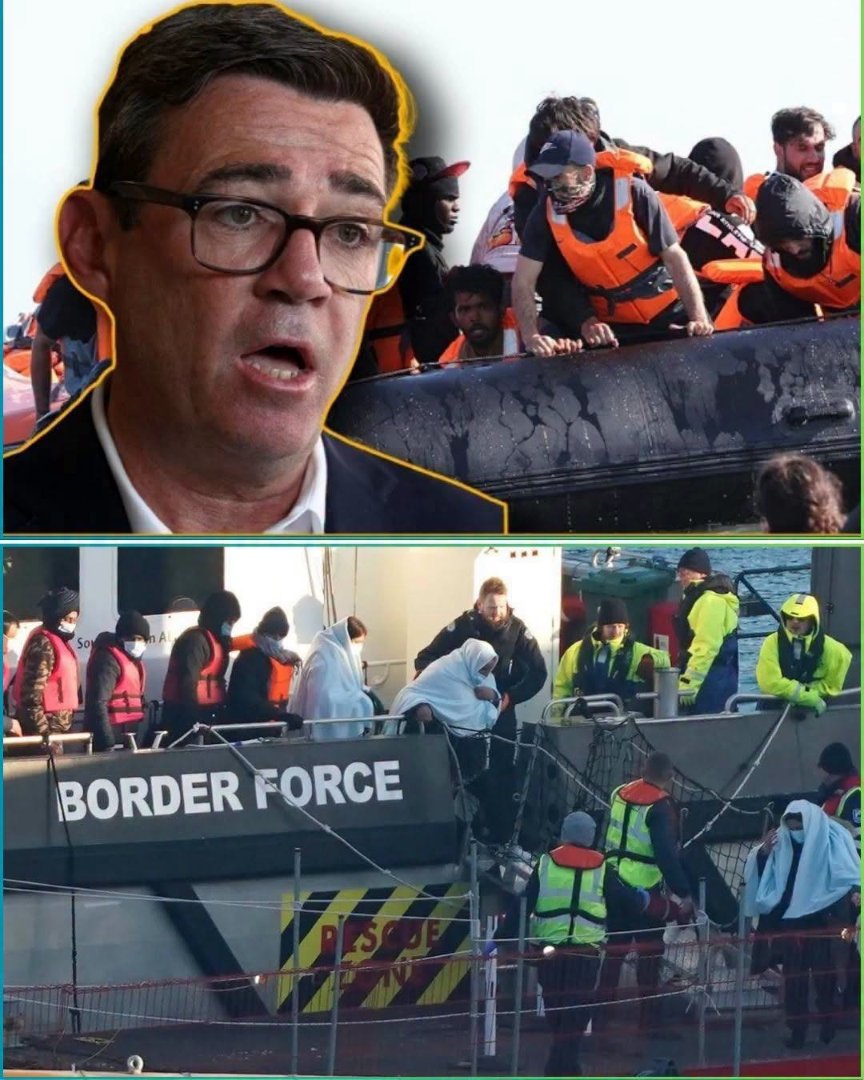
With small boat crossings continuing—reportedly numbering 15,000 this year, with 3,000 arriving recently—and nearly 100,000 migrants remaining in Home Office accommodations , immigration remains a highly volatile vulnerability for the current administration.
UK ASYLUM ROW ERUPTS — COUNCILS FIGHT BACK AS NEW RELOCATION PLANS SPARK FURY! LABOUR FACES GROWING PRESSURE OVER BRITAIN’S MIGRATION CRISIS!
Britain’s immigration debate has entered another heated chapter as local councils raise serious objections to proposed asylum accommodation plans. Across the country, communities are demanding answers about housing, public services, financial pressures, and the government’s decision-making process.
The controversy has created another difficult political challenge for the Labour government, which is attempting to reform the asylum system while reducing the costs associated with temporary accommodation.
For many local authorities, the issue is no longer simply about immigration policy in Westminster. It is about how decisions made by central government affect individual towns, villages, and neighbourhoods.
Council leaders want greater consultation, clearer information, and guarantees that local services will not be overwhelmed.
Meanwhile, residents are asking why their communities are being considered for additional accommodation without what they believe is sufficient public discussion.
As tensions increase, one question is becoming increasingly important: who should have the final say when the government wants to establish asylum accommodation in a local community?
LOCAL COUNCILS PUSH BACK AGAINST NEW ASYLUM PLANS
Local authorities across Britain have repeatedly raised concerns about the impact of asylum accommodation on their communities.
Some councils argue that central government has not provided enough information before considering locations for accommodation facilities.
Others have questioned whether local healthcare services, transport infrastructure, housing resources, and community support organisations have sufficient capacity.
The concerns are particularly significant in smaller towns and rural areas, where public services may already be operating with limited resources.
Council representatives argue that decisions involving large accommodation facilities should involve meaningful consultation with local communities.
They also want assurances that the government will provide appropriate financial support for any additional responsibilities.
For these councils, the central issue is not simply whether asylum accommodation should exist.
It is whether decisions are being made transparently and whether local authorities are being given the resources necessary to manage their consequences.
WHY THE GOVERNMENT IS LOOKING FOR NEW ACCOMMODATION
The government has been under considerable pressure to reduce its reliance on hotels for people awaiting decisions on their asylum applications.
Hotel accommodation has become one of the most controversial aspects of Britain’s migration system.
The financial costs have attracted criticism from opposition parties, local politicians, and taxpayers’ organisations.
Ministers argue that the current arrangements are expensive and that the government needs more sustainable alternatives.
One option involves using existing government buildings and other suitable properties to provide temporary accommodation.
However, identifying appropriate locations is complicated.
Buildings must meet safety standards, provide suitable facilities, and be supported by adequate local infrastructure.
The government must also consider whether proposed sites are appropriate for the number of people expected to live there.
These practical challenges explain why accommodation decisions frequently become controversial.
RURAL COMMUNITIES DEMAND A GREATER SAY
The debate has become especially sensitive in rural communities.
Residents in smaller towns and villages often argue that they have limited opportunities to influence decisions made by central government.
Some fear that introducing large accommodation facilities could place additional pressure on already stretched local services.
Questions about GP appointments, school capacity, transport, policing, and housing availability regularly feature in public discussions.
Other residents are concerned about the long-term future of their communities and want clearer explanations about how accommodation arrangements will operate.
Local representatives have therefore called for more detailed assessments before any major decisions are implemented.
They argue that residents should receive information about proposed numbers, security arrangements, management responsibilities, and the expected duration of accommodation.
At the same time, asylum seekers must not become targets of hostility simply because they are living in a particular area.
The debate should focus on government decisions, local resources, and practical arrangements rather than blaming individuals seeking protection.
LABOUR FACES AN INCREASINGLY DIFFICULT POLITICAL CHALLENGE
For Labour, the asylum accommodation controversy creates a difficult balancing act.
The government wants to demonstrate that it can manage immigration more effectively while reducing the financial burden on taxpayers.
However, it must also maintain working relationships with local councils and avoid creating the impression that communities are being ignored.
Council leaders from different political backgrounds have raised concerns about consultation and funding.
This makes the issue particularly complicated for ministers.
It is not simply a disagreement between Labour and opposition-controlled councils.
Local authorities have different responsibilities, financial circumstances, and community priorities.
Some may be willing to consider accommodation proposals if appropriate guarantees are provided.
Others may object because they believe their areas lack the infrastructure to support additional facilities.
The government therefore needs to develop arrangements that recognise local circumstances rather than assuming every community has the same capacity.
NIGEL FARAGE AND REFORM UK SEIZE ON THE CONTROVERSY
Immigration remains one of the central political issues for Nigel Farage and Reform UK.
The party has repeatedly criticised the government’s approach to irregular migration and asylum accommodation.
Farage argues that Britain needs stronger border enforcement, faster asylum decisions, and a significant reduction in the number of people entering the country through irregular routes.
The latest council disputes provide another opportunity for Reform UK to challenge Labour’s immigration policies.
Reform supporters argue that local communities should not be expected to absorb the consequences of decisions made without adequate consultation.
However, other political voices warn against turning asylum accommodation into a source of hostility towards vulnerable people.
The distinction between criticising government policy and targeting individuals seeking asylum remains important.
Britain’s immigration debate requires serious scrutiny of government decisions, but it should also recognise the legal protections and humanitarian responsibilities involved.
THE FINANCIAL BURDEN ON LOCAL AUTHORITIES
One of the biggest concerns surrounding asylum accommodation is the financial impact on local councils.
Local authorities are already responsible for delivering essential services under considerable budgetary pressure.
Additional responsibilities can create challenges involving housing administration, community support, environmental health, and coordination with other public agencies.
Councils therefore want to know exactly what financial assistance will be available.
They also want clarity about which responsibilities will remain with central government and which will fall to local authorities.
Without clear funding arrangements, councils fear they could be left managing problems without sufficient resources.
The government must therefore demonstrate that any accommodation programme includes realistic financial planning.
Providing accommodation is only one part of the process.
Effective management also requires appropriate staffing, healthcare access, safeguarding arrangements, and communication with local residents.
ASYLUM SEEKERS ALSO FACE AN UNCERTAIN FUTURE
While political disagreements continue, the people living in asylum accommodation face their own difficulties.
Many individuals have arrived in Britain after experiencing conflict, persecution, or serious threats to their safety.
Their applications must be considered individually under the UK’s asylum laws and international obligations.
Long processing delays can leave people uncertain about their future for extended periods.
They may be unable to make long-term plans, establish stable employment, or understand how their circumstances will develop.
The government has therefore faced calls to improve the speed and effectiveness of asylum decisions.
Faster processing could reduce uncertainty for applicants and help authorities manage accommodation more efficiently.
People whose claims are successful can receive appropriate permission to remain, while those whose claims are refused must be dealt with according to the relevant legal procedures.
An efficient asylum system should provide clarity, fairness, and consistent enforcement.
COULD NEW RELOCATION PLANS DIVIDE BRITAIN FURTHER?
The dispute over asylum accommodation reflects a wider disagreement about how Britain should manage migration.
Some people believe the government must prioritise reducing irregular arrivals and strengthening border enforcement.
Others emphasise the importance of protecting refugees and ensuring that the country meets its humanitarian obligations.
Local councils frequently find themselves caught between these competing expectations.
They must respond to residents, cooperate with central government, and ensure that public services continue operating effectively.
The controversy could become even more difficult if proposed accommodation sites are announced without sufficient public information.
Clear communication and genuine consultation will therefore be essential.
Communities need to understand why a location has been selected, how many people it could accommodate, and what safeguards will be in place.
Without that information, rumours and political tensions can spread rapidly.
WHAT HAPPENS NEXT?
The government now faces several important decisions.
It must identify suitable accommodation, negotiate with local authorities, establish clear funding arrangements, and explain how proposed facilities will be managed.
Councils will continue demanding meaningful involvement in decisions affecting their communities.
Residents will also want opportunities to ask questions and receive direct answers from officials.
At the same time, ministers must continue working to reduce asylum processing delays and disrupt the criminal networks responsible for dangerous Channel crossings.
These issues are closely connected.
Reducing irregular arrivals, processing asylum applications efficiently, and providing suitable accommodation all form part of the same wider challenge.
A policy that addresses only one part of the system is unlikely to resolve the underlying problems.
CONCLUSION: BRITAIN’S ASYLUM ACCOMMODATION ROW IS FAR FROM OVER
The growing dispute between local councils and central government over asylum relocation plans has exposed another major challenge facing Britain’s immigration system.
For local authorities, the priorities are consultation, financial support, public services, and the ability to make decisions that reflect local circumstances.
For the Labour government, the challenge is to reduce accommodation costs, improve asylum processing, and maintain confidence in its immigration policies.
For opposition politicians, the controversy provides another opportunity to question whether ministers understand the concerns of local communities.
Meanwhile, asylum seekers remain caught in a system where delays and uncertainty can have significant consequences for their lives.
The debate cannot be resolved through political slogans alone.
Britain needs transparent decision-making, properly funded local services, fair asylum procedures, and effective enforcement of immigration laws.
Local communities deserve to be heard, and people seeking protection deserve to be treated lawfully and humanely.
Ultimately, the biggest question facing the government is whether it can develop a national accommodation strategy that works for local authorities, taxpayers, and the people who depend on the asylum system.
Until that question is answered, the battle over asylum accommodation is likely to remain a major source of political tension across the United Kingdom.