Ask a question or make a comment
Tax receipts leap – and what it could tell us about next week’s budget
Tax receipts in the UK have risen sharply compared with this time last year, government figures show.
Total receipts from HMRC, plus national insurance contributions (NICs), were worth £467.3bn for April to September 2026, which is £29.5bn higher than the same period in 2025.
Income tax and NICs generated £18.2bn more when comparing the two periods; inheritance tax receipts were up £300m; and capital gains tax receipts were up £1m.
The figures come a week before Chancellor John Healey’s first budget on 28 October.

Rachael Griffin, tax and financial planning expert at wealth management firm Quilter, said: “A week out from the budget, these figures show just how much the tax system has already been stretched to produce ever-increasing receipts through fiscal drag.
“If recent budgets have been something of a smorgasbord of tax changes, this one increasingly looks like it will be more meat and two veg.
“Fewer headline-grabbing changes would be no bad thing after such a prolonged period of tinkering with the tax system.”
Here is the full breakdown of the tax receipts figures for April to September this year:
- Income Tax, Capital Gains Tax and NICs – £270.8bn
- VAT – £90.5bn
- Business taxes – £52.2bn
- Fuel duty – £12.5bn
- Stamp taxes – £10.1bn
- Alcohol duty – £6.2bn
- Inheritance Tax – £4.7bn
- Tobacco duty – £4bn
- Environmental taxes – £1.5bn
DWP can seize money from bank accounts under new powers – here’s who it affects
New powers given to the Department for Work and Pensions could see cash taken directly from bank accounts without the need for a court order.
The changes allow the DWP to recover certain outstanding debts from accounts, whether that’s through regular payments or a one-off deduction.
This is targeting a specific group of people from whom reclaiming money has previously been difficult.
Specifically, the powers can be used against former benefit claimants who are not in employment. If they were in employment, the money could simply be taken via pay as you earn (PAYE).
The DWP started sending letters on 24 June to anyone who could be affected, warning them of the new powers that could be used to recover money owed.
Anyone who received one of those letters was told to get in touch with the department over the next four months, which ends on Saturday.
The DWP must obtain and consider bank statements as it follows statutory procedures, meaning money cannot be automatically seized from everyone who has previously claimed benefits.
The projected deductions must also avoid causing hardship in meeting essential living expenses.
The DWP also has new powers to seek a court order disqualifying someone from driving in certain circumstances.
This is a separate enforcement measure, not an automatic consequence of owing benefit debt.
M&S offers new Sparks rewards to Christmas shoppers
We’ll leave you today with news of three ways M&S customers can earn extra money in their Sparks wallets in the build-up to Christmas.
Shoppers can earn £5 when spending £25 on Delacourt Champagne in England and Wales, while those in Scotland can earn £5 when spending £20 on soft drinks and mixers.
Other offers include £5 when purchasing flowers online and £5 when spending £20 at an M&S Cafe.
The deals will run until 1 January.
Customers can activate the offers by using their existing Sparks account and scanning their card at checkout.
Drivers could save £300 as EV charger planning rule scrapped
Drivers of electric vehicles will no longer require planning permission to install chargers which run under pavements from their home to their cars, the government has announced.
The change, which comes into effect immediately, could save drivers up to £300 when installing chargers and will mean those without off-street parking can plug into cheaper domestic electricity prices, according to the Department for Transport (DfT).
Vicky Edmonds, chief executive of EVA England, said the change “could make the difference between being able to afford an electric car and ruling one out altogether” for those without a driveway.
As part of its announcement, the DfT said it was also considering mandatory requirements for landlords and freeholders to make it more difficult for them to refuse renters’ applications for chargers, while building regulations could be updated to ensure charging points are installed in new and refurbished covered car parks.
Majority of working Britons don’t think state pension will be guaranteed when they retire
Less than half of UK adults think the state pension will be available to everyone when they retire.
New data from Standard Life’s Retirement Voice research study reveals that only 49% of adults aged 18 to 65 believe the state pension will still be available for all when they retire, down from 51% in 2025.
Only 23% think the triple lock will still exist when they retire, a drop from 29% in 2025, while 26% don’t believe the measure will survive until their retirement.
Watch Sky’s Ed Conway explain the triple lock below:
Meanwhile, more than half of adults polled (51%) said they expect to have to work beyond state pension age of 66/67 – with this figure rising to 58% among millennials.
Some 42% expect their standard of living in retirement to be worse than it is today.
Catherine Foot, director of the Standard Life Centre for the Future of Retirement, said Generation X – anyone born between 1965 and 1980 – faces “particular challenges” approaching retirement, as people in this demographic have fewer defined benefit pensions and many have under-saved for life after work.
Co-op rolls out crime-fighting system as trial leads to surge in cases solved
A new crime reporting system is being rolled out to Co-op stores after a successful trial.
The platform, called SentrySIS, allows for stronger intelligence sharing, improved tracking of repeat offenders and closer collaboration with police both at a local and central level.
Store colleagues can upload incident details, photos and an impact statement to the system, allowing police to record and allocate the crime in as little as 30 minutes – something that previously would have taken up to seven days.
It also removes the need for investigating officers to approach the retailer for evidence.
Solved retail crime cases have almost doubled following the trial in Devon and Cornwall, with the average time taken for investigations to be completed being slashed by more than a third.
Discussions on a wider rollout are under way with additional police forces.
Musk backs SpaceX and Tesla merger
By James Sillars, business and economics reporter
Elon Musk has fired the starting gun on a possible SpaceX takeover of Tesla – a move that could help him land a potential payday worth up to $1trn (£747bn).
The world’s richest person has described the prospect of a merger between his two companies as a “good idea”, but he is sitting out early discussions because of the obvious conflict of interest.
He is the largest shareholder in both.
A tie-up would deliver a combined market value of $3.5bn (£2.6trn) at current prices. There’s strategic sense in that both operations are AI-heavy businesses.
It could be lucrative for Musk personally as it would bolster the chances of him meeting tough bonus criteria earlier.
SpaceX shares were up 8% in extended trading last night.
Size of state pension increase confirmed
The new state pension will increase to more than £13,000 a year from next April, it has been confirmed.
Under the triple lock, pensions rise by whichever is highest from inflation, wage growth or 2.5%.
We knew wage growth, at 3.9%, was likely to be the highest – and that was confirmed this morning when September’s inflation figure came in at 3.5%.
It will mean pensioners on the new state pension receive £250.70 a week from next spring, or £13,036.40 a year – an increase of £488.80.
People who reached state pension age before April 2016 and receive the basic state pension are expected to get a £7.20-a-week increase, taking payments to £192.10 a week, or just under £10,000 a year.
“This will be welcome news for millions of retirees, particularly after another year in which many household budgets have remained under pressure,” Jon Greer, head of retirement policy at Quilter, said.
“However, this increase carries significance beyond next year’s uplift alone. While the triple lock may now have an expiry date, it has not finished boosting pensioners’ incomes just yet.”
Earlier this month, Prime Minister Andy Burnham confirmed the triple lock would stay in place until 2030 – but that it would be tweaked in Labour won another term in office.

Analysis: Will Jackdaw gas bring down my bill?
The approval of the Jackdaw gas field is topping the headlines this morning because it is controversial.
But from where I sit on Sky’s business desk, my focus is on what this new source of natural gas will mean not only for its owners – but the users.
Jackdaw, 150 miles off the Aberdeen coast, could account for 6% of domestic gas production at its peak, according to the government.
Its decision is driven by energy security demands.
Gas volumes are under pressure globally.
The loss of supplies from Russia due to its war in Ukraine first put Europe under pressure in 2022.
This year’s Middle East conflict has meant that the continent’s vital back-up plan is in tatters, with deliveries of liquefied natural gas from the Gulf falling off a cliff.
It leaves us hugely dependent on gas supplies from the US and Norway to power homes and businesses – and to keep the heating on.
The gas leaving Jackdaw for the mainland – expected as early as next week – is aimed at domestic use but still tied to international prices.
This is why it will have no noticeable impact on household or business bills ahead.
UK wholesale natural gas costs are currently 171% up on where they stood this time last year.
Energy supplier forecasts expect a 20% rise in the price cap between January and March as a result.
Jackdaw can not move the market in any material way, but its contribution will be welcome at a time when storage levels are historically low.
How will inflation spike impact mortgage borrowers?
Inflation spiked at a higher rate than economists expected – but what does this mean for mortgage borrowers?
It will do nothing to ease the recent upward pressure on mortgage rates, David Hollingworth, associate director at L&C Mortgages, said.
“A rate rise will push up payments for tracker borrowers and although there’s been some examples of lenders easing their fixed rates back a touch, the overwhelming direction for fixed rates in recent months has been up,” he said.
“Despite the surge in fixed rates, most mortgage borrowers will prefer the security that they offer, especially as there’s so much uncertainty still at play.
“Those coming to the end of a current fixed deal will not only face higher rates but also a more volatile market where deals can come and go quickly.”
Securing a rate earlier to protect against further increases is the best thing a mortgage borrower can do, Hollingworth added.
The rate should then be reviewed closer to completion, a move he said has become the “name of the game”.
No room for big budget giveaways as UK debt crosses £3trn mark
By James Sillars, business and economics reporter
We’ve had the final set of government borrowing figures before next week’s budget.
They show borrowing for the financial year to date around £6bn above Office for Budget Responsibility expectations.
This is mostly the consequence of a higher than expected cost of servicing government debt.
Mounting inflation expectations have also resulted in bond market investors demanding a higher premium for new borrowing.
The challenges around these costs are underlined by wider ONS data showing public sector net debt exceeding £3trn for the first time.
That total debt sum hit the £2trn milestone in 2020 – at the height of the COVID-19 pandemic.
What will please chancellor John Healey is that tax receipts have held up due to greater resilience in the economy than had been forecast but his first budget is tipped to increase bank taxes.
It’s because higher borrowing costs are weighing down on his fiscal headroom.
Healey is expected to trim the headroom buffer from the £23bn his predecessor had expected by 2029/30, without spooking bond markets through any major new borrowing plans.
Economic pressure tracker reveals full inflation picture
Our economic pressure tracker shows how inflation has changed over the last five years.
It shows how changes in different parts of the global economy have impacted your finances.
With fuel costs largely to blame for the latest inflation hike, you can also track the impact of the US war with Iran – check it out below…
Analysis: Interest rate rise is now nailed on
I think we can safely call it.
These inflation figures have made a Bank of England rate rise inevitable in two weeks.
Not only was the headline figure higher than expected, but two other important measures – closely watched by the Bank – were up and by more than forecast.
Core inflation – a reading that strips out volatile elements such as energy and food price shifts – rose to 2.8% from 2.6%.
It suggests higher energy prices are starting to become more ingrained across the economy.
Services inflation (a measure that tracks services prices as opposed to goods) hit 3.7% from 3.4% last month.
The ONS also noted rising raw material costs and higher prices for goods leaving factory gates.
Both are important indicators of inflation ahead.
London Stock Exchange Group data shows 98% of financial market participants see the Bank of England rate going up to 4% from 3.75% at the next meeting of the Monetary Policy Committee.
The rate-setters will be keen to try and place some brakes on demand in the economy, to help ease the speed of price growth.
The data further suggests there will be more increases over the following 12 months, with the Bank rate standing just shy of 5% by the end of 2027.
The implied hikes will be driven by the effects of rising energy and fuel prices, without peace in the Middle East.
They are tipped by the Bank to include food prices in the coming months as higher production and transport costs spike, but higher food bills could also be tempered by strong UK supermarket competition, especially in the run-up to Christmas.
How does UK inflation compare with other countries?
The UK isn’t alone when it comes to feeling the pressure of rising inflation.
The Consumer Price Index across the Eurozone was at 3.8% in September, while rates shot up in Italy to surpass 4%.
See the full outlook in our table below…
Surging fuel costs the main factor behind inflation spike
As expected, transport is once again the biggest driver behind the latest rise in inflation.
The war in Iran has pushed up oil prices and left consumers paying more at the pump.
As business and economics correspondent Paul Kelso points out, “pretty much everything we use, buy and sell every day in Britain is moved by road”.
“We’re seeing an impact from that, and we can expect inflation to rise further,” he said.
You can see the other contributing factors below…
Analysis: Could upcoming budget help with rising inflation?
The inflation outlook is not good.
The Office for National Statistics has already pointed to rising costs of raw materials and higher prices for goods leaving factories.
It reflects higher energy and fuel costs for businesses to grapple with – costs that are likely to be passed on to consumers.
Let’s consider the other upward pressures. Next month’s inflation figures will also reflect the 4% hike in the energy price cap.
Gas and power suppliers have been forecasting a rise in the cap, from January, of at least a further 20%.
Some help should come next week from the budget.
The chancellor may choose to postpone planned fuel duty hikes – or even cut the level.
Targeted help with energy bills, such as for those on means-tested benefits, is tipped too.
Those actions, if realised, would not have much of an effect on the consumer price index measure of inflation.
It now seems likely to exceed 4% by the end of the year.
The little known ‘income’ rule to avoid inheritance tax | Money newsletter
More than 210,000 people have now signed up to our free Money newsletter, which brings the kind of content you enjoy in the award-winning Money blog directly to your inbox every week.
This Thursday: The little known “income” rule to avoid inheritance tax
Plus: “I used a meet and greet parking service and then came back from my holiday to three fines – what can I do?”
Every week, subscribers get early access to our Money Problem feature too and, in our popular Money in your pocket section, a rundown of the best deals currently on the market for broadband, mortgages, savings, bank switching and energy.
So join our growing Money community – and thanks to the hundreds of thousands of you who already have.
Inflation rises to 3.5% in September
By James Sillars, business and economics reporter
The rate of inflation is up to its highest level this year.
A third consecutive monthly increase, from 3.1% to 3.5%, has been revealed by the Office for National Statistics (ONS).
A rise to 3.4% had been forecast by economists, meaning this is a bigger increase than what was expected.
It takes the rate to its highest level since last October.
The ONS said rising fuel prices continued to drive the figure up in September.
Diesel hit a record level late that month (but after the ONS took its readings) as the squeeze on global supplies intensified amid the Middle East conflict and Russia-Ukraine war.
ONS chief economist Grant Fitzner said: “Inflation climbed notably in September to its highest annual rate in almost a year.
“Increased fuel prices were again the main driver, with the cost of diesel the highest since July 2022.
“Other upward pressures included airfares and, to a lesser extent, computer games and live events, which are often volatile.
“These were partially offset by the cost of hotel stays, where prices rose by less than this time last year. The annual cost of both raw materials and goods leaving factories continued to rise, driven by higher crude oil and petrol prices, respectively.”
The final line of that commentary tells us all we need to know about the outlook for inflation. It’s up.
Record number of people at risk of needing food bank by 2029, charity says
A record number of people in the UK could be at risk of needing to use a food bank by 2029, according to an anti-poverty charity.
Trussell estimates that more than 9.1 million people could be affected as the cost of living crisis continues to “bite for people on the lowest incomes”.
The charity’s projection includes an estimated 6.2 million adults and 2.9 million children – and could surpass the previous record high of 9.07 million people in 2025/26.

Trussell said the figures are based on Office for Budget Responsibility forecasts on average earnings growth, forecasts on social security payments, and on rent payments.
The modelling also takes into account policies such as the government’s removal of the two-child benefit limit from last April, as well as the uprating of universal credit.
Earlier this year, Trussell reported a 12% drop in total food parcel numbers in 2025 compared with 2024, which it said reflected a “slowdown in the rising cost of essentials – alongside fewer people losing their jobs”.
However, Helen Barnard, Trussell’s director of policy and research, said that while pressure eased for some families when the “especially sharp price spikes seen in 2022 came down”, inflation remaining high has meant “more and more people since 2024/25 are finding it difficult to afford the essentials”.
She added:
“Rising costs in the coming months, especially for energy, are likely to mean more people will find it difficult to afford essentials like food and heating. People just a few streets over from you are sitting in the dark to save electricity, skipping meals so their kids can eat, feeling invisible and alone as they try to get by for weeks and weeks without any support.”
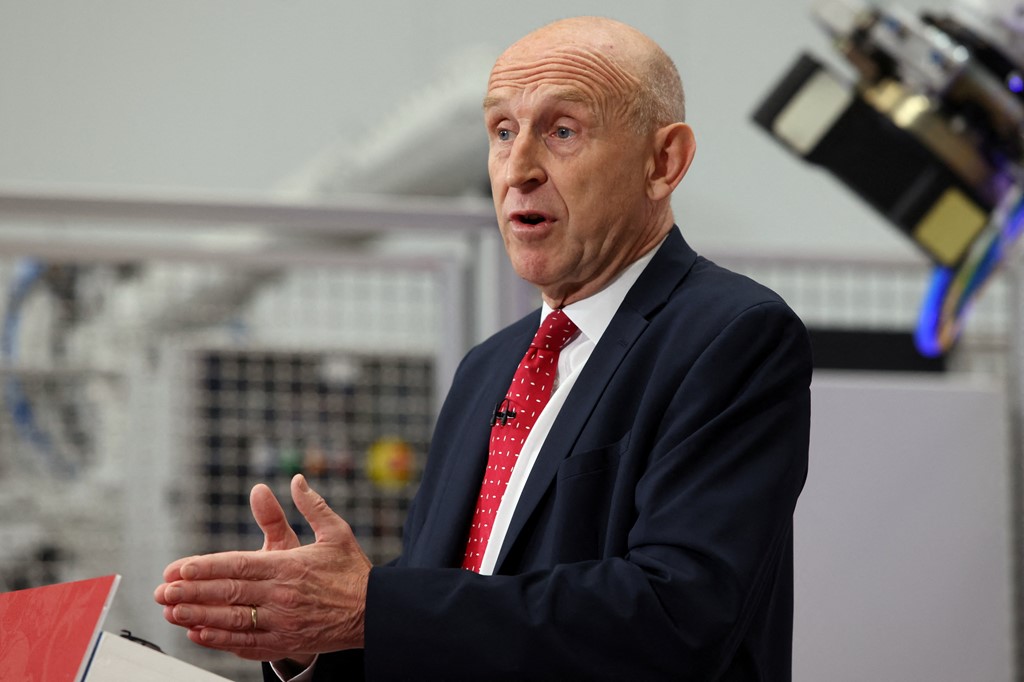
It comes as Chancellor John Healey is due to deliver his budget next week, with Prime Minister Andy Burnham previously saying that tackling the cost of living crisis was one of his priorities.
Barnard insisted that the government “must renew Labour’s manifesto promise to end the need for emergency food, start strong in his first budget, and make this a measurable goal for his government’s 10-year plan to raise living standards”.
A government spokesperson said: “Every person deserves the security of knowing they can afford to eat, keep warm and build a decent life, which is why we’re determined to turn the tide on poverty and help more people into secure jobs.”
How to get free tennis sessions
As ever, we’ll leave you with a money saving tip…and it’s great news if you are a tennis fan.
Free tennis coaching sessions are on offer as part of Barclays Big Tennis Weekends, with weekend sessions available at more than 60 venues.
The sessions across England, Scotland and Wales are organised by the Lawn Tennis Association (LTA).
To get involved, you just need to enter your postcode and find your nearest court.
The LTA recommends booking online in advance here.