

Chancellor John Healey Sets Date for the First Budget Under Prime Minister Andy Burnham as Government Faces Major Economic Test
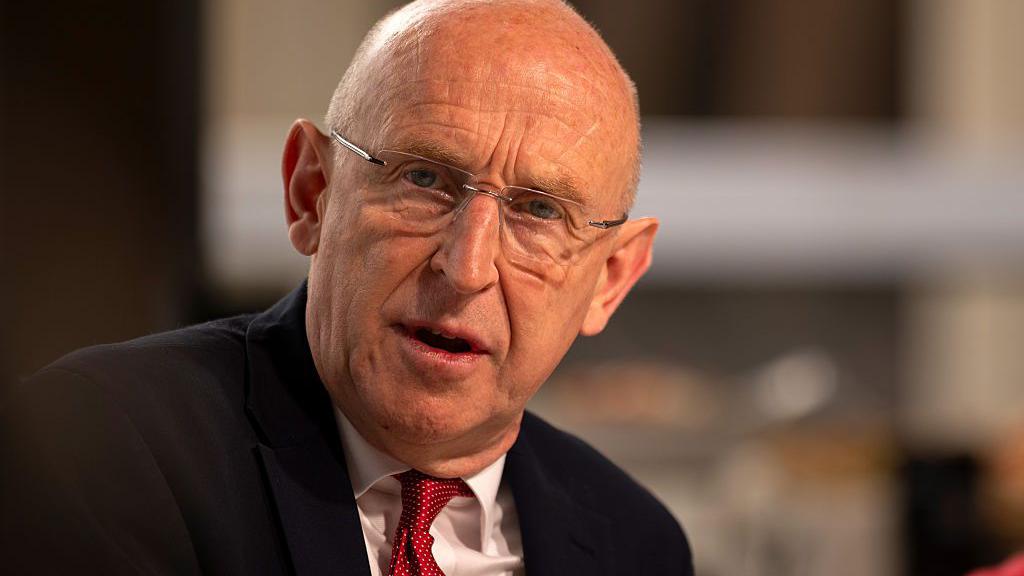
The British government has officially confirmed the date of its first Budget under Prime Minister Andy Burnham, marking one of the most anticipated moments of the new administration. Chancellor John Healey announced that he will deliver the government’s first full Budget on 28 October, promising a plan that combines fiscal discipline with Labour’s ambition to boost economic growth, strengthen public services and transfer more power from Westminster to local communities.

The announcement comes at a crucial time for the new government. Having entered office with promises to improve living standards, stimulate investment and reform public services, Burnham’s administration now faces its first major opportunity to demonstrate how those ambitions will be funded.
Financial markets, businesses, economists and millions of households across the United Kingdom will closely examine the Budget, viewing it as an early indication of the government’s long-term economic strategy.
John Healey, appointed Chancellor shortly after Burnham became Prime Minister, described the upcoming Budget as one designed to provide stability during a period of global economic uncertainty. He pledged that the government would continue to follow Labour’s existing fiscal rules, including balancing day-to-day government spending with tax revenues over the medium term while ensuring that public debt remains on a sustainable path.
These commitments are intended to reassure investors that, despite ambitious policy goals, the government will avoid excessive borrowing that could undermine confidence in Britain’s public finances.
Since taking office, Andy Burnham has announced several initiatives aimed at addressing the cost of living and promoting regional economic development. Among the measures already introduced are lower VAT on domestic electricity, continued support for affordable public transport and reductions in business rates for certain sectors. His government has also placed significant emphasis on devolving greater financial powers to regional mayors and local authorities.
Supporters argue that these policies represent a fresh approach to governing by giving local communities greater control over economic decisions rather than concentrating authority in London.
However, delivering these promises while maintaining fiscal discipline presents a considerable challenge.
Britain continues to face several economic pressures. Although inflation has eased compared with previous peaks, government borrowing costs remain elevated and public debt remains historically high. International events, including geopolitical instability, have also contributed to uncertainty in global financial markets, increasing the difficulty of long-term budget planning.
Economists note that the Chancellor has relatively limited financial flexibility. Funding additional investment in healthcare, education, transport, housing and defence while keeping borrowing under control will require careful prioritisation.
One of the government’s central themes is economic decentralisation. Burnham has repeatedly argued that too much political and financial power has remained concentrated in Westminster for decades. His administration intends to give regional governments greater authority over taxation, infrastructure investment and local economic planning.
Healey reinforced this objective when announcing the Budget, stating that more “money and power” should flow directly to communities across the country rather than remaining concentrated within central government departments.
If implemented successfully, these reforms could represent one of the most significant changes to regional government financing in modern British history.
Businesses are also watching closely for tax announcements.
Although the government has indicated that the principal rates of income tax, VAT and National Insurance are expected to remain unchanged, ministers have acknowledged that some targeted tax reforms may still be necessary to finance spending commitments. Analysts continue to speculate about possible changes affecting capital gains, property taxation or other areas of the tax system, although no final decisions have yet been announced.
For companies, predictability may prove just as important as tax reductions. Many business leaders have emphasised that long-term investment depends upon confidence that economic policy will remain stable.
Another important issue facing the Chancellor is defence spending.
The government has committed to increasing defence investment in response to changing international security conditions. However, expanding military expenditure while maintaining investment in domestic priorities such as healthcare and social care creates additional pressure on public finances. Several economists have warned that balancing these competing priorities may require difficult decisions during the Budget process.
Public services remain another major priority.
The National Health Service continues to face long waiting lists in many parts of the country, while local councils have experienced financial pressures over several years. Burnham’s government has promised improvements in healthcare, education, transport and housing, but delivering these commitments will depend largely upon the financial framework established in October’s Budget.
For ordinary households, the Budget may determine how quickly recent government promises translate into practical improvements.
Families experiencing high living costs will be looking for continued support with energy bills and essential expenses. Businesses hope for policies that encourage investment, increase productivity and stimulate economic growth without creating unnecessary uncertainty.
Investors, meanwhile, will judge whether the government’s fiscal plans appear credible over the longer term.
Political observers also recognise the symbolic importance of the Budget.
Every new government uses its first Budget to communicate priorities, establish credibility and define its governing philosophy. The decisions announced by Healey will therefore be interpreted not only as financial measures but also as a statement about the direction Burnham intends to take Britain during the coming years.
Opposition parties have already indicated that they will closely scrutinise every proposal. Critics argue that Labour’s ambitions may prove difficult to finance without either increasing taxes or reducing spending elsewhere. Government supporters respond that careful investment now can generate stronger economic growth and healthier public finances over time.
Such disagreements are entirely expected during the preparation of any national Budget, particularly one introduced by a relatively new administration.
International observers will also be paying attention.
Britain’s economic performance influences financial markets beyond its borders, and investors worldwide will examine whether the new government can successfully combine public investment with fiscal responsibility. Maintaining confidence among international investors remains an important objective for any Chancellor.
Ultimately, the Budget scheduled for 28 October represents one of the defining moments of Andy Burnham’s early premiership. It will reveal how the government intends to balance ambitious political promises with the practical realities of managing one of Europe’s largest economies.
Whether the measures announced are ultimately judged as bold reforms or cautious financial management, the decisions made on Budget Day will influence public services, businesses, investment and household finances for years to come. For Chancellor John Healey, it will be the first major test of his stewardship of the Treasury. For Prime Minister Andy Burnham, it will provide the clearest indication yet of how his government plans to turn campaign promises into economic policy.