

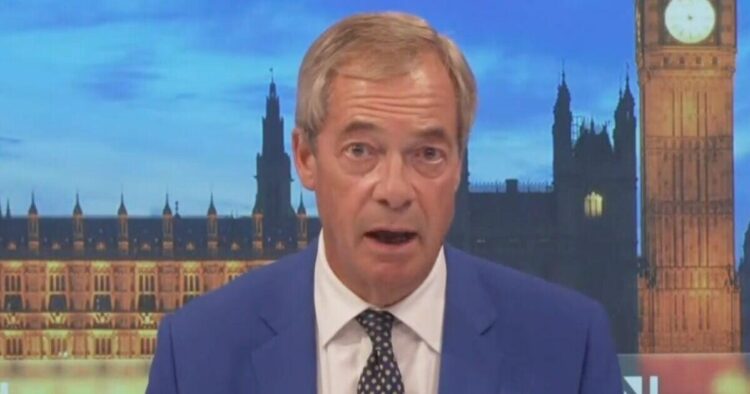
Photo: Twitter/X
Nice one, Nostradamus. Nigel Farage has been brutally mocked online on Wednesday morning, following a disastrous night for Donald Trump and the Republican Party. The Democrats have taken control of both the House and the Senate, flipping several red states in the 2026 Midterm Elections.
‘He won’t get absolutely smashed’, Nigel Farage said, hours before Donald Trump got absolutely smashed in the midterms
Trump heartlands of Texas, Kansas, and Ohio all comprehensively rejected the current administration and candidates endorsed by POTUS. The scale of the victory means, for the first time since the 80-year-old returned to office, his power and ability to force-through policies will be limited.
The near-certainty of a lame duck presidency certainly doesn’t come without risk, and a wounded Donald Trump is a dangerous thing indeed. There are fears that there could be significant escalations against Iran, compounded by substantial capitulations to Russia and its aggression towards Ukraine.
However, none of that takes away from the resounding defeat that has just been handed to the Republican leader. Democrats mobilised. Americans made their voices heard. And, quite frankly, anyone with even an iota of foresight could have seen this battering from a mile away.
Then, there’s Nigel Farage. The Reform leader, who has been Trump’s leading acolyte in the UK, failed to remove the blinkers on Tuesday. Speaking on GB News, he was bullish about Mr. Trump pulling off another surprise election victory. His judgment, however, appeared woefully impaired.
Don’t quit the dayjob! Reform annihilated over Trump prediction
Farage confidently stated that Trump ‘would not get absolutely smashed’. He did. There was also prediction that Americans would be ‘in for a big surprise’. And no, he wasn’t referring to a state like Kansas turning blue for the first time in over 90 years. Nigel was adamant that it would all come good.
Alas, he would be left bitterly disappointed. The whole statement is a hilarious post-mortem of misplaced hubris – especially given that Nigel Farage thought Elon Musk’s half-a-billion dollar war chest would make a difference. ‘Must has not spent his own money for fun’, he argued.
Well. He may as well have done…
“I don’t go with the consensus that Donald Trump is going to get absolutely smashed. I think this Republican Party is way better than it was 10 years ago when he first became president. And Elon Musk hasn’t chucked in $450 million dollars of his own money for fun. He’s helping.”
“Of course, the Iran War and the cost of fuel are not good. But look at the opponents! Who leads the Democrats? You’ve now got this new hard left coming in. So I think for all those reasons, we’re in for a big surprise tonight – Trump won in 2016, and that was against all the odds.” | Nigel Farage
FARAGE DROPS AN ELECTION PREDICTION BOMBSHELL AFTER TRUMP’S REPUBLICAN PARTY SUFFERS HISTORIC MIDTERM DEFEAT
Nigel Farage has been left facing intense criticism after confidently predicting that Donald Trump’s Republicans would avoid a crushing defeat in the 2026 American midterm elections. Just hours after making his prediction on GB News, the results began exposing a dramatically different political reality, with Democrats securing control of both chambers of Congress.
The Reform UK leader had dismissed warnings that Trump’s party was heading towards an electoral disaster, arguing that Republicans were better organised than they had been during Trump’s first presidency.
But the election results proved otherwise.
Farage subsequently admitted that he had got his prediction wrong, describing the Republican performance as a complete wipeout and an absolute shellacking.
The embarrassing reversal has generated criticism from political commentators and reopened questions about Farage’s close relationship with the American president.
More importantly, it has raised a wider question: has the Reform UK leader become too closely associated with Trump’s political fortunes?
THE PREDICTION THAT QUICKLY BACKFIRED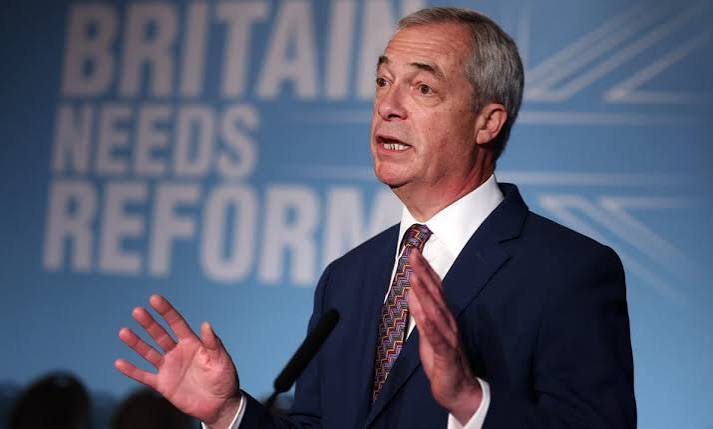
The controversy began on Tuesday, 3 November 2026, when Farage appeared on GB News to discuss the American midterm elections.
With voters heading to polling stations across the United States, the Reform leader was asked whether he believed Republicans could suffer the heavy losses predicted by several political commentators.
His response was confident.
Farage said:
“I don’t go with the consensus that Trump’s going to get absolutely smashed.”
He argued that the Republican Party was considerably stronger than it had been ten years earlier.
He also pointed to the party’s improved campaigning operation and the financial support provided by billionaire entrepreneur Elon Musk.
Farage suggested that Musk’s substantial financial contribution would help Republicans mobilise supporters and improve their chances of success.
He even suggested that Americans could be in for a big surprise.
However, the results began arriving within hours, and the political picture quickly changed.
Democrats made substantial gains, taking control of both the House of Representatives and the Senate.
Several states that had traditionally supported Republicans also delivered significant Democratic victories.
Farage’s confident prediction had been overtaken by events.
<Cite refs={[“turn261460search0″,”turn261460search1”]}/>
DEMOCRATS DELIVER A MAJOR BLOW TO TRUMP
The 2026 midterm elections represented a serious setback for Donald Trump and the Republican Party.
Midterm elections traditionally provide American voters with an opportunity to express their satisfaction or dissatisfaction with the sitting president’s administration.
Although Trump was not personally standing for re-election, his policies became a central issue throughout the campaign.
Democratic candidates focused heavily on economic concerns, rising fuel prices and the consequences of the ongoing war with Iran.
Their campaign also challenged the administration’s approach to immigration and the cost of living.
The results demonstrated the extent of the political difficulties facing Republicans.
Democrats secured control of both congressional chambers, limiting Trump’s ability to advance his legislative programme without negotiating with the opposition.
For Farage, who had publicly defended Trump’s political strategy, the outcome created an uncomfortable situation.
His prediction had not simply been slightly inaccurate. The scale of the Democratic victory contradicted the central argument he had made on television.
The London Economic subsequently mocked Farage’s failed forecast, while other commentators questioned whether his political judgment had been affected by his admiration for Trump.
<Cite refs={[“turn261460search1″,”turn261460search2″,”turn261460search4”]}/>
FARAGE ADMITS: “I WAS WRONG”
Perhaps the most significant moment came after the results became clear.
Rather than continuing to defend his earlier prediction, Farage publicly acknowledged that he had made a mistake.
Speaking to broadcasters on Thursday, 5 November, he said:
“I was wrong.”
He explained that he had expected Elon Musk’s financial support, technology and Republican get-out-the-vote operation to limit the party’s losses.
However, the strategy had failed to deliver the result he anticipated.
Farage described the outcome as:
“A complete wipeout, an absolute shellacking for the Republicans.”
He also complained that political commentators frequently ignored his successful predictions while giving considerable attention to the occasions when he got things wrong.
Nevertheless, his admission represented a clear acknowledgment that his assessment of the American political situation had been inaccurate.
The episode also highlighted the risks of making highly confident predictions before election results are known.
Political forecasting involves interpreting polling, voter behaviour, campaign strategies and economic conditions. Even experienced politicians can misjudge how these factors will combine on election day.
But when a politician makes a prediction publicly and repeatedly, the eventual result can become a measure of their judgment.
<Cite refs={[“turn261460search0″,”turn261460search8”]}/>
ELON MUSK’S MILLIONS FAILED TO SAVE THE REPUBLICANS
One of Farage’s central arguments before the election concerned Elon Musk’s financial involvement in Republican campaigning.
He suggested that Musk’s enormous financial contribution would provide Republicans with an important advantage.
Musk had reportedly spent approximately $445–446 million during the 2026 election cycle, making him one of the most significant political donors in the United States.
Farage believed that the money would help improve Republican campaigning and voter mobilisation.
However, the election results demonstrated that financial resources alone cannot guarantee electoral success.
Democratic candidates were able to build strong campaigns around economic concerns and dissatisfaction with the administration.
The result raises an important question about the relationship between campaign spending and voter behaviour.
Money can help political parties organise campaigns, communicate with supporters and mobilise voters.
But it cannot automatically persuade people that a government’s policies are working.
When voters are concerned about fuel prices, inflation and international conflict, campaign donations may have limited influence over their underlying frustrations.
The Republican defeat therefore provides an important example of the limitations of relying on financial resources to overcome wider political dissatisfaction.
<Cite refs={[“turn261460search5″,”turn261460search6”]}/>
THE IRAN WAR BECOMES A MAJOR PROBLEM
Another important factor behind the Republican defeat was the continuing military conflict with Iran.
Farage had previously supported aspects of the American and Israeli military operation, arguing that preventing Iran from developing nuclear weapons was an important international security objective.
However, as the conflict continued, the economic consequences became increasingly difficult to ignore.
Rising fuel prices placed additional pressure on American households and businesses.
For voters already concerned about the cost of living, the war became another source of economic uncertainty.
Following the election, Farage began openly criticising Trump’s handling of the conflict.
He argued that the American president had broken an important promise to voters by becoming involved in another prolonged foreign war.
Farage also warned that further military escalation could push oil prices higher and create additional inflationary pressure.
This change in tone attracted attention because Trump had previously been one of Farage’s closest international political allies.
The Reform leader was now acknowledging that the president’s decisions had contributed to the Republican defeat.
It was a significant moment in their political relationship.
<Cite refs={[“turn261460news9″,”turn261460search7”]}/>
HAS FARAGE BECOME TOO CLOSE TO TRUMP?
The failed prediction has also reopened discussion about Farage’s relationship with Donald Trump.
For years, Farage has openly praised the American president and presented his political movement as an example of how populist politics can challenge established institutions.
Their relationship has provided Farage with international recognition and reinforced his position within the wider nationalist political movement.
However, the Republican defeat creates a potential difficulty.
If Trump becomes increasingly unpopular among American voters because of economic and foreign-policy decisions, British politicians closely associated with him may face uncomfortable questions.
The political circumstances in Britain are different from those in the United States.
British voters do not necessarily judge Reform UK according to American congressional results.
Nevertheless, Farage’s close association with Trump makes developments in Washington relevant to discussions about his own political identity.
Critics argue that his enthusiasm for Trump sometimes prevents him from recognising the weaknesses of the American president’s political strategy.
Supporters, meanwhile, may view his willingness to acknowledge mistakes as evidence that he can revise his position when circumstances change.
The important distinction is between supporting particular political ideas and automatically defending every decision made by an international ally.
WHY THIS MATTERS FOR REFORM UK
The American midterm defeat also creates questions about Reform UK’s wider political strategy.
Farage has frequently used Trump’s political success to demonstrate that established political parties can be challenged by movements promising major changes to immigration, government spending and national sovereignty.
But the Republican results show that political movements can lose support when voters become dissatisfied with their economic and foreign-policy records.
For Reform UK, the lesson is particularly relevant.
British voters are concerned about household bills, housing, healthcare, taxation and immigration.
They will ultimately judge political parties according to whether their proposals address these issues.
The American election cannot determine Reform UK’s future, but it provides an opportunity to examine the risks of becoming too closely identified with another country’s political movement.
Farage must therefore explain which aspects of Trump’s approach he supports, which he disagrees with and how Reform’s policies would operate independently in Britain.
FINAL VERDICT: FARAGE’S BIG PREDICTION BECOMES A POLITICAL HEADACHE
Nigel Farage’s prediction that Donald Trump’s Republicans would avoid a crushing midterm defeat has become one of the most widely discussed political moments following the American election.
He confidently dismissed warnings of a Republican rout, highlighted Elon Musk’s financial support and suggested that voters could produce a major surprise.
Instead, Democrats secured control of both chambers of Congress.
Farage subsequently admitted that he was wrong and described the Republican performance as a complete wipeout.
His response to the defeat has also revealed growing differences over Trump’s handling of the Iran war.
Although Farage has not abandoned his friendship with the American president, his criticism demonstrates that the relationship is not without limits.
Ultimately, the episode is about more than one failed prediction.
It highlights the risks politicians face when they become closely associated with international leaders whose decisions can have significant economic and political consequences.
For Farage, the immediate challenge is explaining why his confidence in Trump’s electoral position was misplaced.
For Reform UK, the broader challenge is demonstrating that its political identity and policies can stand independently of the fortunes of the MAGA movement.
The American election has delivered a clear result. The debate over what it means for British politics, however, is only beginning.