
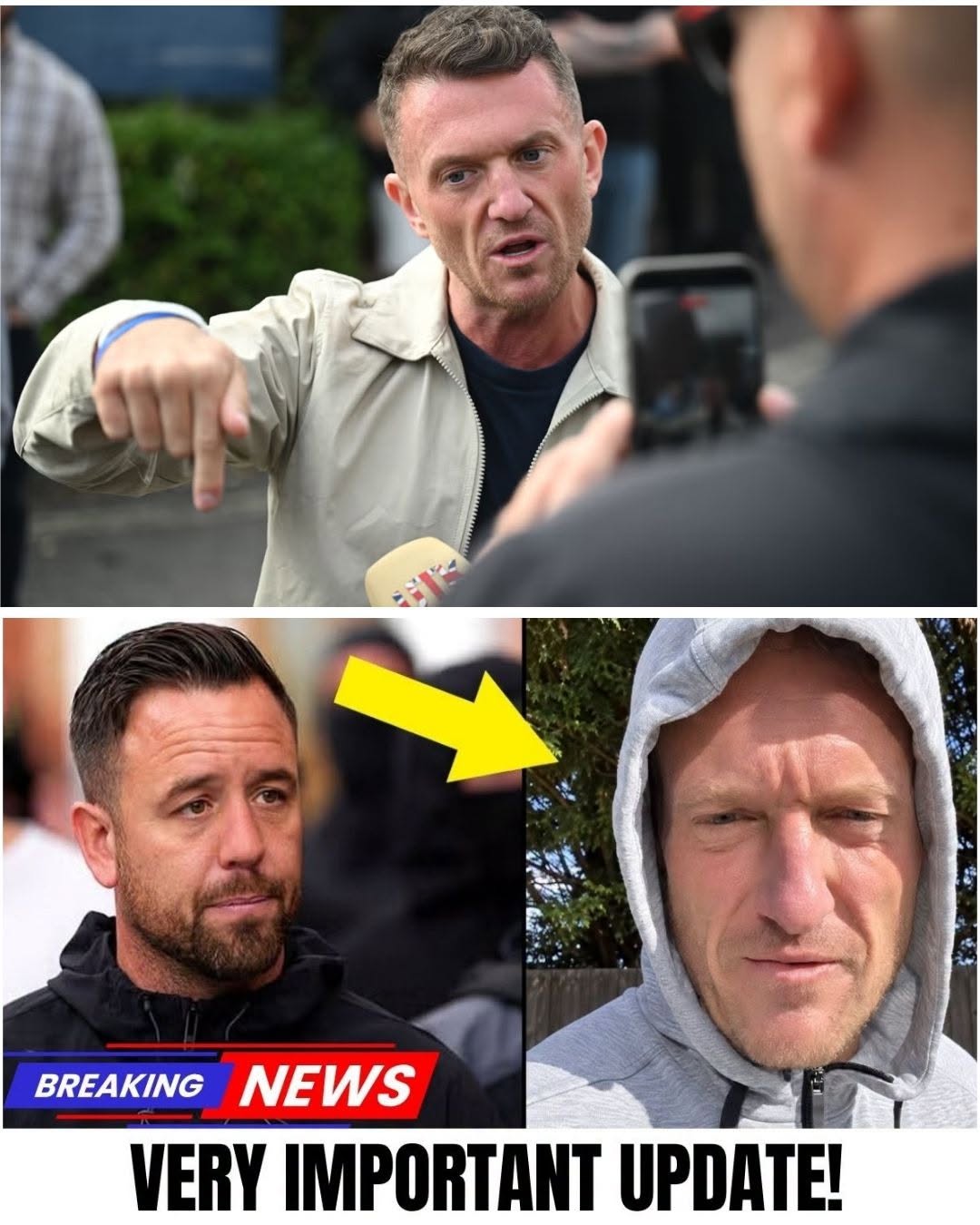
Daniel Thomas Court Case Puts Spotlight on Channel Protests as Legal Battle Moves to Crown Court
A high-profile criminal case involving anti-migration activist Daniel Thomas, better known to supporters as “Danny Tommo,” has become the latest flashpoint in Britain’s increasingly heated debate over small-boat crossings, political protest and the limits of direct action.
Thomas, 37, has pleaded not guilty to two charges after an incident in the English Channel in which he is accused of damaging an inflatable boat. He has been remanded in custody and elected to have the case heard at Crown Court, bringing the proceedings to Portsmouth and ensuring that the allegations will now receive further judicial scrutiny.
The case has also attracted the involvement and attention of Stephen Yaxley-Lennon, better known as Tommy Robinson, who attended Thomas’s earlier appearance at Basingstoke Magistrates’ Court.
But some of the dramatic claims circulating online about a supposed political “strategy,” a government “nightmare” or a surprise planned for the hearing remain difficult to substantiate through reliable reporting. What is confirmed is already significant: Thomas faces criminal proceedings, denies wrongdoing, has chosen a Crown Court trial, and has become a focal point for supporters angered by the government’s immigration and border policies.
What Thomas Is Accused Of
The criminal damage allegation relates to an incident in the Channel on September 22.
Prosecutors told Basingstoke Magistrates’ Court that Thomas used a knife to damage an inflatable boat while an emergency responder was still aboard. The court heard that air could be heard escaping from the vessel. Thomas is also accused of failing to disclose the PIN to his mobile phone after police requested it under the Regulation of Investigatory Powers Act 2000.
Thomas has pleaded not guilty to both charges.
That distinction is important. The allegations have generated intense discussion on social media, but they remain allegations that must be tested through the judicial process. The Crown Prosecution Service has similarly reminded the public that proceedings are active and that Thomas has the right to a fair trial.
His defence has also sought to separate the specific criminal allegations from the wider political controversy surrounding him.
Simon Pentol KC, representing Thomas, told the magistrates’ court that his client was not charged with political activism. The defence position is therefore likely to focus on the particular offences alleged rather than allowing the case to become a general judgment on Thomas’s political campaigning.
Thomas elected to have both charges tried before a jury at Crown Court. His next hearing was set for September 29 at Portsmouth Crown Court.
Bail Decision Raises the Stakes
One of the most consequential developments at the first hearing was the decision to refuse Thomas bail.
Deputy Senior District Judge Tan Ikram sent the case to Portsmouth Crown Court and indicated that there was a real possibility of an immediate custodial sentence if Thomas were ultimately convicted. That does not predict the outcome of the case; Thomas continues to deny the charges and is legally presumed innocent unless proven guilty.
His personal circumstances were also raised by his defence.
The court heard that Thomas lives with his long-term partner and four children, that his partner is pregnant, and that he works as a professional roofer and provides financially for his family. His barrister also said the family had experienced threats connected with Thomas’s political activism.
Those circumstances appear to be behind some online references to the case threatening a family’s financial security. They are relevant to arguments surrounding bail and Thomas’s personal circumstances, but they do not determine whether the criminal allegations themselves are proven.
Tommy Robinson Appears at Court
The presence of Tommy Robinson added another political dimension to the proceedings.
Robinson attended Basingstoke Magistrates’ Court and sat in the public gallery while Thomas appeared via video link. Several hundred supporters had also gathered outside a police investigation centre in Basingstoke the previous evening, believing Thomas was being held there. Police maintained a significant presence during the demonstration.
Robinson’s involvement has encouraged speculation about a broader campaign around Thomas’s prosecution. However, reliable reporting reviewed for this article does not establish the more dramatic claim that Robinson has disclosed an “ultimate strategy” capable of producing a major political or governmental crisis.
Any such claims should therefore be treated as political rhetoric or unverified social-media commentary unless supported by direct, verifiable evidence.
A Wider Battle Over Anti-Migration Protests
The case cannot be completely separated from the broader political environment in which it has emerged.
Thomas founded Patriot Platform, an anti-migration movement that has been involved in demonstrations in places including Dover and Portsmouth. Some recent protests have involved masked participants, road blockages and confrontations with police surrounding migrant arrivals.
Supporters argue that such activism reflects deep frustration with successive governments’ inability to prevent irregular Channel crossings. Critics, meanwhile, say increasingly confrontational tactics risk intimidation, disorder and interference with emergency or rescue operations.
Government figures have strongly criticised some of the demonstrations. Recent reporting has described ministers condemning actions associated with masked anti-migration groups as intimidating or unacceptable.
The political debate, however, is separate from the question before the courts.
Whether Britain’s immigration system is effective, whether demonstrations against it are justified, and whether government policy should change are political questions. Whether Thomas committed the specific offences alleged against him is a legal question that will be determined through evidence and criminal procedure.
Why the Portsmouth Proceedings Matter
The move to Crown Court means the case is entering a more consequential stage, but the upcoming hearing should not be confused with the trial itself or treated as proof that either side has prevailed.
It is also possible that supporters will continue to use the proceedings as a rallying point. Thomas has built a substantial online profile, and his arrest and prosecution have already generated demonstrations and considerable social-media attention.
That creates an additional challenge: separating what happens inside the courtroom from the political narratives developing outside it.
Claims of a secret legal manoeuvre, a dramatic government confrontation or a predetermined outcome should be approached cautiously unless they emerge in court documents, statements from lawyers or independently verified reporting.
For now, the established facts are considerably narrower.
Daniel Thomas has been charged with criminal damage and failing to disclose his phone PIN. He denies both allegations. He was refused bail, elected Crown Court trial and was remanded in custody pending proceedings at Portsmouth Crown Court. Tommy Robinson has publicly supported him and attended his earlier hearing.
Everything beyond those facts — particularly predictions that the case could somehow “shatter the UK” or produce a government crisis — belongs to the political argument surrounding the proceedings rather than to the established legal record.
What happens next will therefore be important not because a dramatic outcome is guaranteed, but because the courtroom will begin the process of separating evidence from accusation and legal arguments from the much larger political confrontation unfolding around Britain’s borders.
BREAKING: THE COURTROOM CLASH THAT COULD SHATTER THE UK!
Britain’s latest courtroom controversy has reignited a fierce national debate over free speech, journalism, online intimidation and the limits of political activism. A high-profile case involving activist Tommy Robinson has placed these issues under an intense spotlight, raising difficult questions about accountability, public debate and the consequences of turning personal disputes into nationwide political battles.
On 28 October 2026, a jury at Southwark Crown Court found Robinson, whose real name is Stephen Yaxley-Lennon, guilty of harassing two journalists. The case concerned allegations that his online posts and communications had caused the reporters to fear violence. The verdict marked a significant development in a trial that had attracted considerable attention from supporters, critics and observers of British politics.
Robinson has rejected the accusations against him and presented his actions as a response to reporting that he believed endangered his family. Prosecutors, however, argued that his conduct went beyond criticism and had serious consequences for the journalists involved.
The case is now entering another important stage, with sentencing scheduled for 16 December. According to reporting by The Guardian, Robinson faces a maximum potential prison sentence of ten years for the offences, although the actual sentence will be a matter for the court.
The verdict does not mean that Britain itself is on the verge of collapse. But the controversy has exposed divisions over how free expression, public accountability and personal safety should be balanced in an increasingly confrontational political environment.
What Happened in Court?
The case followed events in August 2024, when MailOnline published a report about Robinson’s activities and whereabouts in Cyprus. The subsequent dispute involved social media posts, messages and a telephone call directed at journalists Andrew Young and Jacob Dirnhuber.
Prosecutors argued that Robinson’s communications amounted to harassment and caused the reporters to fear violence. The court heard that the journalists and their families experienced serious disruption, including concerns about their personal safety. Reporting by the Associated Press said some of those affected had to leave their homes or arrange additional security.
Robinson offered a different account of his behaviour. During his evidence, he said he had been shocked and frightened by the reporting and believed that the journalists had put his family at risk. He argued that his communications were intended to challenge or confront the reporters rather than to carry out violence against them.
Those competing accounts formed part of the dispute the jury was required to assess. The verdict means the jury found the relevant charges proved beyond reasonable doubt; it does not mean that every allegation or interpretation aired publicly during the case has been established as fact.
The distinction is important because high-profile trials often generate commentary that extends far beyond the precise issues decided in court.
A Wider Argument About Free Speech
The case has become a focal point for a broader question: where should the boundary lie between forceful criticism and conduct that amounts to unlawful harassment?
In a democratic society, activists, journalists, politicians and members of the public must be able to criticise one another. Investigative reporting can be controversial, and public figures have legitimate reasons to challenge stories they believe are inaccurate or unfair.
But freedom of expression does not give anyone unlimited permission to threaten or intimidate another person. The law can distinguish between robust criticism and a course of conduct that crosses the legal threshold for harassment.
The difficulty lies in applying those principles consistently, particularly when the people involved have large online audiences and the dispute has political significance.
Supporters of Robinson may view the case through concerns about media power, political bias and the treatment of controversial voices. Critics may regard the verdict as a reminder that journalists should be able to investigate public figures without being subjected to intimidation.
These perspectives are part of the public debate, but neither determines the legal outcome. The jury’s task was to consider the evidence and decide whether the prosecution had proved the charges.
The wider lesson is that public disagreement must be examined through evidence rather than assumptions about a person’s political identity.
The Impact on Journalists and Their Families
One of the most serious aspects of the case concerns the effect of the disputed conduct on the journalists and their families.
Reporting on controversial individuals can involve difficult decisions about what information to publish and how to protect sources, staff and the public. Journalists may face angry responses to their work, particularly when stories attract large audiences or challenge a prominent activist’s account of events.
Criticism of journalism is legitimate. Newspapers can make mistakes, and reporters should be held accountable for inaccurate or unfair reporting. However, a dispute over a published article should not automatically become a personal confrontation involving threats or fear for family safety.
The evidence described in court reporting illustrates how online disputes can move beyond the original publication and affect people away from the public spotlight.
That does not mean journalists should be immune from criticism. It means criticism, complaints and legal challenges should be distinguished from behaviour that a court finds to constitute harassment.
For news organisations, the case also raises questions about staff security and the risks associated with reporting on people who command highly engaged online followings. Protecting journalists is not merely a private concern for media companies; it is connected to the public interest in allowing reporting to take place without unlawful intimidation.
Why the Case Has Become Politically Significant
Robinson has long been a polarising figure in British public life, particularly in debates involving immigration, national identity, protest and trust in established institutions.
His supporters often describe him as a campaigner who challenges powerful organisations and raises issues they believe mainstream politicians and media outlets neglect. His critics point to his record of controversial activism and argue that his methods can contribute to hostility and division.
The courtroom verdict has therefore been interpreted through competing political narratives. Some supporters may regard the proceedings as evidence of an establishment hostile to dissent, while opponents may see the result as a demonstration that public prominence does not place someone above the law.
Neither interpretation should be accepted automatically as a complete explanation of the case.
A criminal trial is not a referendum on an individual’s entire political movement. The jury was asked to decide specific charges on the evidence presented, not to determine the future of British politics or settle every dispute about the media.
Equally, the verdict is likely to become part of the wider discussion about the relationship between online platforms, political mobilisation and public order. When political personalities can reach large audiences instantly, their statements may have consequences beyond the immediate exchange in which they were made.
The challenge for democratic debate is to preserve the ability to challenge authority while recognising that public influence comes with responsibilities.
What Happens Next?
The next major development is the sentencing hearing scheduled for 16 December 2026. Until the court determines the sentence, it would be premature to assume that Robinson will receive the maximum penalty or to present a particular outcome as inevitable.
The judge will consider the relevant legal principles and circumstances of the offences when deciding the appropriate sentence. The outcome will be distinct from the jury’s verdict, which established guilt on the charges before it.
The case may also continue to generate public argument about the relationship between activism, journalism and the justice system. Appeals or further legal developments, if they occur, would need to be assessed on their own merits rather than anticipated as certainties.
For now, the verdict provides a clear legal result on the charges the jury considered. It does not, by itself, resolve the broader political disagreements that helped make the trial so prominent.
A Test for Britain’s Public Debate
The phrase “the courtroom clash that could shatter the UK” captures the dramatic tone surrounding the case, but it overstates what a single verdict can establish. Britain faces genuine disagreements about free expression, media trust, political activism and personal safety. Those disagreements are unlikely to disappear because one trial has concluded.
The more important question is how the country handles such disputes.
A healthy democracy must allow people to criticise journalists, challenge public institutions and campaign for political change. It must also protect individuals from unlawful harassment and intimidation, regardless of their profession, political position or public profile.
The same standards should apply to everyone. Political loyalty should not determine whether evidence is taken seriously, and public outrage should not replace careful consideration of legal decisions.
The Robinson case has placed these principles under intense scrutiny. Its consequences will be debated well beyond the courtroom, particularly as the sentencing hearing approaches.
But the future of the United Kingdom will not be decided by sensational headlines alone. It will depend on whether public institutions apply the law fairly, whether media organisations maintain credible standards and whether political disagreements can be pursued without turning opponents into targets.
The courtroom has delivered its verdict. The wider debate over the responsibilities that come with public influence is only beginning.