
The record figures come at a highly precarious moment for Prime Minister Andy Burnham’s administration.
The surge in arrivals follows the controversial admission by Education Secretary Lucy Powell, who earlier on Thursday stated during a radio interview that the government “can’t stop everything all of the time” in reference to border enforcement.
Powell’s comments were prompted by the revelation that at least three migrant dinghies recently breached the UK border undetected by newly upgraded coastal surveillance systems, prompting Home Secretary Shabana Mahmood to launch an urgent review.
Advertisement
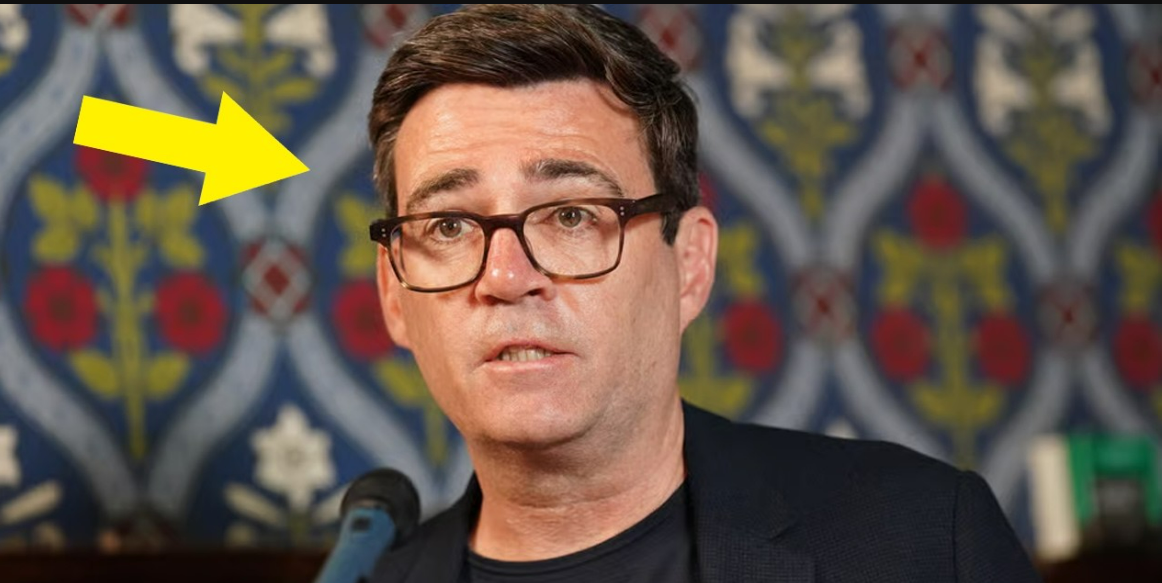
The combination of undetected landings, the highest daily arrival figures of 2026, and Powell’s comments have ignited fierce backlash from right-wing political figures and commentators.
Opponents argue the government’s previous claims that its border policies were working—citing an overall 42% decrease in channel crossings this year—are misleading.
Critics point out that illegal entries into France and broader Europe have also fallen by 42%, suggesting the drop in UK arrivals is due to broader regional trends and weather conditions rather than effective domestic policy.
Nigel Farage and the Reform UK party have aggressively capitalized on the situation, accusing the Labour government of effectively surrendering border control.
The frustration has also been echoed by prominent activists.
Advertisement
In a recent video, right-wing figure Tommy Robinson heavily criticized the government’s handling of the crisis, linking the border situation directly to domestic safety concerns.
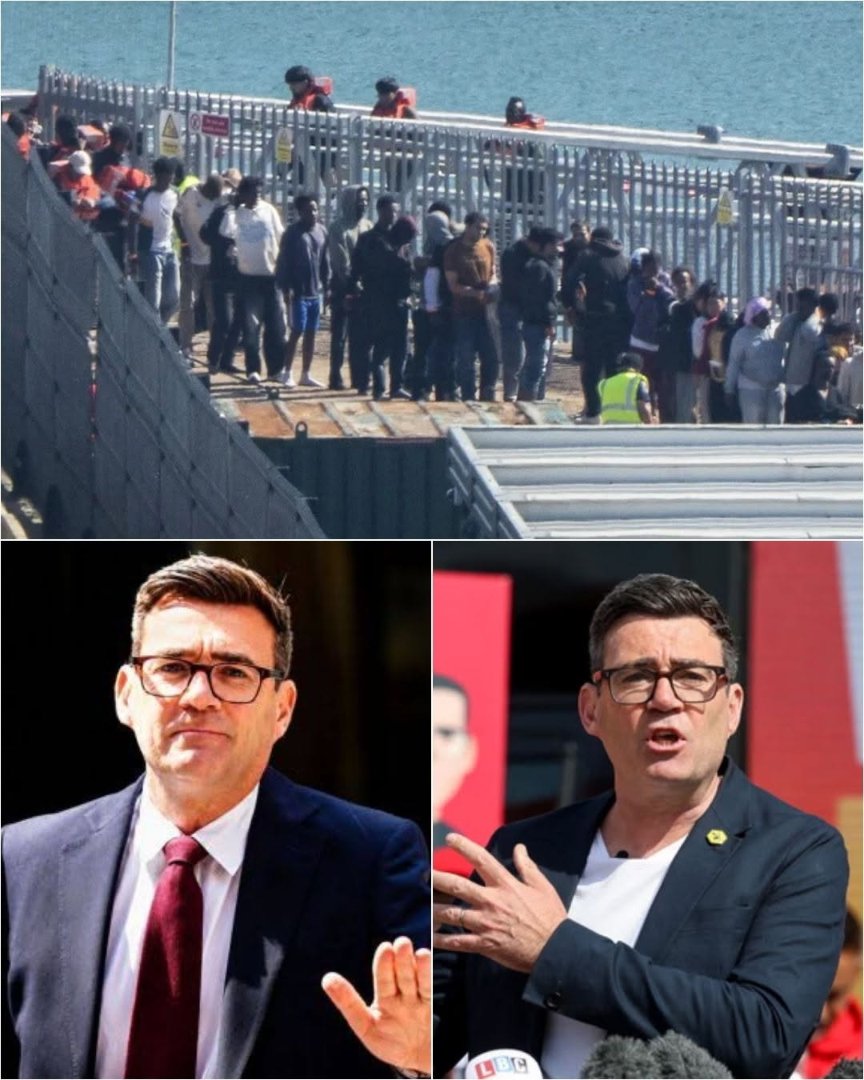
Robinson accused the government of a “massive crackdown against nationalists and patriots” while failing to secure the nation’s borders.
Advertisement
He referenced his own recent questioning by counter-terrorism officers at Luton Airport, as well as the arrest of an associate, Danny Tommo, who was reportedly detained for reckless endangerment of life following an incident involving a migrant boat.
Robinson argued that it is the government, not activists, who should be charged with reckless endangerment for “dumping” unvetted migrants into British communities.
Advertisement

As the political fallout intensifies, the Labour government finds itself increasingly caught between defending its border enforcement record and managing severe domestic criticism over public safety and national security vulnerabilities.
The situation remains deeply volatile as opposition forces demand stricter enforcement and immediate deportations to stem the flow of small boats.
BORDER CRISIS EXPLOSION: LABOUR FACES MASSIVE FURY AS RECORD-BREAKING 781 MIGRANTS CROSS THE ENGLISH CHANNEL IN A SINGLE DAY!
Britain’s immigration debate has erupted into another fierce political confrontation following reports that 781 people crossed the English Channel in small boats in a single day. The dramatic figure has intensified pressure on the Labour government, reignited arguments over border security, and raised fresh questions about whether Britain’s current migration strategy is delivering the results voters were promised.
For communities across the country, immigration remains one of the most sensitive political issues. Concerns about accommodation, public services, housing availability, and the effectiveness of border controls have continued to dominate discussions.
The latest reported arrivals have therefore created another difficult moment for Labour, with opposition politicians demanding urgent explanations and stronger action.
But behind the headlines lies a complicated situation involving international cooperation, organised criminal networks, asylum law, and the safety of people attempting dangerous journeys across one of the world’s busiest shipping routes.
781 ARRIVALS SPARK A POLITICAL STORM
The reported arrival of 781 people in a single day immediately attracted national attention.
The scale of the crossing highlighted the continuing difficulties faced by British authorities in managing irregular migration across the Channel.
Small boats carrying large numbers of passengers remain a major challenge for Border Force and maritime rescue teams.
The English Channel is an extremely busy maritime environment, with unpredictable weather, strong currents, and commercial shipping traffic.
People travelling in overcrowded inflatable boats face serious risks, particularly when conditions deteriorate.
For the government, the latest figures raise an uncomfortable question: how can ministers convince the public that Britain’s borders are being effectively managed when such large numbers can arrive within a single day?
LABOUR FACES GROWING PRESSURE
The Labour government has repeatedly promised to tackle people-smuggling networks and improve the management of Britain’s asylum system.
Ministers have argued that the problem requires international cooperation rather than relying exclusively on increased patrols.
Their strategy has focused on intelligence-sharing, cooperation with French authorities, investigations into criminal networks, and improvements to asylum processing.
However, opposition politicians argue that the government must demonstrate more visible results.
They believe that continued small-boat arrivals undermine public confidence and show that existing measures are insufficient.
The government, meanwhile, argues that daily figures can fluctuate considerably depending on weather conditions, seasonal patterns, and the activities of smuggling organisations.
A proper assessment must consider longer-term trends rather than treating one exceptionally busy day as proof of overall policy failure.
Nevertheless, the political pressure is undeniable.
NIGEL FARAGE AND REFORM UK DEMAND TOUGHER ACTION
Nigel Farage has repeatedly placed immigration at the centre of Reform UK’s political agenda.
The Reform leader argues that Britain needs stronger border enforcement, faster asylum decisions, and a much tougher response to organised people-smuggling operations.
The latest reported arrivals provide another opportunity for Farage to challenge Labour’s record.
Reform UK supporters argue that the government has failed to establish sufficient control over irregular migration.
They also question whether existing agreements with France are producing meaningful improvements.
However, critics of Reform’s proposals argue that stopping small boats involves complicated legal and humanitarian responsibilities.
Maritime authorities must consider the safety of passengers, the risk of drowning, and Britain’s obligations under international law.
The political disagreement therefore goes beyond the question of how many people arrive. It concerns how the country should balance border enforcement with humanitarian responsibilities.
THE PEOPLE-SMUGGLING BUSINESS BEHIND THE CRISIS
One of the most serious aspects of Channel migration involves the criminal organisations that arrange dangerous crossings.
People-smuggling networks can exploit vulnerable individuals by charging substantial sums for journeys in unsuitable boats.
Passengers may be promised safe transportation, despite travelling in overcrowded vessels with inadequate safety equipment.
British and French authorities have attempted to disrupt these organisations through arrests, investigations, financial intelligence, and international cooperation.
However, these criminal networks can be difficult to dismantle.
They may operate across several countries, use intermediaries, and change their arrangements when enforcement becomes stronger.
This is why experts frequently argue that tackling people-smuggling requires more than simply increasing coastal patrols.
It requires sustained cooperation between law-enforcement agencies, financial investigators, intelligence services, and international partners.
THE HUMAN COST OF DANGEROUS CHANNEL CROSSINGS
While political arguments dominate the headlines, the human consequences must not be forgotten.
The Channel is a dangerous place to attempt a crossing in a small inflatable boat.
Overcrowding, mechanical failures, cold temperatures, and rough weather can turn an already risky journey into a life-threatening emergency.
Some people attempting to reach Britain are fleeing war, persecution, and serious threats to their safety.
Others may be seeking employment, family reunification, or better economic opportunities.
Their individual circumstances differ, and every asylum application must be assessed according to the relevant legal requirements.
Regardless of political disagreements, preventing deaths at sea remains an essential responsibility.
An effective immigration policy must therefore address both the criminal networks encouraging dangerous crossings and the humanitarian risks faced by passengers.
LOCAL COMMUNITIES WANT ANSWERS
The controversy does not end when people arrive on British shores.
The government must also provide appropriate accommodation for individuals whose asylum applications are being processed.
The use of hotels has become particularly controversial because of the financial costs involved and the concerns raised by surrounding communities.
Some areas have also faced proposals to use former military facilities as alternative accommodation sites.
Residents have questioned whether local healthcare services, transport networks, housing infrastructure, and other public facilities can cope with additional demand.
These concerns deserve serious consideration.
Local communities should receive clear information about proposed accommodation arrangements and meaningful opportunities to raise questions.
At the same time, asylum seekers must be treated fairly and provided with accommodation that meets the relevant legal standards.
The government faces the difficult task of balancing these responsibilities.
WHY THE BORDER DEBATE COULD SHAPE LABOUR’S FUTURE
Immigration has become one of the defining political challenges facing the Labour government.
Voters are increasingly interested in whether ministers can demonstrate that the asylum system is efficient, that immigration rules are enforced, and that public money is being spent responsibly.
The issue also creates opportunities for opposition parties to challenge Labour’s credibility.
For Nigel Farage, border security remains a major opportunity to attract voters who believe traditional political parties have failed to address their concerns.
For Labour, the challenge is to show that its policies can produce measurable improvements without abandoning Britain’s legal and humanitarian obligations.
The consequences could extend beyond immigration itself.
Public confidence in government depends heavily on whether voters believe ministers can manage complicated national problems effectively.
WHAT HAPPENS NEXT?
The government will face continued pressure to explain how it intends to reduce dangerous crossings and dismantle the criminal organisations responsible for arranging them.
Cooperation with France will remain particularly important.
British authorities will also need to examine whether existing surveillance, intelligence-sharing, and enforcement arrangements are sufficient.
Another priority will be improving asylum processing so that applications can be decided more efficiently.
Long delays create uncertainty for applicants, increase accommodation costs, and place additional pressure on local authorities.
Any sustainable strategy will need to address these problems together rather than relying on one isolated measure.
The coming months will therefore be important in determining whether Labour can convince the public that its approach is working.
CONCLUSION: 781 ARRIVALS REIGNITE BRITAIN’S BORDER CRISIS DEBATE
The reported arrival of 781 people in a single day has once again placed Britain’s immigration system under intense political scrutiny.
For Labour, the challenge is to demonstrate that its border strategy can deliver lasting improvements.
For Nigel Farage and Reform UK, the figures provide another opportunity to demand tougher enforcement and question the government’s performance.
For local communities, the most important issues remain effective planning, properly funded public services, transparency, and confidence in the immigration system.
But the debate must also recognise the human dangers of Channel crossings and the importance of preventing criminal organisations from exploiting vulnerable people.
Britain needs a border policy that is effective, lawful, transparent, and sustainable.
One record-breaking day does not tell the entire story of immigration, but it can expose the questions that politicians still need to answer.
And as public frustration continues to grow, one question will remain at the centre of Westminster’s political battles: can the Labour government restore confidence in Britain’s borders while delivering a system that is both fair and firmly managed?