
Prime Minister Andy Burnham came under fire on GB News after presenter Lizzie Cundy launched a fierce attack over his decision to rule out an early general election.
Burnham confirmed during an ITV interview that the next general election would be held in 2029, dismissing recent speculation that he could seek an earlier vote.
“All of this speculation on an early election – I can knock that dead,” he said.
His declaration came against a volatile polling backdrop.
A YouGov poll conducted on September 20 and 21 put Labour on 23%, with the Conservatives and Reform UK both on 21%.
Polling figures represent voting intention at the time and are not predictions of an election result.
But Cundy was unimpressed, using her GB News appearance to give the Prime Minister a cutting new nickname.
Advertisement

Lizzie Cundy Labels PM ‘Burnham the Bottler’
Opening her attack, Cundy branded the Labour leader “Burnham the bottler” before questioning why he was unwilling to call an early election.
She referenced Labour polling at 23% and accused Burnham of concentrating on comparatively smaller issues while avoiding subjects she regarded as more pressing.
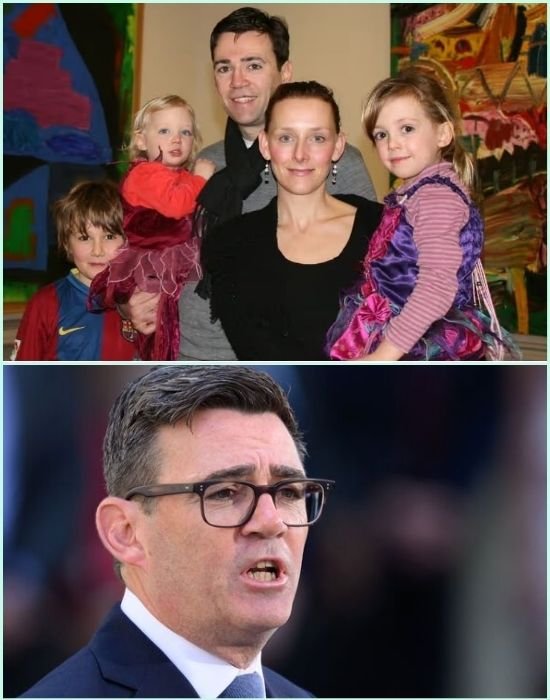
“Well, despite being parachuted in with no mandate, yes, the man with those big glasses and the black t-shirt is doing all right in the polls, 23%,” she said.
“So I say, Andy, why aren’t you calling for that snap election?”
Advertisement
Cundy then offered her own answer, claiming Burnham prefers to “focus on the small political issues and avoid any big issues”.
Those comments were her political assessment rather than an objective description of the Government’s priorities.
Advertisement
Presenter Targets Inflation and Channel Crossings
Cundy pointed to inflation and Channel crossings as examples of issues she believed should command greater attention.
Official figures from the Office for National Statistics show CPI inflation rose to 3.1% in the 12 months to August 2026, up from 2.9% in July.
CPIH, the ONS’s broader measure including owner-occupier housing costs, rose to 3.3%.
A
She also cited more than 1,200 Channel arrivals since Monday and described the situation as a “national emergency”.
Home Office provisional figures recorded 150 small-boat arrivals on September 21, 154 on September 22, 781 on September 23 and 44 on September 24 — 1,129 across those four days.
The Government stresses that operational figures are provisional and can change.
Cundy contrasted those issues with subjects Burnham has discussed, including bus fares and rules surrounding drinking alcohol in football stands.
“It’s time to put those big boy pants on,” she declared.
‘Andy Burnham, You’re a Chicken’
The GB News presenter continued with a series of personal jibes.
She accused the Prime Minister of taxing both wealthier and poorer voters before joking: “You never stand and deliver.”
Cundy then ended her monologue with her strongest attack.
“My feeling is there’s a lot of cluck, cluck, cluck coming from Number 10,” she said.
“I think, Andy Burnham, you’re a chicken.”
The remarks were Cundy’s own criticism of the Prime Minister and do not reflect an assessment of Burnham’s performance or motives.
Advertisement
Burnham Says Early Election Would Be ‘Self-Serving’
Burnham has given a very different explanation for ruling out an early national vote.
Speaking to ITV Calendar, he said 2029 remained the intended election year and argued that calling one earlier would distract from governing.
“Well, yes, that’s when the next election will be,” Burnham said when asked about 2029.
Advertisement
He added: “People want me, new in office, to be getting on with the job of delivering on the things that we’ve discussed, rather than putting self-serving politics before that, which was what I would be doing if I call an election.”
“I’m not going to do that.”
Burnham became Prime Minister in July 2026 and has now publicly committed to serving without seeking an early general election.
Whether political pressure for a snap vote continues will depend on developments in Parliament, public opinion and the Government’s agenda, but Burnham’s own position is currently explicit: he intends the next general election to take place in 2029.
Disclaimer: This story is fictional and created for entertainment purposes only.
Any names, characters, places, or events are fictitious or used fictitiously.
No real person or organization is intended to be portrayed.
LIZZIE CUNDY TAKES AIM AT PRIME MINISTER! TV PRESENTER SLAMS ANDY BURNHAM FOR RULING OUT EARLY GENERAL ELECTION AS POLITICAL FURY GROWS!
British politics has been thrown into another heated debate after television presenter Lizzie Cundy criticised Prime Minister Andy Burnham for firmly ruling out an early general election.
The outspoken presenter questioned why the Prime Minister appeared so determined to avoid asking voters for a fresh mandate, particularly at a time when Britain’s political landscape remains volatile.
Her criticism has added another voice to the growing debate over whether the government should return to the electorate before the next scheduled general election.
For critics, the refusal to hold an early election raises questions about political accountability and whether the Prime Minister is confident enough to put his leadership to a public vote.
For supporters of Burnham, however, the decision is a sensible attempt to avoid another prolonged election campaign and concentrate on governing the country.
The disagreement has quickly become another talking point in Westminster, with opposition politicians and media commentators questioning what the Prime Minister is really trying to achieve by ruling out an early vote.
LIZZIE CUNDY DELIVERS A BRUTAL MESSAGE: “WHY NOT LET THE PUBLIC DECIDE?”
During her appearance on GB News, Lizzie Cundy did not hold back when discussing Burnham’s refusal to call an early general election.
She gave the Prime Minister a particularly memorable nickname: “Burnham the bottler.”
Her criticism centred on what she described as the government’s reluctance to confront Britain’s biggest problems.
Cundy questioned why Burnham appeared comfortable discussing relatively smaller political initiatives while avoiding the larger challenges facing the country.
She specifically highlighted inflation, immigration, and the cost-of-living crisis.
Her argument was that these issues affect millions of ordinary households and deserve far more attention from the government.
She also questioned why a Prime Minister who appears confident about his political position would be unwilling to seek a fresh mandate from voters.
Her comments quickly attracted attention because they touched on a sensitive issue for Labour: political legitimacy.
Does a Prime Minister who takes office following a change in party leadership have a responsibility to seek direct public approval?
That question is now becoming an important part of the wider debate.
WHY ANDY BURNHAM IS REFUSING TO CALL AN EARLY ELECTION
Burnham has offered a straightforward explanation for his decision.
He argues that Britain does not need another general election campaign so soon after the previous political upheaval.
Instead, he wants his government to concentrate on implementing policies and delivering improvements to people’s everyday lives.
In an interview with ITV, he explained that calling an election would put political calculations ahead of the responsibilities of government.
He also insisted that voters want the government to get on with its work rather than become involved in another prolonged political battle.
The Prime Minister has repeatedly stated that the next general election should take place in 2029.
More recently, on 28 October 2026, he explicitly ruled out calling an election within the following 12 months.
His position is therefore clear, at least for now.
However, his explanation has not convinced everyone.
Opposition politicians argue that the country deserves an opportunity to decide whether it supports the direction of the new government.
They believe that a fresh election would give voters the chance to examine the Prime Minister’s policies and decide whether he has sufficient public backing.
This disagreement is becoming increasingly difficult for Labour to ignore.
THE MANDATE QUESTION: DOES BURNHAM HAVE ENOUGH PUBLIC SUPPORT?
One of the biggest political questions surrounding Burnham’s leadership concerns his mandate.
He became Prime Minister following a change in Labour’s leadership rather than through a nationwide general election fought under his own leadership.
Although Labour previously won the 2024 general election, critics argue that voters did not specifically choose Burnham to lead the country.
Reform UK leader Nigel Farage has repeatedly used this argument to demand an early election.
He has suggested that the British public deserves an opportunity to decide who should govern the country under its current political circumstances.
This argument has particular significance because Burnham has discussed ambitions involving Britain’s relationship with Europe, economic growth, migration, and the future of public services.
Critics believe that major political changes should be accompanied by a fresh democratic mandate.
Labour’s response is that governments are entitled to continue governing during a parliamentary term, even when their leadership changes.
There is no constitutional requirement for a new general election every time a Prime Minister changes.
Nevertheless, the political argument about legitimacy is unlikely to disappear.
IMMIGRATION AND THE COST OF LIVING: THE ISSUES LIZZIE CUNDY WANTS ADDRESSED
Cundy’s criticism was not limited to the election timetable.
She also highlighted several issues that continue to generate frustration among British voters.
Immigration remains one of the most divisive subjects in the country.
Small-boat crossings, asylum accommodation, border enforcement, and the cost of processing applications have all attracted intense political scrutiny.
Many voters want clearer answers about how the government intends to reduce irregular migration and improve control of Britain’s borders.
At the same time, households are concerned about inflation, housing costs, energy bills, and the pressure on public services.
For people struggling financially, political arguments about leadership and election strategy can appear disconnected from everyday reality.
Cundy’s criticism attempted to connect these concerns with the Prime Minister’s decision to avoid an early election.
Her underlying argument was that the government should be judged on its ability to confront the country’s most difficult problems.
Whether voters agree with her political conclusions or not, these issues remain central to Britain’s national conversation.
NIGEL FARAGE SEES AN OPPORTUNITY
The controversy also provides an opportunity for Nigel Farage and Reform UK.
Farage has consistently argued that Burnham should seek a fresh mandate rather than continue governing without personally leading Labour into a general election.
His criticism reflects Reform UK’s broader strategy of presenting itself as an alternative to the traditional political establishment.
The party has focused heavily on immigration, national sovereignty, taxation, and dissatisfaction with established political parties.
An early election would create an opportunity for Reform UK to challenge Labour directly.
However, calling an election would also carry risks for every political party.
The Conservatives would need to demonstrate that they had recovered sufficiently to compete.
Labour would have to defend its record and explain its priorities.
Reform UK would need to convince voters that it was prepared to take responsibility for governing rather than simply criticising its opponents.
For Burnham, avoiding an early election allows the government more time to develop its policies.
For Farage, demanding one keeps pressure on the Prime Minister and reinforces his argument that Britain needs a new political direction.
LABOUR’S STRATEGY: GOVERN FIRST, CAMPAIGN LATER
The government’s approach appears to be based on the belief that political credibility must come from delivering results.
Burnham wants to establish a longer-term programme covering economic development, public services, housing, migration, and Britain’s international relationships.
He has also promised a wider 10-year plan intended to provide a clearer direction for the country.
The government believes that another election campaign would distract from these objectives.
There is also a practical political consideration.
An early election could create uncertainty at a time when the government is facing difficult economic decisions.
Ministers may need to make unpopular choices involving public spending, taxation, welfare, and defence.
Going to the country before those decisions are fully explained could create additional political risks.
However, critics argue that delaying an election does not necessarily make difficult decisions easier.
They believe that public confidence depends on transparency and accountability rather than simply waiting until a more convenient political moment.
THE MEDIA BATTLE IS BECOMING JUST AS IMPORTANT AS THE POLITICAL ONE
The reaction to Cundy’s comments demonstrates how television personalities and political commentators can influence public debate.
Modern British politics is no longer confined to Parliament, party conferences, and official government announcements.
Television interviews, social media clips, livestreams, and online commentary can rapidly turn a political disagreement into a national talking point.
Cundy’s remarks attracted attention because they were direct, confrontational, and easy to understand.
Her description of Burnham as “the bottler” provided a memorable headline, while her criticism of his priorities connected with existing public frustrations.
But there is another side to this development.
A dramatic television exchange does not necessarily establish whether an early election would be the right decision.
The constitutional position, the government’s parliamentary majority, public opinion, and the state of the economy all matter.
Voters should therefore look beyond memorable insults and examine the substance of the political disagreement.
The important question is not simply whether Burnham can withstand criticism.
It is whether his government can demonstrate that its decisions are producing meaningful improvements.
WHAT WOULD AN EARLY GENERAL ELECTION ACTUALLY MEAN FOR BRITAIN?
An early general election would have significant consequences for the country’s political direction.
It would give voters an opportunity to evaluate Labour’s leadership and compare its programme with the alternatives offered by the Conservatives, Reform UK, the Liberal Democrats, and other parties.
It could also provide a new Prime Minister with a direct electoral mandate.
However, an election would not automatically solve Britain’s economic and social problems.
The next government would still face difficult decisions involving public spending, immigration, housing, healthcare, national security, and economic growth.
There would also be considerable uncertainty during the campaign.
Businesses, investors, public institutions, and international partners would all be watching the outcome.
That is one reason why Burnham argues that the government should concentrate on delivering its existing programme.
Nevertheless, democratic accountability remains essential.
If voters believe the government’s direction is fundamentally wrong, an election is the mechanism through which they can express that judgement.
CONCLUSION: LIZZIE CUNDY HAS REIGNITED A MAJOR QUESTION FOR LABOUR
Lizzie Cundy’s criticism of Andy Burnham has added another dramatic chapter to Britain’s growing debate about political leadership and democratic accountability.
Her accusation that the Prime Minister is avoiding an early election has resonated with critics who believe the country deserves a fresh opportunity to decide who should govern.
Burnham, however, insists that his responsibility is to deliver results rather than launch another election campaign.
Nigel Farage and Reform UK continue demanding a new vote, while Labour argues that the government needs time to implement its policies.
The disagreement is about more than the timing of an election.
It concerns political legitimacy, public confidence, leadership, and the future direction of Britain.
Cundy has made her position clear: she believes the Prime Minister should face the electorate rather than continue avoiding the challenge.
But Burnham appears determined to stick to his timetable.
The coming months will reveal whether his strategy strengthens public confidence or gives his political opponents even more ammunition.
One thing is certain: the pressure on Labour is not disappearing.
And as Britain continues debating immigration, inflation, public services, and the economy, the question of whether Andy Burnham should seek a fresh mandate could become one of the defining political arguments of his premiership.