

Andy Burnham Is Desperate to Be PM — But Critics Say He Couldn’t Even Answer a Question a Five-Year-Old Could
Andy Burnham’s return to Westminster was supposed to demonstrate that he had what it takes to lead Labour back to power.
Instead, one awkward moment during the political drama surrounding the Makerfield by-election gave his critics fresh ammunition.
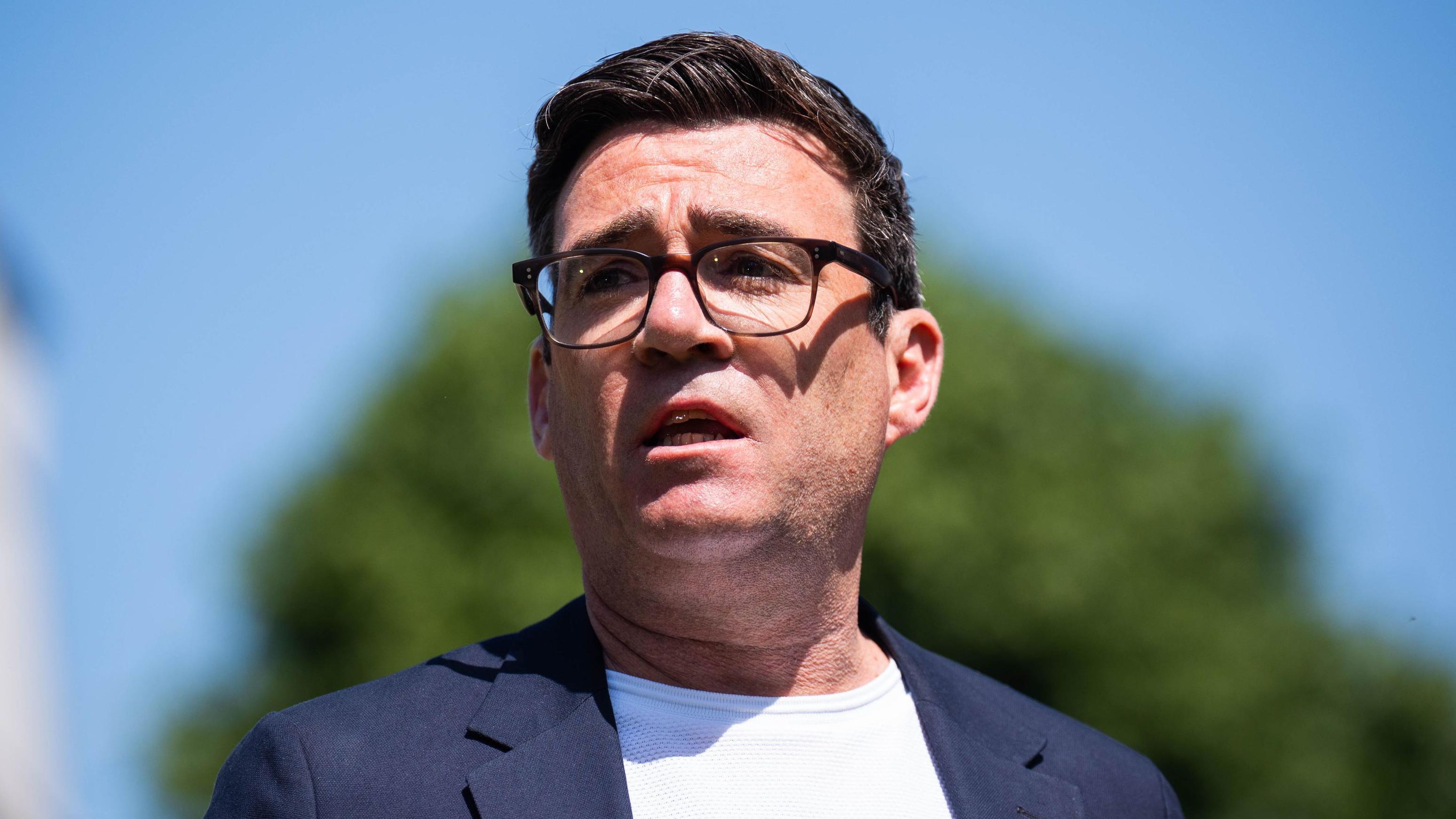
For months, Burnham had been positioning himself as the politician capable of rescuing Labour from its crisis. His supporters presented him as a hugely popular northern figure who understood voters outside Westminster and could take on Nigel Farage’s Reform UK.
But critics saw something rather different: a politician seemingly desperate to reach Downing Street who was already struggling when faced with a simple question about his political ambitions.
The episode became particularly significant because it came at precisely the moment when Burnham’s ambitions were becoming impossible to ignore.
Burnham’s return to Westminster was never just about Makerfield
Officially, Burnham’s decision to contest Makerfield was about representing a community where he had deep personal roots.
He said he had grown up in the area, had lived there for 25 years and believed national politics had let local people down. He insisted that he wanted to make everyday life more affordable and “change Labour for the better”.
But almost nobody in Westminster believed the story ended there.
Burnham had spent nine years as Mayor of Greater Manchester.
Returning to the House of Commons meant giving up that powerful regional position and stepping directly back into the Westminster political battlefield.
And the timing was extraordinary.
Labour was in crisis.
Keir Starmer was under mounting pressure.
Wes Streeting had resigned from the Cabinet and openly questioned Starmer’s leadership.
And Burnham suddenly had a route back into Parliament.
Streeting even described Burnham as Labour’s “best chance” of winning the Makerfield contest.
The message was obvious.
Burnham was no longer simply a mayor thinking about Westminster. He was preparing for a national leadership battle.
The question he couldn’t answer
That is why journalists were so interested in what Burnham intended to do after the by-election.
Would he challenge Starmer?
Would he seek the Labour leadership?
And, ultimately, did he intend to become Prime Minister?
Those are hardly complicated questions for a politician who has spent years being tipped as a future Labour leader.
Yet when confronted by reporters after his victory, Burnham was notably evasive.
ABC News reported that, when asked about the timetable for a potential leadership bid, Burnham avoided the question and literally ran from the event into a nearby building rather than answering journalists.
For his critics, the optics were devastating.
Here was a politician who appeared to be positioning himself for the most important job in British politics — yet he did not want to answer a straightforward question about whether that was actually his goal.
Hence the mocking suggestion that he could not answer something that “any five-year-old” could understand.
But there was a reason for the caution
There was also a perfectly rational political explanation.
Burnham did not want to appear to be celebrating a by-election victory while immediately plotting to overthrow the sitting Prime Minister.
Doing so could have alienated Labour MPs and voters who wanted the party to concentrate on Makerfield rather than Westminster intrigue.
His campaign therefore maintained a careful line.
Win the seat first.
Talk about national leadership later.
And that strategy worked.
Burnham won 24,927 votes, representing 54.8 per cent of the vote.
Reform UK candidate Robert Kenyon received 15,696 votes, or 34.5 per cent.
Burnham’s majority was 9,231.
It was an emphatic result.
Indeed, Burnham received more votes than the other 13 candidates combined.
Whatever his critics thought about his political ambitions, the electorate of Makerfield gave him an impressive mandate.
Reform was supposed to make the contest a nightmare
The result was particularly damaging for Reform.
Only weeks before the by-election, Reform had been making significant gains across northern England.
Makerfield had traditionally been a Labour stronghold, but the political environment had changed dramatically.
Reform had surged locally.
Nigel Farage openly promised to throw “absolutely everything” at the contest.
And Robert Kenyon was determined to demonstrate that Reform could take another traditionally Labour constituency.
Instead, Burnham defeated him comfortably.
ITV reported that Burnham’s 54.8 per cent share exceeded the combined vote of Reform and Restore Britain, which together secured 41.3 per cent.
That transformed the political interpretation of the contest.
Burnham was no longer merely a politician talking about defeating Reform.
He had actually done it.
The victory changed Burnham’s position overnight
Before Makerfield, Burnham could be dismissed as a politician whose popularity was largely confined to Greater Manchester.
After Makerfield, that argument became much harder to sustain.
He had won a parliamentary constituency with a convincing majority at a moment when Reform was polling strongly nationally.
His campaign focused heavily on local issues such as flooding, illegal dumping and road congestion rather than simply relying on Labour’s national brand. The Financial Times described the campaign as highly personalised and deliberately distinct from traditional Labour messaging.
That is an important lesson.
Burnham did not win by pretending that Labour’s national problems did not exist.
He effectively separated himself from them.
The campaign was about Andy Burnham, not simply about the Labour Party.
And that may have been precisely why it worked.
The “King of the North” image was back
Burnham’s political brand has always rested heavily on his northern identity.
He presents himself as someone who understands the frustrations of communities outside London.
He talks about transport.
Energy bills.
Housing.
Local government.
The cost of living.
And the feeling that Westminster politicians have ignored ordinary people.
That message has particular resonance in former industrial communities where traditional Labour support has been badly damaged by Reform.
The Makerfield result suggests that Burnham’s approach may still have considerable electoral potential.
Wes Streeting’s intervention was crucial
The role of Wes Streeting should not be overlooked.
Streeting had been one of the most prominent figures calling for change inside Labour.
In May, he backed Burnham for Makerfield and described him as the party’s “best chance” of winning the seat.
That was politically significant.
Streeting was not simply supporting a colleague in a by-election.
He was effectively acknowledging that Burnham had the electoral credibility required to challenge Reform.
And after Burnham won, Streeting again praised the campaign.
He described the result as evidence that Labour could still win, while saying Burnham’s campaign proved the party needed to change.
That gave Burnham another important advantage.
He was not entering Westminster entirely alone.
He had allies.
But ambition can become a liability
This is where the criticism about Burnham’s evasiveness becomes relevant.
A politician can be ambitious.
There is nothing wrong with wanting to become Prime Minister.
But the public generally expects politicians to be reasonably straightforward about their intentions.
If Burnham wants the Labour leadership, why not simply say so?
The answer is political calculation.
Declaring a leadership bid too early could make him appear disloyal.
Refusing to discuss it allows him to claim that he is focused on his constituents.
It also gives him room to negotiate behind the scenes.
But it creates an awkward contradiction.
Everyone knows what is happening.
Everyone can see the ambition.
Yet the politician at the centre of it insists that nothing has been decided.
That is exactly the kind of behaviour that gives opponents ammunition.
Starmer was never going to disappear quietly
Burnham’s path to Downing Street also depended on what Keir Starmer did.
And Starmer initially made his position absolutely clear.
Following Burnham’s Makerfield victory, Starmer said that if there were a leadership contest, he would stand and fight it.
He insisted that he would not “walk away”.
That created the possibility of a direct confrontation.
Burnham had momentum.
Starmer had the formal authority of the sitting Prime Minister and Labour leader.
And Streeting was another major figure with leadership ambitions.
The result was an extraordinary situation in which Labour’s future appeared to depend on three senior politicians who had recently been working in or around the same government.
Burnham’s problem was not winning Makerfield
The irony is that Burnham’s biggest political challenge was never really Makerfield.
He was heavily favoured to win.
The real challenge was what happened afterwards.
Could he convert a local victory into a national leadership mandate?
Could he convince Labour MPs that he was capable of defeating Reform?
Could he persuade voters who had abandoned Labour that the party had changed?
And could he present himself as a credible Prime Minister rather than simply a popular mayor?
The Makerfield result answered one of those questions.
It demonstrated that Burnham could win.
The other questions remained unanswered.
His campaign was deliberately different
One of the most revealing aspects of Makerfield was how far Burnham’s campaign distanced itself from Labour’s national political identity.
The Financial Times reported that the campaign used personalised branding such as “Vote Andy, Vote Hope” and largely rejected traditional Labour imagery.
That strategy was clever.
Labour was unpopular nationally.
Burnham was not.
So why make the campaign about Labour?
Instead, Burnham turned the contest into a referendum on himself.
That is exactly what successful mayors often do.
They create a personal brand that can survive party turbulence.
Burnham had already done that in Greater Manchester.
Makerfield suggested he could potentially do it elsewhere.
But can the trick work nationwide?
That is the million-pound question.
Makerfield is not Britain.
The constituency had a unique relationship with Burnham.
He grew up in the region.
He had spent years as Greater Manchester mayor.
His campaign could concentrate heavily on local issues.
And Reform and Restore Britain divided the right-wing vote.
Those circumstances cannot simply be reproduced across hundreds of constituencies.
The UCL Policy Lab found that voters viewed Burnham relatively positively, particularly because of his record as mayor, but also noted that some participants saw his Makerfield campaign as part of a plan to become Labour leader.
That is revealing.
People were already thinking beyond the by-election.
The biggest test: Reform
If Burnham wants to become Prime Minister, Nigel Farage is arguably his biggest electoral obstacle.
Reform has built a powerful coalition of voters who are angry about immigration, taxes, public services and the traditional political parties.
Burnham’s challenge is to convince those voters that Labour can represent their concerns without abandoning its core values.
Makerfield showed that this may be possible.
But one victory is not enough.
He will need to replicate it in areas where Reform is even stronger.
And that brings us back to the simple question
Does Andy Burnham want to be Prime Minister?
The evidence is overwhelming.
He left a powerful position as Greater Manchester mayor.
He returned to Westminster through a carefully timed by-election.
He secured an enormous victory.
His allies are openly discussing his leadership prospects.
Wes Streeting backed him as Labour’s best chance of winning Makerfield.
And his victory immediately intensified speculation about a leadership challenge.
Burnham himself may prefer not to say the words.
But British politics can be remarkably good at recognising ambition.
And in this case, voters, journalists and Labour MPs appear to have reached the same conclusion.
Burnham wants the top job.
The real question is whether he can persuade the country that he deserves it.
The danger of overplaying his hand
There is, however, one major risk.
If Burnham becomes too visibly focused on Downing Street, voters could conclude that Makerfield was merely a stepping stone.
That would undermine the very image that helped him win.
His campaign succeeded because he appeared local, personal and focused on everyday problems.
If he suddenly becomes consumed by Westminster manoeuvring, that authenticity could disappear.
And that is precisely why the evasiveness may have been deliberate.
Sometimes refusing to answer the obvious question is itself a political strategy.
A politician caught between ambition and caution
That may be the fairest interpretation of the entire episode.
Burnham knows exactly what journalists want to hear.
They want him to announce his leadership bid.
They want a confrontation with Starmer.
They want headlines about the next Prime Minister.
But Burnham also knows that announcing his ambitions too early could damage him.
So he walks away.
He avoids the question.
He talks about the people of Makerfield.
He says Labour must change.
And he waits.
From a political perspective, that is understandable.
From a media perspective, it is irresistible.
Final verdict
Andy Burnham’s Makerfield victory was one of the most important moments in British politics this year.
He secured 54.8 per cent of the vote and a 9,231 majority, defeating Reform’s Robert Kenyon by a comfortable margin.
The result gave Burnham something he desperately needed: a return to Westminster and a powerful electoral mandate.
But it also exposed the central contradiction at the heart of his political career.
He wants to present himself as the politician who listens to ordinary voters and puts their concerns ahead of Westminster games.
Yet everything about his return to Parliament points towards one enormous ambition:
Downing Street.
His critics will continue to mock him for refusing to answer the simplest questions about his intentions.
His supporters will argue that he was simply exercising political discipline.
Either way, the question is no longer whether Andy Burnham has ambitions to become Prime Minister.
The question is whether he can turn the extraordinary momentum of Makerfield into a national movement.
Because winning one constituency is one thing.
Winning the Labour leadership is another.
And winning Britain is something else entirely.
Andy Burnham has opened the door to Downing Street. Now he has to prove he can walk through it.
Leave a Reply
You must be logged in to post a comment.