

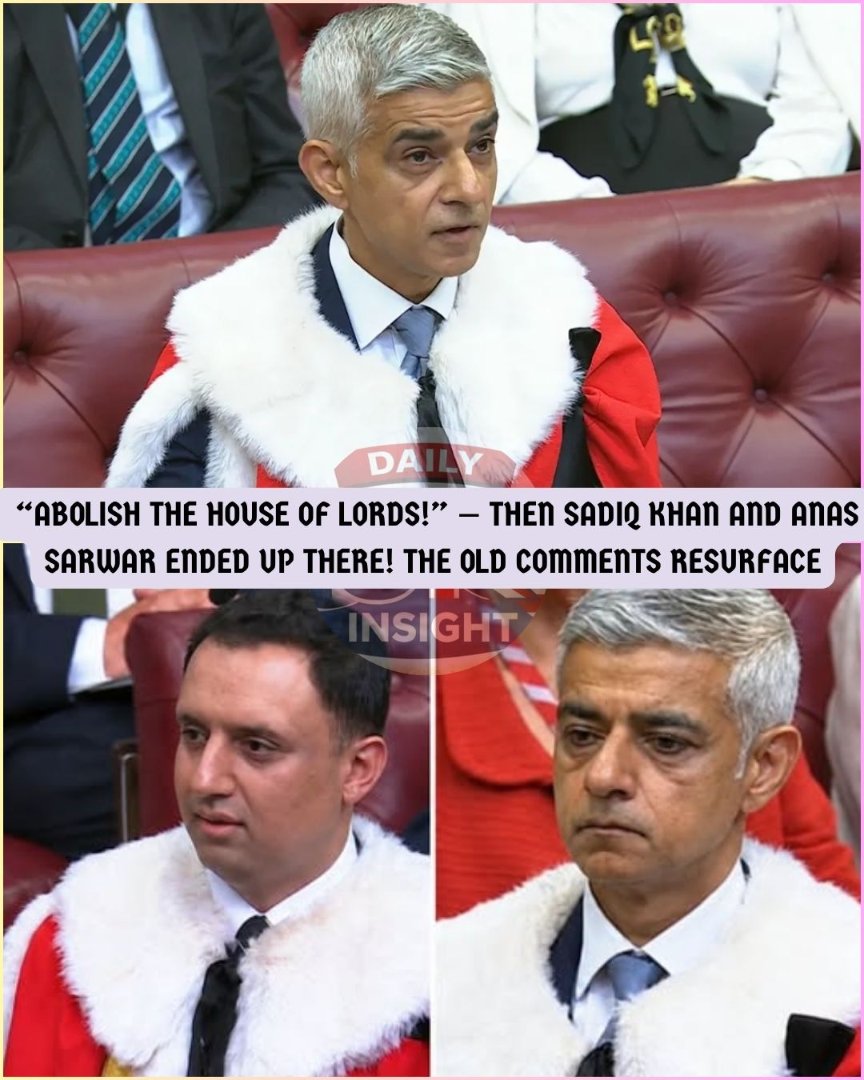
A political controversy is gaining attention over claims that Sadiq Khan and Anas Sarwar once backed the abolition of the House of Lords, only to later become members of the chamber themselves.
The allegation has been widely framed online as an example of politicians allegedly changing their position once circumstances changed.
But the story requires careful examination: the specific claims about what Khan and Sarwar said, when they said it, and whether either actually became a member of the House of Lords need to be established from authoritative records before they are presented as fact.
Without that context, a provocative social-media claim can quickly turn into something very different from the underlying political story.
The House of Lords debate
The House of Lords has long been one of the most controversial institutions in British politics.
Advertisement
Unlike the elected House of Commons, members of the Lords are not generally elected by voters.
The chamber currently consists largely of life peers, alongside a small number of hereditary peers and bishops.
Supporters argue that the Lords provides Parliament with specialist expertise and an additional opportunity to scrutinise legislation.
Its members include people with backgrounds in law, business, science, medicine, public service, academia, the armed forces and many other fields.
Critics, however, question the democratic legitimacy of an unelected chamber exercising legislative powers.
Calls to reform or abolish the Lords have therefore appeared repeatedly throughout modern British political history.
The debate is not limited to one political party.
Politicians across the political spectrum have at different times supported different models, ranging from relatively limited reform to complete abolition.
Advertisement
Why the accusation is politically powerful
The phrase “abolish the House of Lords” carries considerable political force.
For critics, a politician who argues that the chamber should disappear and later accepts a peerage could potentially face accusations of inconsistency.
But there is an important distinction between abolishing the existing House of Lords and opposing membership of a reformed second chamber.
A politician could, for example, support replacing the current Lords with an elected senate or another democratic institution.
In that situation, becoming a member of the existing chamber would not necessarily prove that the politician had abandoned the principle of reform.
That is why the exact wording of previous statements matters.
Was the politician calling for complete abolition?
Were they advocating reform?
Were they discussing Labour Party policy at a particular point in time?
Advertisement
And did their position subsequently change?
Those questions cannot be answered simply by comparing an old quotation with a later appointment.
The Sadiq Khan question
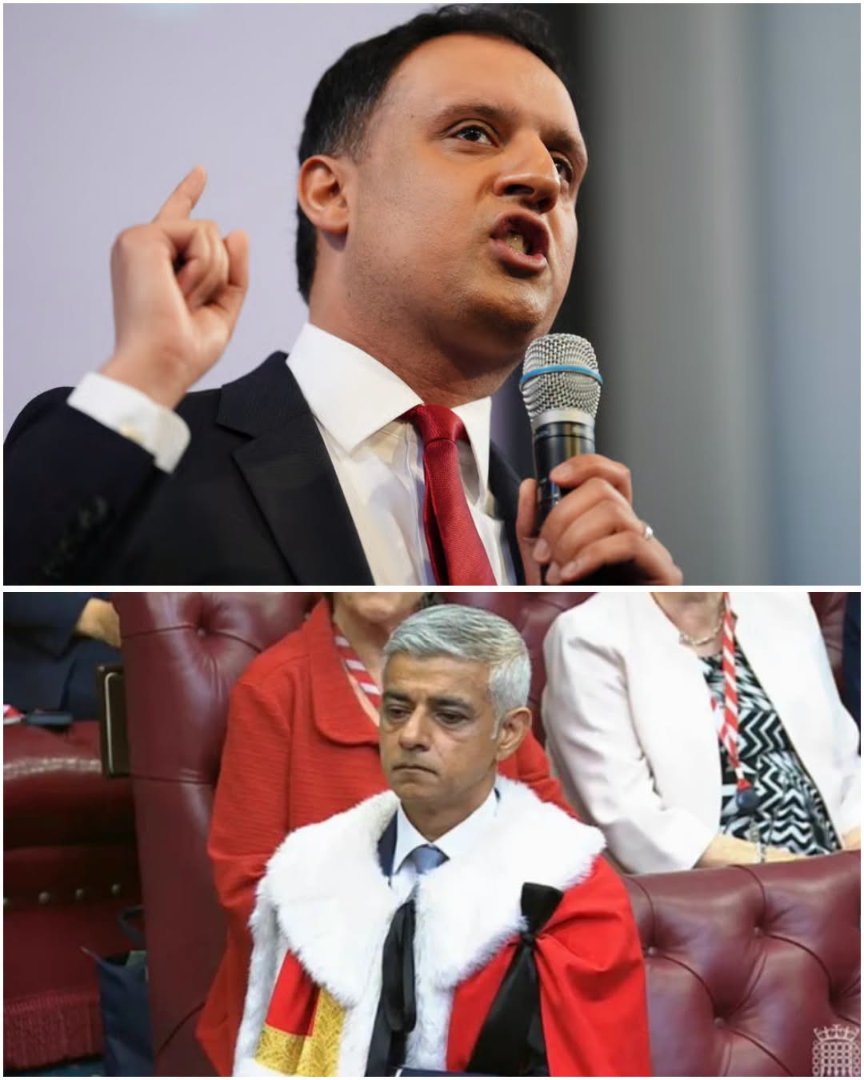
Sadiq Khan has spent much of his political career in elected office, including as a Labour Member of Parliament and later as Mayor of London.
Advertisement
His political career has also placed him at the centre of numerous debates about constitutional reform, London government and the relationship between elected institutions and Westminster.
Claims circulating online about Khan and the House of Lords should therefore be checked against his actual public statements and official parliamentary records.
In particular, it is important to establish whether a quotation attributed to him calling for the Lords to be abolished was referring to complete abolition, reform of the chamber, or a broader discussion about constitutional change.
That distinction is crucial.
Political statements are often shortened dramatically when they are reposted online.
A comment made during a discussion about replacing the Lords with another institution can later appear as though someone simply demanded that the chamber disappear.
The Anas Sarwar question
Anas Sarwar presents a similar issue.
As a senior Scottish Labour politician, Sarwar has been involved in debates about constitutional questions, devolution and the future of the United Kingdom.
Claims about his alleged opposition to the House of Lords should likewise be examined in their original context.
If a politician supports reforming or replacing the Lords, that is not necessarily identical to opposing every possible form of second chamber.
Likewise, membership of the House of Lords would not automatically establish that a person had abandoned a previous position unless there is clear evidence showing that their views had changed.
Advertisement
This is why political controversies involving apparently contradictory statements need more than a headline.
Principles versus political reality
The wider issue is familiar in Westminster.
Politicians regularly campaign for institutional reform while simultaneously operating within the institutions they want to change.
A politician may enter Parliament while arguing that Parliament itself needs reform.
A politician may campaign for changes to the electoral system while standing for election under the existing system.
Advertisement
Similarly, someone can criticise the House of Lords while continuing to participate in the political system surrounding it.
Whether that represents hypocrisy, pragmatism or simply a change in circumstances is ultimately a matter for voters and observers to assess based on the evidence.
The strongest way to examine such controversies is therefore to compare what was actually said with what happened later.
Advertisement
Why the Lords remains controversial
The constitutional argument surrounding the Lords is much larger than any individual politician.
Supporters of abolition say democratic legitimacy should rest primarily with elected representatives.
They argue that legislation should ultimately be scrutinised by institutions whose members are directly accountable to voters.
Supporters of the current or a reformed Lords take a different view.
Advertisement
They argue that an upper chamber can provide detailed scrutiny that complements the elected Commons.
Because members do not face elections in the same way as MPs, they may also be able to examine legislation with greater independence from short-term electoral pressures.
The question is therefore not simply whether the Lords is “good” or “bad”.
It concerns a fundamental constitutional choice:
Advertisement
Should Britain’s second chamber remain appointed, become elected, be substantially reformed, or be abolished altogether?
Different political parties and politicians have proposed different answers over the years.
Advertisement
What would abolition actually mean?
Abolishing the House of Lords would be a major constitutional change.
It would require decisions about what replaces it — if anything.
If Britain moved to a fully unicameral Parliament, the House of Commons would become the country’s sole parliamentary chamber.
If a new second chamber were created, difficult questions would immediately arise.
Advertisement
Should its members be elected?
How would elections work?
Should every part of the UK receive equal representation?
Should the chamber represent nations and regions?
Should members have the power to block legislation or merely delay it?
What should happen to the specialist expertise currently found among Lords members?
These questions demonstrate why constitutional reform is considerably more complicated than simply removing one institution.
The importance of checking the record
The controversy surrounding Khan and Sarwar demonstrates another increasingly important issue in modern politics: the speed at which political claims spread online.
A short post can combine an old quotation, a later political development and an accusation of hypocrisy in only a few sentences.
But the chronology may be incomplete.
A statement may have been taken out of context.
A politician’s position may have changed.
Or the underlying claim may simply be inaccurate.
That is why official parliamentary records, Hansard, government announcements and the House of Lords’ own membership records are the appropriate places to establish the facts.
The bigger political question
Regardless of the claims surrounding individual politicians, the debate over the House of Lords is unlikely to disappear.
Britain continues to face questions about how its constitutional institutions should operate and how much power should belong to elected representatives.
For critics of the Lords, the chamber remains an example of an outdated political system that should be replaced.
For supporters, it remains an important mechanism for detailed legislative scrutiny and independent expertise.
And for politicians who have previously advocated reform, their credibility will inevitably be tested by how consistently they apply those principles when circumstances change.
The most important question, therefore, is not simply whether a politician once used the words “abolish the House of Lords.”
It is what exactly they meant, whether their position subsequently changed, and what evidence exists to demonstrate that change.
That distinction matters — particularly when a provocative political claim is being shared thousands of times online.
Note: I do not have live web-search access in this response, so I have not independently verified the specific allegations that Sadiq Khan and Anas Sarwar both called for abolition and subsequently became Lords members.
The article therefore treats those points as claims requiring verification rather than established facts.
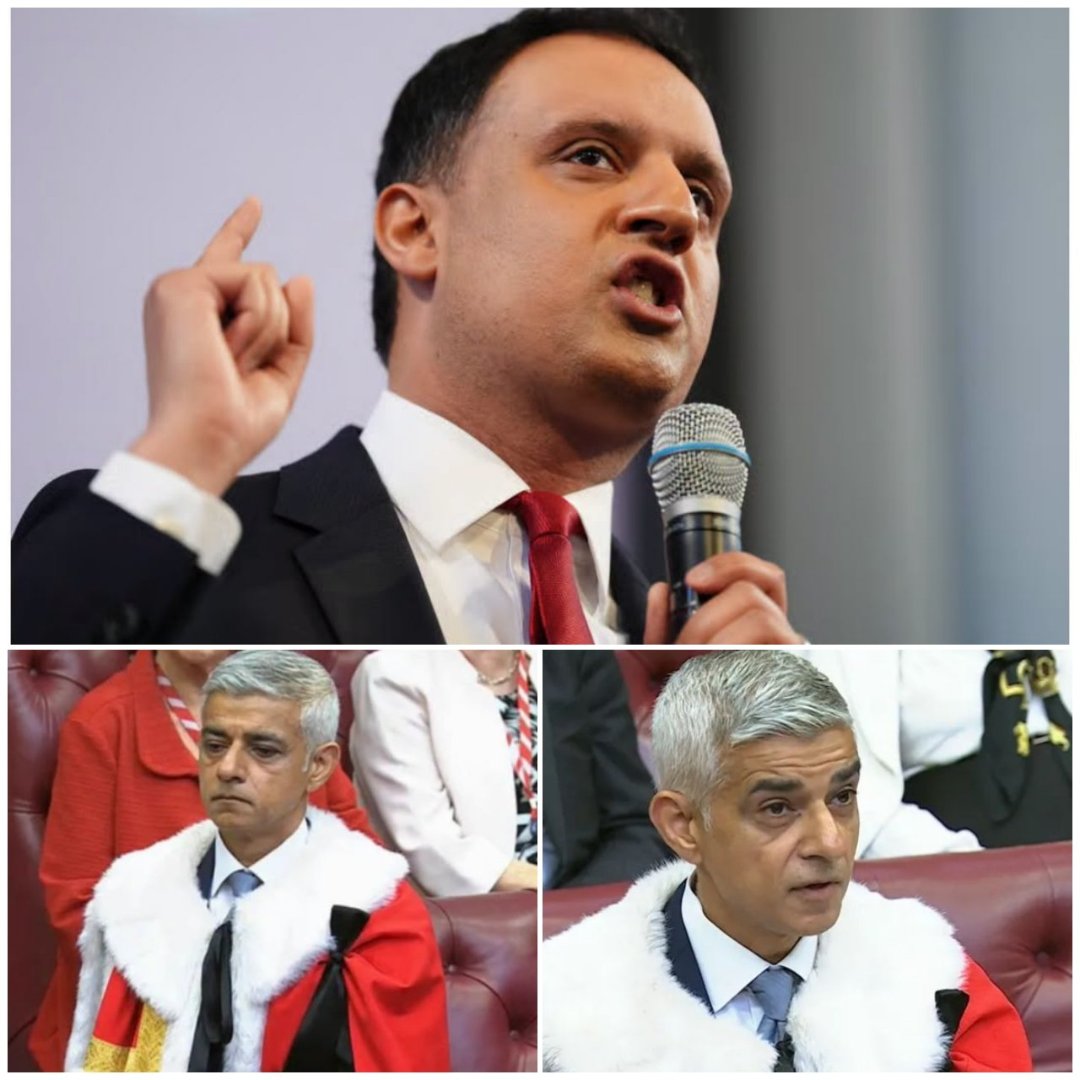
“ABOLISH THE HOUSE OF LORDS!” — SADIQ KHAN AND ANAS SARWAR FACE FRESH QUESTIONS OVER THEIR NEW PEERAGES!
A major political controversy is unfolding in Britain after two prominent Labour politicians, Sadiq Khan and Anas Sarwar, accepted peerages in the House of Lords despite previously expressing support for abolishing or fundamentally replacing the unelected institution. Their decisions have triggered difficult questions about political consistency, public accountability, and the relationship between power and democratic reform.
For critics, the controversy is about more than two individual appointments. It raises a much bigger question: how can politicians argue that an institution needs to be abolished while simultaneously accepting positions that give them membership of that very institution?
The issue has become particularly sensitive because both politicians previously expressed support for replacing the existing House of Lords with a more democratic second chamber.
Sadiq Khan’s Unexpected Journey to the House of Lords
London Mayor Sadiq Khan was among 26 individuals nominated for peerages in July 2026, during Keir Starmer’s final days as prime minister.
His appointment attracted considerable attention because Khan had previously criticized the House of Lords and supported its abolition.
In 2022, during a heated exchange at City Hall involving Conservative peer Shaun Bailey, Khan described Bailey’s membership of the unelected chamber as evidence supporting the argument that the institution should be abolished.
Yet, several years later, Khan accepted a peerage himself.
According to reporting by the Evening Standard, he was formally preparing to take his seat in September 2026. His appointment also attracted questions about how he could reconcile his previous political statements with his new position.
Khan’s representatives said he was honoured by the appointment and remained committed to serving Londoners.
Importantly, becoming a peer does not automatically prevent someone from continuing as Mayor of London. He can therefore retain his elected mayoral responsibilities while participating in the House of Lords.
Nevertheless, the political contradiction has become an unavoidable subject of public discussion.
If Khan believes that Britain needs a different second chamber, critics will naturally want to understand why accepting membership of the current institution is consistent with that position.
Anas Sarwar Faces Similar Questions
The controversy surrounding Anas Sarwar has created another difficult political debate for Labour.
The former Scottish Labour leader was appointed Minister of State for Trade in Andy Burnham’s government in July 2026. To take up his ministerial position, he was granted a peerage and subsequently entered the House of Lords.
His appointment followed Labour’s disappointing performance in the Scottish parliamentary election.
However, the most significant controversy concerns his previous statements about the upper chamber.
In 2022, Sarwar supported abolishing the existing House of Lords and replacing it with a democratically elected institution representing the nations and regions of the United Kingdom.
During the 2026 Scottish election campaign, he also indicated that his ambition was to become Scotland’s First Minister rather than pursue a position in Westminster.
After the election, however, his political circumstances changed.
Sarwar stepped down as Scottish Labour leader and accepted a government position that required him to enter the unelected chamber.
Speaking to BBC Scotland, he maintained that he still supported the idea of a senate representing Britain’s nations and regions.
His explanation raises an important distinction: supporting the eventual replacement of the House of Lords does not necessarily mean refusing to participate in the existing institution while reform remains incomplete.
However, opponents have questioned whether that explanation adequately addresses his earlier statements.
Is This Political Hypocrisy or Political Pragmatism?
This is the central question behind the controversy.
Critics argue that accepting a peerage after publicly supporting the abolition of the House of Lords creates an obvious contradiction.
They question whether political principles are being applied consistently when politicians receive positions and privileges from institutions they previously criticized.
In Sarwar’s case, the criticism has been particularly strong in Scotland.
SNP politicians argued that his appointment undermined public confidence in political promises. Scottish Green representatives also criticized the apparent contradiction between his previous position and his decision to join the Lords.
Some Labour supporters may offer a different interpretation.
They could argue that accepting a ministerial position provides an opportunity to influence national policy while continuing to support long-term constitutional reform.
After all, political institutions do not disappear simply because politicians disagree with their structure.
The House of Lords remains part of the British parliamentary system, and ministers appointed to the chamber can participate in legislation and government responsibilities.
The question is whether accepting that opportunity is compatible with previously expressed commitments to reform.
Voters are entitled to ask for a convincing explanation.
The House of Lords: Why Is It So Controversial?
The House of Lords is the unelected upper chamber of the British Parliament.
Unlike members of the House of Commons, who are elected by voters, most members of the Lords receive life peerages and are appointed following political nomination and formal approval.
The chamber plays an important role in examining legislation, proposing amendments, and scrutinizing government decisions.
Supporters argue that its members bring valuable experience from business, science, education, law, public service, and other professional backgrounds.
They also argue that an upper chamber can provide additional scrutiny of legislation without the same electoral pressures experienced by MPs.
However, critics question the democratic legitimacy of a legislative institution whose members are not directly elected by the public.
They argue that political appointments can create opportunities for party patronage and weaken public confidence in parliamentary accountability.
The size of the chamber has also attracted criticism.
According to figures reported by ITV in July 2026, the House of Lords had approximately 774 members, compared with the 650 seats in the House of Commons.
The question of whether Britain needs such a large unelected chamber has therefore remained an important constitutional debate.
Labour’s Promise to Reform the System
Labour has previously committed itself to significant reform of the House of Lords.
Its proposals included removing hereditary peers, improving the appointments process, introducing participation requirements, and eventually replacing the existing institution with an alternative second chamber that better represents Britain’s nations and regions.
One important change has already happened.
The House of Lords (Hereditary Peers) Act 2026 removed the remaining automatic membership rights associated with hereditary peerages.
This represented a substantial constitutional change, although it did not abolish the House of Lords itself.
The distinction is important.
Removing hereditary membership is not the same as creating a fully elected upper chamber. Life peerages and political appointments remain part of the system.
Consequently, the wider debate about democratic representation is far from resolved.
What Does This Mean for Andy Burnham’s Government?
The appointments also create political questions for Prime Minister Andy Burnham.
His government must balance the practical requirements of parliamentary leadership with Labour’s longer-term commitments to constitutional reform.
Appointing Sarwar to a ministerial position gives him an opportunity to contribute to the government’s trade agenda. Meanwhile, Khan’s peerage provides him with a position in the national legislature while he continues serving as London’s mayor.
From the government’s perspective, these appointments may be defended as decisions based on experience and the need to bring individuals into national public service.
However, political opponents may argue that such decisions reinforce the very appointment system Labour previously promised to change.
This creates a difficult communications challenge for the government.
If ministers want the public to believe that reform is a genuine priority, they must explain how new appointments fit into that wider programme.
Promises of future change will carry less weight if voters believe that political leaders are benefiting from the existing arrangements.
The Public Deserves Clear Answers
Ultimately, this controversy should not be reduced to personal attacks against two politicians.
Sadiq Khan and Anas Sarwar are entitled to explain their decisions, defend their political positions, and demonstrate how they intend to contribute to public life.
Equally, the public has every right to scrutinize those decisions.
Did their understanding of constitutional reform change? Do they believe the current House of Lords can be improved from within? Or do they simply consider their new responsibilities compatible with a longer-term commitment to replacing the institution?
These are reasonable questions that deserve direct answers.
Political consistency matters because public trust depends partly on whether elected representatives can explain the relationship between their promises and their actions.
Conclusion: Reform Must Be More Than a Political Slogan
The peerages accepted by Sadiq Khan and Anas Sarwar have reopened an important debate about Britain’s parliamentary system.
Both politicians previously supported replacing or abolishing the existing House of Lords, yet both have now accepted positions within it.
Their supporters may argue that participating in the current system does not prevent them from working towards future reform. Their critics see an apparent contradiction that requires a convincing explanation.
Neither argument should be accepted without scrutiny.
The real issue is whether Britain will eventually establish a second chamber that is more democratic, representative, transparent, and accountable.
If Labour genuinely intends to transform the House of Lords, the public deserves a clear timetable, detailed proposals, and measurable progress.
Political reform cannot depend entirely on speeches and campaign promises.
At the heart of this controversy is a simple but important democratic principle: politicians should be prepared to explain their decisions, especially when those decisions appear to conflict with positions they previously defended.
The debate over the House of Lords is therefore far from over. And as long as Britain continues to have an unelected upper chamber, questions about political appointments, democratic accountability, and constitutional reform will remain firmly on the national agenda.