
A Syrian migrant with “a deep voice and receding grey hair” has been ruled to be a child in a tribunal.
The migrant claimed he was 16 when he arrived in Britain on a small boat last year.
But Derby City Council carried out an age assessment after his arrival and said he was “significantly over 18 years of age”.
He was judged to be between the ages of 24 and 26 by senior immigration officers, and was said to have “hairy, muscular arms”, “crow’s feet lines” around his eyes and “wrinkles” on his forehead.
The migrant, who is a smoker, also had “stubble”, a “deep voice”, a “visible Adam’s apple” and a “receding hairline with grey hair all over his head”.
According to an immigration officer, he used his “slim” body stature “to present himself as a child”.
The applicant, who was given anonymity and referred to as SMF, appealed the case and has now won in the Upper Tribunal of the Immigration and Asylum Chamber.
Last year a GB News investigation revealed that thousands of migrants were lying about their age in an attempt to gain asylum in the UK.
SMF claimed his date of birth was August 12, 2008, and the Judge decided in his favour, ruling that he was 16 at the time of his arrival in the UK last year.
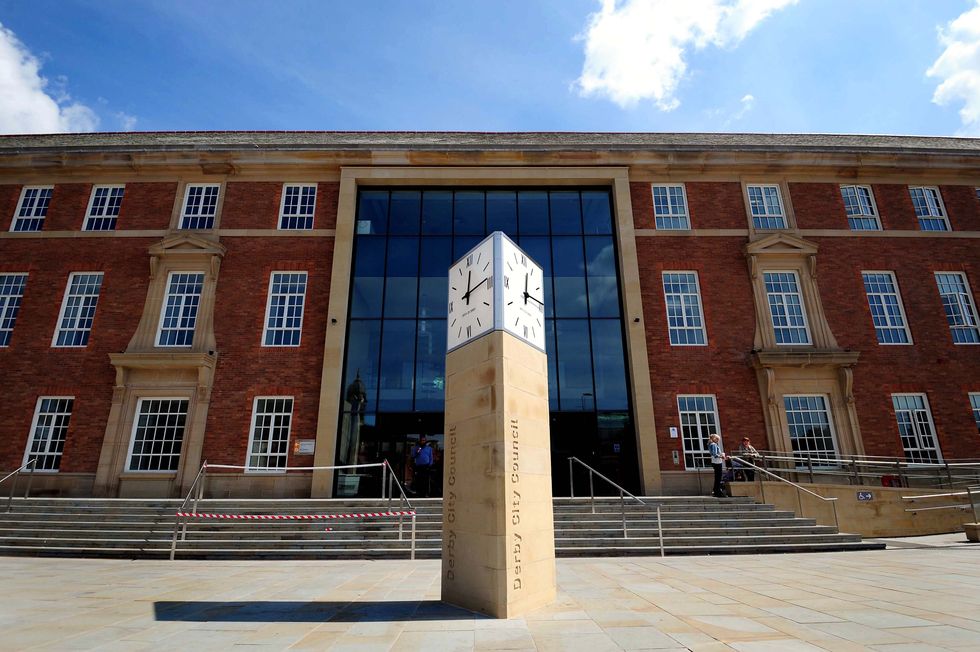
Derby City Council rejected the migrant’s claims, saying he was ‘clearly an adult’
Judge Gaenor Bruce – a former human rights lawyer – said: “Young men typically start to develop facial hair in adolescence, but its thickness and rate of growth can vary.
“Life experience, in particular traumatic life experience, can make someone appear older than they actually are; as can genetics, and exposure to the elements.”
She added that she did not believe everything he said, adding: “I do not accept that he is entirely illiterate, to the point of being unable to sign his own name on the bottom of his statements.
“That is quite obviously incompatible with his use of a smartphone.
The migrant arrived in the UK last year have come to Dover in a small boat
PA
“Overall I have found the chronology in the applicant’s narrative to be internally and externally consistent with what is known about events in norther Syria.”
SMF claimed that while in Syria he had lived with his mother on a farm.
He said that he was “scared the entire time” during his journey to the UK.
After his arrival, he was kept at Dover for two days before he was transferred to a migrant hotel in London for two weeks.
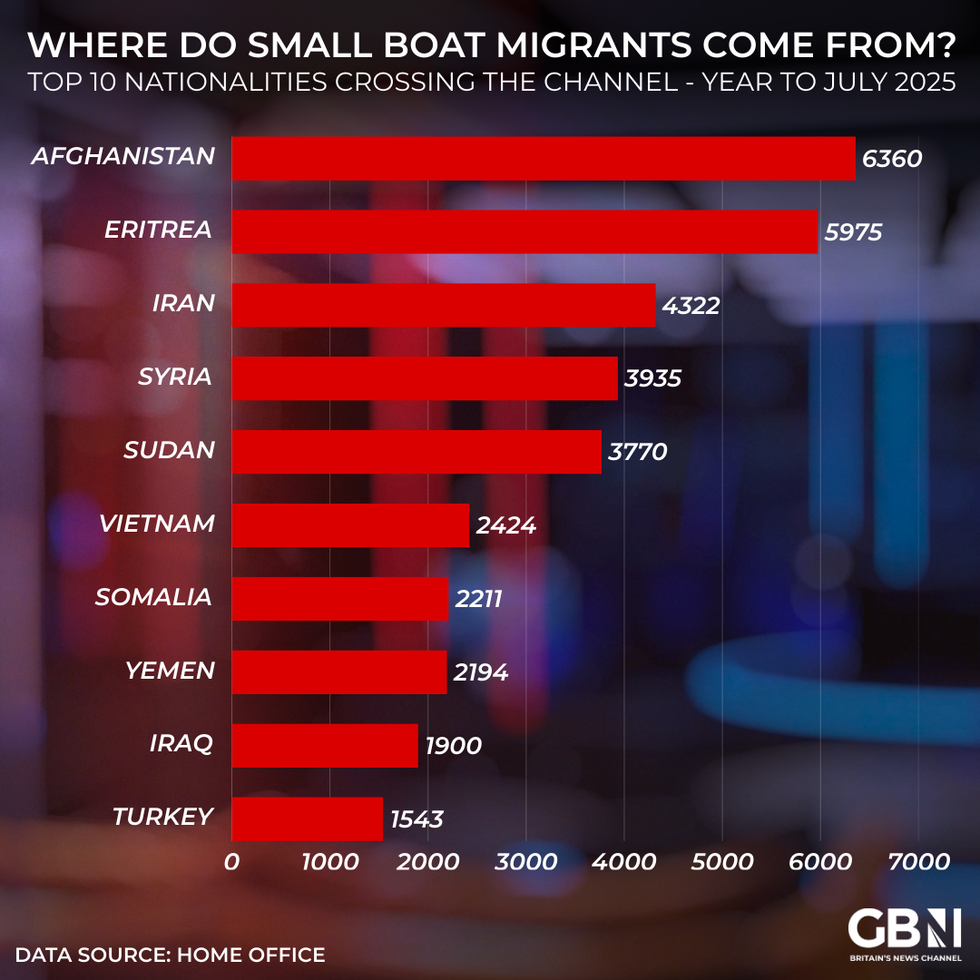
Where do small boat migrants come from? Top 10 nationalities crossing the channel in the year to July 2025
GB NEWS
He claimed to be fearful of the other migrants in the hotel who he said were “noisy, took drugs, drank and smoked cigarettes”.
The Judge declared: “I quash the decision of [Derby City Council] to find that the applicant is ‘clearly an adult’.”
Derby City Council will be made to pay the migrant’s legal costs.
Further details about SMF’s immigration status are unknown.
Syrian Migrant with ‘Deep Voice and Receding Grey Hair’ Is Ruled to Be a Child
A controversial immigration ruling in the United Kingdom has reignited debate about the assessment of asylum seekers’ ages after a Syrian teenager was legally recognised as a child despite concerns about his physical appearance, including grey hair and a deep voice. The case has raised questions about the reliability of age assessments conducted by immigration officials and local authorities, as well as the challenges facing Britain’s already pressured asylum system. While critics have questioned how someone with apparently mature physical characteristics could be classified as a minor, supporters of the ruling argue that appearance alone cannot reliably determine a person’s actual age.
First of all, determining the age of asylum seekers is an important responsibility for British immigration authorities. Many individuals arriving in the United Kingdom through irregular routes do not possess official identity documents. Some have fled conflict, persecution or dangerous living conditions, leaving behind the paperwork that would normally establish their date of birth.
However, establishing whether an asylum seeker is under or over 18 is extremely important. Children are entitled to different legal protections, accommodation arrangements and welfare services from adults. Incorrectly classifying a child as an adult could expose a vulnerable young person to serious safeguarding risks. Equally, incorrectly treating an adult as a child could create difficulties for the authorities responsible for protecting minors.
The controversy surrounding this particular case centres on a Syrian teenager who claimed to have been born on 12 August 2008. When he arrived in Britain by small boat in May 2024, he told immigration officials that he was 15 years old. However, Derby City Council rejected his claimed age and assessed him as an adult.
Officials reportedly raised concerns about his grey hair, physical development and apparently mature appearance. The teenager explained that premature greying was common in his family and that his hair colour did not mean he was older than he claimed. He subsequently challenged the council’s decision through judicial review.
The case was heard by the Upper Tribunal, where witnesses provided evidence about the teenager’s background, behaviour and claimed age. The judge considered the available information, including testimony from people who had interacted with him outside formal assessment interviews.
Importantly, the tribunal recognised that physical characteristics such as grey hair and a mature appearance could provide some information but were not sufficient to establish someone’s chronological age. The judge examined the evidence as a whole rather than relying exclusively on the observations made during the initial assessment. <Cite refs={[“turn117717search0”]}/>
One of the most important aspects of the case was the teenager’s explanation of his personal circumstances. He described growing up in Syria and living with his mother before leaving the country because of the ongoing conflict. His journey to Britain involved travelling through dangerous circumstances, making it difficult for him to provide conventional documentary evidence.
The absence of official documents was an important consideration. Syria has experienced years of civil war, displacement and institutional disruption. Although the country has traditionally issued birth certificates and identity documents, obtaining reliable paperwork can be difficult for individuals from remote communities or families affected by conflict.
The tribunal therefore had to consider whether the absence of documents should undermine the teenager’s account. The judge accepted that the circumstances of his country of origin needed to be taken into consideration.
Another significant factor was the evidence provided by witnesses who had spent time with the teenager in less formal settings. Their observations helped the tribunal assess his behaviour and personal development beyond the brief interviews conducted during the original age assessment.
Following consideration of the evidence, the tribunal concluded that the teenager had more likely than not provided his genuine age and date of birth. The previous age assessments were therefore quashed, and he was entitled to be treated as a child while his asylum claim was considered. Derby City Council was also ordered to pay more than £30,000 in legal costs.
The ruling has raised wider questions about the methods used by British authorities when assessing the ages of young migrants. Physical appearance can vary considerably between individuals. Some teenagers develop mature facial features, deeper voices or grey hair at relatively young ages, while some adults may appear considerably younger than their actual age.
Consequently, relying heavily on appearance can produce inaccurate decisions. Professional assessments should consider personal history, educational background, family information, psychological development and other relevant evidence. Individuals should also have a reasonable opportunity to explain inconsistencies or respond to concerns raised by officials.
Nevertheless, the government faces a difficult challenge in maintaining the integrity of the immigration system. Authorities must ensure that genuine children receive appropriate protection while preventing adults from incorrectly accessing services specifically intended for minors. This requires fair, consistent and transparent procedures.
The issue also has important financial implications. Local authorities across England face significant responsibilities for accommodating and supporting unaccompanied asylum-seeking children. Providing appropriate housing, education, healthcare and social services requires substantial public resources. Councils must therefore ensure that age assessments are accurate and that decisions can withstand legal scrutiny.
There are also serious safeguarding implications. A child incorrectly placed in adult accommodation may experience intimidation, exploitation or abuse. Conversely, placing an adult in accommodation alongside vulnerable children could create additional risks. This makes accurate assessments essential for protecting everyone involved.
The government has consequently faced calls to improve the assessment process, strengthen professional training and ensure that decisions are based on reliable evidence. Greater transparency would also help restore public confidence in the system.
Furthermore, the case highlights the importance of distinguishing between individual asylum claims and the wider political debate about irregular migration. Britain’s immigration system must be capable of enforcing its borders while fulfilling its legal obligations towards vulnerable individuals. These responsibilities should not be treated as mutually exclusive.
In conclusion, the Syrian teenager’s successful legal challenge has highlighted the difficulties of determining the ages of asylum seekers through physical appearance alone. Despite concerns about his grey hair and apparently mature features, the tribunal considered the wider evidence and accepted that he was a child. The case demonstrates why immigration decisions must be based on careful investigation rather than assumptions. Ultimately, Britain needs an age assessment system that is fair, reliable and financially responsible, ensuring that genuine children receive protection while maintaining public confidence in immigration enforcement.