
The move affects coordination rather than support for existing residents and has prompted debate over local priorities, fairness and the future of resettlement arrangements.

Advertisement
Lancashire County Council has formally agreed to end its role as the coordinating authority for refugee resettlement schemes operating in the county.
The decision, taken by the cabinet in early September 2026, means the council will notify the Home Office and transfer administrative responsibilities through a managed process, with its involvement ceasing no later than 31 March 2027.
The council currently coordinates several Home Office schemes on behalf of the 15 local authorities in Lancashire.
These primarily support Afghan nationals who assisted British forces, along with other vulnerable people resettled under national programmes.
Around 745 individuals are currently receiving support under the arrangements.
Officials emphasised that the decision concerns only the administrative and coordination function.
It does not end the support available to refugees already living in Lancashire, nor does it prevent the government from continuing the national schemes or placing people in the area in future.
County Councillor Joshua Roberts, the cabinet member responsible, said the cabinet had carefully considered the options.
He cited pressures on housing, the impending local government reorganisation, and what he described as the unfairness of dedicated multi-year support packages available to some groups while others face different routes to similar assistance.
“This decision relates to the administration and coordination of the schemes rather than the support available to refugees living in Lancashire,” the council stated.
Advertisement
It pledged to work with the Home Office and partners to ensure a safe transition that protects those currently receiving help.
Political reaction and next steps
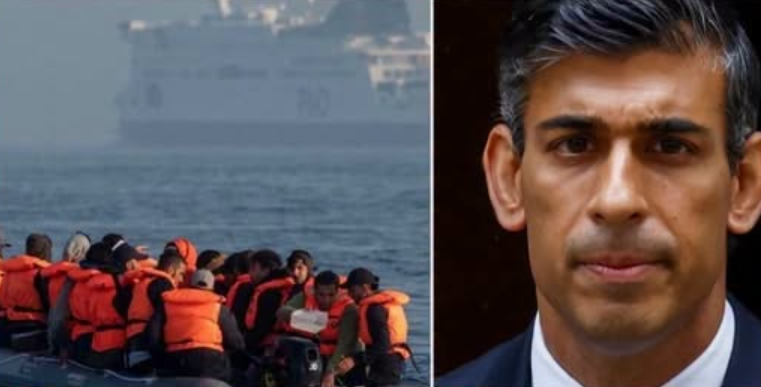
The move has divided opinion.
Advertisement
Labour councillors on the authority condemned the decision, with the group leader describing it as “nonsense.”
Campaigners and sanctuary groups argued that the Afghans involved arrived through legal government schemes and that coordinated support remains essential.
Attempts by opposition members to force a reconsideration of the cabinet decision were unsuccessful.
District councils are now exploring how the coordination role might be handled after March 2027.
Advertisement
Preston City Council has indicated it is prepared to discuss taking on administrative responsibilities, describing continued coordination as a practical way to avoid gaps in support.
The Home Office is expected to engage with the district and unitary authorities that hold housing powers, since housing is a central element of the resettlement packages.
Wider implications
Lancashire’s decision is significant because it is one of the first major county authorities under Reform UK control to step back from the coordinating function.
Other councils facing similar housing pressures, reorganisation or political change may watch the outcome closely.
National resettlement schemes themselves remain the responsibility of central government; local authorities have traditionally played a voluntary coordinating and delivery role rather than a statutory one.
Advertisement
Supporters of the withdrawal frame it as a necessary prioritisation of local housing and service pressures and a move towards treating all residents under the same systems.
Critics see it as a retreat from commitments made to people who arrived legally under government programmes, particularly those who worked with UK forces in Afghanistan.
The practical test will be whether alternative arrangements are put in place smoothly so that existing support continues without disruption.
For now, Lancashire has set a clear timeline for ending its coordinating role while insisting that the change is administrative rather than a rejection of support for those already settled in the county.
The coming months will show whether this remains an isolated local decision or becomes part of a broader shift in how refugee resettlement is organised across England.
BREAKING: LANCASHIRE WITHDRAWS FROM REFUGEE RESETTLEMENT SCHEME – REFORM UK’S DECISION SPARKS NATIONAL IMMIGRATION ROW!
Britain’s immigration debate has entered another controversial chapter after Lancashire County Council officially agreed to withdraw from its role coordinating refugee resettlement schemes across the county. The decision, approved by the council’s Reform UK-led cabinet on 3 September 2026, has triggered a political confrontation over immigration, public spending, housing pressures and Britain’s humanitarian responsibilities.
The move makes Lancashire one of the first major county authorities to step away from coordinating government-backed refugee resettlement programmes. It also represents an important political development for Reform UK, which has repeatedly argued that local communities should have greater control over how public resources are allocated.
However, the decision is more complicated than the headline might suggest. Lancashire County Council is withdrawing from administering and coordinating the schemes, rather than ordering refugees already living in the county to leave. The Government’s national resettlement programmes will also continue, with alternative arrangements expected to take over the administrative responsibilities.
Nevertheless, the decision has raised serious questions about the future of refugee support across Britain.
Reform-led council makes its decision
The decision was approved by Lancashire County Council’s cabinet following a review of its responsibilities under several Home Office resettlement programmes.
The council currently acts as the coordinating authority for 15 local authorities across Lancashire. Its responsibilities include overseeing the administration of refugee resettlement arrangements and coordinating support delivered through local councils and partner organisations.
Under the approved plan, Lancashire will notify the Home Office of its intention to end its coordinating role. A managed transfer of responsibilities will then take place, with administrative duties expected to end no later than 31 March 2027.
County Councillor Joshua Roberts, Cabinet Member for Rural Affairs, Environment and Communities, said the council had carefully considered the available options.
He stressed that the decision concerned the administration and coordination of the schemes rather than the support available to refugees already living in Lancashire.
The council also promised to work with the Home Office and relevant organisations to ensure that existing families would continue receiving appropriate assistance during the transition.
This distinction is important. Lancashire is not closing its doors to every refugee, nor is it cancelling the national programmes operated by the Government.
Instead, the county council wants another authority or organisation to take responsibility for coordinating the services.
Why has Lancashire taken this step?
Reform UK representatives have argued that the existing arrangements place pressure on housing, public services and council resources.
Under the resettlement programmes, local authorities may be responsible for helping families secure accommodation, register with doctors, access education, receive interpretation services and integrate into their new communities.
These services require administrative capacity and cooperation between different organisations.
A Reform UK spokesperson argued that the existing arrangements created an imbalance between the assistance provided to newly arrived refugees and the support available to established residents facing their own difficulties.
The party has particularly highlighted the shortage of affordable housing, financial pressures on local authorities and the challenges faced by vulnerable residents.
Councillor Joshua Roberts has previously argued that people who work, live and contribute to Lancashire should receive appropriate consideration when public resources are allocated.
For Reform UK, the decision reflects its wider political position that local authorities must prioritise the needs of their existing communities.
However, the council’s decision also raises questions about the financial consequences of withdrawing from the schemes, particularly because the Home Office provides funding for refugee resettlement services.
Labour MPs strongly criticise the move
The decision has attracted strong criticism from Labour politicians and refugee-support organisations.
Lizzi Collinge, Labour MP for Morecambe and Lunesdale, expressed her opposition to the original proposal, arguing that withdrawing from the programmes could affect vulnerable people who had fled war and persecution.
She particularly highlighted Afghan refugees who had supported British armed forces during the conflict in Afghanistan.
Many of these individuals and their families had faced serious personal risks because of their association with the United Kingdom.
Collinge also emphasised that the UK Resettlement Scheme provides safe and legal routes for vulnerable refugees. It should not be confused with irregular Channel crossings or the wider debate about illegal immigration.
Her criticism reflects a fundamental disagreement between Labour and Reform UK about the responsibilities of local government.
For Labour, refugee resettlement is an important humanitarian commitment that should continue to receive local support.
For Reform UK, local authorities must be able to reconsider administrative arrangements when they believe existing services are placing excessive pressure on their resources.
What happens to refugees already living in Lancashire?
One of the biggest concerns following the announcement has been the future of families already receiving assistance through the resettlement programmes.
The county council has stated that existing refugees will not automatically lose their support because of the administrative withdrawal.
The Home Office and other local authorities will need to agree alternative arrangements to take over the responsibilities.
Importantly, refugees who have arrived through the relevant programmes have entered Britain through official legal routes. Many have already received indefinite leave to remain, allowing them to live and work in the United Kingdom without a time limit.
They do not automatically lose their immigration status because a local council changes its administrative arrangements.
The council has also acknowledged that it will retain its statutory responsibilities towards residents, including refugees.
This means that essential obligations involving education, social care and other public services cannot simply disappear.
The main challenge will be ensuring that the transfer of responsibilities does not interrupt the assistance available to vulnerable families.
Political tensions increase after scrutiny meeting
The controversy continued after 19 councillors submitted a formal request to review the cabinet’s decision.
A special meeting of Lancashire County Council’s Community, Cultural and Corporate Services Scrutiny Committee took place on 11 September 2026.
Opposition councillors raised concerns about the potential financial consequences, the adequacy of the equality impact assessment and the legal risks associated with withdrawing from the arrangements.
They also questioned whether sufficient consideration had been given to the effects on refugees and organisations currently delivering support.
However, the committee ultimately voted against asking the cabinet to reconsider its decision.
The original withdrawal decision therefore remained in place.
The dispute demonstrated that the controversy was not limited to immigration policy. It also involved questions about local government accountability, public funding and the legal responsibilities of elected councillors.
Financial and legal questions remain
Another important issue concerns the financial implications of the decision.
The Home Office provides funding for the administration and delivery of refugee resettlement services. Lancashire County Council therefore needs to consider whether withdrawing from its coordinating role could affect the funding available for local services.
An investigative report by The Lancashire Lead subsequently highlighted potential financial, legal and reputational risks associated with the withdrawal.
The report indicated that the council could face legal challenges, although the risks might be reduced through a properly managed transition.
There are also concerns about the loss of administrative funding and the possibility that other authorities may have to assume additional responsibilities.
The situation illustrates a wider difficulty in British local government: decisions that appear straightforward politically can become complicated when they involve contractual arrangements, statutory duties and the distribution of public money.
Preston offers to take over refugee support
A further development emerged on 30 September, when Preston City Council became the first local authority to put itself forward to manage refugee support services previously coordinated by Lancashire County Council.
This development is significant because it demonstrates that the withdrawal does not necessarily mean refugee resettlement will end in the county.
Other councils and organisations may be able to assume the responsibilities, provided suitable arrangements are agreed with the Home Office.
The transfer could also provide an opportunity to reconsider how funding and administrative responsibilities are distributed between local authorities.
However, the transition will need careful management to ensure that existing families do not experience unnecessary disruption.
The Government’s national refugee policy
The Lancashire decision also comes at an important moment for national immigration policy.
On 28 September 2026, Home Secretary Shabana Mahmood announced that the UK Resettlement Scheme would reopen for new referrals.
The Government said the programme would provide safe and legal routes for vulnerable refugees, including Afghan women and girls and Palestinian refugees.
The scheme is intended to operate alongside new community sponsorship arrangements involving charities, universities and employers.
Under the proposed approach, participating sponsors will provide accommodation and integration support, potentially reducing the administrative burden on local authorities.
This creates an interesting contrast between the national Government’s decision to reopen refugee resettlement and Lancashire County Council’s decision to withdraw from coordinating the programmes locally.
The two decisions are not necessarily contradictory, since the Government intends to develop alternative arrangements for delivering support.
Nevertheless, they demonstrate how national immigration policy can become a source of disagreement between central government and locally elected administrations.
A wider political battle over Britain’s future
For Nigel Farage and Reform UK, Lancashire’s decision provides an example of the party’s approach to local government and public spending.
The party argues that councils should have greater freedom to determine how resources are allocated and should not be expected to continue programmes that they believe place excessive pressure on local communities.
Critics, meanwhile, argue that refugee resettlement is a national humanitarian responsibility and that withdrawing local administrative support risks weakening Britain’s ability to protect vulnerable people.
Both arguments raise important questions about the relationship between central government, local authorities and the communities they serve.
Ultimately, Lancashire’s decision does not end refugee resettlement in Britain. Nor does it automatically remove the rights of refugees already living in the county.
What it does demonstrate is that immigration policy remains one of the most divisive issues in British politics.
The coming months will be crucial in determining whether alternative authorities can successfully take over the administrative responsibilities and ensure that existing families continue receiving the assistance they need.
For the Government, the challenge is to maintain safe and legal refugee routes while addressing the concerns of communities experiencing pressure on housing and public services.
For Reform UK, the decision represents an opportunity to demonstrate how its approach to local government works in practice.
And for refugees already rebuilding their lives in Lancashire, the most important question is straightforward: will the transition take place without disrupting the support on which they depend?
That question will ultimately matter more than the political headlines surrounding the decision.