
Danny Dyer has unexpectedly found himself at the centre of a political controversy after a BBC interview at an environmental protest turned into an expletive-filled attack on Britain’s political leadership.
The actor questioned who had voted for Prime Minister Andy Burnham and expressed anger at successive governments, producing a viral moment that quickly travelled far beyond the original campaign about sewage and water ownership.
But the complete context is important: the most explosive exchange was not originally broadcast as an uncensored live-TV confrontation.
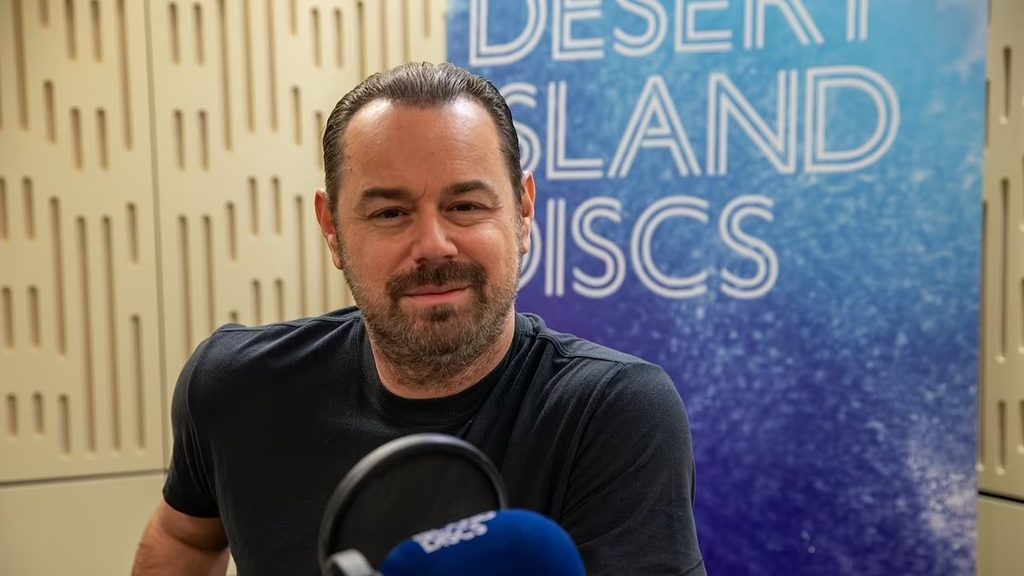
Danny Dyer went to the Kent coast to talk about sewage.
Advertisement
He ended up talking about the Prime Minister.
The actor, famous for EastEnders and more recently Rivals, was attending a Surfers Against Sewage demonstration in Leysdown-on-Sea alongside his daughter Dani Dyer and singer Becky Hill.
The campaigners were demanding that Britain’s water industry be returned to public ownership, with more than 315,000 people having signed a supporting petition.
Advertisement
Dyer has also been involved with a caravan park nearby, giving him a direct connection to the area.
When BBC political reporter Michael Keohan asked Dyer whether he had a message for Prime Minister Andy Burnham, however, the conversation abruptly changed.
Dyer initially responded that he did not know who the Prime Minister was.
When Burnham’s name was put to him, the actor questioned who he was and whether anybody had actually voted for him.
What followed was a profanity-heavy criticism of Britain’s recent political leadership.
And within hours, the clip had become a political story of its own.
Dyer’s question touched on something larger than his personal opinion of Burnham.
He appeared to be challenging the legitimacy of a system in which somebody can become Prime Minister without the public directly voting for that individual to hold the office.
That sentiment is politically powerful.
Constitutionally, however, Britain does not directly elect its prime ministers.
Voters elect Members of Parliament in individual constituencies.
A Prime Minister normally holds office because they lead a government capable of commanding confidence in the House of Commons.
That means a governing party can change leader — and consequently Prime Minister — without automatically holding another general election.
Advertisement
Burnham became Prime Minister earlier this year and delivered his first Commons speech in the role on September 1.
Dyer’s complaint therefore represents a political argument about democratic mandates rather than evidence that Burnham’s premiership is constitutionally invalid.
Advertisement
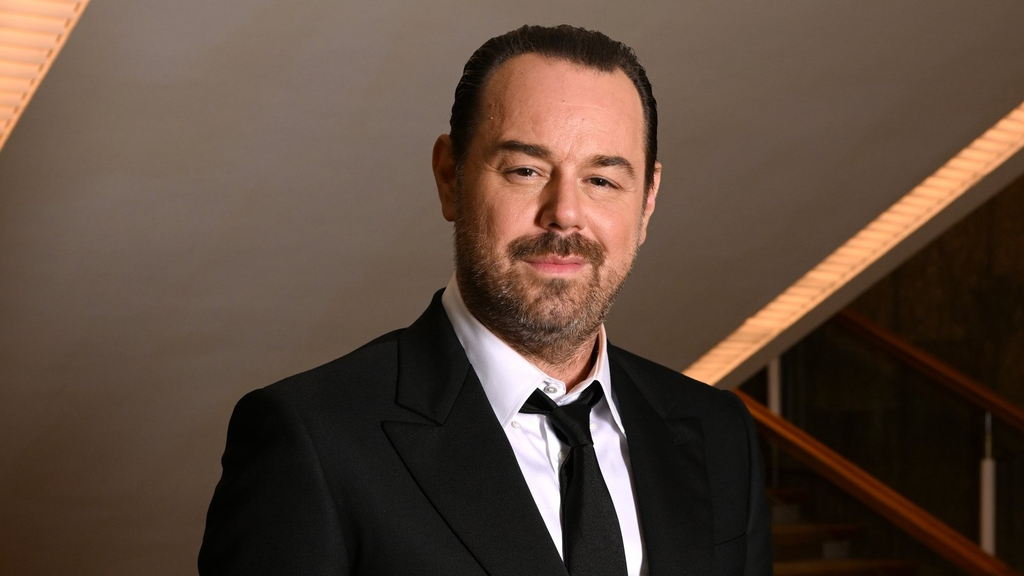
The verified footage shows Dyer using strong language about successive prime ministers and expressing frustration with Britain’s political establishment.
Reports of the exchange quote him questioning Burnham’s identity and asking whether anyone voted for him before broadening his attack to recent national leadership.
The precise distinction matters because viral versions of the story have increasingly described the exchange as an attack on “the elites” or a complete denunciation of Britain’s political system.
Advertisement
Those descriptions may capture how some viewers interpreted Dyer’s comments.
They should not automatically be treated as verbatim quotations unless supported by the original footage.
Dyer has certainly expressed anti-establishment views before.
But a responsible account should separate his actual words in this interview from political messages subsequently attached to the clip online.
Was His Microphone Cut?
Advertisement
Another dramatic version of the story suggests Dyer was suddenly silenced during a live BBC broadcast.
The available reporting does not support that interpretation.
The BBC interviewed Dyer at the protest and used material from the event in its coverage.
But the profanity-filled political exchange was shared online by BBC reporter Michael Keohan rather than being shown uncensored as part of the original television report.
Advertisement
That is considerably different from a broadcaster deliberately cutting someone’s microphone because of political criticism.
There is no clear evidence in the available reporting that the BBC stopped Dyer from speaking because he attacked the Government.
In fact, the reporter subsequently making the footage public undermines the idea that the exchange was being secretly suppressed.
The political controversy also risks obscuring why Dyer was there in the first place.
Advertisement
Surfers Against Sewage organised the demonstration as part of its campaign against pollution and for public ownership of water companies.
Dyer said he had become increasingly aware of sewage pollution while working near the coast.
He described being able to smell an unpleasant “twang” while looking out to sea and criticised the condition of Britain’s water system.
Advertisement
LBC reported that campaigners pointed to 7,280 incidents during the first five months of 2026 in which water companies in England and Wales discharged sewage, chemicals or other pollutants on days with little or no rainfall.
So the original political question was not about immigration, taxation or Westminster personalities.
It was about who should control essential infrastructure and whether Britain’s water system is serving the public effectively.
Advertisement
Dyer’s answer transformed it into something much broader.
The reaction demonstrates the unusual political power of celebrities who are perceived as speaking without the caution normally associated with Westminster
Advertisement
Dyer does not communicate like a government minister.
He uses profanity, humour and deliberately blunt language.
For supporters, that can make his frustration sound more authentic than carefully prepared political messaging.
For critics, the same quality can make complicated constitutional and political questions appear deceptively simple.
His question — “Did anyone vote for him?” — is a good example.
Advertisement
As an expression of frustration, it is immediately understandable.
As a literal description of how Britain’s parliamentary democracy works, it requires much more context.
Burnham was not directly elected Prime Minister by the national electorate.
Neither are other British prime ministers.
The Prime Minister subsequently responded with humour rather than launching a major confrontation.
Advertisement
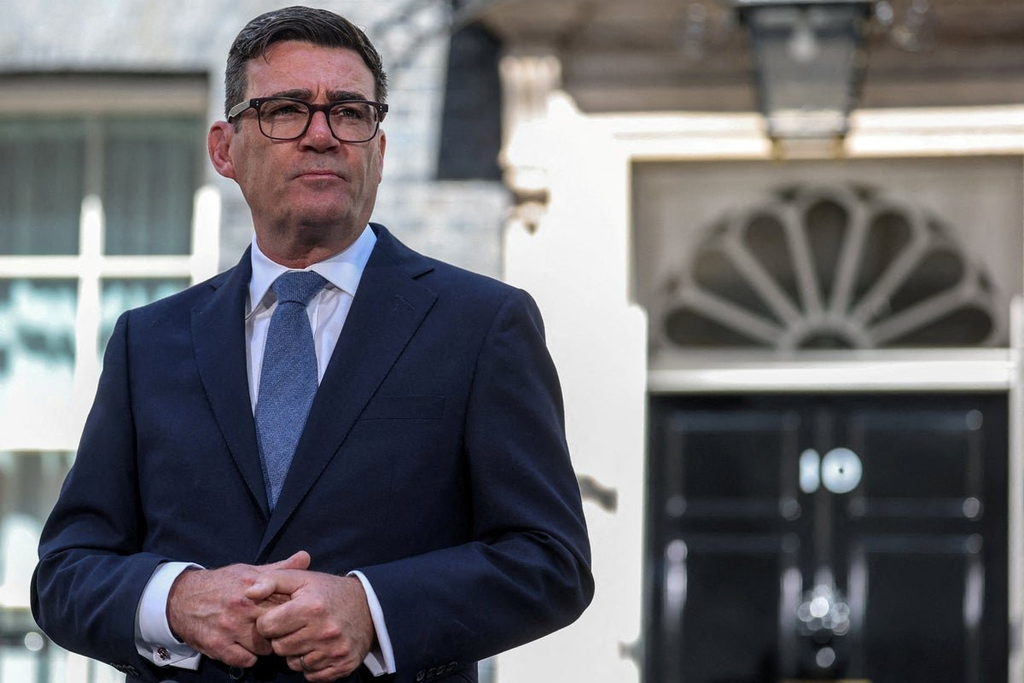
Asked about Dyer’s comments, Burnham said he was “not sure” who Dyer was either.
Reports also noted the football connection: Dyer’s daughter Dani is married to England and West Ham footballer Jarrod Bowen.
The response helped prevent what could have become an extended personal argument.
But it did not answer the broader sentiment behind Dyer’s comments.
Distrust of political institutions has become an increasingly important feature of British politics.
Different groups blame different institutions and policies, but frustration with Westminster has become fertile territory for parties, campaign organisations and public personalities willing to portray themselves as outsiders.
Dyer’s latest intervention is also not completely out of character.
He has previously criticised political leaders and spoken about class inequality and Britain’s social divisions.
His political commentary tends to focus less on detailed policy programmes and more on a broader feeling that ordinary people have been poorly served by powerful institutions.
That does not make his interpretation objectively correct.
Nor does celebrity provide special political expertise.
But celebrities can articulate frustrations that already exist among sections of the public — and sometimes reach audiences politicians struggle to reach.
That appears to be what happened here.
The most interesting part of the episode may therefore be how quickly an unusual interview became something larger.
The verified story is already dramatic enough.
Danny Dyer attended an environmental demonstration, was asked about the Prime Minister and delivered a heavily profane criticism of Britain’s political leadership while questioning Burnham’s mandate.
The additional claims require more caution.
There is no solid basis for presenting the incident as an uncensored live-TV meltdown abruptly terminated by the BBC.
And political interpretations describing Dyer as declaring war on a particular group of “elites” should not be placed inside quotation marks unless those exact words can be established from the original exchange.
For Burnham, the episode is unlikely to represent a major political crisis on its own.
For Dyer, it reinforces his reputation as an unusually outspoken celebrity.
But the reaction to the footage says something more interesting about Britain.
A conversation about sewage became a national political story because Dyer articulated a basic question about who governs the country and how that person acquired authority.
The constitutional answer is straightforward: Britain elects Parliament rather than directly electing a prime minister.
The political answer is more complicated.
Governments ultimately depend not merely on constitutional authority but on public confidence that the political system represents the people it governs.
Danny Dyer’s viral intervention does not prove that Britain has rejected its political establishment, nor does it establish that Andy Burnham lacks constitutional legitimacy.
What it does reveal is how quickly frustration with individual policies can become frustration with the political system itself.
And perhaps the greatest irony is that none of this was supposed to be the day’s headline.
Dyer had gone to the beach to talk about sewage
DANNY DYER CAUSES UTTER CHAOS ON BBC AFTER SCORCHING LIVE ATTACK ON PRIME MINISTER ANDY BURNHAM!
British actor Danny Dyer has found himself at the centre of an extraordinary political controversy after delivering an explosive verbal attack on Prime Minister Andy Burnham during an encounter with a BBC journalist. The outspoken television star questioned Burnham’s identity, challenged his democratic mandate and unleashed a furious criticism of Britain’s political leadership, leaving viewers with another reminder that the country’s growing political frustrations are no longer confined to Westminster.
The incident took place during a protest organised by environmental campaign group Surfers Against Sewage at Leysdown-on-Sea in Kent. Dyer attended the demonstration alongside his daughter Dani Dyer and singer Becky Hill, supporting calls for water companies to be returned to public ownership amid continuing concerns about sewage pollution.
However, it was not simply the environmental campaign that attracted national attention. When BBC political reporter Michael Keohan asked the actor whether he had a message for the Prime Minister, Dyer delivered an unexpectedly blunt response.
“I don’t know who the Prime Minister is, mate. Do you?”
When the journalist informed him that Andy Burnham was leading the Government, Dyer appeared unimpressed.
“Yeah, but who is he? I don’t understand. Did anyone vote for him? Because I didn’t vote for him.”
He then launched into a profanity-filled criticism of successive political leaders before demanding that his comments be broadcast by the BBC.
The footage, which was initially shared online by the BBC journalist, quickly attracted attention across social media. Keohan later deleted his original post, joking that the footage was unlikely to appear in the evening news bulletin.
Nevertheless, the exchange had already become a major talking point.
Andy Burnham responds with a cheeky comeback
The Prime Minister was subsequently asked about Dyer’s remarks while travelling to New York for the United Nations General Assembly.
Rather than responding with a lengthy political statement, Burnham chose humour.
“I’m not sure I know who he is. Is he the father-in-law of a West Ham player?” he joked.
The remark was a reference to Dyer’s daughter Dani, who is married to West Ham United footballer Jarrod Bowen.
Burnham’s response transformed the confrontation into an entertaining exchange between two well-known public figures. Yet beneath the humour was a more serious political question about public confidence in government and the relationship between politicians and ordinary citizens.
Dyer’s comments were particularly notable because he questioned whether the Prime Minister had received a direct democratic mandate from voters.
Under Britain’s parliamentary system, the Prime Minister is not elected through a separate nationwide presidential ballot. Voters elect Members of Parliament, and the government is formed according to parliamentary support and constitutional conventions.
Consequently, a Prime Minister does not need to win a personal nationwide vote to hold office. Nevertheless, public expectations concerning democratic accountability remain an important part of political debate.
Danny Dyer’s anger over Britain’s political establishment
Dyer has never been particularly shy about expressing his political opinions.
The actor, best known for his role as Mick Carter in EastEnders, has repeatedly criticised politicians from different parties.
His most famous political confrontation came in 2018, when he appeared on ITV’s Good Evening Britain and launched an angry attack on former Prime Minister David Cameron over the Brexit referendum.
Dyer questioned why Cameron had been able to leave office after calling the referendum and then avoid responsibility for the political consequences.
The actor’s comments attracted enormous attention and became one of the most memorable television moments of the Brexit period.
He has also criticised former Prime Minister Keir Starmer, questioning his political priorities and expressing disappointment over decisions affecting pensioners.
In an interview with The Big Issue in October 2024, Dyer argued that Britain needed more working-class people in positions of political power.
He suggested that ordinary people were becoming increasingly disconnected from the politicians responsible for making decisions about their lives.
His latest confrontation with Burnham therefore fits into a longer pattern of outspoken criticism rather than representing an isolated incident.
The sewage crisis behind the confrontation
Although the political exchange dominated the headlines, the original protest focused on a serious environmental issue.
Surfers Against Sewage has campaigned for stronger action against water pollution and greater accountability from Britain’s water companies.
The organisation has repeatedly highlighted concerns about sewage discharges into rivers and coastal waters, arguing that pollution threatens public health, wildlife and the environment.
Campaigners want water companies to face stronger regulation and believe that returning the industry to public ownership could provide a more accountable system.
Dyer’s presence at the demonstration helped attract attention to these demands.
For many campaigners, the central issue is not simply who owns the water companies but whether the current system adequately protects the public.
Water companies have faced considerable criticism over sewage discharges, infrastructure investment and the environmental consequences of their operations.
The Government has promised stronger action, but campaigners continue to demand evidence that political commitments are translating into measurable improvements.
Dyer’s outburst therefore brought an environmental campaign into the centre of a much wider national political discussion.
Why the exchange struck a nerve
The incident attracted attention because it combined three issues that have become increasingly important in British public life: political accountability, environmental protection and public frustration.
Many people feel that politicians make ambitious promises during election campaigns but struggle to deliver meaningful improvements once they enter government.
This perception is particularly evident in debates involving household bills, the NHS, housing, immigration and environmental regulation.
Dyer’s criticism was emotional rather than a detailed examination of government policy. Nevertheless, it reflected a broader question that voters frequently ask: who is actually listening to ordinary people?
The actor’s celebrity status also helped amplify the controversy.
Unlike professional politicians, entertainers are not required to follow the same conventions of political communication. Their comments can therefore be more spontaneous, direct and occasionally offensive.
However, celebrity criticism should not be confused with detailed political analysis. Dyer’s remarks expressed personal frustration, but they did not establish whether the Government’s policies were successful or unsuccessful.
That assessment requires evidence about government decisions, public spending and measurable outcomes.
The BBC and the challenge of political reporting
The incident also highlighted the difficulties facing journalists covering political stories involving celebrities.
BBC reporters must balance the public interest in a story against the need to maintain editorial standards.
The original exchange was reportedly not broadcast because of its language. However, its circulation online ensured that audiences could see the actor’s unfiltered response.
This raises wider questions about how traditional broadcasters compete with social media platforms.
Short video clips can spread rapidly, often attracting more attention than longer interviews or detailed policy discussions.
A dramatic remark can become the headline, while the original context receives considerably less attention.
In this case, the protest concerned public ownership of the water industry, but the political confrontation became the dominant story.
For journalists, the challenge is to ensure that the underlying issue is not lost simply because a celebrity has delivered a memorable soundbite.
What does this mean for Andy Burnham?
For Burnham, the exchange represents another reminder that political leaders face scrutiny from outside Westminster.
The Prime Minister’s light-hearted response avoided turning the incident into a major confrontation. However, the environmental issues raised at the demonstration remain matters for the Government to address.
Public ownership of water companies is a complicated policy question involving financial liabilities, regulation, investment and the future management of essential infrastructure.
Supporters argue that public ownership could make accountability easier and allow investment decisions to focus on long-term public interests.
Opponents question whether nationalisation would necessarily improve performance and warn that taxpayers could face substantial costs.
The Government must therefore explain how it intends to address sewage pollution, protect consumers and ensure that water infrastructure receives the investment it requires.
A celebrity confrontation with a political message
Danny Dyer’s comments may have been delivered with humour, anger and considerable profanity, but the incident has highlighted a serious issue facing British politics.
Public confidence cannot be restored simply through speeches, television appearances or carefully prepared political messages.
Voters expect politicians to explain their decisions, accept criticism and demonstrate that their policies are producing results.
At the same time, celebrities who choose to intervene in political debates should recognise that their influence can bring greater attention to important issues, but their opinions do not replace evidence or democratic accountability.
The exchange between Dyer and Burnham is unlikely to be remembered as a major constitutional confrontation. It was, above all, an unusual moment involving an outspoken actor, a BBC journalist and a Prime Minister willing to respond with humour.
Yet the environmental concerns behind the incident remain unresolved.
For the Government, the real challenge is not responding to a celebrity’s insults. It is demonstrating that Britain’s water industry can be made more accountable and that the public’s concerns are being taken seriously.
And for Danny Dyer, the episode has once again demonstrated that he remains one of Britain’s most unpredictable celebrity voices when it comes to politics.
The headlines may focus on the language, the laughter and the personal exchange. But the bigger question remains: will the Government deliver the changes that the campaigners at Leysdown-on-Sea were demanding?