

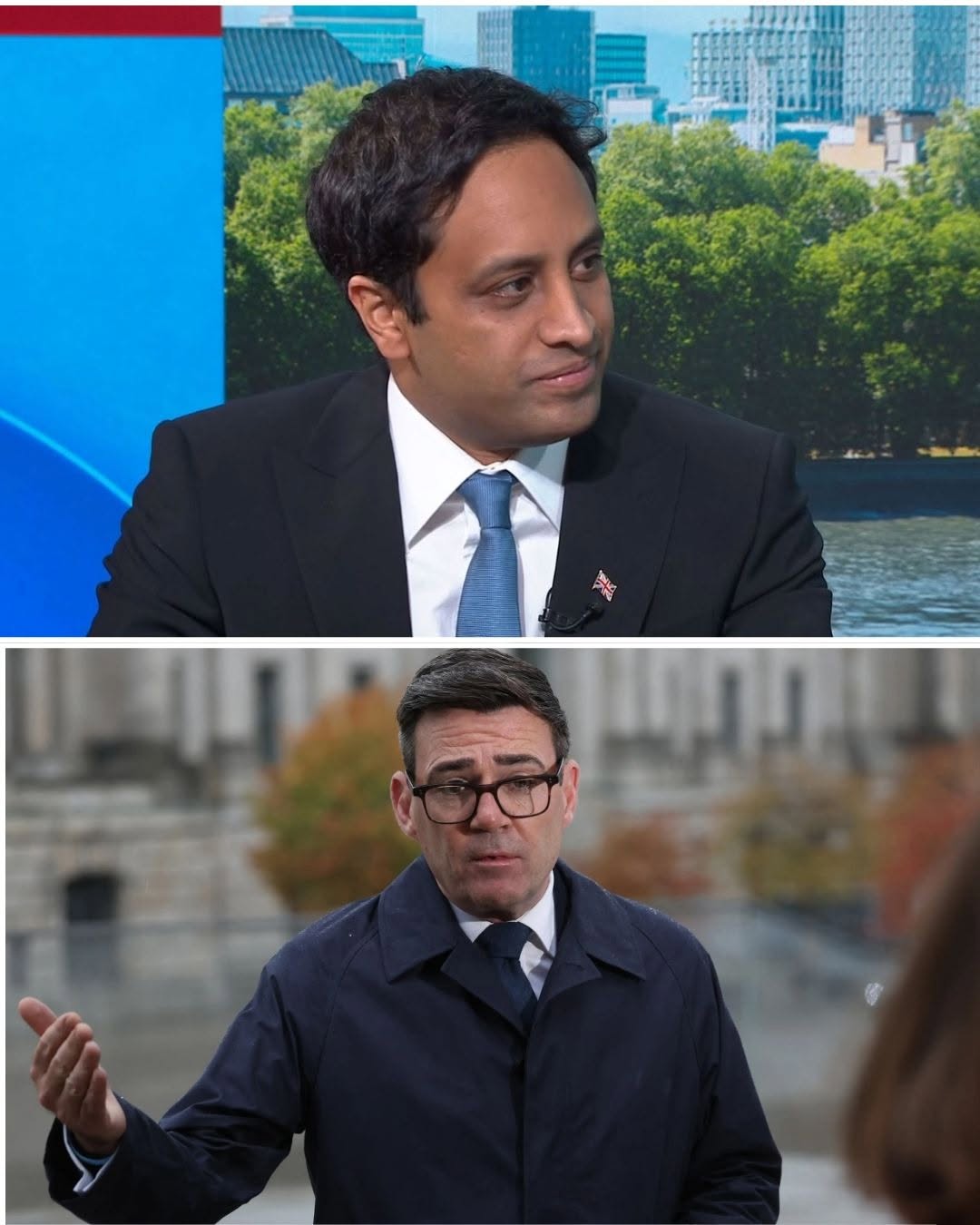
Zia Yusuf Raises Questions Over Allegedly Withheld Government Data as Transparency Debate Intensifies
Claims attributed to the Reform UK figure have prompted questions about government accountability, public safety and access to information. However, allegations of a deliberate cover-up and attempts to silence journalists remain unsubstantiated in the material currently available.
A Political Allegation Demanding Closer Examination
A dramatic allegation attributed to Reform UK politician Zia Yusuf has brought renewed attention to the question of whether the British government is withholding information that the public has a legitimate interest in seeing.
According to a circulating social media account, Yusuf has accused political authorities of concealing data connected to public safety, describing the alleged situation as a serious betrayal of public trust.
The account further suggests that the information is so disturbing that efforts were made to prevent journalists from reporting it.
However, the material does not identify the precise dataset, the government department responsible, the date of Yusuf’s alleged remarks or any documentary evidence supporting claims of deliberate suppression.
Those omissions are significant.
Without the original statement and relevant records, it is impossible to establish whether the data was withheld, why it may not have been published or whether any attempt to obstruct press coverage actually occurred.
The allegations nevertheless raise broader questions about transparency, political accountability and the public’s right to information.
Who Is Zia Yusuf?
Zia Yusuf is a prominent figure associated with Reform UK, the political party led by Nigel Farage.
His involvement in the party has brought him into national debates about immigration, government performance and public policy.
Reform UK has frequently positioned itself as a challenger to Britain’s established political parties, arguing that major institutions have failed to respond adequately to public concerns.
The party’s messaging often emphasizes accountability, institutional reform and dissatisfaction with existing political leadership.
Supporters view this approach as a necessary challenge to political complacency.
Critics argue that some of the party’s rhetoric risks presenting complex policy questions in overly confrontational terms.
Against that background, allegations involving hidden government information are likely to attract attention from both supporters and opponents.
However, political prominence does not establish the accuracy of any particular claim.
The evidence must be assessed independently of the person making the allegation.
What Information Is Allegedly Being Withheld?
The central claim concerns government data said to have implications for public safety.
Yet the circulating account does not identify the subject of the information.
It provides no official document title, statistical reference, government correspondence or published request for disclosure.
This makes it difficult to determine whether the controversy concerns crime, immigration, policing, public administration or another policy area.
It would be misleading to assign the allegations to a specific subject without supporting evidence.
Government information can be unavailable for several different reasons.
Some data may not yet have been collected or verified.
Other information may be undergoing statistical review before publication.
Certain records may contain personal information or material subject to legal restrictions.
In other circumstances, authorities may face legitimate criticism for unnecessary delays or inadequate explanations.
These possibilities should not be treated as interchangeable.
A delay in publication does not automatically prove a deliberate cover-up.
Equally, an official explanation should remain open to scrutiny when there are credible reasons to question it.
The Difference Between Withheld Data and a Cover-Up
https://encrypted-tbn0.gstatic.com/images?q=tbn:ANd9GcR7NQgWd9Fp-nC9sh_SvFQsMlBaSzLCsWs-Q5aPXnqeOA&s=10
The term “cover-up” carries a serious implication.
It suggests that information has been intentionally concealed to prevent the public from discovering misconduct, wrongdoing or another significant fact.
Establishing such a claim requires more than showing that particular records are unavailable.
Investigators or journalists would ordinarily seek evidence of deliberate decisions to suppress information, misleading public statements or inappropriate interference with disclosure processes.
Relevant material might include internal correspondence, documented instructions, official decisions or testimony supported by independent evidence.
Without such evidence, a claim of concealment remains an allegation.
This distinction matters because public trust can be damaged both by genuine institutional secrecy and by unsupported accusations.
Responsible scrutiny requires a clear understanding of what is known, what is disputed and what remains uncertain.
Were Journalists Really Prevented From Reporting?
Another element of the circulating account alleges that attempts were made to silence the press.
If substantiated, interference with legitimate journalism would raise important questions about freedom of expression and democratic accountability.
However, the supplied material does not identify a journalist, media organization, legal notice or documented attempt to prevent publication.
There is also no authenticated statement from a news outlet confirming that it faced improper pressure in connection with the alleged data.
Journalists may encounter restrictions for many reasons, including privacy law, court orders and legal obligations involving sensitive information.
Such restrictions are not necessarily evidence of political intimidation.
The key question is whether any specific action was taken improperly to prevent reporting in the public interest.
That determination requires verifiable facts.
Until those facts are available, claims of press suppression should be presented cautiously.
Why Public Access to Government Data Matters
Government statistics play an important role in democratic decision-making.
Reliable information allows citizens to evaluate public policies, assess institutional performance and hold elected officials accountable.
It also enables researchers, journalists and civil society organizations to examine whether government programmes are achieving their stated objectives.
When important data is delayed or difficult to obtain, public confidence may suffer.
Authorities can reduce uncertainty by explaining what information exists, how it is collected and when it is expected to become available.
Transparency does not mean that every government record can be published without restriction.
Personal privacy, national security and other legitimate considerations may justify limits on disclosure.
However, those limits should be clearly explained and subject to appropriate oversight.
A credible system balances openness with lawful protections.
How Britain Handles Information Requests
The United Kingdom has established legal mechanisms designed to support public access to information.
Under the Freedom of Information Act 2000, individuals can request recorded information from many public authorities.
Public bodies are generally required to respond within specified time limits, although exemptions and other legal provisions may apply.
The Information Commissioner’s Office oversees important aspects of information rights and can consider complaints about how requests have been handled.
These mechanisms provide routes for examining whether information has been improperly withheld.
They also allow disputes to be considered through formal procedures rather than relying entirely on political statements.
If Yusuf or another political figure believes particular records should be disclosed, a clearly identified request and documented official response would provide a stronger basis for public examination.
The Political Impact of Allegations About Secrecy
Claims that governments are hiding information can resonate strongly with voters.
They speak to concerns about whether political institutions are honest, competent and responsive.
For opposition parties, transparency disputes can provide opportunities to challenge ministers and demand explanations.
For governments, the challenge is to respond with sufficient detail to demonstrate that disclosure decisions are lawful and justified.
However, political competition can also encourage exaggerated descriptions.
Words suggesting catastrophe, betrayal or suppression may attract attention without establishing the underlying facts.
The public interest is better served when politicians identify the records in question and explain precisely what evidence supports their concerns.
Specificity makes allegations testable.
It also allows journalists and independent experts to examine them fairly.
What Evidence Would Clarify the Dispute?
Several pieces of information would be necessary to assess the claims attributed to Yusuf.
First, the original speech, interview or social media statement should be identified.
Second, the dataset or government records allegedly withheld should be named.
Third, any formal request for disclosure and the government’s response should be made available.
Fourth, the alleged attempts to restrict press coverage should be supported by identifiable evidence.
Finally, the relevant department should have an opportunity to explain its position.
These steps would not automatically resolve every disagreement.
They would, however, establish a factual foundation for meaningful public scrutiny.
Without them, the controversy remains largely a collection of serious but insufficiently documented assertions.
The Responsibility of Political Leaders and the Media
Politicians have a legitimate role in questioning government decisions and demanding accountability.
Journalists have an equally important responsibility to investigate those claims independently.
Neither role is served by treating dramatic allegations as established facts before evidence is examined.
Media organizations should distinguish direct quotations from paraphrases, identify the origin of documents and seek responses from those accused of wrongdoing.
Political leaders should also recognize that accusations of deliberate concealment can undermine trust in public institutions.
When such accusations are justified, they deserve rigorous investigation.
When evidence is incomplete, that uncertainty should be acknowledged.
Public debate becomes more productive when claims are specific enough to be tested.
Conclusion: Serious Questions Require Verifiable Answers
The allegations attributed to Zia Yusuf raise questions about government transparency, access to information and the protection of legitimate journalism.
However, the circulating account does not establish which records were allegedly withheld or provide independent evidence of a deliberate cover-up.
It also fails to substantiate the claim that journalists were prevented from reporting the information.
The strongest test of any allegation about government secrecy is not the intensity of the language used, but the quality of the evidence supporting it.
If relevant data has been improperly concealed, the public deserves an explanation and appropriate accountability.
If the information has been delayed or restricted for legitimate reasons, those reasons should be clearly communicated.
For now, the central questions remain unanswered.
Identifying the records, examining the disclosure process and verifying the alleged interference with the press would be essential steps toward determining what actually happened.
Transparency is fundamental to public trust, but so is accuracy in the accusations made against those in power.