

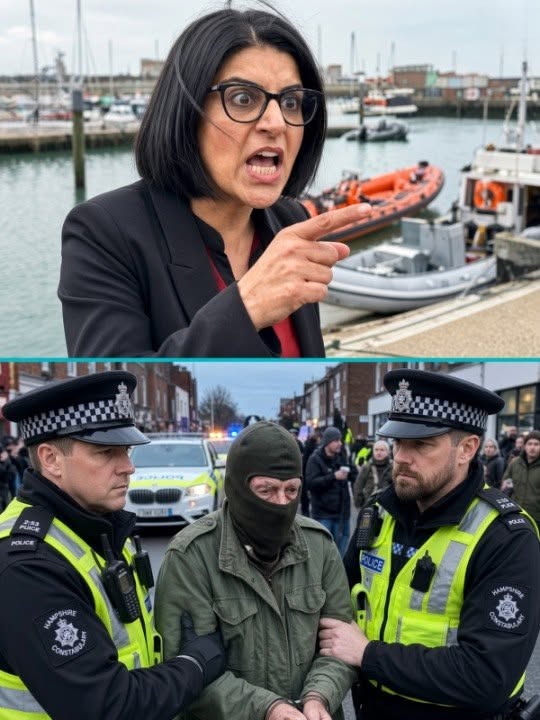
Introduction: A New Political Flashpoint Over Policing and Public Confidence
A new political controversy has emerged in Britain as debates over immigration enforcement, protest policing and the treatment of veterans become increasingly connected in public discussions.
The argument has intensified after claims circulated comparing immigration enforcement actions in the United States with policing decisions during demonstrations in the United Kingdom. Supporters of stricter immigration controls argue that governments should prioritise tackling illegal activity, including immigration fraud and organised crime, while critics warn that political pressure must not influence policing decisions or undermine the rule of law.
At the centre of the debate is a wider question that has become increasingly important across many Western democracies: how can governments maintain public order while protecting democratic freedoms?
Recent demonstrations linked to immigration concerns have placed police forces under significant pressure. Officers have been required to balance competing responsibilities — protecting public safety, allowing lawful protest and responding to potential criminal behaviour.
For some critics, the handling of certain protests has created a perception that authorities apply rules differently depending on the political views of those involved.
Government supporters reject that accusation, arguing that policing decisions are based on evidence, risk assessments and legal frameworks rather than political opinions.
The disagreement reflects a deeper issue: declining public trust in institutions and growing suspicion about whether governments and authorities treat different groups equally.
Immigration Enforcement and the International Comparison Debate
Across the Atlantic, immigration enforcement has also become a major political issue.
Reports of large-scale investigations into alleged immigration fraud involving Somali immigrants in the United States have attracted attention among commentators who argue that immigration systems require stronger oversight.
The FBI and other federal agencies have conducted investigations into immigration-related offences, including cases involving alleged fraudulent documentation or violations of immigration rules.
However, immigration enforcement cases are complex. Each investigation involves specific evidence, legal procedures and individual circumstances. Authorities must establish wrongdoing through proper legal processes rather than assumptions based on nationality or background.
The issue highlights a challenge faced by many countries: maintaining confidence in immigration systems while ensuring enforcement actions follow legal standards.
In Britain, similar debates have focused on illegal Channel crossings, asylum applications and concerns about the ability of government agencies to process cases efficiently.
Critics argue that failures in immigration control can damage public confidence and place pressure on housing, healthcare and local services.
Government officials have responded by emphasising the need for practical solutions, international cooperation and reforms designed to reduce illegal migration.
Portsmouth Protests and the Debate Over Mask Restrictions
In the United Kingdom, protests connected to immigration policies have generated significant controversy, particularly around the use of face coverings during demonstrations.
Police forces have powers under existing legislation to impose restrictions in certain circumstances where there are concerns about public safety, criminal activity or the identification of individuals involved in offences.
Supporters of stronger enforcement argue that people attending demonstrations should not be allowed to hide their identities if authorities believe masks could be used to facilitate crime.
They say anonymity can make it harder for police to investigate incidents and hold individuals accountable.
However, critics argue that wearing a face covering does not automatically indicate criminal intent.
Some people choose to cover their faces for personal reasons, including concerns about online harassment, employment consequences or privacy.
The central legal question is therefore not simply whether someone wears a mask, but whether authorities can demonstrate that restrictions are necessary and proportionate in a specific situation.
This distinction has become a major part of the wider political debate.
The Accusations of “Two-Tier Policing”
One of the most repeated criticisms from some political groups is the claim that Britain has developed a system of “two-tier policing”.
Those making the accusation argue that different protest movements have been treated differently depending on their political message.
They point to previous demonstrations involving groups from across the political spectrum and question whether police responses have always been consistent.
Supporters of this criticism say public confidence depends on people believing that laws are applied equally regardless of ideology.
However, police leaders have repeatedly rejected claims that officers operate according to political preferences.
They argue that every protest is assessed individually based on factors such as intelligence, risk of disorder, threats to public safety and evidence of criminal behaviour.
The challenge for police forces is that public perception can be influenced not only by what officers do, but also by how decisions are explained.
A lack of communication can create suspicion, even when decisions are legally justified.
Veterans and the Political Debate Over Respect and Recognition
Another emotional aspect of the controversy involves veterans.
Many former members of the armed forces have expressed concerns about how they are treated by society and government.
Veterans often represent themes of national service, sacrifice and loyalty, which makes debates involving former soldiers particularly sensitive.
Some critics argue that a government asking citizens to support future defence commitments must also demonstrate respect toward those who previously served.
They question whether policies affecting veterans reflect sufficient appreciation for their contribution.
Others argue that political disagreements should not be interpreted as a lack of respect for the armed forces.
Governments of different political parties have historically faced criticism from veterans’ groups over issues including healthcare support, housing, employment and administrative difficulties.
The relationship between governments and veterans is therefore broader than any single protest or political dispute.
Freedom of Expression, Flags and National Identity
Another part of the debate concerns national symbols and freedom of expression.
Flags, slogans and public demonstrations have always played an important role in political movements.
Supporters of stronger national identity policies argue that citizens should have the right to express pride in their country without fear of criminal consequences.
Critics, however, argue that context matters.
A symbol displayed peacefully is different from a symbol used alongside threats, intimidation or violence.
Modern democracies constantly face the challenge of protecting free expression while preventing genuine harm.
The legal distinction between offensive speech and criminal behaviour is often debated, particularly during periods of heightened political tension.
Government Transparency and Public Trust
A recurring theme in immigration debates is transparency.
Critics often argue that governments should release more information about immigration numbers, enforcement outcomes and public spending.
They say transparency allows citizens to judge whether policies are working.
Governments, meanwhile, sometimes argue that releasing certain information could interfere with legal processes, investigations or individual privacy rights.
This tension between transparency and confidentiality exists across many areas of public policy.
However, when trust in institutions declines, demands for openness become stronger.
Citizens often want clear explanations about how decisions are made and why certain priorities receive attention.
Are Governments Facing a Crisis of Trust?
The controversy surrounding immigration, protest policing and veterans reflects a wider political trend.
Across many countries, citizens increasingly question whether traditional institutions represent their concerns.
Issues such as migration, crime, economic pressure and national identity have become central political subjects because they directly affect people’s daily lives.
For some voters, the biggest concern is whether governments can maintain control over borders and public safety.
For others, the priority is protecting democratic freedoms and preventing excessive state power.
Both concerns exist simultaneously, creating difficult choices for policymakers.
A successful approach requires maintaining security without damaging civil liberties.
Conclusion: Balancing Security, Freedom and Fairness
The debate over immigration enforcement, protest policing and treatment of veterans is unlikely to disappear soon.
Supporters of tougher policies argue that governments must act decisively to protect citizens and maintain confidence in national institutions.
Critics warn that strong enforcement must always operate within the boundaries of law and respect democratic rights.
The challenge facing Britain is not simply choosing between security and freedom.
It is finding a balance where both can exist.
A society built on the rule of law requires effective enforcement, but it also requires public trust.
When citizens believe institutions are fair, transparent and accountable, cooperation becomes easier.
When trust declines, even lawful decisions can become sources of political conflict.
As Britain continues to debate immigration, national security and public order, the central question remains the same:
How can a modern democracy protect its people while ensuring that the principles it claims to defend remain protected as well?
Protest Policing, Immigration Fraud Claims and the Growing Debate Over Trust in Britain’s Institutions
Britain is facing an increasingly intense debate over public trust, immigration enforcement and the role of the police in managing politically sensitive demonstrations. Questions about how protests are policed, how allegations of immigration fraud are investigated and whether public institutions are treating people fairly have become part of a wider discussion about accountability and confidence in government.
Across the country, disagreements over immigration, asylum policy and freedom of expression have placed considerable pressure on political leaders and law enforcement agencies. Supporters of stricter immigration controls argue that authorities must act decisively when evidence of wrongdoing emerges. Others warn that unverified allegations, inflammatory rhetoric and inconsistent interpretations of police decisions can deepen divisions and undermine confidence in the institutions responsible for upholding the law.
At the centre of this debate is a fundamental question: how can Britain ensure that its institutions remain fair, transparent and effective when public opinion is sharply divided?
Protest Policing Under Increasing Scrutiny
The policing of demonstrations has become an important issue in Britain’s broader debate about civil liberties and public order. Protests concerning immigration, asylum accommodation, national identity and government policy can attract large crowds, intense media attention and competing demands from different sections of the public.
For police officers, these events can present difficult operational challenges. They must protect the right to peaceful protest while preventing violence, intimidation, criminal damage and serious disruption. They must also consider the safety of demonstrators, counter-protesters, residents, journalists and other members of the public.
The challenge becomes particularly difficult when a demonstration involves deeply divisive political issues. Some participants may believe they are exercising legitimate democratic rights, while others may feel threatened by the messages being expressed or the presence of particular groups.
Public criticism can emerge regardless of the decisions officers make. If police intervene, demonstrators may accuse them of restricting legitimate expression. If officers adopt a less interventionist approach, critics may question whether they have done enough to protect vulnerable people or prevent disorder.
Such disagreements do not automatically establish that police have acted improperly. Assessing a particular incident requires evidence about what happened, the applicable law, the risks officers faced and the reasons behind their decisions.
Transparency is therefore essential. Clear explanations of policing decisions, accessible complaint procedures and independent scrutiny where appropriate can help the public distinguish justified enforcement from potential mistakes.
The Balance Between Freedom of Expression and Public Order
Freedom of expression and peaceful assembly are important features of democratic life in the United Kingdom. They allow citizens to challenge government decisions, campaign for policy changes and draw attention to issues they believe have been neglected.
However, the right to protest does not mean that every action carried out during a demonstration is lawful. Threats, violence and certain forms of intimidation may justify police intervention, depending on the circumstances and the relevant legal provisions.
The distinction between expressing an unpopular opinion and engaging in unlawful conduct is particularly important during politically charged demonstrations.
Police decisions should be based on evidence and applicable law rather than assumptions about the political views of those involved. Consistency matters because public confidence can be damaged if people believe that similar conduct is treated differently depending on the identity of the demonstrators or the popularity of their cause.
At the same time, officers must make decisions in rapidly changing situations, often with incomplete information. It is therefore important to examine the circumstances of individual incidents before drawing conclusions about whether a response was proportionate.
Independent reviews, published operational guidance and effective accountability mechanisms can help establish whether procedures are being followed and identify areas requiring improvement.
The objective should be to protect lawful democratic participation while ensuring that everyone remains subject to the same legal standards.
Immigration Fraud Claims and the Need for Evidence
Allegations of immigration fraud have also contributed to public debate about trust in Britain’s institutions.
The term can refer to several different types of alleged wrongdoing, including the submission of false documents, misrepresentation in visa applications, sham arrangements intended to circumvent immigration rules or dishonest claims relating to residence or eligibility.
Such conduct can have serious consequences. Fraudulent applications may undermine the integrity of immigration procedures, consume administrative resources and complicate decisions affecting people with legitimate claims.
For this reason, authorities have an interest in investigating credible evidence of wrongdoing and enforcing the relevant rules.
However, allegations must be distinguished from proven offences. A claim circulating on social media, a political accusation or an unexplained administrative decision does not, by itself, establish that fraud has occurred.
Immigration cases can involve complicated documentation, changing circumstances and different legal requirements. Errors may arise from incomplete records or misunderstandings as well as deliberate deception. Determining what happened requires a careful examination of the available evidence.
A credible enforcement system must be capable of identifying fraud without treating entire communities as suspect.
This distinction protects both the integrity of immigration controls and the rights of individuals whose circumstances deserve to be assessed fairly.
Why Immigration Has Become a Question of Public Trust
Immigration is not merely a matter of border management. It has become connected to broader questions about government competence, public spending and the ability of institutions to enforce their own decisions.
Some members of the public believe that the government has not done enough to prevent unauthorised entry, resolve asylum claims promptly or remove people who have no lawful basis to remain in the country.
Others are concerned about the humanitarian consequences of restrictive policies, the treatment of asylum applicants and the risk that misleading claims may encourage hostility towards migrants.
These positions reflect different priorities, but both can involve demands for greater transparency.
People who support stricter controls want reliable information about the number of applications being processed, the outcome of decisions and the effectiveness of enforcement measures. Those concerned about individual rights want assurance that decisions are accurate, that legal protections are respected and that people are not unfairly penalised.
The government must address these concerns through evidence rather than relying solely on political messaging.
Reliable statistics, clear explanations of legal procedures and regular reporting on policy outcomes can help the public assess whether immigration measures are working as intended.
Without credible information, speculation can fill the gap, making it more difficult for citizens to distinguish genuine administrative failures from exaggerated or unsupported allegations.
The Role of Political Leaders
Political leaders have considerable influence over how the public interprets controversial events.
When ministers acknowledge problems, explain the evidence and outline practical solutions, they can help establish a clearer basis for public debate. When politicians make sweeping claims without sufficient supporting information, they risk increasing confusion and distrust.
This is especially relevant when discussions combine immigration, crime and public order. These subjects can generate strong emotions, and claims about individual incidents may quickly become arguments about entire communities or institutions.
Politicians have a legitimate role in questioning police performance, demanding investigations and challenging government policy. Such scrutiny is an important part of democratic accountability.
However, effective scrutiny requires specific questions and verifiable evidence. If a politician alleges fraud, the relevant facts should be established. If police conduct is challenged, the incident and applicable legal standards should be examined. If a government department is accused of failing, its decisions and performance should be assessed using reliable information.
The same standards should apply regardless of the political affiliation of the person making the allegation.
A more evidence-based approach would not eliminate disagreement, but it could help ensure that debate focuses on the actual conduct of institutions rather than assumptions about their motives.
Social Media and the Spread of Unverified Claims
Online platforms have become major sources of information about protests, immigration enforcement and alleged institutional failures.
Videos recorded during demonstrations can provide useful evidence of events that might otherwise receive limited attention. Witness accounts can also raise legitimate questions that authorities need to investigate.
However, short clips rarely provide a complete account of a complex incident. Footage may omit what happened immediately beforehand, fail to show subsequent developments or circulate without an accurate date or location.
The same problem affects allegations of immigration fraud. A document, screenshot or anonymous account may appear convincing without establishing the underlying facts.
As content spreads, speculation can become detached from its original source. Repetition may create an impression of certainty even when the central allegation remains unverified.
For journalists, officials and members of the public, checking original records and seeking independent corroboration are important safeguards.
Authorities should also communicate promptly when credible misinformation risks undermining public safety or obstructing an investigation. Corrections should be clear, accessible and supported by evidence.
At the same time, governments must avoid using concerns about misinformation as a reason to dismiss legitimate criticism. Transparency and open scrutiny are essential precisely because official accounts can also be challenged.
Accountability and the Future of British Institutions
Public confidence is difficult to maintain when people believe that institutions operate without sufficient scrutiny.
Police forces, government departments and immigration authorities all exercise significant powers. Their decisions can affect personal liberty, family life, public safety and access to essential services.
Those powers must be accompanied by accountability.
For policing, this means appropriate complaint mechanisms, independent investigation of serious allegations and clear explanations of decisions where disclosure is legally possible.
For immigration administration, it means consistent procedures, accurate record-keeping, effective fraud detection and accessible routes for challenging decisions.
For government more broadly, it means publishing reliable performance data, acknowledging mistakes and explaining how lessons from investigations will be implemented.
Accountability should not be confused with assuming that wrongdoing has occurred. Independent scrutiny can establish that an action was justified, identify a failure or show that available evidence is insufficient to reach a conclusion.
Each outcome matters because institutions earn credibility through demonstrated fairness and competence rather than through demands that the public accept their decisions without question.
Practical Reforms That Could Restore Confidence
Several measures could help address concerns about protest policing, immigration fraud and institutional transparency.
First, authorities should communicate the legal basis for important operational decisions as clearly as possible. Public explanations can reduce confusion and help people understand the limits of police powers.
Second, immigration agencies should provide accurate information about application processing, enforcement outcomes and confirmed cases of fraud, while protecting personal data and the integrity of ongoing investigations.
Third, complaints involving police conduct should be handled through established procedures, with appropriate independence and meaningful explanations of the findings.
Fourth, public officials should distinguish confirmed facts from allegations when discussing controversial incidents. This would make it easier for citizens to evaluate claims without relying on speculation.
Finally, institutions should explain what happens after mistakes are identified. Publishing lessons learned and evidence of improvements can demonstrate that accountability leads to practical change.
These measures would not resolve every disagreement over immigration or protest policy. They could, however, establish a clearer factual foundation for debate and help prevent isolated incidents from becoming the basis for sweeping assumptions.
Conclusion
The debate over protest policing, immigration fraud claims and public confidence reflects a wider challenge facing Britain: ensuring that institutions remain accountable and effective in a politically divided society.
Citizens have legitimate reasons to demand fair policing, effective immigration enforcement and transparent public administration. They should be able to question official decisions and expect credible answers.
At the same time, allegations must be assessed on the evidence, and individual incidents should not automatically be used to draw conclusions about entire communities or institutions.
The rule of law depends on both effective enforcement and fair procedures. Police must protect public safety while respecting lawful protest, immigration authorities must investigate genuine fraud without prejudging applicants, and political leaders must explain their claims responsibly.
Ultimately, trust cannot be restored through rhetoric alone. It requires accurate information, consistent standards, independent scrutiny and a willingness to correct mistakes.
Britain’s institutions will continue to face difficult questions as debates over immigration and public order evolve. Their ability to respond openly, fairly and effectively will play a significant role in determining whether citizens believe that the country’s democratic system is working as it should.