
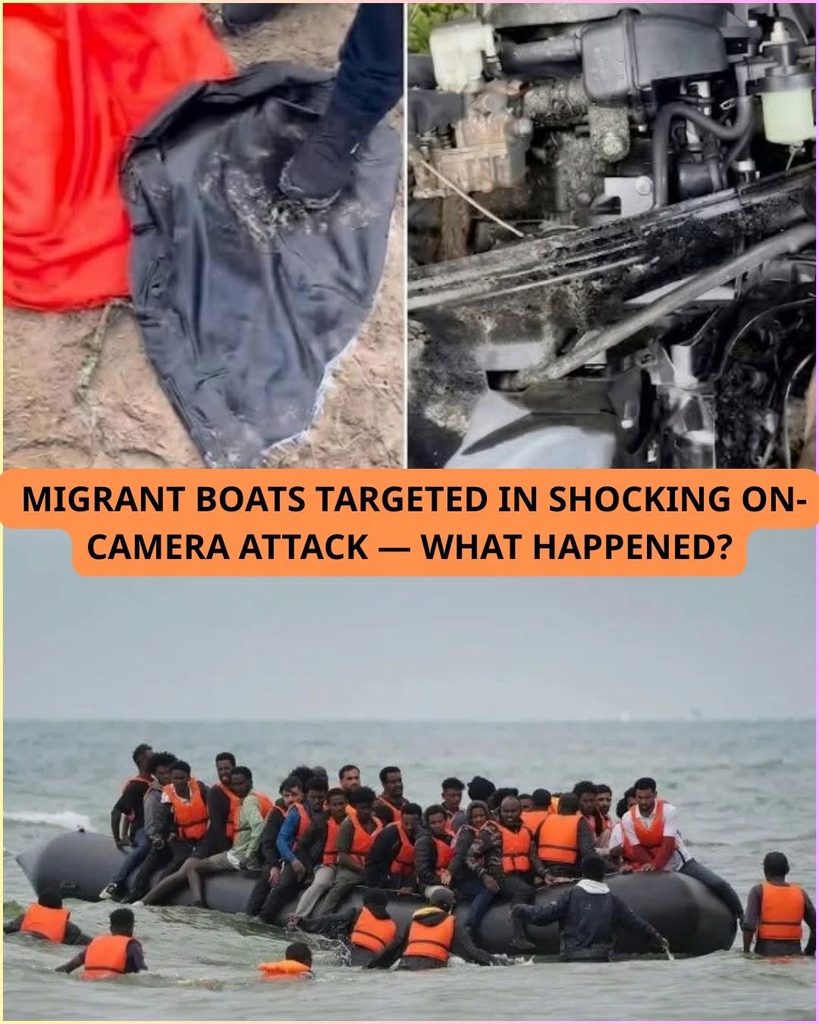
Masked Group Allegedly Targets Migrant Dinghies as Disturbing Footage Fuels Border Security Debate
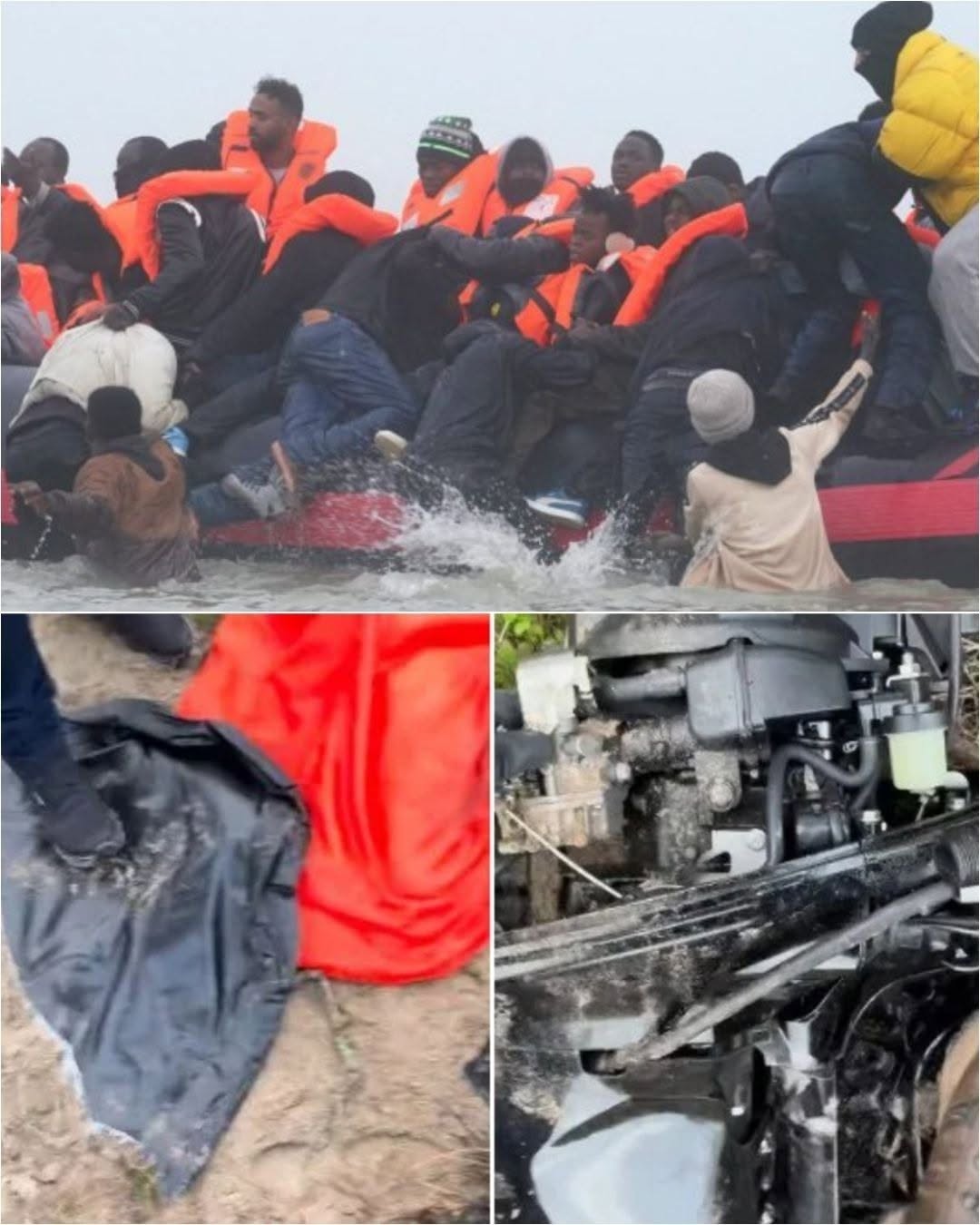
Disturbing footage purportedly showing masked individuals attacking or attempting to sabotage dinghies associated with migrant crossings has ignited a fierce debate over vigilantism, border security and the increasingly volatile politics surrounding irregular migration to Britain.
The video, described in widely circulating social-media posts as showing “British vigilantes” targeting migrant boats, has been presented by some commentators as evidence that frustration over Channel crossings is escalating into direct action.
But significant questions remain unanswered.
Based on the information accompanying the footage, it is not yet possible to independently establish exactly where or when the incident occurred, who the masked individuals were, who owned the boats, or whether migrants were aboard or nearby when the alleged attack took place.
There is also insufficient evidence in the material provided to establish the attackers’ nationality, organizational affiliation or precise motive.
Those uncertainties matter.
Calling the incident “border warfare” may capture the intensity of online reaction, but it risks transforming an unclear episode into evidence of an organized conflict before investigators have established the facts.
What the footage does demonstrate, however, is how combustible the debate over Britain’s borders has become.
From Political Anger to Direct Action?
For years, small-boat crossings have occupied a central place in British politics.
Governments have promised tougher enforcement, closer cooperation with France, faster asylum decisions and stronger action against people-smuggling organizations. Opposition parties and campaign groups have proposed their own solutions, ranging from new returns agreements to sweeping changes in immigration and human-rights law.
But there is a fundamental difference between demanding tougher government policy and individuals taking enforcement into their own hands.
If masked civilians deliberately damaged boats in an attempt to prevent migrant crossings, that would raise serious legal and safety questions.
The fact that a vessel might eventually be used for an unlawful journey does not automatically give private individuals the right to destroy it.
And if people were aboard, preparing to board or dependent on the vessel for safety, interference could create potentially grave consequences.
That distinction is central to the controversy.
Opposition to irregular migration is a political position.
Vigilante violence is an entirely different matter.
What Does the Video Actually Prove?
Video can provide powerful evidence, but it rarely explains everything by itself.
A short recording may establish that certain actions occurred. It may show people damaging an object or confronting another group.
But it does not automatically establish identities, motivations or events immediately before and after the clip.
That is why claims surrounding the footage require independent verification.
Investigators would need to determine the location and date, identify those involved and establish whether the boats were connected to migrant smuggling as claimed.
They would also need to examine whether criminal offences occurred.
Until that work has been completed, describing the masked individuals as an organized British extremist group would go beyond the evidence currently available.
The same caution applies to claims that the incident was specifically designed to “sabotage illegal sea crossings.”
That may be the interpretation promoted by those sharing the video, but motive must be established rather than assumed.
The Danger of Sabotaging Boats
If the vessels were indeed intended for Channel crossings, the alleged actions raise another uncomfortable issue.
Small migrant boats are already extraordinarily dangerous.
Many are overcrowded and poorly suited to crossing one of the world’s busiest shipping routes. Engine failures, damaged tubes, bad weather and panic aboard can quickly create life-threatening emergencies.
Sabotaging a boat can therefore have consequences far beyond damage to property.
If defects are not discovered before departure, people could potentially take a compromised vessel to sea.
That is one reason enforcement against smuggling networks is normally conducted by trained police, border authorities and other official agencies.
Authorities can seize equipment, gather evidence, make arrests and disrupt criminal organizations through established legal processes.
A masked group acting independently has none of those safeguards.
Anger Over the Channel Has Been Building
The incident has attracted attention partly because it comes against a background of intense frustration over Britain’s inability to eliminate small-boat crossings.
For some voters, the boats have become a symbol of a border system they believe has lost credibility.
Each arrival can generate renewed questions about enforcement, asylum processing and the UK’s relationship with France.
Those concerns are politically significant and should not simply be dismissed.
Governments have a responsibility to enforce immigration laws and maintain public confidence in the border system.
But frustration with government performance does not transfer enforcement powers to private citizens.
If people conclude that authorities are failing and therefore decide to enforce their own interpretation of border law, the result risks being disorder rather than stronger borders.
Migrants and Smugglers Are Not the Same
Another important distinction concerns the people inside the boats.
People-smuggling networks profit from organizing dangerous journeys and are legitimate targets for criminal investigation.
Migrants are not automatically members of those organizations.
People attempting to reach Britain may have very different circumstances. Some may eventually qualify for protection; others may have asylum applications rejected. Those decisions belong to the legal process.
Reducing everyone involved to a single category can make dangerous actions easier to justify rhetorically.
That is particularly concerning when people are at sea.
Whatever a person’s immigration status, maritime rescue principles require preservation of life when someone is in danger.
Border enforcement and humanitarian obligations therefore operate simultaneously rather than being mutually exclusive.
Could Vigilantism Make Enforcement Harder?
There is also a practical argument against private intervention.
If civilians interfere with suspected smuggling operations, they could disrupt official investigations, destroy evidence or unintentionally place migrants and police officers in greater danger.
Organized smuggling networks are criminal enterprises.
Investigating them can involve surveillance, intelligence sharing, financial investigations and cooperation between authorities in several countries.
Damaging one dinghy may create a dramatic video.
It does not necessarily dismantle the organization that purchased it.
Smugglers may simply obtain another vessel, change location or alter their methods.
Effective enforcement requires targeting the business model behind the crossings, including organizers, supply chains, money flows and logistical networks.
International Consequences
The alleged incident could also become politically sensitive depending on where it occurred.
If the boats were located in France or another country rather than Britain, questions of jurisdiction become particularly important.
British citizens cannot simply travel abroad and independently enforce UK immigration policy.
Any confirmed involvement by organized British activists in violent activity on foreign territory could create legal and diplomatic complications.
That is another reason the location of the footage needs to be established before broader conclusions are drawn.
A Warning Sign for Britain’s Migration Debate
Perhaps the greatest significance of the video is what it reveals about the atmosphere surrounding immigration.
Political disagreement is normal in a democracy.
People can campaign for lower migration, tougher borders, more generous asylum policies or almost any position between those extremes.
They can protest, vote, petition politicians and challenge government decisions through the courts.
The boundary becomes clearer when political frustration turns into intimidation, destruction or violence.
If the footage is authenticated and investigators establish that masked individuals deliberately attacked migrant vessels as an act of private border enforcement, the episode would represent a troubling escalation.
It would not prove that Britain is experiencing “border warfare,” nor would it justify assigning responsibility to a broader political movement without evidence.
But it would raise a serious question about what happens when citizens cease believing that institutions can enforce the law effectively.
The answer cannot be to normalize masked groups deciding which laws they will personally enforce.
Britain’s government remains responsible for controlling its borders. Police and international partners remain responsible for confronting smuggling networks. Courts remain responsible for determining criminal liability.
The frustration surrounding Channel migration may be genuine.
But if individuals replace lawful enforcement with vigilantism, the result is unlikely to be greater control.
It risks creating another form of lawlessness altogether.
Border Warfare: Masked British Vigilantes and Migrant Dinghies Ignite a Dangerous Channel Controversy
The English Channel has become the centre of an increasingly tense debate over immigration, border security and public order, as allegations of confrontations involving masked British vigilantes and migrant dinghies raise concerns about the safety of those at sea. The controversy has intensified questions about the government’s ability to manage irregular migration, the limits of private intervention and the growing frustration surrounding Britain’s border policies.
For those demanding tougher immigration controls, the continuing debate over small-boat crossings represents a test of whether the authorities can enforce the rules effectively. They argue that repeated political promises have failed to provide sufficient reassurance to communities concerned about border management, public spending and the credibility of the asylum system.
Others warn that confrontations involving unofficial groups could turn an already dangerous maritime situation into a humanitarian emergency. They argue that no level of political frustration justifies violence, intimidation or interference with legitimate rescue and enforcement operations.
While specific allegations about attacks or individual incidents require independent verification, the broader controversy highlights a serious challenge for Britain: how to respond to public demands for stronger border controls without allowing anger to undermine the rule of law.
The English Channel at the Centre of a National Dispute
Small-boat crossings have become one of the most visible and divisive issues in British politics. The Channel is a busy maritime route, and journeys in small vessels can be dangerous because of overcrowding, changing weather conditions and limited safety equipment.
For successive governments, reducing irregular crossings has been a major policy objective. Ministers have faced pressure to disrupt smuggling networks, improve cooperation with European partners, process asylum applications more efficiently and ensure that people who have no legal right to remain can be removed in accordance with the law.
Yet the issue has proved difficult to resolve. Enforcement at sea is only one part of a complicated system involving international cooperation, identity checks, legal assessments and decisions about individual cases.
For critics, the persistence of crossings raises questions about whether existing policies are achieving their stated aims. They want clear evidence that the authorities can manage arrivals and implement immigration decisions consistently.
The appearance of vigilante-style groups adds another layer of complexity. When individuals attempt to intervene in situations involving migrant boats, the debate shifts from government policy to the immediate question of who has the authority to act and what risks such interventions create.
That distinction is important. A public disagreement about immigration policy is one thing; an encounter involving potentially unstable boats and people in danger is another.
Masked Groups and the Limits of Private Enforcement
The image of masked individuals confronting migrant vessels can generate powerful reactions. Supporters of stricter border controls may interpret such activity as a sign of growing anger over the government’s approach. Critics may view it as an alarming example of people attempting to impose their own authority outside established legal channels.
However, the use of masks or the circulation of dramatic footage does not, by itself, establish what happened during a particular encounter. Claims about violence, injuries, the identities of those involved or the circumstances leading to a confrontation must be assessed using reliable evidence.
What remains clear is that private individuals do not automatically acquire enforcement powers because they believe the authorities are failing.
Peaceful protest is a legitimate part of democratic life. Citizens can organise demonstrations, campaign for changes to immigration law, question elected representatives and demand greater accountability from ministers.
But deliberately endangering people, threatening individuals or interfering with emergency operations raises very different issues. Depending on the facts, such conduct may have legal consequences.
The distinction between protest and vigilantism is especially significant at sea, where a sudden movement or unexpected confrontation can create dangers that are difficult to control.
If people believe that the government’s immigration policy is inadequate, the appropriate response is to pursue political and legal change rather than create additional risks through unofficial enforcement.
Why Confrontations at Sea Can Become Dangerous
A migrant dinghy is not a stable platform for a confrontation. Passengers may be crowded together, the vessel may be poorly equipped, and those aboard may have little ability to respond safely to unexpected events.
A sudden approach by another vessel, aggressive shouting or an attempt to block a route could cause panic. If passengers move abruptly or the boat becomes unstable, the situation could deteriorate rapidly.
The risks extend beyond the people aboard the dinghy. Individuals attempting to intervene may lack the training and equipment required for maritime emergencies. Their actions could also complicate the work of professional responders.
This is why incidents at sea require a coordinated response from properly trained and authorised personnel. Maritime safety cannot be reduced to a contest between groups with opposing political views.
The danger is not limited to one side of the immigration debate. Anyone entering an unstable maritime situation without appropriate preparation could become a casualty or create additional work for emergency services.
Effective border enforcement and the protection of life should therefore be treated as complementary responsibilities. Authorities can investigate suspected criminal activity, manage arrivals and implement lawful decisions while ensuring that emergencies are handled safely.
Allowing confrontations to escalate would risk turning a political dispute into a preventable tragedy.
Public Anger Over Small-Boat Crossings
The controversy also reflects wider public concern about immigration policy.
For some people, small-boat arrivals have come to symbolise a loss of confidence in the government’s ability to control the border. They question why crossings continue despite repeated announcements of new enforcement measures and demand a clearer explanation of what is being done.
Other concerns involve the cost of asylum accommodation, pressure on local services, the time taken to decide claims and the implementation of decisions when applications are unsuccessful.
These are questions that governments must address with evidence and clear communication. Public confidence is difficult to maintain when official statements are not accompanied by transparent information about progress and setbacks.
However, anger about policy should not be confused with proof that every allegation circulating online is accurate. Dramatic headlines can compress complex events into a simple narrative before the facts have been established.
Nor should the actions of particular individuals be used to characterise every migrant, protester or resident concerned about immigration.
A constructive debate requires reliable information about crossings, asylum decisions, enforcement outcomes and public expenditure. Without it, political disagreement can become increasingly dominated by speculation and emotionally charged claims.
The Government Faces Demands for Stronger Action
Confrontations involving vigilante-style groups place additional pressure on ministers to demonstrate that their immigration strategy is working.
A comprehensive approach must address several connected challenges. The authorities need to identify and disrupt smuggling networks, improve the processing of asylum claims, resolve documentation problems and implement final decisions where removal is lawful.
International cooperation is also important because the organisations arranging dangerous crossings often operate across national borders. Action at the British coastline alone cannot address every stage of the smuggling process.
The government must also explain how its policies will be evaluated. Counting arrivals is one measure, but it does not provide a complete picture of whether the system is functioning effectively.
Other relevant measures include the time required to process claims, the number of cases resolved, the implementation of final decisions and the effectiveness of investigations into criminal organisers.
Ministers should explain what changes have been introduced, what results have followed and where difficulties remain.
Critics may argue that stronger deterrence and more consistent removals are necessary. Others may emphasise the need for fair procedures and compliance with international protection obligations.
These approaches can involve genuine disagreements about priorities and implementation. But whatever policy a government adopts, it must be clear about its legal basis, practical requirements and expected outcomes.
The presence of unofficial groups does not eliminate the state’s responsibility to manage the issue. If anything, it reinforces the need for an effective and trusted official response.
The Difference Between Irregular Entry and Asylum Rights
One reason the immigration debate becomes so contentious is that several different legal questions are often treated as though they were identical.
Irregular entry concerns the manner in which a person enters a country. An asylum claim concerns whether that person qualifies for international protection under the applicable legal framework.
The circumstances of people arriving by small boat vary. Some may qualify for protection, while others may not meet the relevant criteria. The outcome cannot be determined solely by the route taken to reach Britain.
Authorities must assess individual claims, establish identities where possible and make decisions through procedures that comply with the law. Where a claim is refused and there is no remaining legal barrier to removal, the state must have workable arrangements for implementing the decision.
A system that takes too long to resolve cases can create uncertainty for applicants and local communities. A system that fails to assess claims properly can also produce serious errors.
The objective should be a process that is timely, consistent and enforceable, while preserving the safeguards required by law.
Calls for tougher immigration controls are part of a legitimate political debate. But they do not give private groups the authority to decide who may remain in the country or how an individual case should be handled.
Those responsibilities belong to the institutions established to administer and enforce the law.
The Role of Social Media in Escalating Tensions
Video footage can play a significant role in shaping public reactions to Channel incidents.
A short clip may appear to show a confrontation clearly, yet omit the events that preceded it or the circumstances that followed. Captions and commentary can also present interpretations as though they were confirmed facts.
This does not mean footage should be dismissed. Video can provide important evidence, help establish a sequence of events and support investigations. But it should be considered alongside other available information rather than treated as a complete account automatically.
When allegations of attacks or dangerous conduct circulate widely, responsible reporting requires attention to the original material, the context in which it was recorded and any findings from relevant authorities.
The same standard should apply regardless of whether the people involved are migrants, activists, local residents or public officials.
Reliable evidence is essential not only for determining whether a law may have been broken but also for preventing false accusations from intensifying an already sensitive debate.
Political leaders and campaigners also have a responsibility to avoid encouraging harassment or presenting unverified claims as established fact.
What Coastal Communities Need
Residents of coastal communities have a legitimate interest in how border operations are conducted and how national immigration policies affect their local area.
They may want clear information about emergency procedures, public spending, accommodation arrangements and the responsibilities of different agencies. They may also expect their concerns about safety and disruption to be taken seriously.
Central government and local authorities can help by providing accurate information, explaining decisions and establishing clear channels through which residents can raise questions.
Transparent communication is particularly important when dramatic incidents generate rumours or competing accounts. A lack of information can allow speculation to spread, although no amount of communication will eliminate disagreements about immigration policy.
At the same time, residents should not be placed in a position where they feel compelled to intervene in dangerous situations themselves. Professional agencies have responsibilities and procedures for handling incidents, and those arrangements exist partly to protect everyone involved.
A system that commands public confidence must be both effective and accountable. Communities need to understand what is happening, while the authorities need sufficient capacity to carry out their responsibilities safely.
A Test of the Rule of Law
The controversy surrounding masked vigilantes and migrant dinghies ultimately raises a broader question about the relationship between public frustration and democratic institutions.
When people believe that official systems are failing, some may become attracted to direct action. Such activity can attract attention, but it does not necessarily produce lasting policy improvements. If it creates threats or dangerous confrontations, it may make the underlying problem harder to manage.
A functioning democracy provides lawful ways to challenge government decisions. Elections, parliamentary scrutiny, peaceful demonstrations, judicial processes and public campaigning allow citizens to demand change without replacing official authority with private force.
The government, in turn, must take criticism seriously. It cannot expect public confidence to recover simply by condemning confrontational behaviour while leaving legitimate questions about enforcement unanswered.
Ministers need to demonstrate that border policy is based on clear rules, adequate resources and measurable results. Enforcement agencies must apply those rules fairly and respond proportionately to unlawful conduct.
The objective is not to prevent people from disagreeing about immigration. It is to ensure that disagreement does not undermine public safety or the institutions responsible for resolving it.
Conclusion: Effective Border Control Without Dangerous Confrontations
The controversy surrounding masked British vigilantes and migrant dinghies reflects the intensity of the debate over the English Channel. Questions about border security, government credibility and the future of immigration policy continue to divide public opinion.
Those who demand stricter controls want evidence that crossings are being managed effectively and that lawful departure decisions are implemented. Those concerned about vigilante activity warn that intimidation and unsafe interventions could endanger lives and undermine the rule of law.
Both the policy debate and the safety concerns require serious attention. Specific allegations about violent incidents should be investigated and verified, while wider questions about enforcement should be answered with reliable data rather than political slogans.
Britain needs an immigration system capable of processing claims efficiently, acting against criminal smuggling networks and enforcing final decisions lawfully. It also needs clear accountability for public spending and open communication with coastal communities.
No unofficial group can substitute for that work. Confrontation may generate headlines, but lasting improvements depend on competent administration, lawful enforcement and cooperation across the relevant institutions.
The real test for Britain is whether it can address public frustration, maintain effective border controls and protect people from unnecessary danger at the same time. That challenge will not be resolved by escalating confrontations on the water, but by demonstrating that the law can be enforced consistently, transparently and safely.