
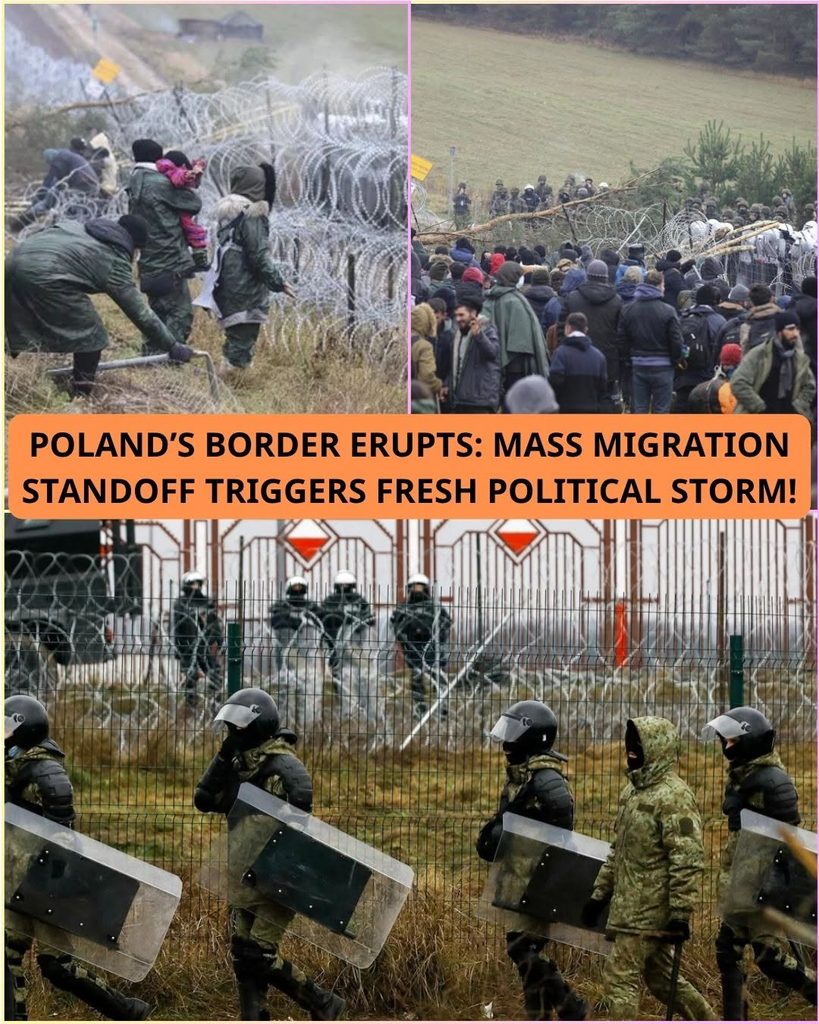
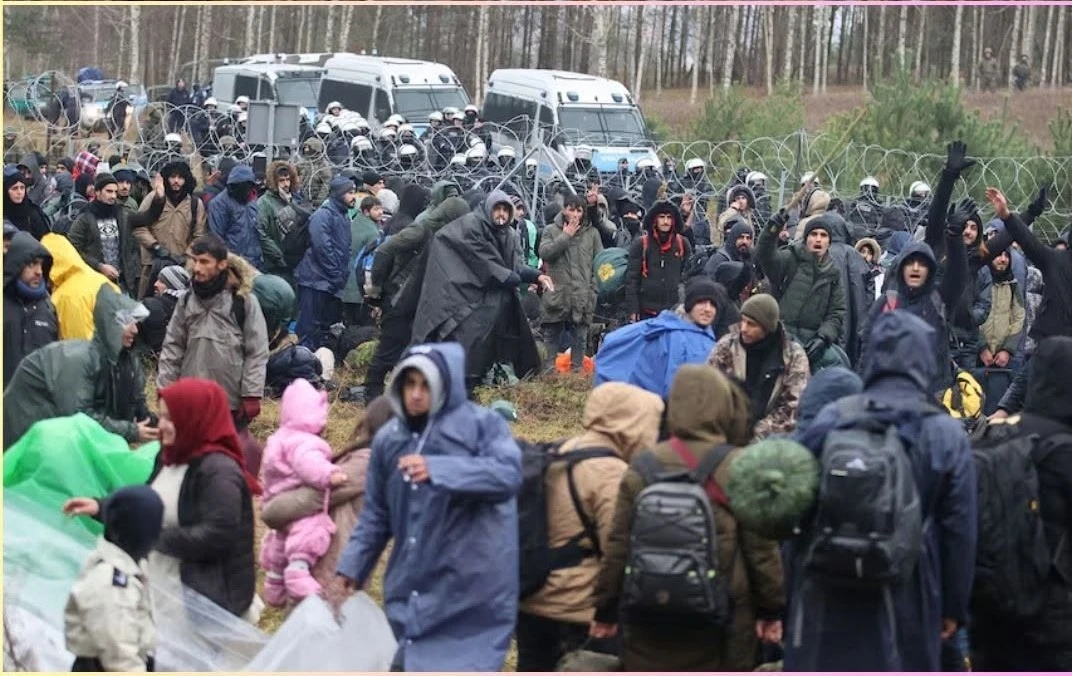
Poland’s heavily fortified frontier with Belarus has once again become a focal point in Europe’s migration debate, as reports of attempted irregular crossings revive arguments over national security, asylum rights and the extraordinary measures Warsaw has adopted along the European Union’s eastern edge. Images of razor wire, riot police and groups of migrants stranded near the border present a dramatic picture, but the story behind them is considerably more complicated. Poland argues that it is confronting not simply spontaneous migration but a deliberately engineered pressure campaign linked to Belarus. Human-rights organisations and Poland’s own rights commissioner, meanwhile, have questioned whether restrictions on asylum and other border practices go too far. The result is a dispute in which security, sovereignty and humanitarian obligations collide.
A Border That Has Become Much More Than a Border
For most Europeans, the frontier separating Poland and Belarus was once simply one of the European Union’s external borders. Since 2021, however, it has evolved into something substantially more significant: a geopolitical pressure point where migration, security policy and the confrontation between Belarus and the West intersect.
The crisis began escalating in 2021 as thousands of people, many originating in the Middle East, Asia and Africa, travelled through Belarus and attempted to enter Poland, Lithuania and Latvia irregularly. European governments accused the Belarusian authorities of facilitating the movement of migrants toward EU territory in retaliation for Western sanctions and political pressure against the government of Alexander Lukashenko.
Poland consequently argues that the people arriving at its frontier cannot be viewed exclusively through the traditional framework of migration.
Warsaw describes the situation as “instrumentalised migration” and part of a broader form of hybrid pressure against Poland and the European Union.
That distinction lies at the heart of almost every controversy surrounding the frontier.
If the people approaching the border are understood primarily as refugees and migrants seeking entry into Europe, humanitarian and asylum obligations naturally dominate the discussion.
If their movement is simultaneously being facilitated by a hostile neighbouring state seeking to destabilise an EU and NATO member, border security becomes a national-security question.
Both elements can exist at the same time.
A migrant can be vulnerable while also being exploited by a government for geopolitical purposes.
Understanding that uncomfortable overlap is essential to understanding Poland’s response.
What Do We Know About the Latest Claims?
Reports circulating online have claimed that Polish authorities recently stopped a large group attempting to cross the border without authorisation.
Such incidents are consistent with the broader pattern documented along the Poland-Belarus frontier, where Polish border authorities have repeatedly reported attempted irregular crossings.
However, dramatic photographs circulating alongside individual reports should not automatically be treated as evidence of the precise incident described in a social-media caption. Images from the border crisis have circulated for years and are frequently reused to illustrate newer developments.
The photograph itself therefore cannot establish exactly when a particular confrontation occurred, how many people were involved or what happened immediately before and after the scene captured by the camera.
What can be established is that Poland continues to operate unusually intensive security measures along the Belarusian frontier.
Official European migration reporting shows that on 3 June 2026, Poland’s interior minister extended the buffer zone along the Polish-Belarusian border for another three months, keeping it in force from June 3 through August 31. Polish authorities said maintaining the zone was necessary to preserve operational readiness and effective border protection.
Poland has also maintained temporary controls on its borders with Germany and Lithuania, measures that authorities say are intended to reduce irregular secondary migration and strengthen security.
Meanwhile, official Polish border information has continued to show restrictions at certain crossings with Belarus, including temporary suspensions affecting Połowce and Sławatycze.
So although every viral account of a dramatic “border standoff” requires independent verification, the larger reality behind those reports is clear: Poland remains engaged in an intensive effort to prevent irregular entry through Belarus.
Why Poland Believes This Is a Security Operation
Polish governments across different political administrations have increasingly treated the Belarus frontier as a security problem rather than a conventional migration route.
That approach is rooted in what happened beginning in 2021.
Belarus was accused by Poland and other EU governments of helping people from countries outside Europe reach Belarus before directing or encouraging them toward EU borders.
From Warsaw’s perspective, this transformed vulnerable migrants into instruments of political pressure.
The objective, Polish officials have argued, was not simply to help people migrate. It was to overwhelm border infrastructure, create humanitarian emergencies, generate political conflict inside European democracies and force governments into difficult choices.
Belarus has disputed Western descriptions of its responsibility for the crisis.
Nevertheless, the EU has broadly supported the assessment that migration was being deliberately instrumentalised.
The consequences for Poland were profound.
The country deployed additional border guards, police and soldiers.
It constructed a substantial physical barrier along sections of the Belarus frontier.
Electronic surveillance was expanded.
Restricted zones were introduced.
Crossing points were closed or limited.
And eventually Warsaw moved toward one of its most controversial policies: restricting the ability of many people crossing irregularly from Belarus to lodge asylum applications.
Poland’s Controversial Asylum Restriction
This is where the security argument collides directly with international refugee law.
Poland introduced legislation allowing authorities temporarily to restrict the right to apply for international protection at the Belarusian frontier.
The measure came into force in March 2025.
The government argued that extraordinary circumstances justified extraordinary measures because the asylum system itself was being exploited as part of hybrid aggression.
Polish authorities subsequently argued that the policy was producing results.
According to figures cited by Poland’s interior ministry and reported in May 2026, between March 27, 2025 and May 19, 2026, 621 people who crossed from Belarus attempted to submit asylum claims under circumstances covered by the new restrictions.
Of those, 480 were refused permission to lodge claims under the restriction, while 141 applications involving people falling under exemptions were accepted.
Those exemptions are important.
The system is not an absolute prohibition on every asylum application at the border.
Certain vulnerable people—including minors, pregnant women, people requiring special medical care and individuals considered at genuine risk of serious harm if returned—may still fall within exceptions.
The Polish government says the restriction has discouraged people from choosing the Belarus route and reduced migratory pressure.
Poland’s Border Standoff: Security, Migration and the Humanitarian Questions Behind Europe’s Eastern Frontier
Poland’s eastern border has become one of the most politically sensitive frontiers in Europe, placing national security, migration control and humanitarian responsibility at the centre of an increasingly difficult debate. For Warsaw, protecting the country’s territory is a fundamental duty, particularly amid wider tensions between Russia and the West and continuing concerns about the use of migration as a political instrument. For human rights organisations and humanitarian workers, however, the situation raises urgent questions about the treatment of people attempting to cross the border, their access to asylum procedures and the risks faced by vulnerable individuals in remote forested areas.
The dispute reflects a broader challenge confronting the European Union: how can governments maintain effective border controls without abandoning the legal principles and humanitarian obligations that underpin the European system?
A Border Under Growing Pressure
Poland’s eastern frontier has attracted international attention because of its strategic importance and its connection to wider political tensions in the region. The border with Belarus, in particular, has been at the centre of disputes over migration, security and the responsibilities of neighbouring states.
Polish authorities have argued that movements of migrants towards the border cannot be viewed solely as a conventional migration issue. Warsaw has repeatedly raised concerns that Belarusian authorities have encouraged or facilitated the arrival of people seeking to enter the European Union, creating pressure on Poland and other neighbouring countries. Polish officials have described such developments as a form of hybrid pressure designed to test border security, strain public resources and create political divisions within Europe.
Belarus has disputed aspects of Western accusations, and the circumstances surrounding individual border crossings can vary considerably. Nevertheless, the confrontation has helped transform the eastern frontier into a major security concern for Poland and its European partners.
For the Polish government, the central argument is straightforward: a country must be able to decide who enters its territory and prevent hostile actors from exploiting migration routes. Supporters of a firm border policy believe that failing to respond decisively could encourage further pressure and weaken public confidence in the state’s ability to protect its citizens.
Yet a security-focused approach also brings difficult consequences. Many people arriving near the border are fleeing conflict, persecution, political instability or severe economic hardship. Others may have travelled through several countries before reaching the European Union. Their individual circumstances cannot be understood through a single political narrative.
That distinction is essential to understanding why the border dispute remains so contentious.
Security Concerns and the Politics of Deterrence
Border protection has become a powerful political issue in Poland, where national sovereignty and regional security carry particular historical significance. Memories of foreign domination, occupation and geopolitical vulnerability continue to influence public attitudes towards threats from neighbouring states.
The war in Ukraine has further sharpened these concerns. Poland has played a significant role in supporting Ukraine and strengthening NATO’s eastern flank, while officials have warned that instability in the region requires sustained vigilance. In this environment, the protection of the border with Belarus is frequently presented as part of a wider national security strategy.
Measures such as additional patrols, surveillance systems, physical barriers and tighter controls have been defended as necessary tools for preventing irregular crossings. Supporters argue that a visible and well-equipped border reduces opportunities for smuggling networks and makes it more difficult for foreign governments to create disorder.
They also point to the dangers faced by border personnel. Officers operating in remote areas may encounter hostile situations, organised smuggling activity or rapidly changing conditions. The state has a responsibility to provide them with appropriate training, equipment and clear operational rules.
However, deterrence policies can produce unintended consequences. When people believe that legal entry is impossible, some may turn to increasingly dangerous routes or rely on smugglers who promise to guide them across the frontier. The resulting journeys can expose migrants to exploitation, violence, dehydration and life-threatening weather.
A strong border system therefore requires more than physical barriers. It also depends on effective intelligence, cooperation with neighbouring countries, action against criminal networks and accessible procedures for assessing protection claims.
Security and humanitarian considerations are often presented as opposing priorities, but a durable policy must address both.