
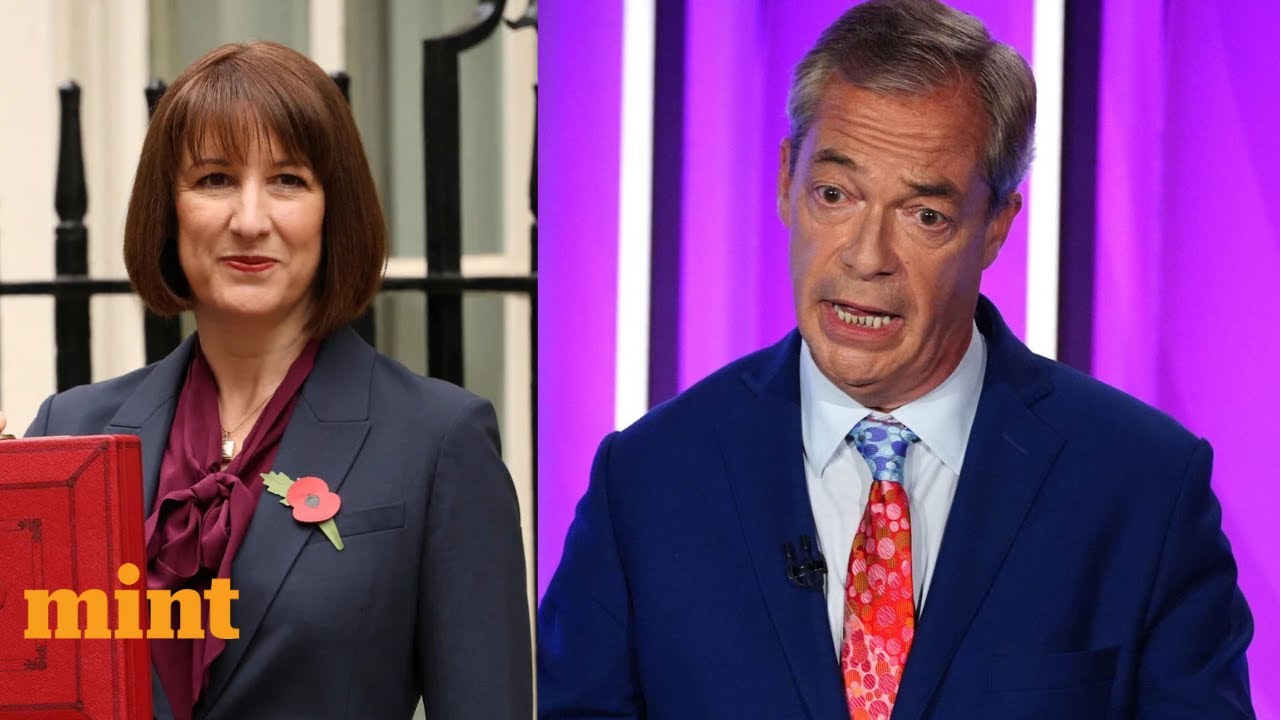
Nigel Farage Skewers Rachel Reeves at Major Reform Rally as Budget Battle Intensifies
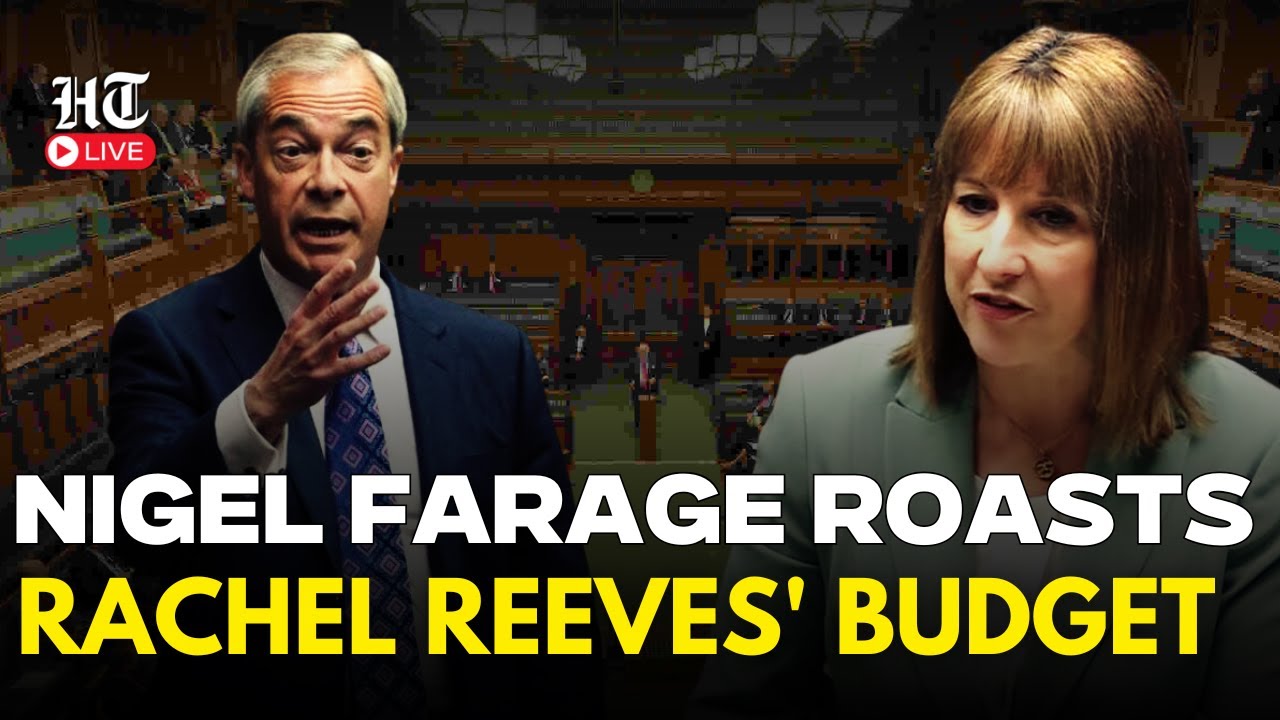
Nigel Farage has launched another fierce attack on Rachel Reeves, warning that Labour’s approach to taxation and public spending risks placing an even greater burden on ordinary British families.
Speaking to supporters at a major Reform UK rally, Farage presented the coming Budget as a defining political moment. His message was deliberately blunt: working people, businesses and families should not be expected to pay for what he regards as years of government overspending.

The confrontation between Farage and Reeves is about more than one Budget.
It reflects a much bigger disagreement over the future direction of Britain’s economy.
Reeves argues that Labour must maintain fiscal discipline while investing in public services and supporting economic growth. Farage, by contrast, argues that the British state has become too large, too expensive and too willing to take money from taxpayers.
That fundamental disagreement has become one of the most important political dividing lines between Labour and Reform.
Farage’s Attack on Reeves
Farage has increasingly made Rachel Reeves one of his principal political targets.
The reason is straightforward.
As Chancellor of the Exchequer, Reeves is responsible for many of the decisions that directly affect household finances: taxation, government spending, borrowing and economic policy.
For Reform UK, attacking the Treasury therefore provides a way to connect national economic arguments with voters’ everyday experiences.
Farage’s message is particularly effective when framed around the cost of living.
Many households do not think about government finances in terms of fiscal rules or debt-to-GDP ratios.
They think about how much money remains in their bank account at the end of the month.
They think about mortgage payments, rent, energy bills, food prices, council tax and fuel.
Farage wants those voters to believe that Labour’s economic policies will ultimately leave them paying more while receiving too little in return.
That is the political foundation of his attack.
Reform’s Message: Working People Are Being Squeezed
Farage has repeatedly argued that Britain has developed a tax system in which people can work harder yet feel little financial benefit.
In a May 2026 article published by Reform UK, he argued that working people were frustrated because additional effort was not producing a sufficient reward, while families were being pushed into higher tax bands.
That argument is central to Reform’s economic identity.
The party wants to portray itself as the political representative of workers who believe the tax system has become unfair.
Its argument is not simply that taxes are high.
It is that taxpayers are increasingly being asked to finance a government that, in Reform’s view, does not deliver enough value for the money it receives.
This allows Farage to combine two different political messages:
cut taxes and cut government waste.
The difficulty, of course, is demonstrating that both can be achieved simultaneously.
The Numbers Behind the Argument
This is where Reform faces one of its biggest challenges.
Britain has substantial public spending commitments.
The NHS requires enormous resources.
Pensions are a major expenditure.
Local government provides essential services.
Defence spending has increased.
Debt interest absorbs significant amounts of government revenue.
And welfare payments represent another major part of the budget.
Therefore, promising lower taxes requires difficult choices.
If the government collects less money, it must either spend less, borrow more or generate stronger economic growth.
Farage has increasingly acknowledged this reality.
Reuters reported that Reform moderated its earlier ambition for approximately £90 billion of annual tax cuts, with Farage arguing that substantial reductions should come only after the party has demonstrated fiscal credibility and established the necessary financial conditions.
That represents an important evolution in Reform’s economic strategy.
The party still wants lower taxes.
But it now has to convince voters and financial markets that its plans are affordable.
The Shadow of Liz Truss
One reason Reform must be careful is the experience of Liz Truss.
The 2022 mini-budget demonstrated how quickly financial markets can punish a government when investors believe its economic plans are insufficiently funded.
The episode remains one of the most powerful warnings in modern British economic politics.
Farage does not want Reform to be associated with another financial crisis.
That is why the party has increasingly emphasised spending reductions and fiscal credibility before major tax cuts.
The political calculation is clear.
If Reform promises enormous tax reductions without credible funding, opponents can portray the party as reckless.
If Reform develops a detailed plan to reduce spending first, it can argue that its programme is responsible.
The role of Robert Jenrick, Reform’s would-be chancellor, is therefore crucial.
He has been tasked with giving the party’s economic programme greater credibility and demonstrating that its promises can be converted into a coherent fiscal strategy.
Rachel Reeves’ Defence
Reeves has a fundamentally different economic philosophy.
The Chancellor has argued that investment in public services and infrastructure can help create the conditions for long-term economic growth.
The government has therefore sought to balance fiscal responsibility with investment.
Its approach is not based simply on cutting the size of the state.
Instead, Labour argues that Britain needs investment to improve productivity, strengthen infrastructure and rebuild public services.
A government cannot simply reduce spending without considering what that spending achieves.
That is the core of Labour’s counterargument.
If Reform proposes deep cuts, Labour can ask which services would be affected.
If Reform proposes tax reductions, Labour can ask how they would be funded.
And if Reform promises faster economic growth, Labour can ask what evidence demonstrates that its policies would produce it.
These questions will become increasingly important as the next general election approaches.
Farage’s Appeal to Taxpayers
Farage nevertheless has an important political advantage.
Tax is personal.
A government can announce billions of pounds of spending, but voters may not immediately feel the impact.
A tax increase is different.
People notice it.
They see it in their payslips.
They notice changes to household bills.
They calculate what they can afford to spend.
That makes taxation one of the easiest economic issues for an opposition party to use against a government.
Farage’s rhetoric is designed around precisely this psychology.
He wants voters to ask a simple question:
“Why am I paying more when public services appear to be getting worse?”
If enough voters accept that premise, Reform can build a powerful electoral coalition.
Reform’s Wider Economic Programme
The party’s economic arguments extend well beyond tax.
Reform has proposed substantial reductions in government spending, including measures targeting welfare and support for foreign nationals.
In 2025, the party proposed a package intended to save approximately £25 billion annually, including major reductions in foreign aid and changes to welfare eligibility. The Financial Times reported that Labour and Conservative critics challenged the assumptions behind those projected savings.
This is important because it reveals the mechanism behind Reform’s economic philosophy.
The party does not simply want to reduce taxation.
It wants to reduce the size and responsibilities of the state.
Farage’s argument is that government has accumulated too many functions and spends too much money attempting to solve problems that could be handled more efficiently by individuals, businesses or local communities.
Critics argue that such reductions could undermine public services or disproportionately affect vulnerable people.
That disagreement is likely to become one of the central economic battles of the next election.
The Welfare Question
Welfare is particularly controversial.
Reform argues that people who can work should have stronger incentives to do so.
The party has criticised what it regards as an expanding benefits system and has proposed restrictions intended to reduce spending.
Its opponents argue that welfare reform can easily become unfair when it fails to distinguish between people who genuinely cannot work and those who choose not to.
This creates a difficult political problem for Farage.
The argument that “work should pay” is popular.
But the implementation of welfare cuts is much more complicated.
A successful policy would need to increase employment without pushing genuinely vulnerable people into poverty.
That is where the detail of Reform’s economic programme will matter.
The Fuel Duty Battle
Fuel duty has provided another example of the confrontation between Reeves and Reform.
In May 2026, Reeves announced that a planned fuel-duty increase would be scrapped, a decision aimed at helping consumers. The announcement nevertheless took place amid fierce political criticism, including an encounter with a Reform supporter who heckled Reeves at a petrol station in Leeds.
Farage has made fuel costs a recurring political issue because they affect not only private motorists but also businesses and transport costs.
A rise in fuel duty can eventually affect the price of goods because transportation becomes more expensive.
For Reform, therefore, fuel taxation is part of a wider argument about the cost of living.
The party wants voters to associate Labour with higher costs.
Labour, meanwhile, wants to demonstrate that it is taking practical measures to reduce pressure on households.
The Politics of the Budget
Budgets are always politically dangerous for governments.
A Chancellor has to satisfy financial markets, investors, public-sector workers, businesses and ordinary taxpayers simultaneously.
Every decision creates winners and losers.
That gives opposition parties numerous opportunities for criticism.
Farage’s strategy is to simplify the argument.
His message is essentially that Labour has spent too much and will eventually ask ordinary people to pay the bill.
That argument has emotional force even when the underlying economics are complicated.
Reeves has to do the opposite.
She must explain why particular spending decisions are necessary and why particular taxes are justified.
That is a much more complicated political message.
Labour’s Attack on Reform
Reeves has not remained passive.
She has increasingly attacked Reform directly.
During the March 2026 Spring Statement, she described Reform as a “Tory tribute act” and criticised its support for restoring the two-child benefit limit, arguing that such a policy could push hundreds of thousands of children into poverty.
That attack illustrates Labour’s broader strategy.
Rather than treating Reform as a fringe movement, Labour increasingly treats it as a serious political competitor.
This is significant.
When established parties begin directly attacking an insurgent party, they implicitly acknowledge that it has become electorally important.
Why Reform Is Dangerous for Labour
The greatest threat to Labour may not be that Reform wins every seat it contests.
The more important issue is that Reform can change the political debate.
If Reform makes immigration, taxation, welfare and national identity central electoral issues, Labour may be forced to respond even when it would prefer to focus on other matters.
That gives Farage influence without necessarily requiring him to win an election.
He can force Labour to defend its record.
He can force Reeves to explain taxation.
He can force ministers to respond to Reform’s proposals.
And he can present himself as the politician setting the agenda.
The Conservative Problem
The Conservatives face a different but equally serious challenge.
Traditionally, the Conservatives were Britain’s party of lower taxation and smaller government.
Farage is now attempting to claim that political territory for Reform.
The Conservatives therefore have to answer a difficult question:
Why should a voter choose the Conservatives rather than Reform if both parties promise lower taxes and tougher control of government spending?
The Conservative response is generally to emphasise experience and credibility.
Reform’s response is that Conservative governments had their opportunity and failed to deliver sufficient change.
That argument is particularly powerful among voters who supported the Conservatives in the past but became disappointed with their performance in office.
The Economic Battle Could Decide Reform’s Future
Reform has demonstrated that it can generate political excitement.
Its rallies attract attention.
Its leader dominates political coverage.
And its support has extended beyond the party’s original Brexit constituency.
But economic credibility could determine whether that popularity becomes lasting political power.
Immigration can win attention.
Cultural issues can mobilise supporters.
Political anger can produce protest votes.
But governing requires economic competence.
Voters need to believe that a party can manage inflation, borrowing, employment, public services and taxation.
That is why Jenrick’s role is so important.
He must translate Farage’s political message into a programme that survives serious scrutiny.
Farage’s Political Advantage
Farage has one significant advantage over Reeves.
He can make promises without having to implement them.
As an opposition leader, he can identify problems and propose solutions without immediately facing the consequences of those solutions.
Reeves does not have that luxury.
Every decision she makes affects the government’s finances.
Every policy must be funded.
Every forecast can be challenged.
Every tax change produces measurable consequences.
That asymmetry gives opposition politicians a natural political advantage.
But it also creates a future test.
If Reform enters government, voters will expect Farage and his team to deliver the promises they made in opposition.
The Question of Growth
The most important economic question may ultimately be growth.
Britain cannot simply cut its way to prosperity.
Nor can it tax its way to unlimited public spending.
A growing economy makes almost every fiscal problem easier.
More employment means more tax revenue.
Higher productivity increases wages.
Greater investment can improve living standards.
That is why both Labour and Reform talk constantly about growth, even though their proposed methods are very different.
Labour emphasises investment and industrial strategy.
Reform emphasises deregulation, lower taxes, reduced government and stronger incentives to work and invest.
The election will eventually provide voters with a choice between these competing economic philosophies.
A Battle Over Britain’s Political Future
The confrontation between Farage and Reeves therefore goes far beyond a personal political feud.
It represents two competing visions of Britain.
Reeves wants a state capable of investing heavily in infrastructure and public services while maintaining fiscal discipline.
Farage wants a smaller state, lower taxes and a much more radical restructuring of government.
Labour sees government intervention as an important tool for economic renewal.
Reform sees excessive government intervention as part of the problem.
Neither side can avoid the central reality:
Britain has limited resources and unlimited political demands.
Every government has to choose its priorities.
Conclusion
Nigel Farage’s attack on Rachel Reeves at a major Reform UK rally was another example of the increasingly intense economic battle between Labour and Reform.
Farage wants voters to believe that the Government’s approach will ultimately force ordinary Britons to pay more for a state that is already too expensive.
Reeves, meanwhile, argues that Labour’s economic programme is designed to create growth, protect public services and improve living standards.
The disagreement cannot be reduced simply to “high taxes versus low taxes”.
The real question is what kind of state Britain should have.
Should the government spend more to invest in healthcare, infrastructure and public services?
Or should it reduce spending, lower taxes and give individuals and businesses more control over their money?
Reform’s answer is increasingly clear.
Farage wants a smaller government, lower taxation and a stronger emphasis on personal responsibility. His own description of the party’s economic appeal focuses heavily on workers who feel that additional effort is not being rewarded sufficiently.
But the difficult part comes next.
Reform must demonstrate that its promises can actually be paid for.
The party has already moderated some of its most ambitious tax-cutting plans in an attempt to establish greater credibility with financial markets.
That may ultimately be the decisive test.
Farage has proved that he can capture public frustration.
Now he must prove that frustration can be converted into an economic programme capable of governing Britain.
For Rachel Reeves, the challenge is equally serious.
She must persuade voters that higher spending and taxation can deliver better services and stronger growth rather than simply placing another burden on households.
That is why every Budget confrontation between Reeves and Farage matters.
It is not merely a clash between two politicians.
It is a battle over who should pay, what government should provide, how Britain’s economy should grow—and ultimately, what Britain should look like after the next political revolution.
Leave a Reply
You must be logged in to post a comment.