
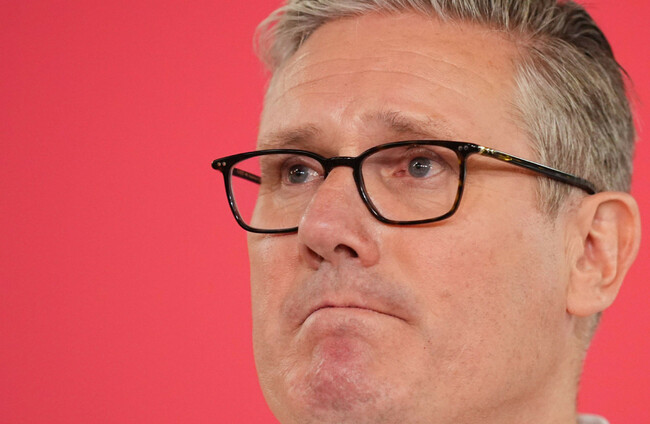
AT THIS STAGE, almost nobody over in Britain seems to actually like prime minister Keir Starmer.
His approval ratings are now among the worst recorded for any modern UK leader less than two years into office.
The pressure on Starmer intensified dramatically after last week’s local elections, which saw Labour suffer heavy losses across England, Scotland and Wales while Nigel Farage’s Reform UK surged. 80 Labour MPs have since called on Starmer to resign.
Starmer himself conceded the results were “very tough” and admitted Labour would need to “reflect” on the message voters were sending.
Instead, the fallout has escalated into open civil war inside the party.
According to YouGov polling published this week, just 23% of Britons now view Starmer favourably, while 69% view him unfavourably, giving him a net favourability rating of -46.
Another YouGov poll found that 70% of Britons believe he is doing badly as prime minister, compared to just 22% who think he is doing well.
Ipsos polling published this week found that two-thirds of Britons believe Starmer should not lead Labour into the next general election.
Even among people who voted Labour in 2024, the numbers are bleak. More Labour voters now think Starmer should resign than stay on.
Why?
Despite the collapse in support, there’s a mixed consensus on why exactly Britain dislikes him so much.
As one Labour voter told YouGov in a qualitative survey this week: “He’s been a bit rubbish — unambitious, inconsistent, timid, uncharismatic and lacking in bold vision.”
Another respondent described him as “a bland grey little man” who had turned into “an absolute disaster”.
The hostility has now escalated into open warfare within Labour itself.
This week, Wes Streeting resigned as UK health secretary after publicly declaring that he had “lost confidence” in Starmer’s leadership.
In a blistering resignation letter, Streeting criticised the “drift” at the top of the government and warned that Starmer would not lead Labour into the next election.
At the same time, Greater Manchester mayor Andy Burnham confirmed he wants to return to Westminster, freeing him up to challenge for the Labour leadership.
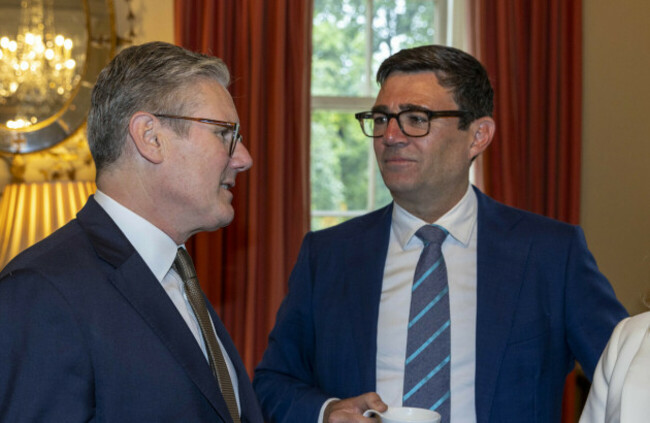
Angela Rayner, meanwhile, has refused to rule out her own leadership bid.
Political analysts say the seeds of this collapse were visible long before Starmer ever entered Downing Street.
‘This was never a popular government’
Eoghan Kelly, a postdoctoral researcher leading the Polling London Project at Queen Mary University of London, said Labour’s huge parliamentary majority disguised the reality that Starmer himself was never especially popular.
“His approval rating when he won the election in 2024 was only around 30%,” Kelly said.
“He’s never been popular. This was never a popular government. It was a government that was made to look popular because they had loads of seats.”
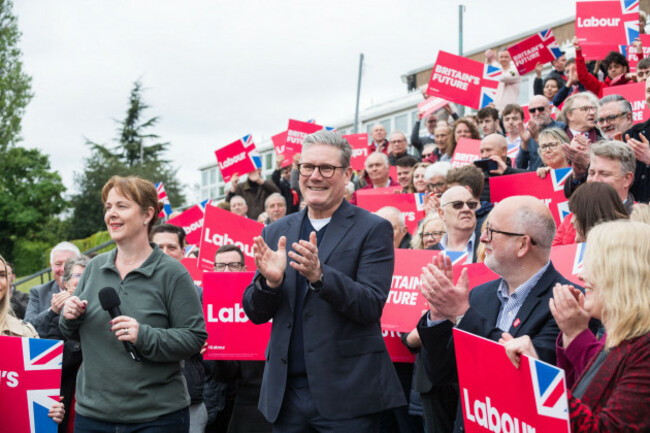
Labour won the 2024 election with just 32.1% of the vote, one of the lowest vote shares ever to produce such a dominant majority in Westminster. Despite this, they picked up a sweeping majority of 411 seats out of a possible 650.
Kelly argues the election was less an endorsement of Starmer than a collective rejection of the Conservatives after years of chaos under Johnson, Truss and Sunak.
“The entire election was basically driven by: ‘Do you want to keep the Tories in or not?’” Kelly said.
Labour was offering the least radical alternative. Their pitch was essentially just to stop making things worse.
That cautious, managerial approach may have worked electorally in 2024, but more voters have since fallen out of favour with Labour.
“Starmer is your sort of centrist, managerial-style leader,” Kelly said.
“He’s never leaned into being radical or inspirational. He’s not Boris Johnson and he’s also not Jeremy Corbyn. His plan was basically to make things slightly better.”
But many Labour voters expected something more transformative once the party secured a massive Commons majority.
Instead, critics on the left accuse Starmer of abandoning progressive promises and pivoting even further to the right in an attempt to win back Reform UK voters.
“He’s managed to get the worst of both worlds,” Kelly said.
“They’re not winning over Reform voters because Reform voters don’t believe them on immigration. But they are alienating progressive voters, because progressive voters do believe them.”
That tension repeatedly appears in the YouGov interviews.
One Labour voter said: “I expected better from him. I want to like him but the treatment of welfare claimants absolutely ruined it for me. I expect it from Tories but it hit hard coming from his hand.”
Another said Starmer “stands for whatever focus groups say are popular”.
‘Doesn’t seem to stand for anything’
Much of the public’s frustration with Starmer appears less ideological than emotional.
Britons do not seem to hate him in the way many hated Boris Johnson or Liz Truss. Instead, pollsters describe a broader sense of disappointment and confusion.
“I don’t think it’s visceral dislike,” Kelly said.
The British public is more like: ‘What is the point of all this?’
That sentiment surfaced repeatedly in the YouGov responses.
“He does not seem to stand for anything,” one voter said. “He changes direction like a weather vane.”
Another described him as “timid, uncharismatic and lacking in bold vision”.
Kevin Cunningham, founder of Ireland Thinks and a lecturer in politics at TU Dublin, said Starmer’s difficulties reflect a much broader problem facing centrist parties across Europe.
“There used to be a big electoral advantage in occupying the centre ground,” Cunningham said.
“But politics has become much more fragmented now. There are very distinct ideological tribes on the left and right, and if you try to sit in the middle you often end up alienating both.”
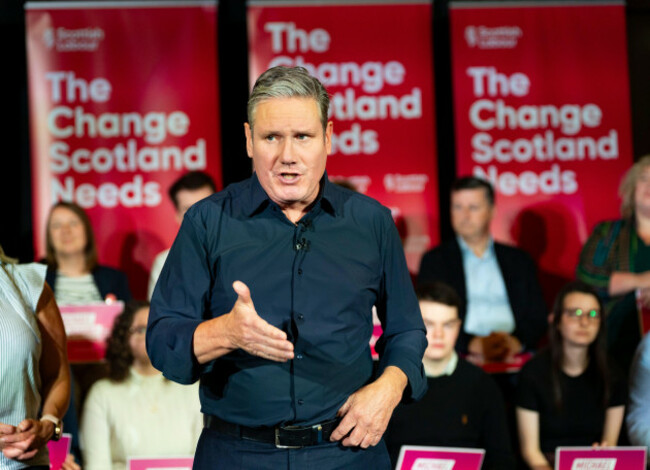
He argues Labour’s electoral strategy has become trapped by the realities of Britain’s first-past-the-post voting system.
The party increasingly fears losing working-class constituencies to Nigel Farage’s Reform UK, leading Labour strategists to prioritise immigration and culturally conservative messaging.
Kelly said that strategy may now be backfiring badly.
“It’s extremely difficult to win those Reform voters back,” he said.
“They don’t trust Labour on immigration anyway. So Labour ends up validating Reform’s arguments while simultaneously upsetting progressive voters.”
Could it be worse?
Starmer’s unpopularity may end up costing him his job, but even in Ireland we’ve seen leaders who are more unpopular than he currently is.
Former taoiseach Brian Cowen remains the gold standard for political unpopularity on this side of the Irish Sea.
By late 2010, amid the financial crash and the IMF-EU bailout, support for Cowen remaining as taoiseach had collapsed to just 8% in RedC polling.
Starmer has not yet reached those depths, though his support is lower than the current leaders here.
Polling from earlier this month suggests Taoiseach Micheál Martin (a fan of Starmer) is viewed favourably by roughly one-third of Irish voters (33%), while Tánaiste Simon Harris polls similarly (31%).
Even at his lowest ebb, Starmer remains more popular than Conservative PM Liz Truss.
YouGov polling earlier this year found Britons preferred almost every recent prime minister to Starmer, including Tony Blair, Gordon Brown, David Cameron, John Major and Boris Johnson.
Still, Cunningham believes Starmer’s situation may not be entirely hopeless.
“The British media environment is incredibly hostile,” Cunningham said.
“But Labour probably have hit close to their floor in the polls.”
Why Does Almost Nobody in Britain Seem to Like Keir Starmer?
In modern politics, popularity can be just as important as policy. A leader may win elections, control a parliamentary majority, and still struggle to create a strong connection with the public. The headline “Why Does Almost Nobody in Britain Seem to Like Keir Starmer?” reflects one of the biggest questions surrounding the Labour leader: why has a politician who achieved major political success often faced criticism, scepticism, and a lack of personal enthusiasm from many voters?
The answer is not simple. Public attitudes towards politicians are shaped by many factors, including expectations, economic conditions, media coverage, personal style, political decisions, and the relationship between promises and delivery. Starmer’s difficulties with popularity do not necessarily mean that every voter dislikes him, but they highlight a challenge faced by many modern leaders: gaining public trust is often much harder than winning political power.
Keir Starmer entered national politics with a reputation very different from many traditional politicians. Before becoming Labour leader, he had a successful legal career and served as Director of Public Prosecutions. His professional background created an image of someone who was serious, disciplined, and focused on evidence-based decision-making.
For many supporters, these qualities were attractive. After years of political instability, some voters wanted a leader who appeared responsible and predictable. Starmer presented himself as a politician who could restore professionalism and rebuild confidence in Labour after its defeat in the 2019 general election.
However, the same qualities that appealed to some voters also created criticism. Some opponents argued that Starmer appeared too cautious, too controlled, and lacking the emotional connection that successful political leaders often develop with the public. They suggested that while he could appear competent, he struggled to inspire enthusiasm.
One of the biggest challenges facing Starmer has been the gap between competence and popularity. In politics, being respected is not always the same as being liked. A leader can be viewed as capable but still fail to create a strong personal bond with voters.
Many successful politicians have built their careers around powerful stories about national change. They often communicate a clear vision that allows supporters to feel part of a wider movement. Critics of Starmer argue that his messaging has sometimes appeared more focused on management and administration than on a compelling political mission.
Another major factor has been the expectations placed on Labour after years in opposition. When a party promises change after a long period away from power, voters often expect rapid improvements. Problems involving healthcare, housing, public services, and living costs cannot be solved immediately, but governments are frequently judged on whether people feel their lives are improving.
Economic pressures have also affected Starmer’s popularity. Many households have experienced concerns about prices, mortgages, energy bills, wages, and financial security. Even when governments inherit difficult circumstances, voters often judge the current leadership based on their everyday experiences.
This creates a difficult situation for any prime minister or governing party. Economic problems can reduce public confidence even when some challenges are beyond a government’s immediate control. Political leaders must therefore not only manage the economy but also explain their decisions clearly.
Another source of criticism has come from within Labour itself. Some traditional supporters have accused Starmer of moving away from long-standing Labour principles. They argue that attempts to appeal to a wider range of voters have resulted in a weaker sense of identity.
Supporters of Starmer respond that political parties must adapt if they want to win elections. They argue that Labour needed to rebuild trust among voters who had moved away from the party and that a more moderate approach was necessary to become competitive nationally.
This disagreement reflects a long-running debate within Labour: whether electoral success requires broad appeal or stronger ideological commitments. Different groups within the party have different answers, and balancing these views has been one of Starmer’s greatest challenges.
Media coverage has also influenced perceptions of Starmer. British politics has a highly competitive media environment, and newspapers often present leaders through strong political narratives. Some outlets have portrayed Starmer as a cautious administrator, while others have criticised his decisions and questioned his leadership style.
Social media has added another layer to this challenge. Online political discussions are often more aggressive and polarised than traditional debates. Negative impressions can spread quickly, and politicians may struggle to control how they are portrayed.
However, media criticism alone cannot explain public dissatisfaction. Political leaders are ultimately judged by their decisions and communication. Some voters who are unhappy with Starmer are responding to specific policies, while others are reacting to his overall political style.
A key issue has been trust. Modern voters often expect politicians to be consistent and transparent. When leaders change positions or adjust policies, opponents may describe it as weakness, while supporters may describe it as flexibility and pragmatism.
Starmer’s leadership has involved several attempts to balance principles with political reality. Moving from opposition into government requires compromise because governing involves financial limits, international pressures, and competing demands from different groups.
The challenge for Starmer has been convincing voters that compromise represents responsible leadership rather than a lack of conviction. This is one of the most difficult communication tasks in politics.
Another factor is personality. Political popularity is not only about policies; it is also about how people perceive a leader. Some politicians naturally create strong emotional connections through speeches, personal stories, or a distinctive public image. Others rely more on professionalism and authority.
Starmer’s critics argue that he has struggled to create warmth and relatability. They suggest that voters want to understand not only what a politician plans to do but also what motivates them personally.
His supporters argue that politics should not be reduced to personality contests. They believe effective government requires competence, careful planning, and difficult decision-making rather than simply being charismatic.
The comparison with previous Labour leaders has also affected perceptions. Different leaders have offered different styles of politics, from ideological movements to more centrist approaches. Some voters compare Starmer with these previous figures and judge him according to expectations created by earlier leaderships.
There is also a broader issue affecting many politicians across democracies: declining trust in institutions. Many citizens have become more sceptical of political promises, making it harder for any leader to achieve widespread popularity.
People often feel frustrated when governments cannot immediately solve major problems. This frustration is not always directed at one individual but reflects wider dissatisfaction with the political system itself.
Despite criticism, Starmer has also maintained significant support among many voters who value stability and practical government. Some believe his careful approach is preferable to more dramatic but unpredictable leadership styles.
The question of whether a leader is “liked” is therefore complicated. Some politicians are personally popular but struggle to govern effectively. Others are less charismatic but achieve important policy goals. Political history often judges leaders differently from public opinion at any single moment.
For Starmer, the central challenge is turning political authority into public confidence. Winning an election provides power, but maintaining support requires continuous communication, successful policies, and the ability to respond to changing public concerns.
In conclusion, the question “Why Does Almost Nobody in Britain Seem to Like Keir Starmer?” reflects the complex relationship between political leadership and public opinion. Starmer’s difficulties with popularity come from a combination of factors: his cautious style, high public expectations, economic pressures, internal party disagreements, media criticism, and debates over Labour’s direction.
However, political popularity can change quickly. Leaders who face criticism early in their careers can later gain respect if they deliver results, while popular leaders can lose support if they fail to meet expectations.
Ultimately, Starmer’s legacy will not be decided only by whether people find him personally appealing. It will depend on whether voters believe his leadership improved the country and delivered meaningful change.