


A recent parliamentary debate in Westminster Hall devolved into heated exchanges after Reform UK MP Sarah Atherton described the arrival of migrants across the English Channel as an “invasion.”
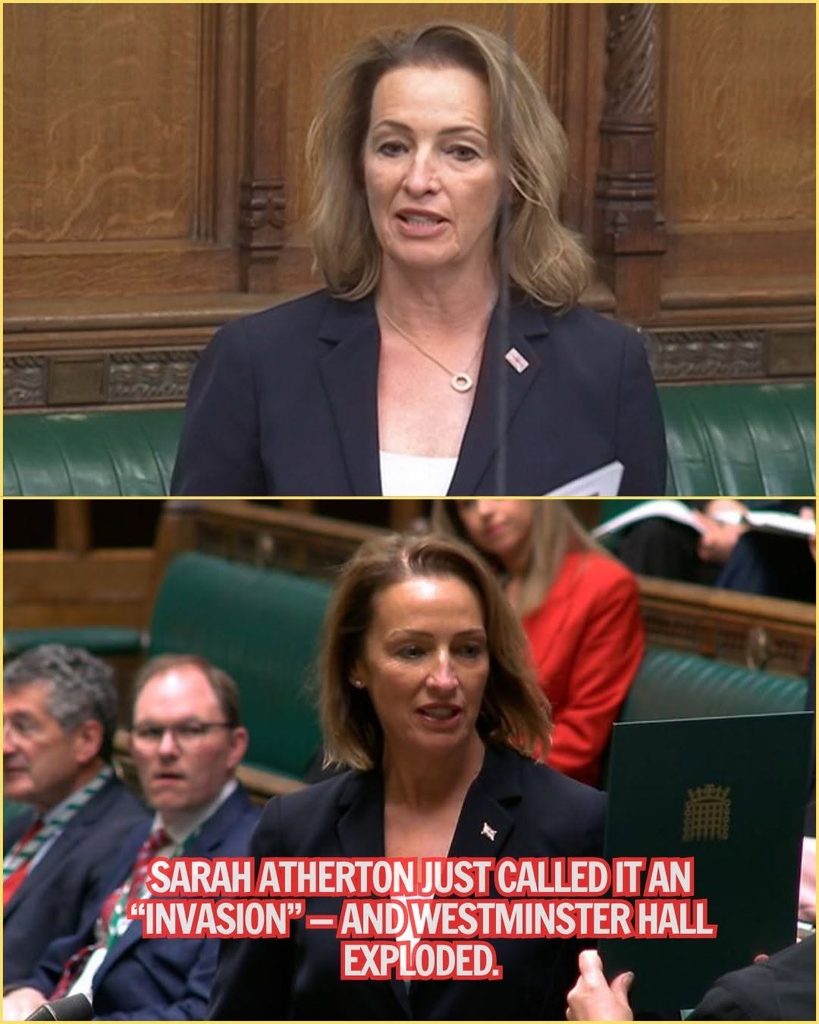
The debate, triggered by two public petitions concerning immigration policy, highlighted the deep political fractures within Parliament over the handling of asylum seekers.
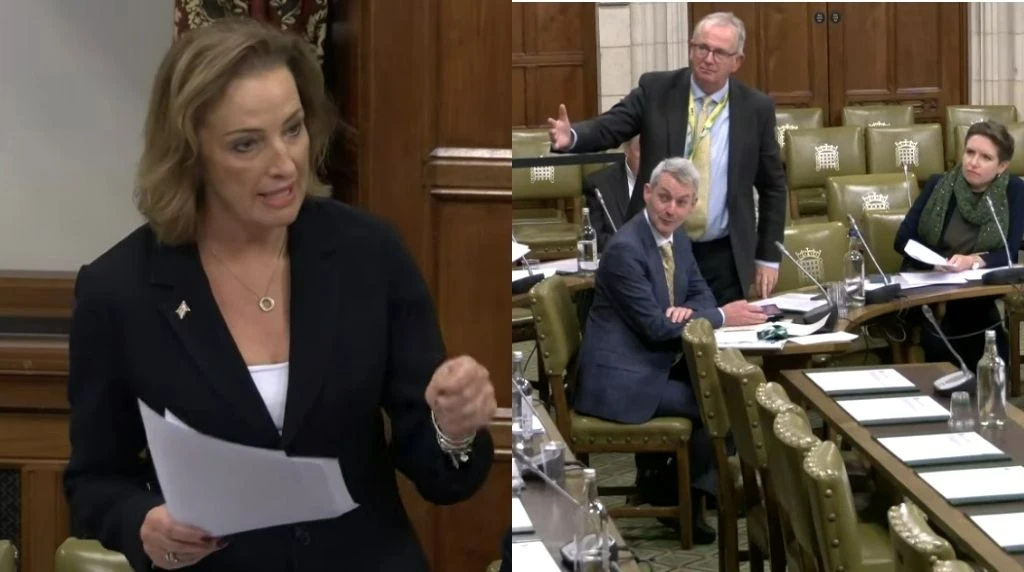
Speaking to the petitions—which called for the closure of migrant hotels, the deportation of illegal migrants, and the cessation of financial support for asylum seekers—Atherton cited the hundreds of signatures gathered from her constituency of Runcorn and Helsby as evidence of widespread public frustration.
Atherton framed the situation as a dire national crisis. “Make no mistake, this is the biggest issue that this country is facing at the moment. We are now facing an invasion. We are facing a national security issue and a national emergency,” she stated, sparking immediate visible dissent and interruptions from opposition and left-wing MPs.
During her speech, Atherton repeatedly refused to take interventions from opposing members. She characterized the UK’s asylum policies as “ridiculously generous,” claiming they have made the nation a laughingstock in Europe and a source of despair for allies like the United States. She further alleged that the current approach prioritizes those “who have no right to be here” over “loyal British citizens.”
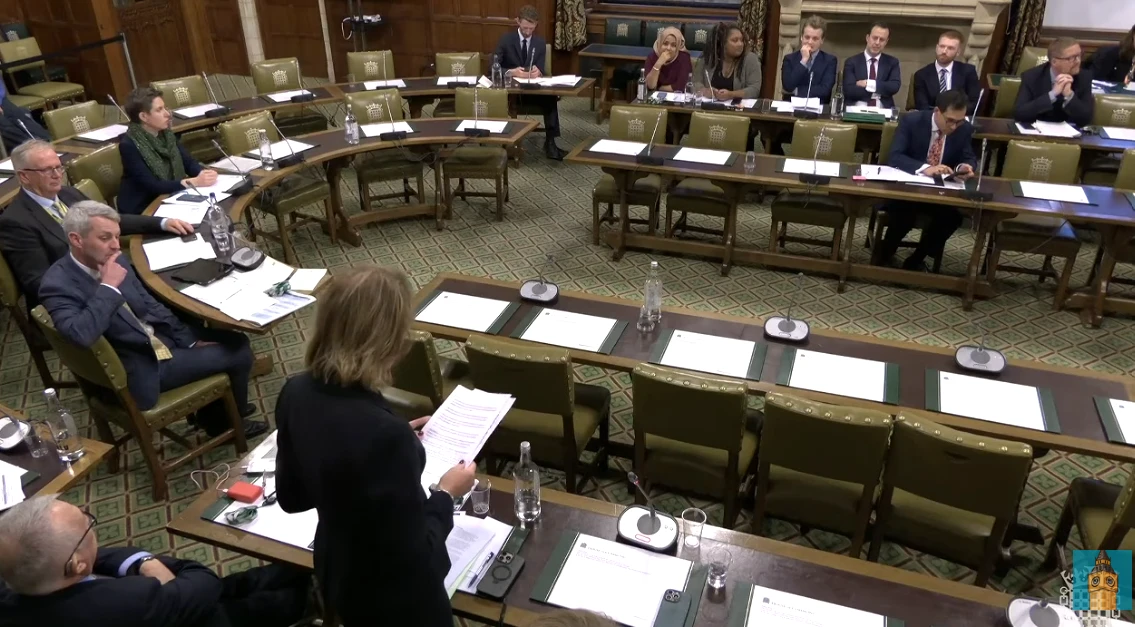
The most contentious moments arose when Atherton outlined her proposed immediate actions. She called for the rapid closure of hotels currently housing migrants and their relocation to secure holding centers away from local communities, emphasizing that conditions should be “humane but not luxurious.”
Her subsequent comments warning of risks to women and girls from “sexually active young men currently free to roam our streets” drew strong condemnation from MPs across the aisle, escalating the tension in the chamber.
In closing, Atherton pointed to a recently tendered Home Office contract for asylum support and accommodation services scheduled to run from 2029 to 2036. She cited this contract as proof that the government intends to institutionalize rather than dismantle the current system of hotel accommodations, despite visible disagreement from government representatives in the hall.
The fiery debate underscores the escalating rhetoric and profound divisions within British politics regarding border control and asylum policy, as the government faces mounting pressure from both the right wing and local constituencies to enact stricter measures.
Westminster Erupts After Reform MP Calls Channel Migration an “Invasion”
A fierce political debate has erupted over the language used to describe small-boat migration across the English Channel, after a Reform UK MP reportedly characterised the arrivals as an “invasion”. The choice of words has reignited arguments over border security, national sovereignty and the responsibility of politicians to describe immigration in a way that reflects both public concerns and the realities of the situation.
The controversy comes as irregular Channel crossings remain one of the most divisive issues in British politics. Reform UK has repeatedly called for a tougher approach to immigration, arguing that successive governments have failed to establish effective control over the country’s borders. Opponents, however, warn that describing migrants as an invading force risks inflaming tensions and obscuring the legal distinctions between asylum seekers, irregular entrants and people involved in organised smuggling.
The reported remark has therefore raised a broader question: where should political debate draw the line between forceful criticism of government policy and language that may deepen divisions within society?
A Word That Has Triggered a Political Storm
The term “invasion” carries a powerful meaning. In its conventional military sense, it describes an organised entry into territory by hostile forces. Applied to migration, it becomes a political characterisation rather than a neutral description of people arriving at a border.
For supporters of a tougher immigration policy, the word may express frustration with the scale of arrivals and a belief that the government has lost control of the situation. They argue that language should reflect the seriousness of a problem that has persisted despite repeated promises to reduce crossings.
From this perspective, the remark is intended to challenge what critics of existing policy regard as an overly cautious political response. They want ministers to acknowledge public concerns, improve enforcement and explain how they intend to reduce irregular arrivals.
Critics take a different view. They argue that describing migrants collectively as an invading force risks presenting people with very different circumstances as a single hostile group. Some people crossing the Channel may be seeking asylum, while others may not qualify for protection. The presence of suspected smugglers raises separate questions about criminal responsibility.
Those distinctions matter when discussing both immigration policy and the treatment of individuals.
Without the full context of the MP’s statement and the responses it prompted, it would be premature to conclude exactly what the speaker intended or how the remark has been received across Parliament. Nevertheless, the language itself illustrates the intensity of Britain’s immigration debate.
Why Channel Migration Remains a Westminster Flashpoint
Small-boat arrivals have become a visible measure of the government’s ability to manage Britain’s borders. Images of inflatable vessels crossing one of Europe’s busiest shipping routes have repeatedly prompted questions about enforcement, asylum processing and cooperation with France.
For many voters, the continued crossings are a source of frustration. They want to know why people are able to make the journey, how quickly their claims are considered and what happens when an application is rejected.
The costs associated with accommodation and processing have added another dimension to the discussion. Local authorities and public services may face pressures when arrangements for housing and support become prolonged, while delays can leave applicants uncertain about their futures.
Politicians who call for stricter controls argue that the government must do more to discourage dangerous journeys and prevent criminal networks from profiting from vulnerable people. They also stress that decisions to remove people who have no legal right to remain must be implemented effectively.
Yet the Channel issue cannot be understood solely through the number of boats arriving. It also involves the legal obligations that govern asylum claims, the practical difficulties of returning people to other countries and the dangers faced by passengers during the crossing.
The challenge for policymakers is to address public concerns while ensuring that enforcement measures are effective, lawful and sustainable.
Reform UK’s Immigration Message
Reform UK has made reducing immigration and strengthening border enforcement central to its political platform. Its message appeals to voters who believe the established parties have failed to deliver meaningful change.
By using uncompromising language, Reform politicians seek to distinguish their approach from that of their opponents. They argue that the public wants a clear commitment to reducing irregular migration, disrupting smuggling networks and removing people who do not qualify to remain in Britain.
The controversy over the word “invasion” also demonstrates the risks of that strategy. Strong language can attract attention and communicate urgency, but it may also shift discussion away from the specific measures a party proposes.
Voters still need answers to practical questions. How would crossings be reduced? What legal powers would be required? How would asylum applications be handled? What arrangements would allow lawful returns to take place? And how would the government measure whether its policies were working?
Those questions are important regardless of which political party raises them.
For Reform UK, the challenge is to explain how its preferred approach would operate in practice. For its opponents, the challenge is to demonstrate that alternative policies can address irregular migration rather than simply criticise the language used by political rivals.
The Difference Between Irregular Migration and an Invasion
The distinction between migration and military aggression is more than a matter of terminology.
People arriving in Britain by small boat may have different nationalities, personal histories and reasons for leaving their countries. Some may be escaping persecution or conflict. Others may be seeking economic opportunities or may ultimately be found not to meet the legal requirements for asylum.
The method of arrival does not, by itself, determine whether a person qualifies for international protection. That decision depends on the relevant legal criteria and the circumstances of the individual case.
Similarly, a person who facilitates a dangerous crossing for profit may face questions about suspected criminal conduct that are different from those applying to a passenger.
Using one label for everyone involved can blur these differences. It may also make it harder to discuss specific solutions, because preventing smuggling, assessing asylum claims and removing people without a lawful basis to stay require different procedures.
None of this means that governments cannot enforce immigration rules or that members of the public must support current arrangements. It means that the terminology used to describe a problem should not replace an examination of the facts.
A government can pursue strict border controls while recognising that people arriving at the border are not automatically members of a hostile military force.
The Humanitarian Dimension
The Channel is a dangerous maritime environment. Small inflatable vessels can be overcrowded, unstable and poorly equipped for the journey. Passengers may face cold water, strong currents, changing weather and the risk of collisions with other vessels.
These dangers have made the work of rescue services an important part of the debate. Authorities must be able to respond when boats get into difficulty, even while enforcing immigration law and investigating suspected smuggling operations.
Supporters of stronger enforcement argue that preventing departures would reduce the number of people exposed to these risks. They believe effective action against smugglers could save lives by making the dangerous journey less attractive and less available.
Others caution that aggressive rhetoric or poorly designed enforcement measures could increase hostility towards migrants or complicate efforts to protect people in distress.
The policy challenge is to reduce dangerous crossings without abandoning the legal and humanitarian responsibilities that apply at sea.
This requires a combination of effective investigations, international cooperation, clear procedures for interceptions and an asylum system capable of making decisions in a timely manner.
The Political Consequences of Heated Language
Language used by elected representatives can influence how an issue is discussed beyond Westminster. A controversial phrase may dominate headlines, trigger responses from political opponents and circulate widely across social media.
Supporters may view the statement as an example of a politician speaking directly about a concern they believe has been neglected. Critics may see it as an unnecessary escalation that risks encouraging hostility towards people who are already in vulnerable circumstances.
The same remark can therefore be interpreted in sharply different ways, depending on a person’s political views and understanding of the immigration issue.
Political leaders have a responsibility to explain their positions clearly and to distinguish criticism of government policy from generalisations about entire groups of people. This does not require politicians to soften every disagreement. It requires them to make claims that can be examined and to explain the practical consequences of their proposals.
When the debate becomes dominated by competing accusations, it can become more difficult for voters to assess which policies are likely to work.
The public deserves a discussion that considers evidence, legal constraints, financial costs and the impact on communities, rather than relying entirely on emotionally charged language.
What Would an Effective Border Policy Require?
Reducing irregular Channel crossings is a complex task involving several interconnected areas.
First, authorities need to investigate the criminal networks that organise journeys, collect payments and expose passengers to dangerous conditions. Cooperation between British and French law-enforcement agencies can be important in identifying organisers and disrupting their operations.
Second, the asylum system needs sufficient capacity to assess applications fairly and without avoidable delays. Clear decisions allow the government to identify people who qualify for protection and those who may be eligible for removal under the law.
Third, lawful returns depend on practical arrangements with receiving countries. Identity verification, travel documentation and diplomatic cooperation can all affect whether a removal can take place.
Finally, the government needs transparent measures of progress. The number of arrivals is one indicator, but it should be considered alongside attempted crossings, smuggling investigations, processing times, return decisions, costs and maritime safety.
No single slogan can resolve all these challenges. A credible policy must explain how its different elements fit together and how success will be measured.
Westminster’s Debate Is Far From Over
The reported description of Channel migration as an “invasion” has highlighted the divisions that continue to shape Britain’s immigration debate. It reflects the intensity of concern among some voters while raising questions about the effects of applying military terminology to civilian migration.
Reform UK and other supporters of stricter enforcement argue that the government must demonstrate control over its borders and reduce dangerous crossings. Critics emphasise the need for accurate language, lawful procedures and protection for people who may have valid asylum claims.
These positions do not remove the need for practical solutions. Britain still faces difficult questions about smuggling networks, asylum processing, international cooperation and the implementation of lawful removal decisions.
Ultimately, the value of any political intervention will depend on whether it helps explain the problem and identify workable responses. Strong words may bring immediate attention, but lasting improvements require clear policies, credible evidence and effective implementation.
As the argument continues in Westminster, the central test for every party will be whether it can address public concerns about border control while respecting the law and distinguishing between individuals whose circumstances may be very different. That is a more demanding task than winning a dispute over a single word, but it is the one that will matter most to the country’s future immigration policy.